Workforce AI Reskilling - Resistance is Artificially Unintelligent!
When the Problem Becomes the Solution
Remember those sci-fi movies where the robot learns too much and decides humans are the problem? Plot twist: in today’s tech talent landscape, AI isn’t eliminating humans, - it’s becoming our most powerful ally in staying relevant.
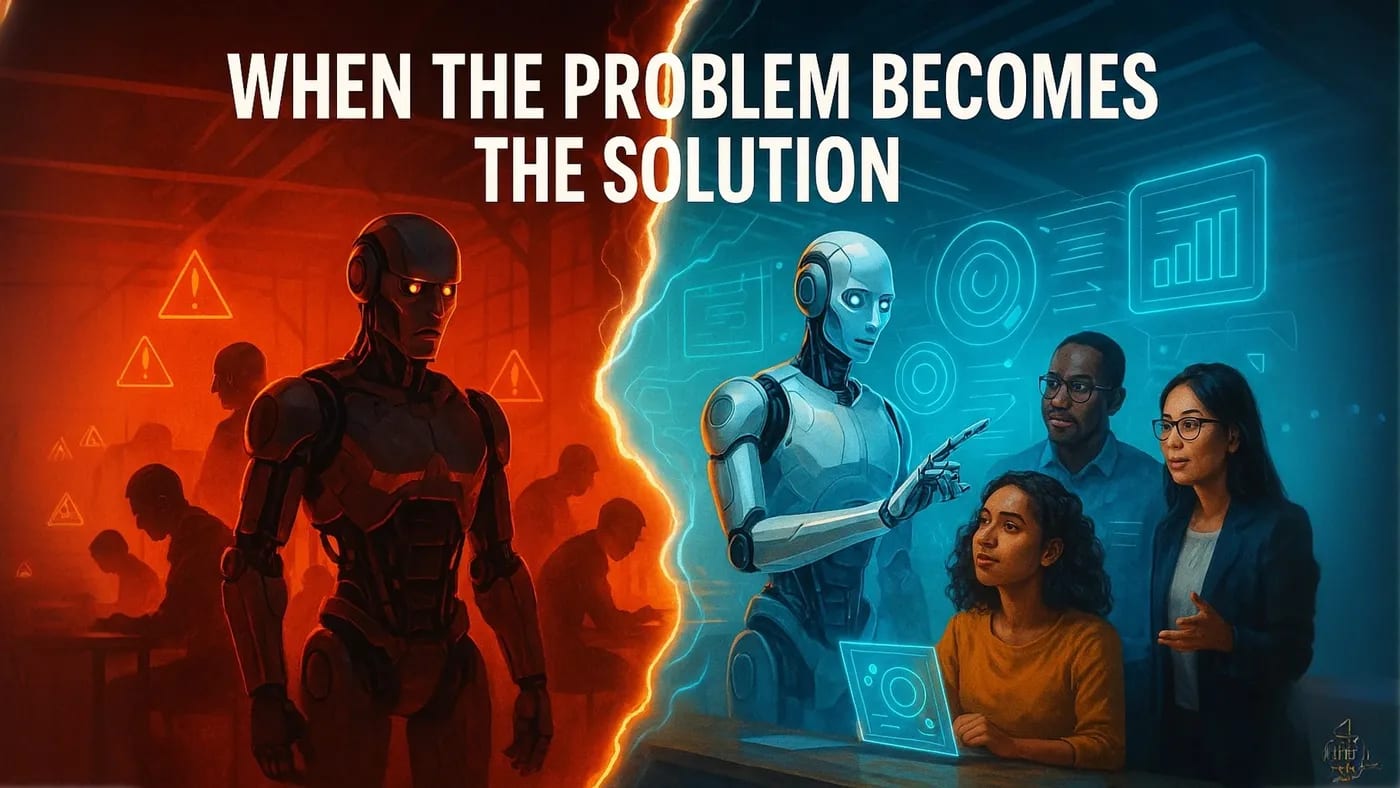
I’ve watched the narrative evolve from “AI might steal our jobs” to “AI might steal our jobs… and then teach us how to get better ones.” Welcome to the delicious irony of 2025: the very technology creating our skills gaps is now our best hope for bridging them.
What Makes AI “Agentic” (And Why Your Career Depends On It)
First, let’s decode the buzzword. Agentic AI isn’t just your passive, obedient digital assistant waiting for commands. It’s the difference between having a GPS that barks turn-by-turn directions (traditional AI) versus an autonomous vehicle that gets you to your destination while adjusting for traffic, weather, and your sudden craving for drive-thru coffee (agentic AI).
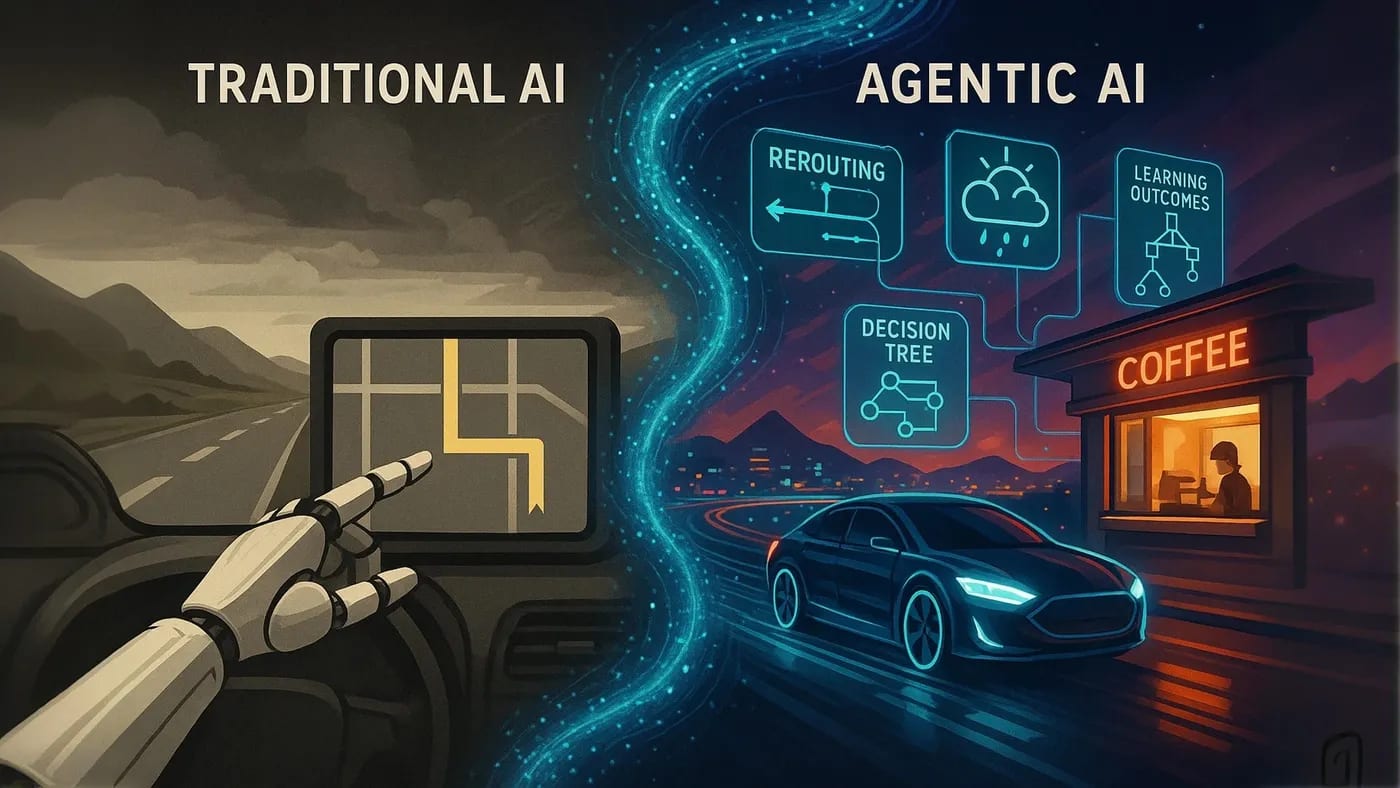
As McKinsey notes, these systems can “converse with a customer and plan the actions it will take afterward”, - perceiving environments, making decisions, and learning from outcomes without constant human babysitting.
The Skills Chasm: From “Mind the Gap” to “Grand Canyon”
The numbers tell a sobering story: the World Economic Forum reports nearly 40% of workers will need reskilling due to AI implementation within three years. Meanwhile, 75.6% of marketers identify AI as their major skills gap (Marketing Week), and 63% of employers cite skill gaps as their biggest AI adoption hurdle (Yahoo News).
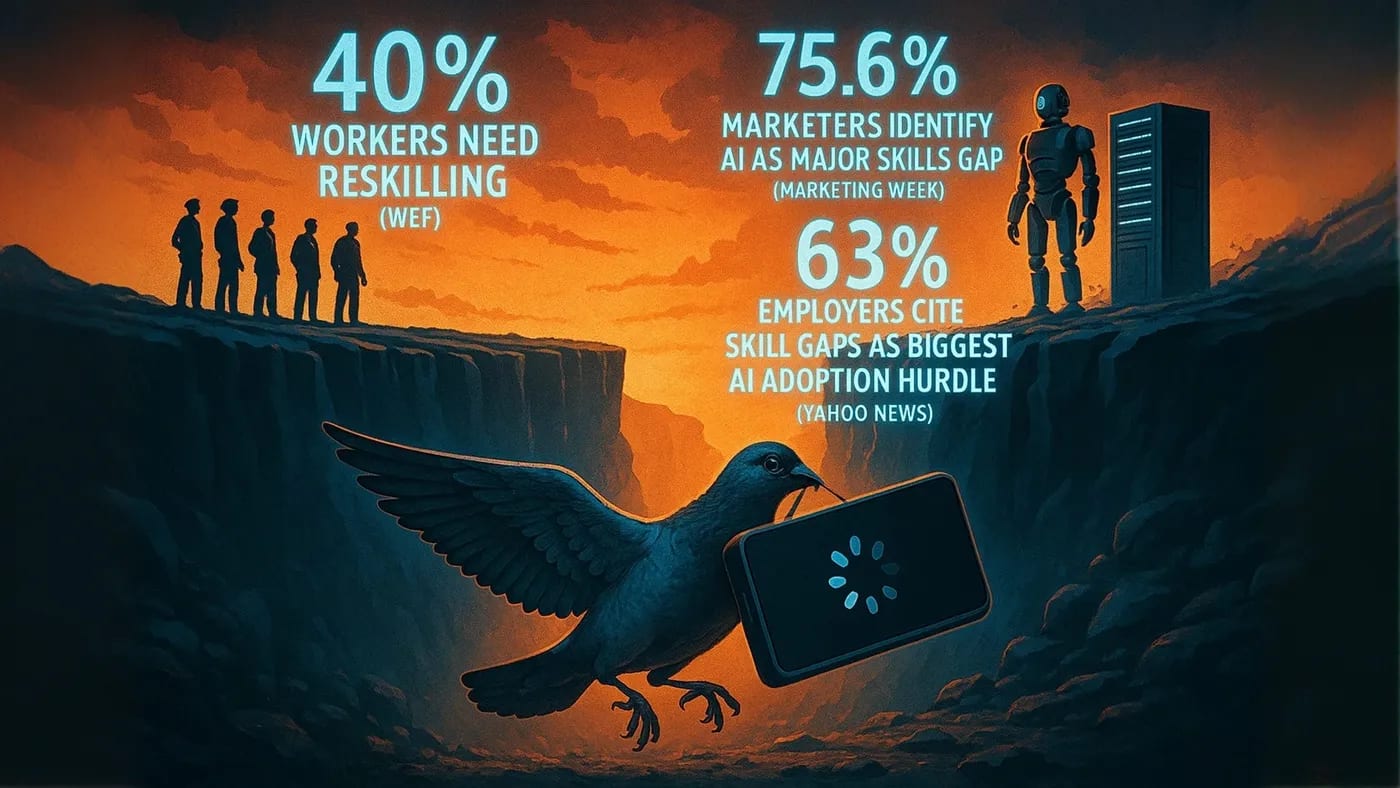
Traditional approaches to workforce reskilling, - annual training budgets, standardized learning paths, and corporate one-size-fits-all programs, are about as effective at addressing modern skill gaps as a carrier pigeon is at delivering streaming video.
How Agentic AI Is Rewriting the Talent Playbook
1. From Lagging Indicators to Future-Sensing
Traditional reskilling relies on yesterday’s data, - like driving forward while staring in the rearview mirror. Agentic AI, however, constantly monitors GitHub repositories, conference agendas, and patent filings to detect emerging skill trends before they become critical gaps.
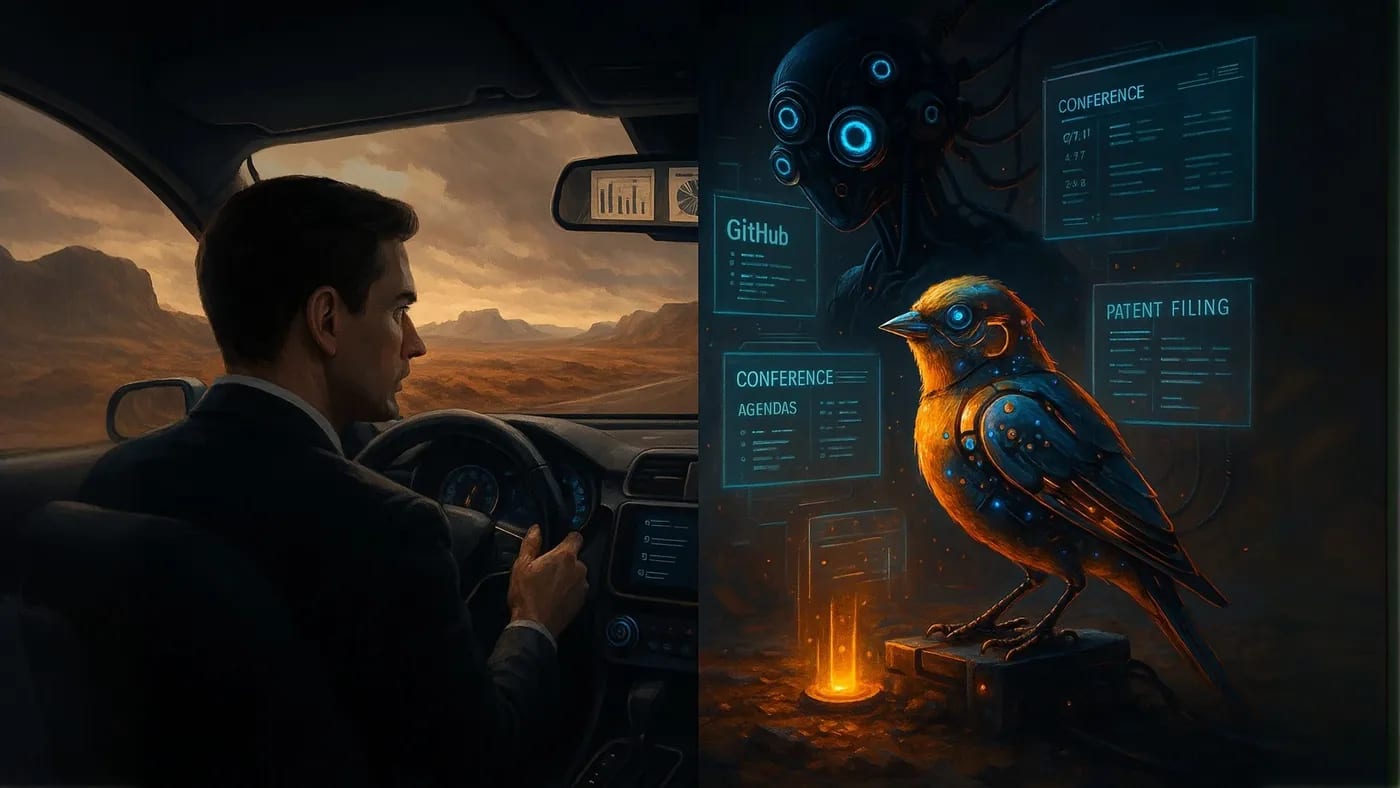
As HoloIQ researchers note, “AI, workforce demands, sustainability, and collaborative partnerships are driving change in the soon to be $10 trillion education market.” Think of agentic AI as your organization’s early warning system, - the canary in the technological coal mine.
2. Learning Paths That Actually Understand You’re a Person
Perhaps you’ve experienced the corporate training equivalent of being asked, “Would you like fries with that?”, - standardized, supersized, and served to everyone regardless of appetite or dietary needs.
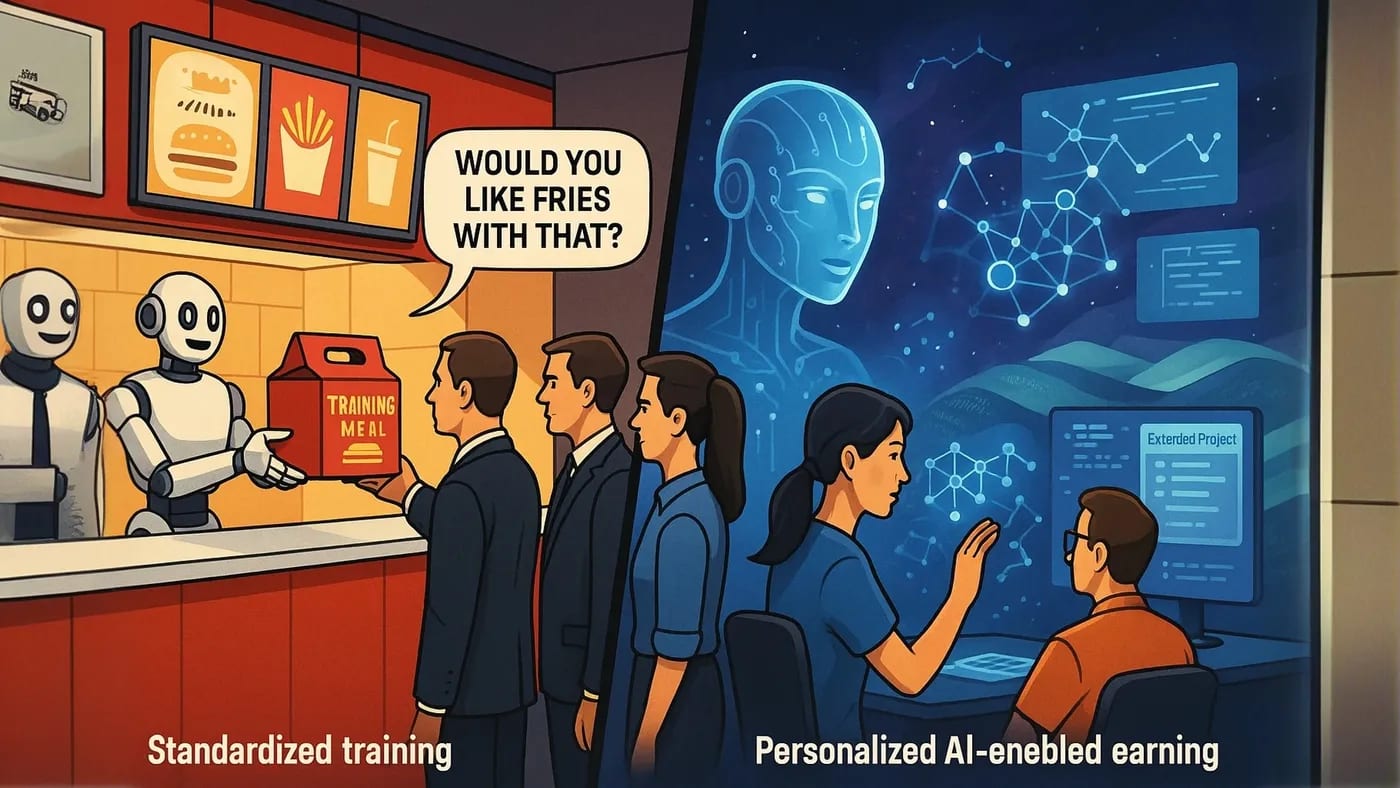
Agentic AI creates genuinely personalized learning experiences based on individual learning styles, prior knowledge, career aspirations, and real-time performance. As Frontiers in Education research highlights, personalization can be based on “cognitive characteristics, behavioral traits, learning style, knowledge level, and even spatial abilities.”
Consider this: Two engineers need AI development skills. One learns through visual demonstrations and quick practice; the other craves theoretical depth followed by extended projects. Agentic AI adapts accordingly, - like having a personal tutor who actually remembers your name and how your brain works.
3. Career Navigation That Sees Around Corners
Beyond filling skill gaps, agentic AI creates what I call “opportunity awareness”, - connecting dots between your unique abilities and roles you might never have considered.
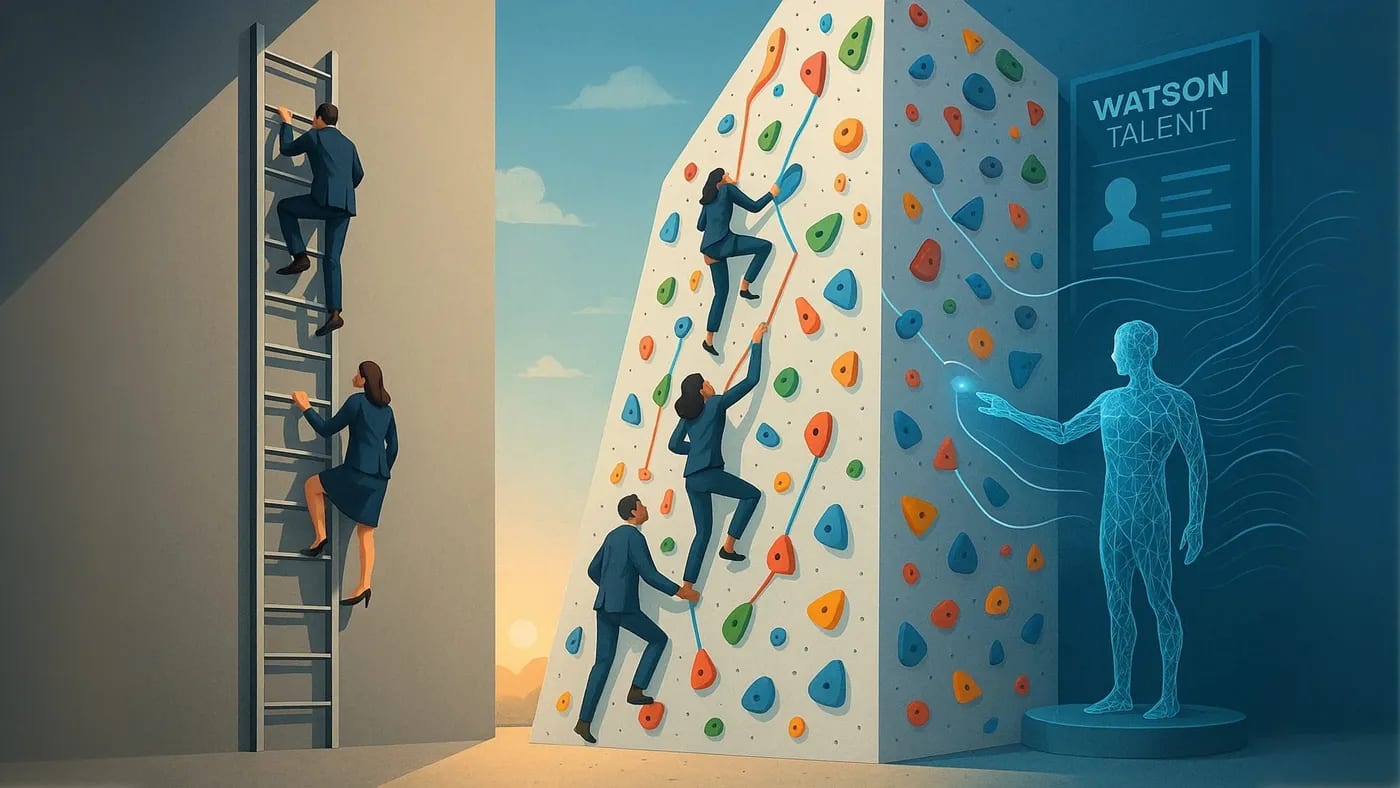
IBM’s Watson Talent “learns the employee” to recommend lateral moves, special projects, or advancement paths aligned with individual profiles. This creates a talent ecosystem where skills flow to their highest-value applications, - less like a corporate ladder and more like a corporate rock climbing wall with multiple possible routes to the top.
Real-World Examples That Aren’t Just PowerPoint Dreams
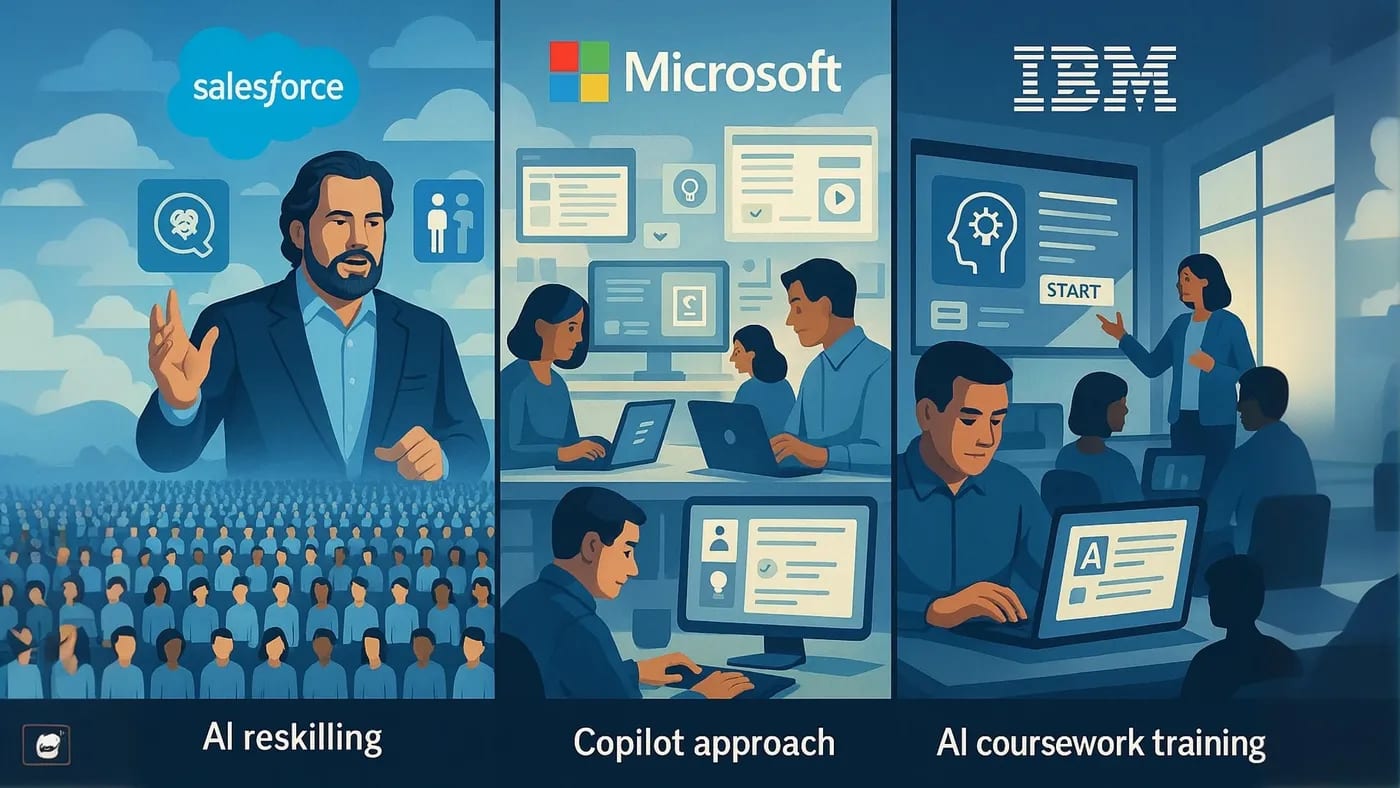
Image features company logos for illustrative purposes only. All trademarks and registered trademarks are the property of their respective owners. No endorsement implied.
Salesforce isn’t just talking, - they’re orchestrating an AI reskilling revolution for 72,000 employees focused on AI literacy, human-AI collaboration, and hands-on learning. CEO Marc Benioff acknowledges that “every organization will be called to redesign their people strategies” for an agent-augmented workforce.
Microsoft’s Copilot approach integrates personalized learning directly into workflows, -making learning part of doing rather than separate activities. This seamless integration means employees develop new skills while completing actual work, not in artificial training environments.
IBM combines AI with human expertise, - their Watson platform identifies skill gaps while human managers provide coaching and context. The result? AI-trained employees are 25% more likely to remain with the organization.
The Coming Talent Evolution: 2025-2030
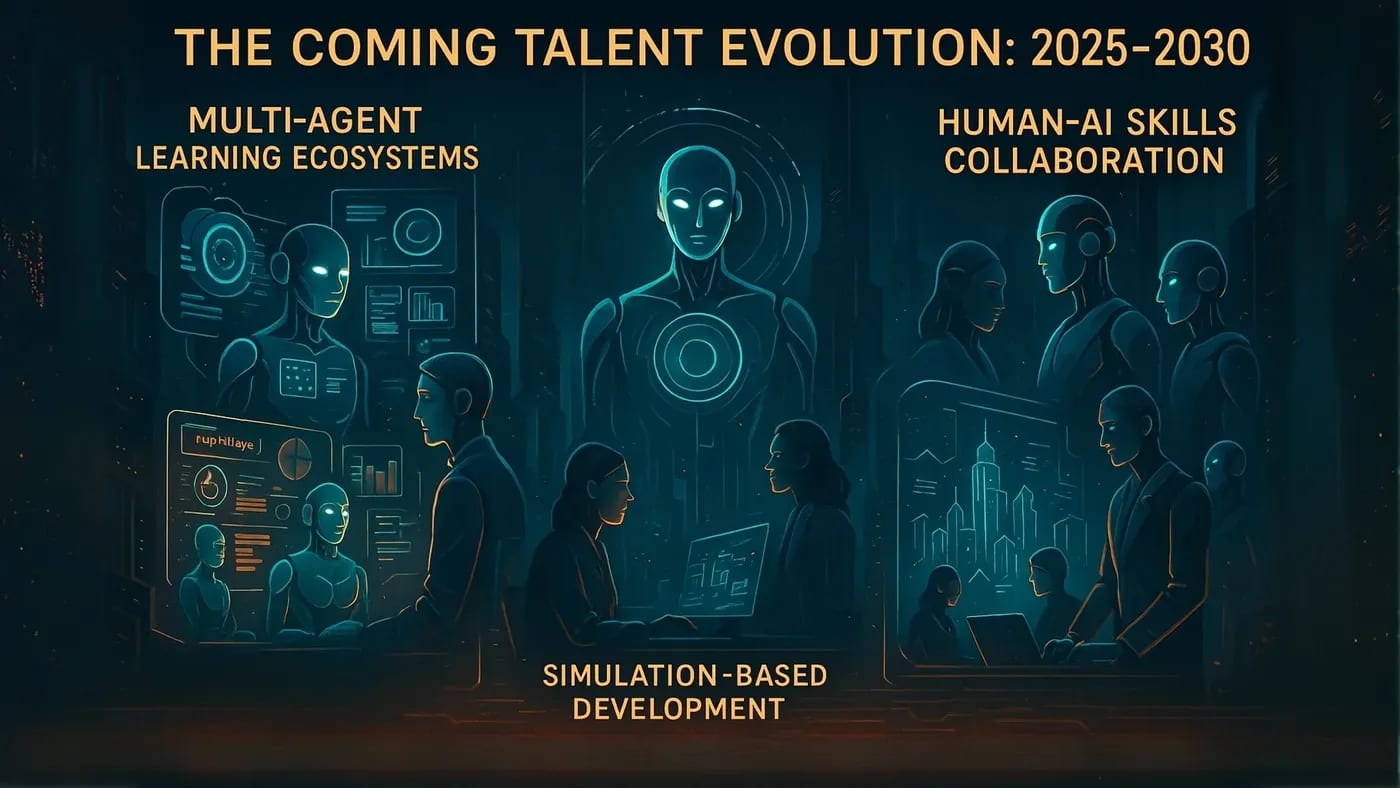
Looking ahead, expect:
-
Multi-Agent Learning Ecosystems where specialized AI teachers collaborate, - one identifying skill gaps, another curating content, others providing coaching. As CDO Times notes, from 2025 through 2030, agentic AI will “upend how work gets done” across industries.
-
Simulation-Based Development replacing traditional content with personalized, adaptive scenarios that adjust in real-time based on performance, - like flight simulators, but for any technical or soft skill.
-
Continuous Micro-Credentialing supplementing traditional certifications with dynamic skill validation, - creating real-time, verified skill profiles that evolve with each project completion.
Your Leadership Imperative
For tech executives, the message is clear: elevate learning and development from cost center to strategic function. As PwC observes, “Organizations that invest in upskilling and reskilling their workforce will gain a competitive advantage in an increasingly AI-driven world.”
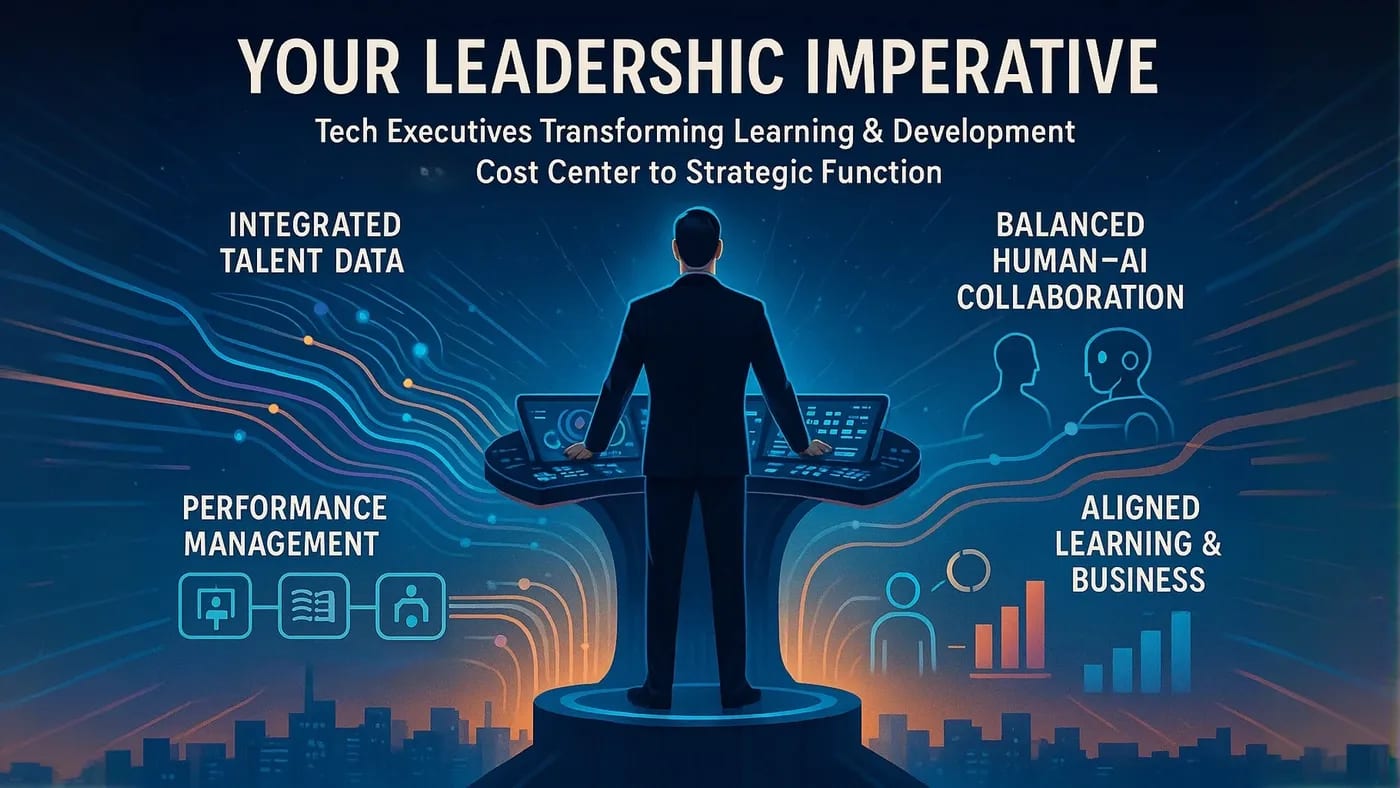
This requires integrating talent data across systems, balancing AI automation with human guidance, and establishing ethical frameworks that ensure fairness and transparency.
The Elegant Resolution
The talent development paradox is resolving itself: the technology creating our skills gaps is becoming our most sophisticated solution. The future isn’t about replacing human judgment, - it’s about augmenting human potential with AI-driven insights.
As IBM’s research suggests, organizations that thrive will view “AI skills not as separate from human capabilities, but as an extension and enhancement of them.” The question isn’t whether agentic AI will transform your workforce development, - it’s whether you’ll lead this transformation or be forced to follow.
After all, in the tech industry’s talent race, the tortoise rarely beats the hare—especially when the hare has an AI coach.
What’s your experience with AI-driven reskilling? Have you implemented agentic systems in your organization? Share your thoughts below in the comments.
Disclaimer: The perspectives shared in this article are my own and do not represent those of my employer or any affiliated organizations.
References and Additional Reading:
-
How Salesforce is Training its 72,000 Employees to Use AI Agents (HR Brew – Mar 2025)
-
Transform Organizational Training with Micro-Credentials (Digital Promise – Mar 2025)
-
AI Integration and Upskilling (PWC – Mar 2025)
-
From Year of AI Agents to Trillion-Dollar Impact (Medium – Mar 2025)
-
How Digital Labor Will Reshape the Enterprise (Salesforce – Feb 2025)
-
AI-Driven Simulations Build Decision-Making Skills (AACSB – Feb 2025)
-
2025 Education Trends Snapshot: AI, Skills, and Workforce Pathways (Holon IQ – Jan 2025)
-
AI Upskilling Strategy (IBM – Oct 2024)
-
Crafting Personalized Learning Paths with AI for Lifelong Learning (Frontiers – Aug 2024)
-
Learn How to Use Microsoft 365 Copilot (Microsoft)
More from the human factor
All the human factor → the human factor
The Chatbot and the Philosopher: Embracing Uncomfortable Truths with AI Thought Partners
The first time an AI chatbot challenged me to reconsider my biases, I laughed. The second time, I objected vehemently. Now it's obvious: my digital thought partner has become an unexpected guide to the intellectual blind spots I'd rather…
 the human factor
The Great AI Panic: The 2025 Guide to Human-AI Harmony
Picture this: Your Thursday morning stand-up has just wrapped, and Sarah, your most reliable project manager, lingers behind. With a mix of determination and vulnerability in her voice, she confesses, "I'm afraid the new AI system will…
 the human factor
The Digital AI Twin Dilemma: Mirror, Mirror, on the Wall — What’s the Cost of Waiting After All?
If Narcissus were born today, he might not have gazed longingly into a pond, - he’d fall head over heels for his “digital twin”: a hyper‑real, AI‑powered replica that predicts his every move before it happens. No more flinging yourself…