The Great AI Panic: The 2025 Guide to Human-AI Harmony

Is Your Team Having an AI Meltdown?
Picture this: Your Thursday morning stand-up has just wrapped, and Sarah, your most reliable project manager, lingers behind. With a mix of determination and vulnerability in her voice, she confesses, “I’m afraid the new AI system will make my job obsolete.”
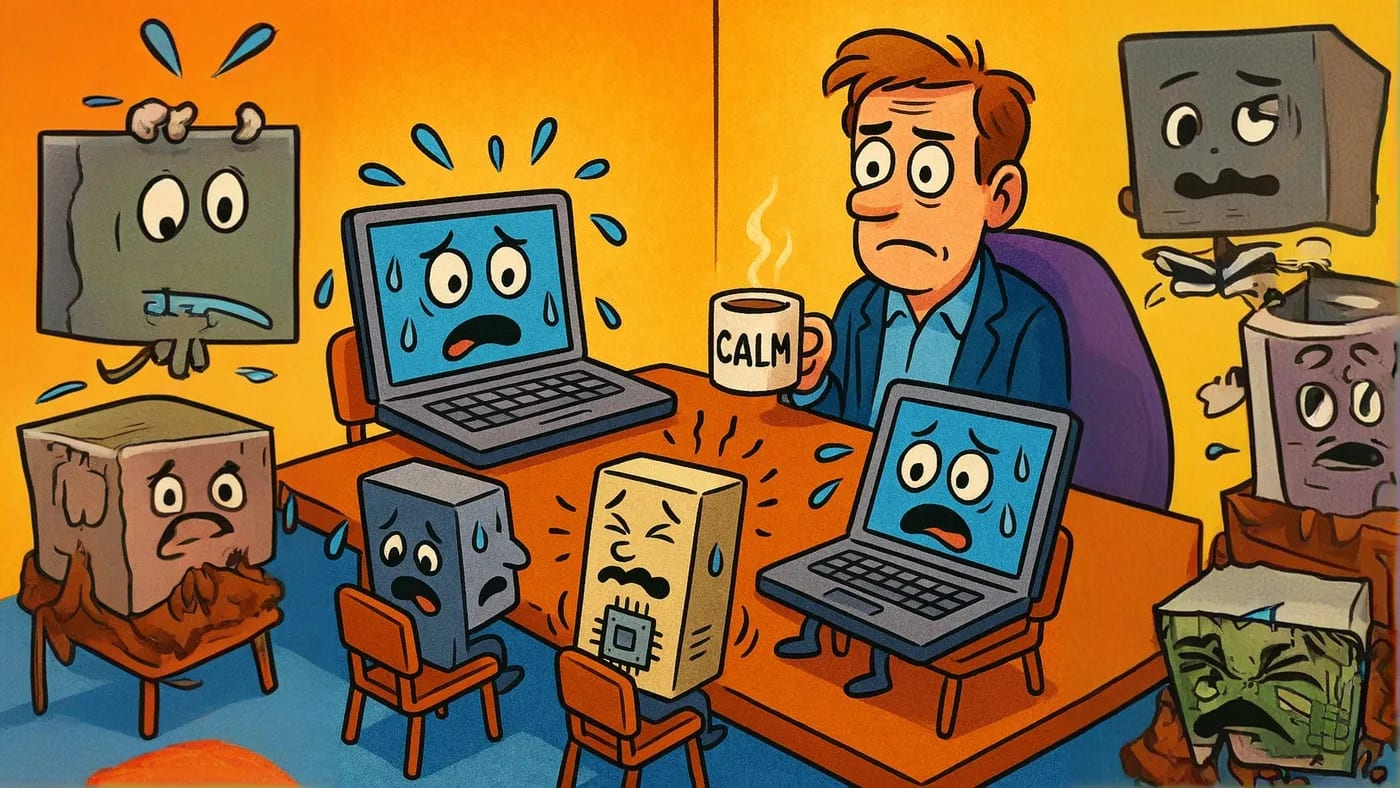
She’s not alone. According to the latest 2025 Pew Research study, a startling 52% of workers now fear AI’s impact on their jobs (Pew Research), and recent EY research reveals that 46% of employees are considering quitting their jobs due to AI anxiety (EY). The fear is so pervasive it’s earned its own term: “AI resentment” Forbes.
As a technology leader in 2025, you’re caught in an exhilarating yet terrifying technological tsunami. Your executive team is pushing for AI implementation to boost efficiency (and frankly, keep up with competitors), while your workforce is frozen in anxiety, wondering if they’re training their digital replacements.
Welcome to the present age of AI anxiety, - where your emotional intelligence might just be your most valuable leadership tool.
The Anxiety Divide: What Your Team Isn’t Telling You
Here’s an uncomfortable truth: while 92% of companies are increasing AI investments in 2025, only 1% have achieved true AI maturity with full integration into workflows (McKinsey). This creates a peculiar paradox, - executives dream of AI-powered efficiency while employees dread AI-driven obsolescence.

I thought implementing AI was about managing technology, but as it turns out, it’s about managing stories, - the narratives employees create when they’re afraid.
The disconnect is striking. This year’s research shows that 73% of CEOs call AI a top investment priority, yet only 11% of employees use AI weekly, and fewer than 6% feel comfortable with the technology (6Seconds). It’s like throwing a sophisticated dinner party where most guests don’t know which fork to use.
What’s more, this anxiety isn’t new. Every technological revolution has sparked similar fears. As one historical account from the late 19th century reveals, employees were initially anxious when typewriters replaced quill and ink, - but soon discovered more creative ways of working (E. Fukumura et al.). Similar fears emerged around telephones, motorized technology, and even fax machines. Today’s AI anxiety in 2025 is simply the latest chapter in our long human story of technological adaptation. Albeit, a lot of people fear that our brains are being replaced.
Enter Agentic AI: The Evolution That’s Reshaping 2025’s Workplace
Just when workers were starting to get comfortable with generative AI like ChatGPT, the evolution that’s defining 2025 has emerged: Agentic AI.
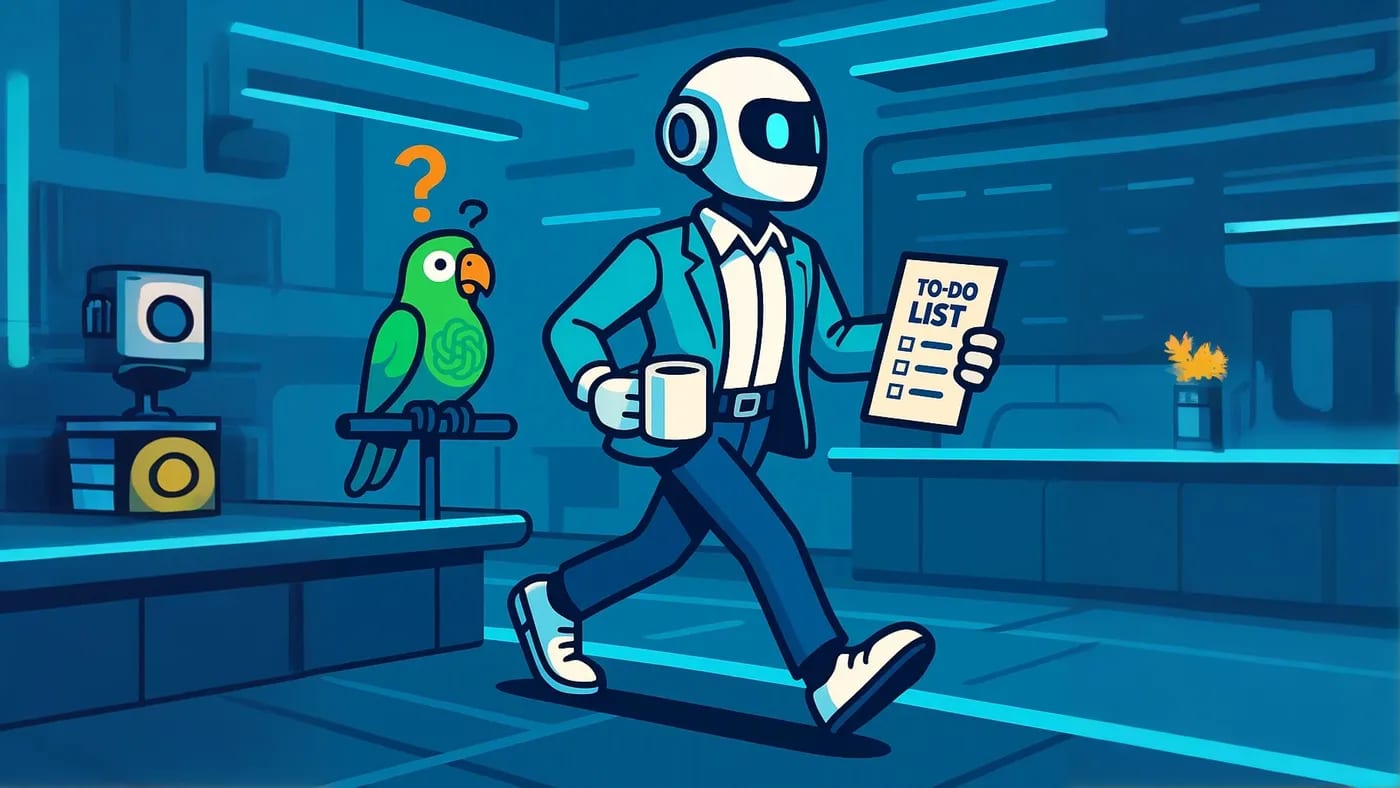
Unlike traditional AI that simply responds to prompts, agentic AI acts independently by observing, processing information, and taking actions to achieve pre-defined goals. These digital agents gather information from the internet, process it, make decisions, and execute plans continuously until the targeted objective is reached (Latif et al.).
If ChatGPT was a really smart parrot that could mimic human language, today’s agentic AI is more like an intern who can actually go do some tasks for you.
This evolution raises the stakes even higher for technology leaders. Workers who were just beginning to understand and adjust to generative AI now face an entirely new paradigm, - one where AI doesn’t just generate text or images but actually performs tasks previously done by humans.
The Trust Deficit: Your Secret Challenge
The most critical insight from 2025’s research? Employees won’t trust AI if they don’t trust their leaders (Harvard Business Review). It’s like trying to convince someone to jump off a cliff with a parachute you packed while they’re questioning your knot-tying skills.
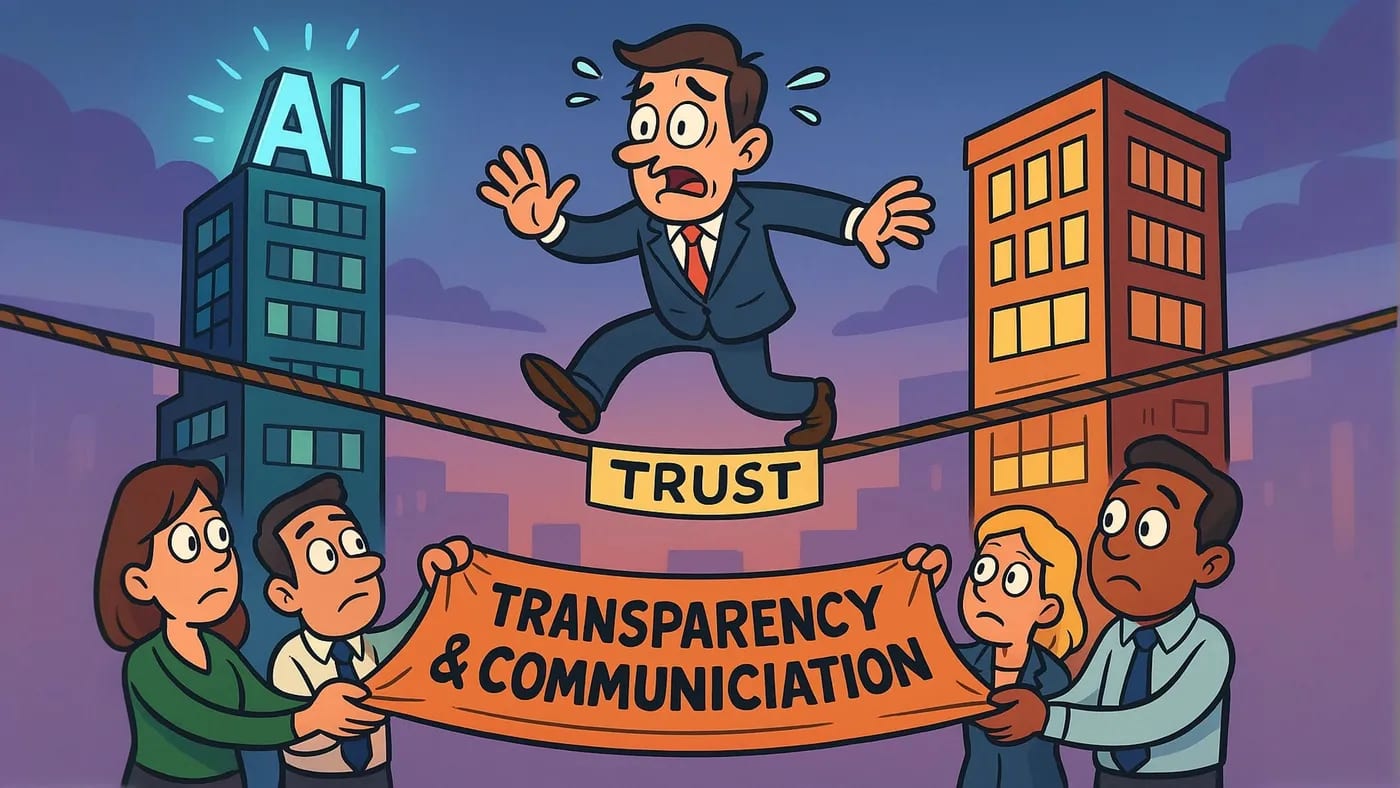
Trust is eroding across organizations. The latest 2025 surveys of more than 200,000 US workers reveal that employees’ comfort in raising questions and concerns to leadership has declined quarter over quarter since 2020 (World Economic Forum). This trust deficit undermines the very potential AI holds for business transformation.
The pattern is clear: When direct reports see their managers exhibiting agency and optimism toward AI, they become 1.5 times more likely to use AI at work and almost three times as likely to display those same positive attitudes (World Economic Forum). Your team is watching how you respond to technological change and taking their cues accordingly.
As a former colleague of mine told me, “We realized our problem wasn’t technical resistance, - it was emotional resistance. Creating safe spaces for people to express fears completely changed our AI adoption trajectory.”
The Multi-Layered Anxiety: Three Perspectives to Consider
To effectively address AI anxiety in today’s 2025 workplace, you need to understand it from three distinct perspectives:
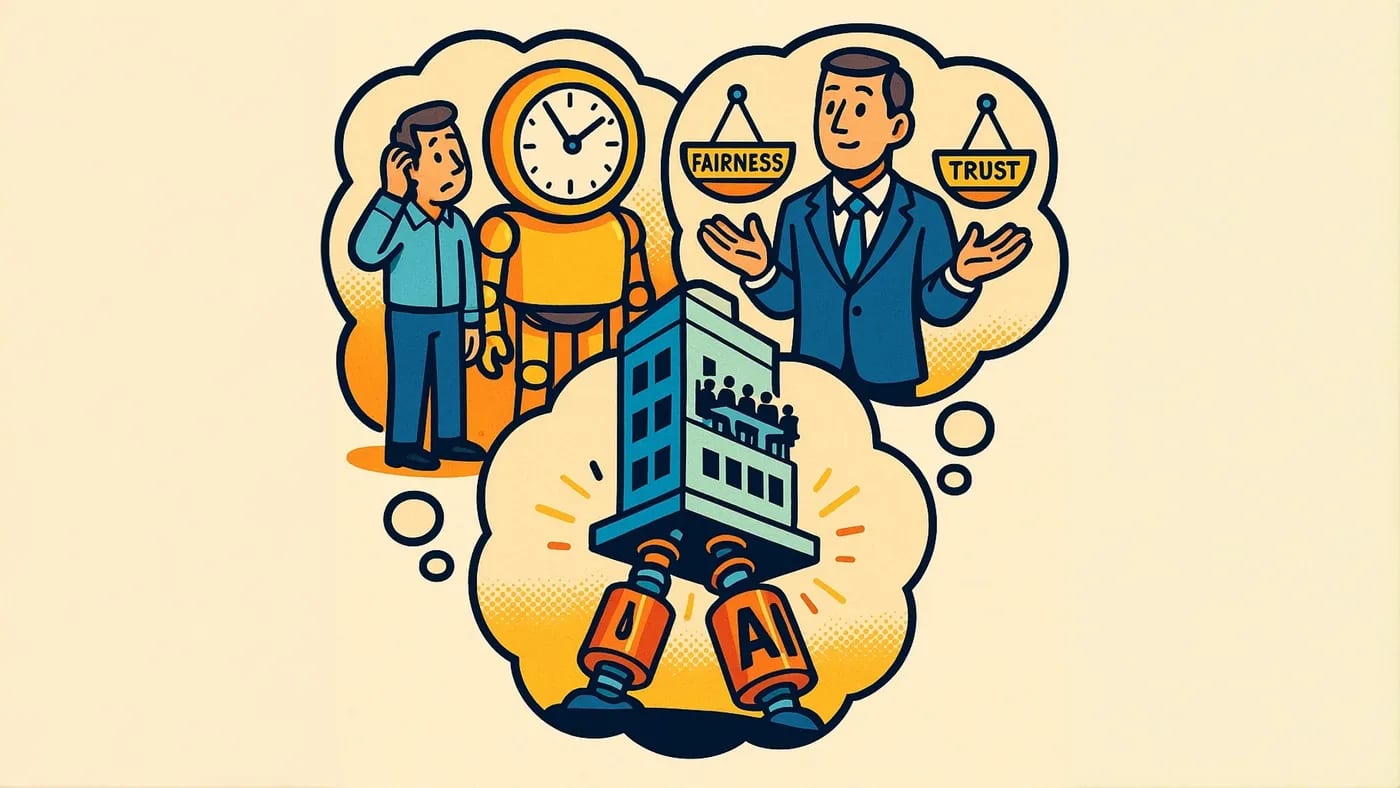
The Worker’s View: “Will I become obsolete?”
For workers, AI anxiety manifests primarily as job security concerns. According to this year’s research, employees ask themselves questions like:

-
Will this AI make my skills outdated?
-
How can I compete with something that never sleeps or takes vacation?
-
Will my creativity and human judgment still be valued?
-
What happens if I can’t learn to work with these new tools?
Interestingly, younger workers tend to perceive AI as more of a benefit than a threat, while mid-career professionals with fewer job changes are more inclined to view AI as threatening. Workers over 45 often view AI as potentially beneficial but find the technology too ambiguous to grasp fully.
One manufacturing worker told researchers in a 2025 study: “I don’t fear the AI that helps me spot defects faster. I fear the assumption that I can now inspect twice as many units in the same shift.” (E. Fukumura et al).
The Manager’s View: “How do I implement this responsibly?”
For managers in 2025, AI anxiety centers around implementation, fairness, and trust:

-
How do I ensure AI systems are fair and unbiased?
-
How can I maintain team trust while implementing AI?
-
What’s the right pace for adoption without disrupting current work?
-
How do I balance productivity improvements with employee well-being?
As organizations rapidly implement AI to manage employees, managers find themselves caught between executive demands for efficiency and employee concerns about fairness and privacy Hughes et al.. It’s like trying to drive a car while simultaneously redesigning its engine.
The Corporate View: “How do we remain competitive yet responsible?”
For corporations in 2025, AI anxiety manifests as strategic and ethical concerns:

-
How do we gain competitive advantage while managing risks?
-
What are our ethical responsibilities in AI deployment?
-
How do we balance investment returns with worker well-being?
-
What are the potential reputational impacts of our AI decisions?
This year’s research shows that corporate-level anxiety about AI is actually greater than worker-level anxiety in many organizations Maria Correia Loureiro et al.. While workers worry about job security, corporations worry about everything from regulatory compliance to potential PR disasters.
The Eight Pillars of Leading Through AI Anxiety
So how do you, as a technology leader in 2025, address these multi-layered anxieties? Here’s a comprehensive framework that builds on the latest research and real-world best practices:

1. Transparency: The Antidote to Fear
“Will AI replace my job?” is the unspoken question haunting your team members. Instead of letting this anxiety fester, address it directly.

Smart tech leaders in 2025 recognize that proactive transparency is non-negotiable. Clearly communicate that AI is designed to augment human work, not replace it (Forbes). Share your AI implementation roadmap, anticipated changes to workflows, and most importantly, how roles will evolve rather than disappear.
Practical Transparency Tactics:
-
Host regular “AI Update” sessions where team members can ask questions without judgment
-
Create a dedicated Slack channel for AI implementation discussions
-
Publish an evolving FAQ document addressing common concerns
-
Share both successes AND failures in your AI journey
Consider the approach at DuPont’s Spark Academy, which is now helping employees rethink their relationship with AI by focusing on collaboration, not replacement (LinkedIn). Their message is simple: AI is your digital assistant, not your successor.
2. Skills Development: Building AI Fluency and Human Brilliance
Nearly half of employees surveyed in 2025 want more formal AI training and believe it’s the best way to boost adoption. Yet more than a fifth report receiving minimal to no support (McKinsey).

This training gap isn’t just unfortunate, - it’s strategically disastrous. Organizations must invest in both technical AI skills and uniquely human capabilities that AI cannot replicate:
-
Curiosity: AI can process information but can’t experience the wonder of discovery. According to 2025 analysis, curiosity helps humans explore interconnected ideas in ways AI cannot (Forbes).
-
Critical thinking: While AI excels at pattern recognition, it lacks the nuanced judgment humans bring to complex decisions.
-
Empathy: As AI handles routine tasks, emotional intelligence becomes more valuable. As emotional intelligence scores have declined alongside rising stress and burnout, making this skill increasingly precious (6Seconds).
-
Collaboration: The ability to work effectively with both humans and AI defines workplace success in 2025 and beyond.
Upskilling Success Story: When a major financial services firm implemented an AI system for customer service earlier this year, they didn’t just train representatives on the new technology. They created a comprehensive “AI + Human Excellence” program that developed both technical AI skills and enhanced representatives’ emotional intelligence capabilities. The result? Customer satisfaction increased by 24% while employee turnover dropped to its lowest level in five years (Health Action Alliance).
3. Inclusive Implementation: Co-Creation, Not Imposition
Want to know the fastest way to breed AI resentment in 2025? Drop new technology on your team without their input.
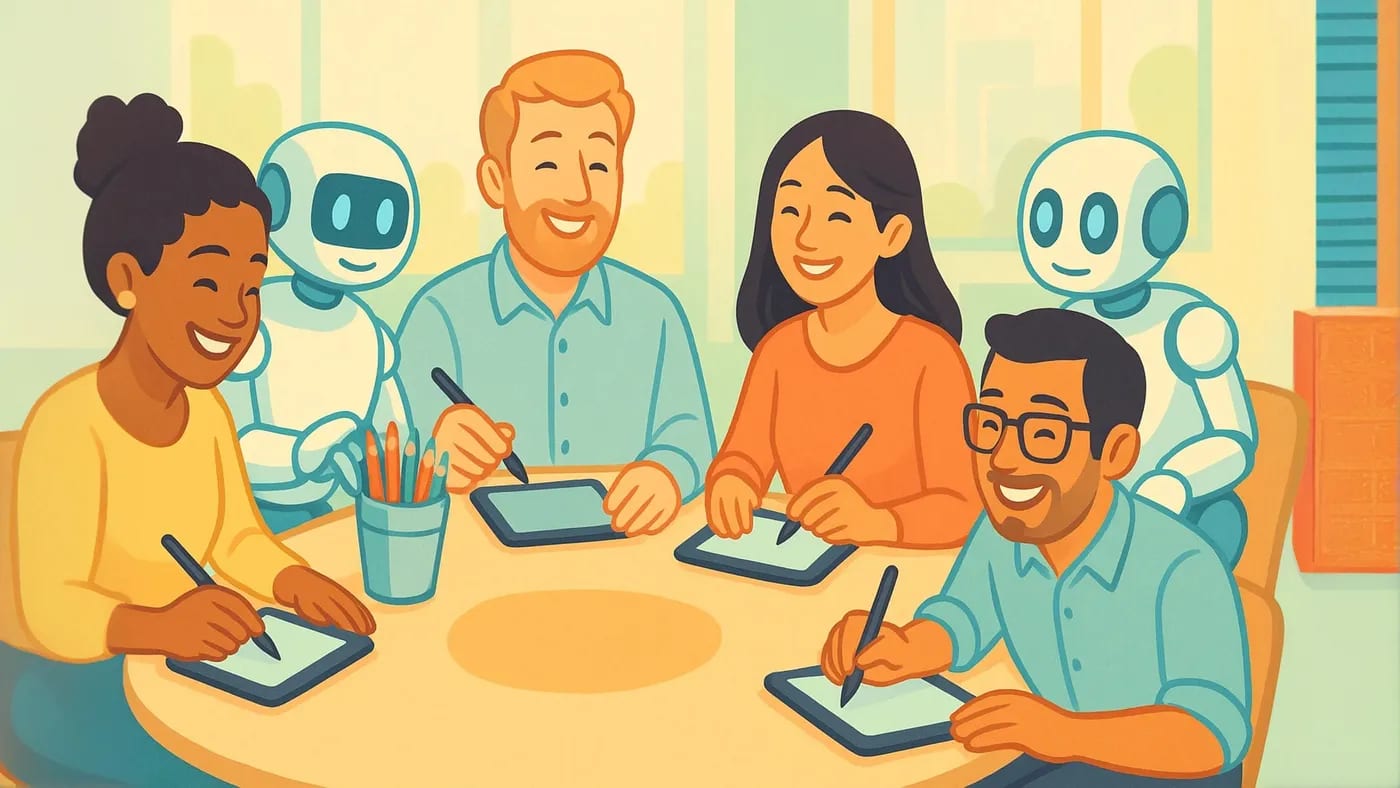
Successful AI adoption requires employee engagement from day one. When employees are encouraged to ask questions, experiment with AI, and contribute feedback, they’re more likely to see it as a tool for growth rather than a threat (Forbes).
Co-Creation Tactics:
-
Form cross-functional AI implementation teams that include frontline workers
-
Create “AI experimentation zones” where employees can test systems without performance pressure
-
Establish feedback mechanisms where suggestions are visibly incorporated
-
Celebrate employee contributions to AI improvement
Some companies are finding creative ways to involve employees in 2025. Topsoe achieved 85% AI adoption among office employees in just the first quarter of this year by making implementation collaborative and emphasizing productivity benefits (Microsoft).
As one VP of Engineering told me, “The day I started sharing my AI prompts with my team was the day they started really embracing AI tools. They needed to see me being a learner, not just an implementer.”
4. Psychological Safety: The Foundation of Adaptation
The latest 2025 research shows that organizations focusing on psychological safety during AI implementation experience 37% higher adoption rates and significantly reduced employee anxiety (Partnership on AI).

Psychological safety, - the belief that one can speak up without fear of punishment or humiliation, becomes especially crucial during technological change.
Creating Psychological Safety During AI Transition:
-
Normalize questions and concerns about AI implementation
-
Reward those who speak up about challenges
-
Create anonymous feedback channels for those uncomfortable with public discussion
-
Celebrate learning from mistakes in AI use
-
Share your own struggles and learning curve with AI tools
A study published in January 2025 found that workplaces with high psychological safety experienced 42% faster AI adoption rates and significantly lower employee turnover during technological transitions (Fast Company).
5. Human-Centered Design: People Before Algorithms
The organizations achieving the most success with AI adoption in 2025 are those taking a human-centered approach. This means designing AI systems around human needs and workflows, rather than forcing humans to adapt to rigid algorithmic processes (Percipio Company).
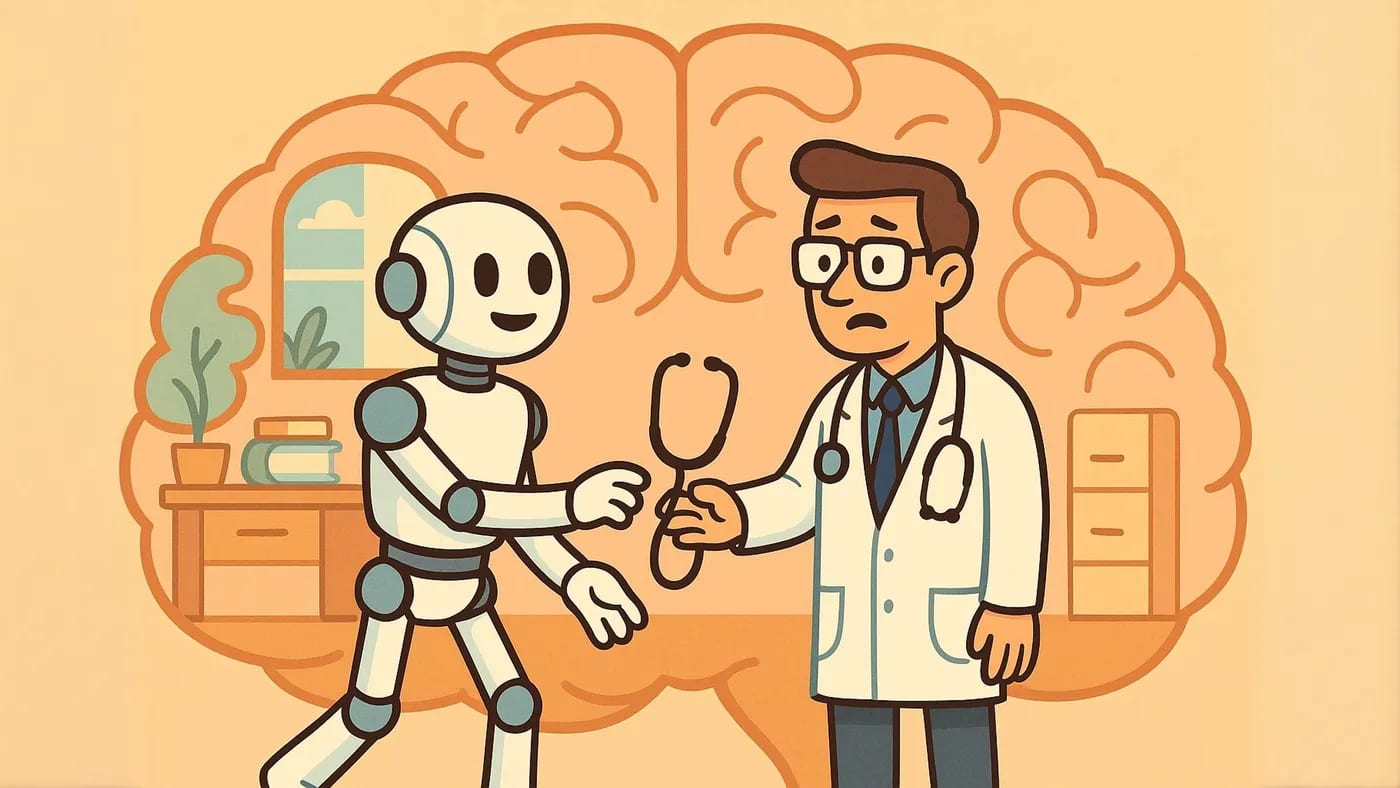
Human-Centered AI Implementation Principles:
-
Start with user needs, not technological capabilities
-
Design for augmentation, not replacement
-
Prioritize transparency in how AI makes decisions
-
Build systems that adapt to human workflows, not vice versa
-
Create interfaces that reflect human cognitive patterns
There was massive resistance to an AI diagnostic assistant released in a clinical setting at a hospital. The breakthrough came when they redesigned the system to position itself as a “second opinion provider” rather than a “primary diagnostician,” putting doctors firmly in control while still leveraging AI’s pattern recognition strengths. A “people first” approach usually goes over well.
6. Ethical Governance: Establishing Clear Boundaries
As AI becomes more agentic and autonomous in 2025, establishing clear ethical boundaries becomes critical. Workers need to know that AI systems operate within well-defined ethical constraints (Borenstein & Howard).
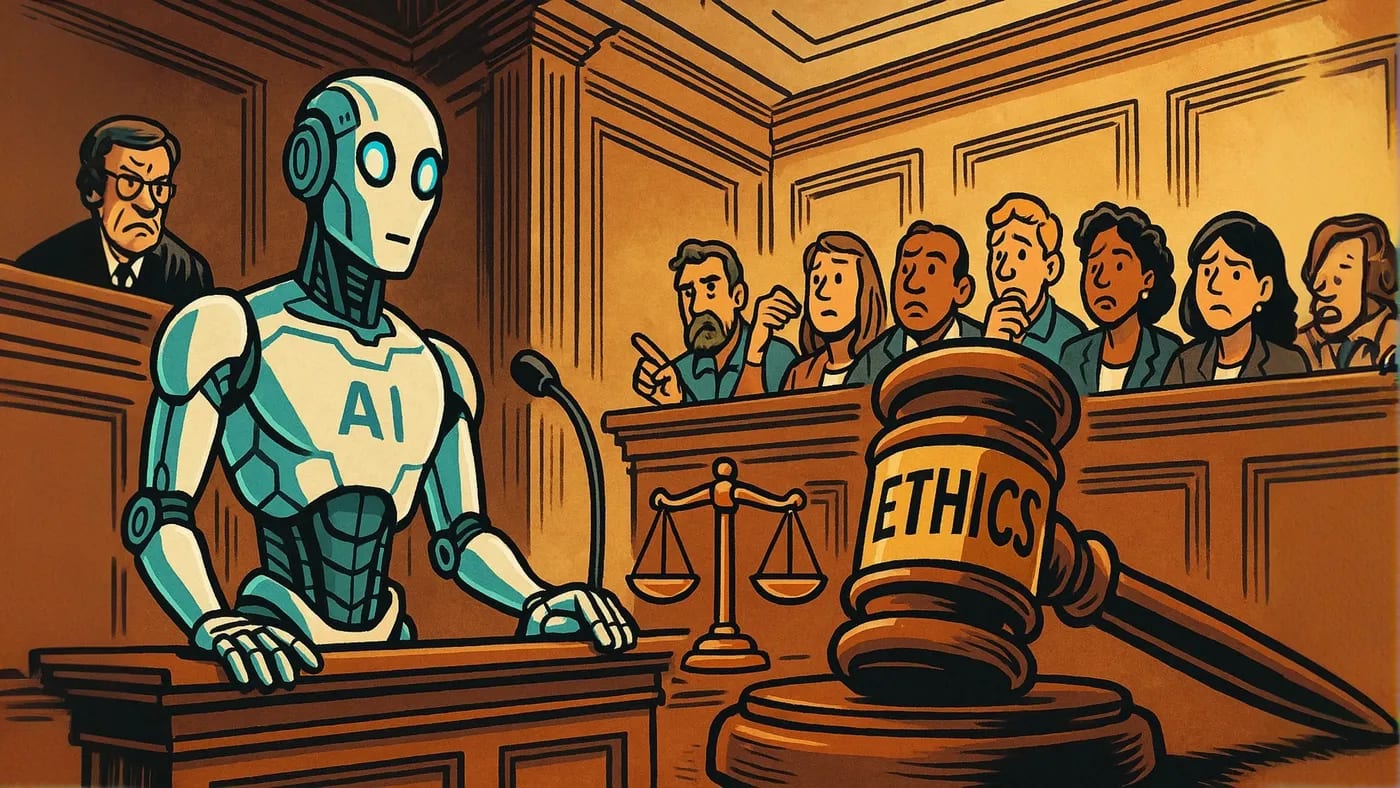
Key Ethical Governance Approaches:
-
Create a cross-functional AI ethics committee with representation from all levels
-
Develop clear policies for data privacy, bias mitigation, and transparency
-
Implement regular ethical audits of AI systems
-
Establish clear processes for reporting ethical concerns
-
Share ethical guidelines and principles openly with all employees
As a general tone among many ethics researcher at the 2025 AI Governance Summit, “AI without ethical governance is like driving a car without brakes. It might work well for a while, but eventually, you’ll face a situation where you desperately need those guardrails.”
7. Leadership Modeling: Your AI Attitude is Contagious
The most overlooked aspect of navigating AI anxiety in 2025? Your own emotional response as a leader.

When direct reports see their managers exhibiting agency and optimism toward AI, they themselves are 1.5 times more likely to use AI productively (World Economic Forum). Your anxiety, excitement, or uncertainty about AI is contagious.
A fascinating Harvard Business Review study published in February of this year revealed that AI can actually help leaders develop greater compassion through tools that analyze behavioral patterns and recommend targeted exercises to improve empathy and interpersonal skills (HBR). The irony is delicious, - using AI to become better at leading through AI anxiety.
Modeling Effective AI Leadership:
-
Demonstrate your own learning journey with AI tools
-
Show vulnerability about your learning curve
-
Celebrate your own productivity gains through AI use
-
Be transparent about limitations you’ve encountered
-
Share how you’re maintaining your unique human value alongside AI
8. Measurement & Feedback: What Gets Measured Gets Managed
Organizations leading in AI adoption in 2025 have implemented robust systems to measure both the technical success of AI implementation and its human impact. This dual measurement approach ensures that productivity gains don’t come at the expense of workforce well-being (Frontiers).
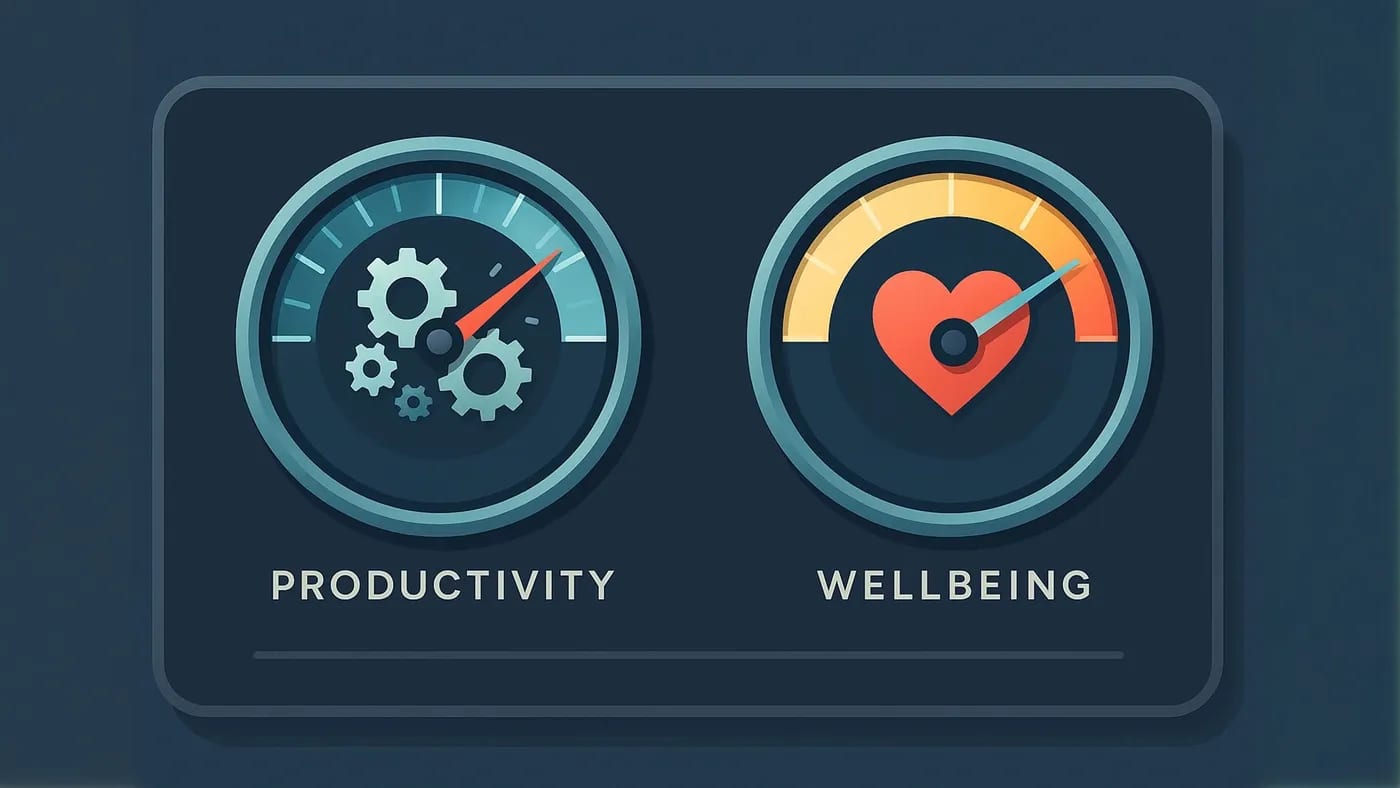
Dual Measurement Framework:
-
Technical metrics: Adoption rates, productivity improvements, error reduction
-
Human metrics: Job satisfaction, anxiety levels, perceived value, skill development
-
Feedback loops: Regular check-ins, survey tools, anonymous feedback systems
-
Adaptation mechanisms: Clear processes for adjusting AI implementation based on human impact data
A retail organization in the first quarter of 2025 created an “AI Impact Dashboard” that tracked both productivity metrics and workforce sentiment. When they noticed anxiety spikes in certain departments, they paused implementation to address concerns before continuing. This approach has improved adoption across the organization within just a few months, - far exceeding industry averages.
The Path Forward: Human-AI Synergy
The most successful organizations in 2025 are adopting a “Yes AND” strategy, integrating both AI and emotional intelligence training to engage employees, maximize AI’s potential, and improve productivity (6Seconds).

This isn’t about choosing between technology and humanity, - it’s about creating synergy between them.
As Workday’s 2025 AI Trends report emphasizes, “The age of AI is upon us, but it’s not about machines replacing humans. It’s about humans and machines working together in unprecedented ways.” (Workday)
The current workplace increasingly involves personalized learning pathways powered by agentic AI. These AI agents now offer customized learning experiences based on each employee’s past experiences, learning preferences, and career goals. Far from making human trainers obsolete, these systems are freeing them to focus on mentorship and coaching, - the aspects of development that require human connection and empathy (Cole Jim Shaw).
Conclusion: Leading with Humanity in the Age of AI
The irony of our technological age in 2025 is exquisite: as AI becomes more powerful, uniquely human skills become more valuable. The machines may be learning, but humans must lead.

Your challenge as a technology leader isn’t just implementing AI, - it’s shepherding your team through profound change while preserving what makes them irreplaceably human.
By building trust, investing in skills development, involving employees in implementation, modeling emotional intelligence, creating psychological safety, taking a human-centered approach, and measuring both technical and human impact, you transform AI anxiety from a liability into a competitive advantage.
Remember Sarah, the anxious project manager? Imagine her six months later, confidently guiding her team in using AI tools that have eliminated 40% of their administrative burden. The change wasn’t in the technology, - it was in her relationship with it, a transformation you facilitated through thoughtful leadership.
In this brave new world of 2025, the leaders who thrive aren’t those with the most advanced AI, - they’re those who most skillfully blend technological capability with human connection (Workday).
What step will you take today to guide your team from AI anxiety to AI advantage?
To effectively lead your organization through AI-driven transformation, partnering with experts who understand both the human and technological aspects of AI is essential. Growth Acceleration Partners (GAP) specializes in building thoughtful AI solutions that amplify human potential rather than replace it. By integrating human-centered design and cutting-edge AI practices, GAP helps leaders accelerate innovation, enhance team productivity, and navigate technological change with confidence. Explore how GAP’s AI solutions can guide your organization toward sustainable, anxiety-free AI adoption.
Disclaimer: The perspectives shared in this article are my own and do not represent those of my employer or any affiliated organizations.
Additional Readings
-
How real-work businesses are transforming with AI – with 261 new stories (Microsoft, April 2025)
-
How Artificial Intelligence Will Redefine Leadership (Harvard Business Review, Feb 2025)
-
The Rise Of AI Resentment At Work: Why Employees Are Pushing Back (Forbes, Feb 2025)
-
AI in the Workplace: A Report for 2025 (McKinsey & Company, 2025) (McKinsey & Company)
-
U.S. Workers Are More Worried Than Hopeful About Future AI Use in the Workplace (Pew Research Center, Feb 2025)
-
How People Are Really Using Gen AI in 2025 (Harvard Business Review, Apr 2025)
-
Why Rebuilding Trust Is Key for the Intelligent Age of AI (World Economic Forum, Jan 2025)
-
2025 AI Trends Outlook: The Rise of Human-AI Collaboration (Workday, Jan 2025)
More from the human factor
All the human factor → the human factor
Workforce AI Reskilling - Resistance is Artificially Unintelligent!
Remember those sci-fi movies where the robot learns too much and decides humans are the problem? Plot twist: in today's tech talent landscape, AI isn't eliminating humans, - it's becoming our most powerful ally in staying relevant.
 the human factor
The Digital AI Twin Dilemma: Mirror, Mirror, on the Wall — What’s the Cost of Waiting After All?
If Narcissus were born today, he might not have gazed longingly into a pond, - he’d fall head over heels for his “digital twin”: a hyper‑real, AI‑powered replica that predicts his every move before it happens. No more flinging yourself…
 the human factor
The Chatbot and the Philosopher: Embracing Uncomfortable Truths with AI Thought Partners
The first time an AI chatbot challenged me to reconsider my biases, I laughed. The second time, I objected vehemently. Now it's obvious: my digital thought partner has become an unexpected guide to the intellectual blind spots I'd rather…