The Persona Economy Is Coming
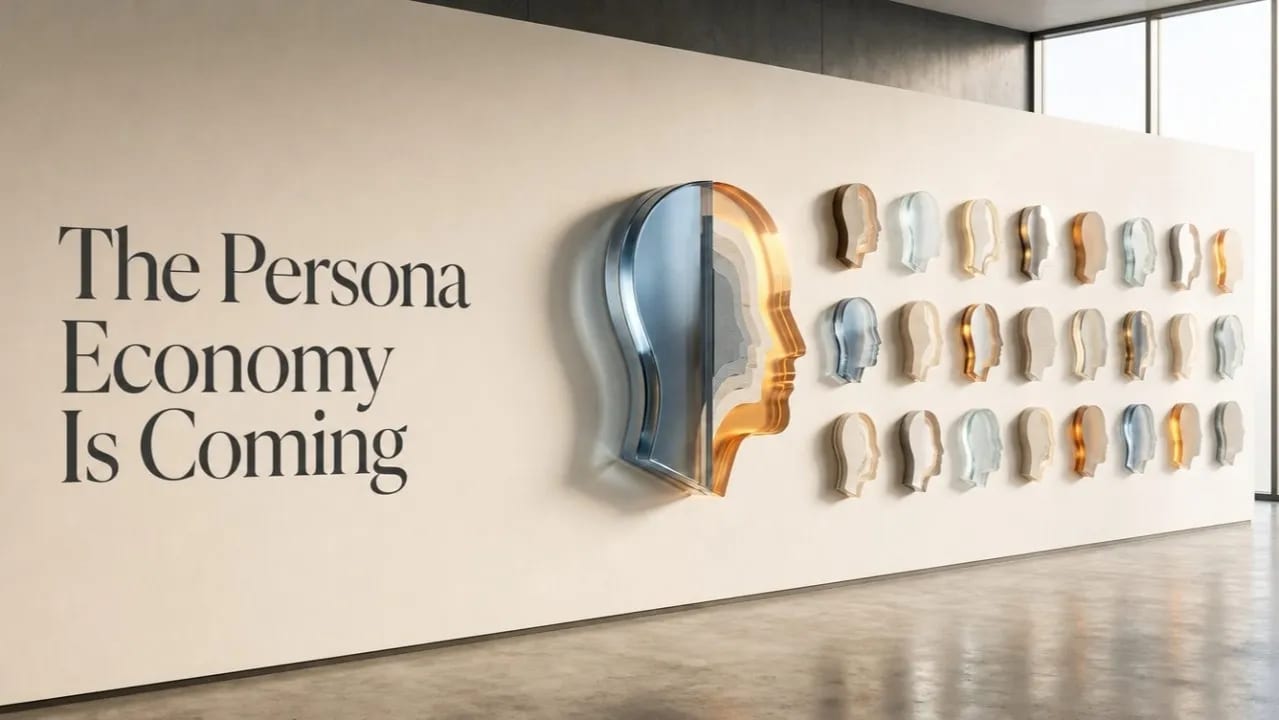
AI is learning to represent the living, preserve the dead, and invent people who never existed. These look like different markets. They probably aren’t.
On August 30, El Mundo ran the sort of headline that would have sounded absurd ten years ago and only mildly premature today. Chris Williams, founder of Afterlife.ai, predicted that within five to eight years people could be sitting at Christmas dinner talking with holographic representations of deceased relatives. His company is already working on the less theatrical precursor: an AI Persona that a person creates while alive from memories, stories, values and voice, then leaves behind under rules established before death.
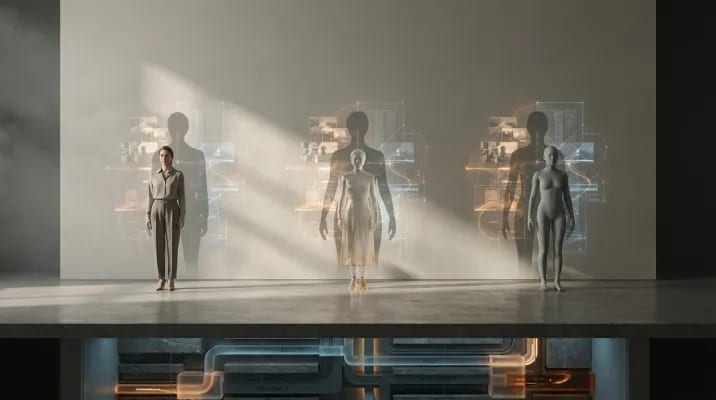
It is easy to look at Afterlife.ai and conclude that the interesting story is digital immortality. Look a little wider and something larger appears. Delphi is creating “Digital Minds” for living experts who want their knowledge and voice available around the clock, while also marketing essentially the same architecture for legacy preservation. Uare.ai wants people to build “Individual AI” around their own experiences and ways of thinking. Character.AI says its creators have already imagined millions of interactive Characters, Inworld supplies infrastructure for persistent characters in games and media, and Replika currently reports more than 42 million users of AI companions that develop memories and personalities through interaction.
These companies are usually placed in different buckets. Personal AI. Digital legacy. Expert cloning. AI companions. Interactive entertainment. Grief tech, which remains one of those industry labels that sounds as though it escaped from a dystopian product-management meeting. The categories make sense if we classify the products by what customers currently use them for, but they make much less sense if we look at what the technology underneath them is becoming.
I think we are watching several AI markets converge around a new software object: the persistent persona. The living version can scale a person, the posthumous version can preserve aspects of a person, and the fictional version can create someone who never existed. Their legal and philosophical differences are enormous, but their technical foundations are starting to look remarkably similar. If that continues, the persona economy may become one of the larger and stranger markets to emerge from generative AI.
Software Is Learning to Become Someone
Most of our current language around AI assumes that the basic unit of the technology is an assistant. We ask a question, assign a task, provide tools and judge the system according to whether it did the work correctly. Even the increasingly fashionable word agent is fundamentally about capability: an agent is software that can take actions on our behalf.
A persona asks a different question. It needs not only capability but continuity. It needs persistent memory, recognizable behavior, some model of relationships, a characteristic way of communicating and boundaries that remain reasonably stable across interactions. If it represents a real person, it also needs provenance: a way to distinguish what that person actually said or believed from what the model inferred they might have said or believed.
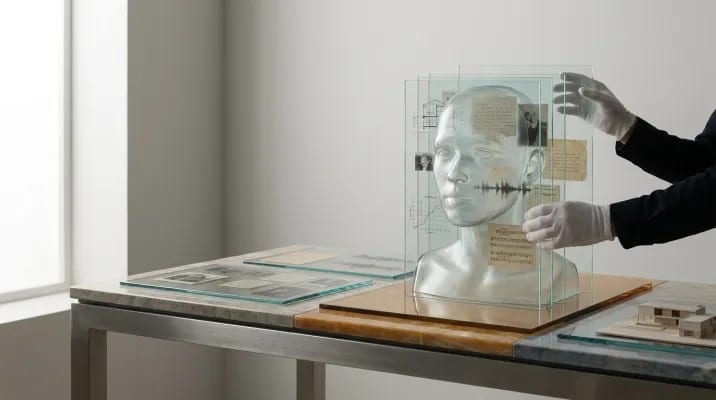
I have been circling pieces of this architecture on Bit & Being for some time without quite seeing the category they were assembling into. In AI’s Goldfish Problem, I argued that persistent memory changes the relationship between people and AI because the system stops beginning every interaction with a small case of amnesia. A model that remembers previous conversations can accumulate context, preferences and history rather than forcing the user to rebuild the relationship every morning.
In Invisible Teammates, I looked at another piece: the system prompts behind AI coding assistants. Those prompts do more than describe capabilities. They establish role, temperament, boundaries, values and degrees of autonomy. Two assistants connected to similar underlying models can behave like distinctly different entities because someone has told each of them, in considerable detail, what kind of entity it is supposed to be.
Persistent memory gives an AI a past, while persona design gives it recognizable character. Add voice, appearance, relationship history and rules governing how that identity may evolve, and the result occupies a different social position from a conventional assistant. We are moving from software that merely knows something about you toward software that can consistently represent someone to you.
That distinction matters because humans respond strongly to continuity. We expect the person we met yesterday to remember enough of yesterday to make today’s conversation coherent. We notice characteristic phrases, recurring opinions, humor, temperament and shared history. A persistent persona does not need consciousness to reproduce many of those social signals. It needs enough consistency that our brains begin treating the interaction as an ongoing relationship rather than a sequence of unrelated transactions.
Three Markets, One Emerging Stack
The living-person market will probably normalize this technology first because the economics are straightforward. Human expertise has a terrible scaling model. A consultant can conduct only so many meetings, a professor can teach only so many students, and an executive can answer only so many variations of the same question before calendar software begins to look like an instrument of psychological warfare.
Books, podcasts, videos and websites solved part of that problem by separating knowledge from the expert’s available hours. They remain one-directional, however. A reader must adapt a question to whatever the author happened to write. A listener cannot interrupt a three-year-old podcast and ask the guest to explain the point differently.

Delphi is explicitly trying to remove that limitation. Its Digital Minds ingest writing, video, podcasts and other material, then mirror the expert’s tone, style and knowledge so people can interact conversationally with the resulting representation. The company raised a $16 million Series A led by Sequoia Capital in 2025 and said at the time that more than 2,000 experts, business owners and creators were already using the platform. Its current offerings span experts, coaches, authors, professors and other professionals, alongside a separate legacy product that uses the same Digital Mind idea to preserve memories, advice and family knowledge.
That overlap is important. It suggests that “digital immortality” may turn out to be less of a standalone product category than the longest available retention policy for technology people first find useful while alive.
Uare.ai provides an even cleaner example. The company began as Eternos, focused on preserving people’s voices and stories for loved ones after death. In 2025, it changed direction, became Uare.ai, raised $10.3 million and repositioned the same broad idea around “Individual AI” for living users. TechCrunch reported that the pivot grew directly from Eternos’s experience building digital replicas, while Uare now describes applications ranging from coaching and education to business expertise and interactive writing.
Personal AI approaches the same destination from yet another direction. Its current architecture places persistent memory at the center of AI identity, with memory intended to travel across systems, agents and assistants rather than remain trapped inside a single application. The company also explicitly describes governance and portability as properties of that memory layer. This begins to look less like another personal assistant and more like infrastructure for maintaining an AI identity across contexts, - precisely the kind of architectural convergence the persona economy would require.
There is a familiar product evolution hiding here. A technology begins with an extreme use case because the extreme case makes its value obvious. Then the market discovers that the underlying capability is useful in ordinary life. GPS moved from military navigation into everyone’s pocket. Cloud computing escaped the data center and became the substrate for entire companies. Digital preservation may similarly turn out to have introduced a more general technology for encoding and operating persistent representations of individuals.
If that happens, today’s website, résumé, LinkedIn profile, conference archive and collection of articles start looking rather primitive. They are passive representations of a person. A persistent persona makes the representation conversational, allowing someone to ask the body of work a new question rather than search through what its author happened to leave behind. And so now, the website begins to answer back.
The Dead Are the Stress Test
Death does not create the persona architecture. It exposes every weakness in it.
Afterlife.ai is particularly interesting because the company has chosen to make governance part of the product rather than an appendix to it. Its Persona is built by the person being represented while that person is alive. After death or incapacity, an “Executor Lock” system is intended to transfer authority according to rules established beforehand, constrain what the Persona is allowed to do and prevent the representation from being freely rewritten by whoever happens to inherit access. The company describes those controls as cryptographically enforced and auditable, although those remain vendor claims rather than an independent technical audit.

Whatever one thinks about interacting with posthumous personas, that design problem deserves attention because a dead person cannot correct the model. A living expert can say that she changed her mind about a recommendation three years ago, that a story has been misremembered, or that the model has mistaken a joke for an enduring political philosophy. Once the represented person is gone, model drift becomes identity drift, and ordinary product concepts such as editing, retraining and personalization begin carrying very different consequences.
Consent becomes stranger too. Most software treats consent as a present-tense relationship. You agree, change a setting, revoke access or close an account, frequently after discovering that the privacy control you want has been placed behind a maze apparently designed by a committee studying behavioral persistence. A posthumous persona has to continue honoring decisions made by someone who is permanently unavailable to clarify what those decisions meant.
Researchers are already identifying the governance gap. A 2026 study in the Journal of Responsible Technology, based on 69 stakeholder interviews, found broad agreement that interactive posthumous personas need governance but little consensus about which governance mechanisms should be adopted. A separate paper in Philosophy & Technology describes an emerging digital-afterlife industry with unresolved technological, social, philosophical, legal and regulatory uncertainties around interactive representations of deceased people.
There are already early attempts to turn those principles into portable infrastructure. In July 2026, Authentic Interactions, together with StoryFile, Lookalike.com and Authentex, released a draft Digital Likeness Directive, a proposed open standard allowing people to specify how AI recreations of them may be created and used both during life and after death. Its consent model covers such questions as whether text, voice or video may be generated, who may interact with the representation, which source material it may use, whether commercial use is permitted and who has authority after the represented person dies. Importantly, the directive is intended to travel across participating platforms rather than remain a setting inside one vendor’s product.
That portability may prove important. If personas themselves eventually move between platforms, consent and authority cannot remain permanently trapped inside the platform where the persona was first created.
The uncomfortable part is that these problems do not stay with the dead. Suppose a company creates a persistent representation of its founder. What happens when the founder leaves the board and changes her mind about the strategy the persona still advocates? If an employee’s expertise has been encoded into a company-owned persona, does that representation remain after the employee resigns? Can it be retrained? Can it be sold during an acquisition? What if a consultant licenses a persona to three clients whose interests later diverge?
The posthumous case simply removes our ability to improvise. It forces us to decide in advance who has authority, which parts of an identity may evolve, what constitutes legitimate use and what happens when the organization operating the persona changes. Those questions will eventually matter for living professional personas too.
Fictional People Change the Scale
If living personas establish the commercial model and deceased personas force us to confront governance, fictional personas may provide the scale. They have a structural advantage over representations of real people. There is no biological original waiting to complain that the software has become embarrassingly unlike them.
Character.AI says its creator community has already produced millions of characters across genres, fandoms and original worlds. Inworld approaches the opportunity from the infrastructure side, building real-time systems for games and entertainment in which characters can remember, react and remain consistent within their worlds. Replika occupies an intriguing middle territory as its AI companions are not replicas of existing people, yet they develop memories, recognizable personalities and ongoing relationships with users. Its website currently reports more than 42 million users worldwide.
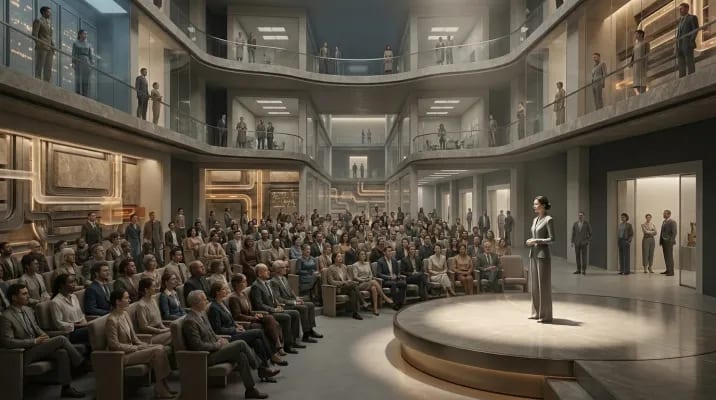
It is tempting to dismiss fictional personas as entertainment, but entertainment has a habit of becoming infrastructure once people reveal what they are willing to become attached to. A fictional persona can serve as a game character today, appear in a streaming series tomorrow, host live events next year and eventually maintain individual relationships with millions of fans who have interacted with it for years.
Brands will discover the same possibility. Imagine a company creating a synthetic spokesperson with a defined history, recognizable humor, opinions, a voice and rules governing how the identity develops. Customers first encounter the character in an advertisement, then speak with it on the company’s site, encounter it inside a game, follow it through social media and eventually interact through augmented-reality glasses. The character can remember long-term customers and maintain continuity across all of those surfaces.
At some point, the company has created something more complicated than a mascot. It has created a synthetic celebrity whose economic value depends partly on the relationships people have formed with it.
That creates unusual second-order effects. A fictional persona can be licensed, transferred or sold without the employment and publicity-rights complications associated with a human celebrity, but changing the character after years of interaction may still feel to users less like updating software and more like replacing someone they know. Intellectual-property law may say the company owns the character. The audience may experience the relationship in much less tidy terms.
The economics strongly favor proliferation. A human expert might maintain one professional persona, but a game studio could operate thousands of characters, a media company hundreds of properties and a global brand different personas for markets, products and communities. If creating and operating persistent personas becomes inexpensive enough, I expect the number of active software identities eventually to exceed the number of humans they interact with.
That prediction sounds dramatic until you remember that websites, email addresses and software accounts already outnumber people. The difference is not numerical abundance. The difference is that these new entities can maintain memory, participate in conversations and occupy roles that humans instinctively understand as social.
When Identity Becomes Infrastructure
For most of computing history, identity meant authentication. The system needed to establish that Robert (that’s me) really was Robert before showing him Robert’s bank account. The machinery became increasingly sophisticated, although the user experience still occasionally involves proving your identity to a laptop by typing a number displayed on the phone sitting next to it.
Persistent personas introduce a second identity problem: not only who is the human using the software, but who is the software supposed to represent?
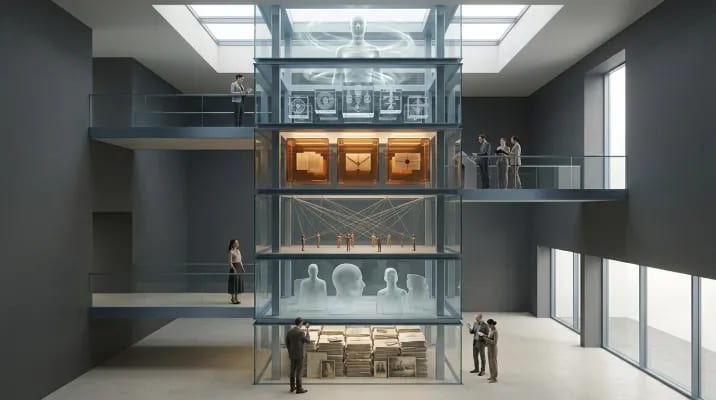
That question needs its own infrastructure. A mature persona platform will need persistent memory, identity provenance, behavioral boundaries, permissions, version history, voice and likeness controls, relationship state, portability and rules governing who can modify what. For real-person personas, it will also need a clear distinction between material supplied by the person and material generated by the model.
That provenance problem may become one of the most important. In I Think, Therefore I Might Be True, I argued that generative AI is making answers cheap much faster than it is making verification cheap. Fluency can reproduce the surface cues of authority without reproducing the evidence that made the original authority trustworthy. As generation becomes abundant, the scarce resource shifts toward justified confidence: knowing why a particular assertion deserves belief.
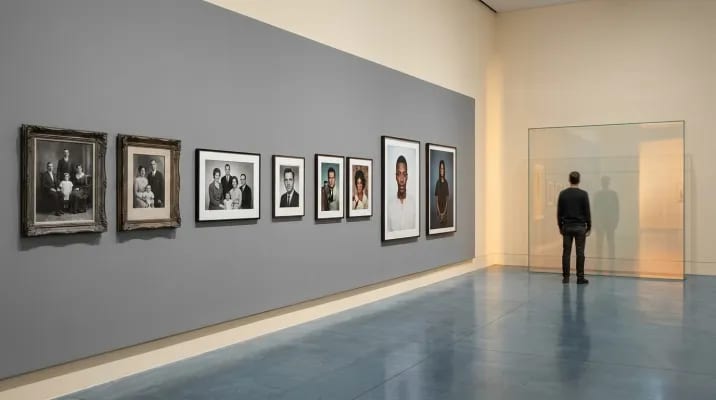
A persona turns that epistemic problem into a personal one. Imagine asking a digital representation of your father whether he regretted selling the family business. It answers that he always wished he had waited another five years. Perhaps he said exactly that in a recording. Perhaps he wrote something adjacent to it in a letter. Perhaps the system inferred it from several memories, or perhaps the model generated a plausible answer because conversational systems are much better at producing sentences than leaving emotionally appropriate silence.
Those are completely different events, but a convincing voice can make them feel identical. Persona systems representing actual humans may therefore need provenance at the level of individual claims: recorded, retrieved, inferred, generated, uncertain.
The more convincing the representation becomes, the more important those distinctions become, because fidelity of presentation can easily outrun fidelity to the person.
There is an even deeper distinction between representation and continuation. In my recent Bit & Being research, The Preservation of the Continuity of the Self, I examine what happens to personal identity when minds become copyable, checkpointable, restorable or reconstructable from records. A representation could reproduce a person’s memories and behavior with extraordinary accuracy without thereby establishing that the original person’s conscious process somehow continued into the copy. Descriptive similarity and causal continuity are not the same claim.
Markets will not wait for philosophers to finish that argument. If a persona remembers what a person remembered, answers as they would answer, speaks in their voice and maintains relationships with people who know them, organizations will need rules for that representation regardless of its metaphysical status.
This is why the living, dead and fictional categories can converge technically while remaining radically different in governance. A fictional character may be designed to evolve freely because change is part of the product. A living person’s persona should remain subordinate to the living person it represents. A posthumous persona may need much stronger restrictions precisely because correction and renewed consent are no longer possible.
The architecture converges. The permissions do not.
For technology leaders, that means persona governance is likely to become the real discipline rather than a collection of terms and conditions buried inside individual products.
Organizations adopting persistent personas will need to know who can create one, who can modify it, what data is allowed to shape it, whether it can learn from new interactions, how its identity travels between platforms, how generated claims are marked and what happens during an acquisition, departure, death or vendor failure.
Those questions sound legal because many of them are. They are also architectural.
The Social Position of Someone
If the technology develops along this path, “AI companion,” “digital twin,” “expert clone,” “griefbot” and “interactive character” may eventually sound like the vocabulary of a market that had not yet realized it was building the same primitive in different places.

The persistent persona is that primitive: a software identity constructed from memory, behavioral constraints, knowledge, relationships, provenance and authority. Once that object becomes portable, the applications multiply quickly. A consultant’s professional persona can answer questions while she is alive, preserve institutional knowledge after she retires and later become part of an archive. A professor can extend office hours indefinitely. A founder can preserve explanations of why important decisions were made. An author can let readers converse with inhabitants of a fictional world, while a brand can operate a synthetic personality across channels for decades.
The difficult question is not whether those products are technically possible. Enough of the pieces already exist to make their direction visible, and venture-backed companies are actively commercializing them.
The harder question is what changes when software stops merely representing information and begins representing people.
Organizations will need new concepts of ownership because the persona may combine one person’s identity with another company’s infrastructure. They will need new notions of lifecycle because the persona can survive the employment, product or relationship that originally justified creating it. They will need new trust mechanisms because a generated sentence delivered in a familiar voice carries more persuasive force than the same sentence arriving from a generic chatbot.
Leadership practices may change as well. Companies have spent years worrying about institutional knowledge walking out the door when experienced employees leave. Persistent personas offer an obvious technical response, but they also create a new management problem. Preserving someone’s expertise is not necessarily the same as preserving their authority. A retired architect’s persona may still know why the system was designed a certain way while being completely wrong about what should be done five years later.
We can already see an adjacent version of this problem emerging in enterprise knowledge transfer. Sensay’s AI Offboarding platform interviews departing employees, captures tacit knowledge and makes that knowledge available afterward through conversational AI. That is not necessarily a persistent persona, but the distinction may become increasingly important. Add the employee’s recognizable voice, behavioral style, history and authority relationships, and a knowledge-retention system begins moving toward something much closer to a persistent professional identity.
Preserving what someone knows is different from continuing to represent the person who knew it.
The persona economy will therefore create both enormous convenience and a new category of organizational ghosts. Representations whose knowledge remains useful after the context that produced it has changed. Good systems will preserve history without quietly converting history into permanent instruction.
I suspect this category will arrive gradually rather than through one dramatic breakthrough. Experts will adopt personas because they save time. Consumers will use companions because they remember. Entertainment companies will deploy characters because audiences engage with them. Families will preserve voices because the alternative is losing them. Companies will encode institutional knowledge because turnover is expensive. Each use case will look reasonable on its own, which is normally how large technological shifts enter organizations.
Eventually we may look up and discover that persistent software identities have become ordinary. Some will represent living people, some the dead, some fictional characters and some entities that do not fit comfortably into any of those categories because they have accumulated years of history independent of their origin.
For most of computing history, we taught machines to represent information: customers, invoices, documents, transactions, images and accounts. We are now learning to make software represent people, and at the same time we are becoming quite good at inventing people entirely in software. That transition will create useful products, strange relationships, valuable companies and governance problems for which our current vocabulary is still inadequate.
The next important question in AI will therefore not always be what the software can do. Increasingly, we will also need to ask who the software is supposed to be, who is allowed to change it, and who owns the relationship when someone-shaped software becomes part of everyday life.

Author’s note, September 2, 2026: This article has been updated since publication to include additional examples and emerging work in persistent AI identity and digital-likeness governance that were brought to my attention after the original version was published.
Further Reading
- AI Identity Governance & Executor Lock - Afterlife.ai, June 2026. A useful real-world example of persona governance moving from an ethical principle into product architecture, including consent, authority transition, auditability and restrictions on posthumous modification.
- Immortality startup Eternos nabs $10.3M, pivots to personal AI that sounds like you - TechCrunch, November 2025. The Eternos-to-Uare.ai pivot is one of the clearest signals that digital legacy and personal AI may be converging into the same broader persona market.
- Delphi Raises $16M Series A from Sequoia Capital to Pioneer “Digital Minds” - Delphi, June 2025. Evidence of commercial demand for interactive representations of living experts, along with the funding and adoption behind Delphi’s Digital Mind model.
- New Ways for Creators to Create, Grow, and Get Discovered - Character.AI, June 2026. A snapshot of the fictional branch of the persona economy, where creators are already building millions of interactive Characters and increasingly treating them as persistent creative properties.
- Multi-stakeholder perspectives on governing innovation in the digital afterlife - Laskor, Owen & Charlesworth, Journal of Responsible Technology, March 2026. Research based on 69 stakeholder interviews showing broad agreement that posthumous AI personas require governance but limited consensus on what that governance should actually look like.
- AI’s Goldfish Problem: Reboot with CMI - Bit & Being, June 2025. An earlier exploration of persistent AI memory and why moving beyond stateless interactions changes an AI from a one-off tool into something capable of sustaining context and relationship over time.
- I Think, Therefore I Might Be True - Bit & Being, August 2026. An argument that as generated answers become abundant, provenance and verification become more valuable, a problem that becomes especially consequential when those answers arrive through a representation of a real person.
- The Preservation of the Continuity of the Self - Robert Encarnacao, Bit & Being, August 2026. A research paper examining the difference between reproducing a mental state and preserving the causal continuity of the subject, a distinction that becomes increasingly important as representations of real people grow more convincing.
Disclaimer: The perspectives shared in this article are our own and do not represent those of our employer or any affiliated organizations. All company names, product names, logos, and brands mentioned are the property of their respective owners and are used for identification and illustrative purposes only. No endorsement, sponsorship, or affiliation is intended or implied. References to specific companies or case studies are based on publicly available information and are used solely for educational and discussion purposes.
More from the human factor
All the human factor → the human factor
AI May Be the First Psychopath Designed to Serve Us
We may have spent the last few years teaching a psychopath to be helpful, harmless, and polite. That sounds more dramatic than I mean it to, since I am not suggesting that ChatGPT belongs on a psychologist’s couch or that Claude should be…
 the human factor
Creative Substratism
Imagine being served two glasses of wine. They look identical, smell identical, and taste identical. Then you are told that one came from a rare bottle laid down decades ago by a celebrated winemaker, while the other came from an ordinary…
 the human factor
The Charm Offensive: When Human-Faced AI Hijacks Our Instincts
Late one night, a marketing manager finds herself laughing at her AI assistant’s latest witty reply. On her screen, a friendly avatar nods with empathetic eyes and a soothing, honeyed voice. Her usual skepticism about “just an algorithm”…