AI's Goldfish Problem: Reboot with CMI
🔊 Listen to the Podcast version here. 🔊
When AI Remembers: How CMI Turns Chatbots into Long-Term Partners
Picture working with a colleague who has chronic amnesia. Every morning, you have to re-introduce yourself and recap yesterday’s entire discussion. Absurd, right? Yet that’s exactly how interacting with many AI systems feels today. For all their advanced intelligence, most chatbots have the memory of a goldfish, - they forget everything the moment you move on. You ask an AI assistant to analyze a report and by the next prompt it’s as if that report never existed. It’s like living Groundhog Day with your AI, repeating the same context over and over while it smiles politely and promptly forgets again. Human teams would never tolerate such forgetfulness, and neither should we in our AI partners.

This forgetfulness isn’t just an annoyance; it’s an architectural limitation. Today’s AI models are largely stateless. Each interaction exists in isolation, confined to a limited context window. Once you exceed that window or start a new session, poof! - the slate is wiped clean. The AI doesn’t carry over yesterday’s insights into today’s conversation. Developers see this in ridiculously verbose prompts, forced to stuff all relevant info every time. Users feel it when the chatbot asks for the same information on loop, giving the impression it just isn’t paying attention (Tribe AI). Organizations notice it in higher costs and slower systems, as the same facts get processed repeatedly. In short, when AI can’t remember, everyone pays the price in time, money, and patience.

The Cost of AI’s Short Memory
The lack of long-term memory leads to very real problems, here are just a few of endless examples:
-
Code assistants lose track of which file or function they’re in, so developers must repeatedly specify paths and re-explain context for each edit.
-
A customer service chatbot sincerely apologizes for an issue, - then proceeds to apologize again an hour later, having forgotten it already resolved that complaint. Users end up answering the same questions every session.
-
An analytics AI that reviewed last quarter’s data won’t recall its findings when new data arrives, forcing analysts to recompute and re-analyze from scratch each time.

It’s like using a website that logs you out and erases your data every time you click a link, - you’d never get anything done. An AI that forgets might occasionally dazzle in the moment, but it can’t build on past knowledge or improve with experience. It’s forever stuck in day one.
A Memory Revolution: AI That Remembers better than Pepperidge Farm
Enter Contextual Memory Intelligence (CMI), - a fancy term for a game-changing long-overdue idea: giving AI a working long-term memory. Instead of treating context as a disposable scratchpad, CMI makes memory a core architectural feature of intelligent systems. In a 2025 paper, researchers argued that memory should be treated as “infrastructure”**, - actively maintained and woven into the AI’s reasoning process (arXiv). In practice, this means AI agents start continuously recording, organizing, and using information across interactions and over time. The goal? Continuity (an AI that remembers what happened last time), reflection (an AI that learns from prior outcomes), and even auditability an AI that can show why it made a decision by pointing to relevant past knowledge, - for real this time. In short, CMI is about turning our short-term savant chatbots into long-term thinkers.

This shift is already underway in cutting-edge AI architectures. For instance, MemoryBank, extends language models with an external memory repository that grows and adapts, - it can “summon” relevant past details when needed and even uses a human-like forgetting curve to let unimportant memories fade over time (arXiv). Meanwhile, Microsoft’s LongMem framework takes a different approach: it adds a dedicated memory module alongside the main model, essentially giving the AI an unlimited scroll of historical context to pull from on demand without cluttering its core reasoning (arXiv).

And in MemInsight researchers focus on structuring memory with semantic hooks. The system automatically tags and indexes previous interactions, so the AI can retrieve facts by meaning, not just by raw text similarity (arXiv). Despite different methods, all these innovations share a common theme: they introduce persistent, intelligent memory that outlives any single chat session. The AI stops starting from zero every time, - like Frosty waking up saying “Happy Birthday”, instead accumulates an understanding of context that grows richer over time. The more you put in, the more you get out.
From Chatbot to Colleague: AI with Contextual Memory
What happens when you give an AI a long-term memory? It stops being a one-off tool and starts acting more like a true colleague. Conversations pick up where they left off, even if they happen weeks apart. You could chat with a virtual assistant about a project in January, and when you revisit it in March, it says, “Welcome back. Last we spoke, we were deciding on a budget allocation for this project,” remembering details you might have forgotten. The AI gradually forms a mental model of your preferences and working style. Instead of generic responses, it recalls that you prefer concise summaries over dense reports, or that you’ve asked three questions this month about a certain client, - hinting that client might be high priority. Over time, the experience becomes more personalized and fluid, as the AI learns who you are and what you’re working on, - one experimental system even adapts to a user’s personality and tone over time (arXiv).

For organizations, an AI with memory effectively becomes a living knowledge base. Imagine a sales AI that has listened in on a year’s worth of customer calls, - it can pull up the history with a key client and highlight past pain points before your next meeting. Or a project management assistant that retains the rationale behind every major decision, so months later it can answer why a certain strategy was chosen, not just what was done. Institutional memory that normally lives in veteran employees’ heads can now be partly captured by AI, available on-demand. Organized Labor may have something to say about that. Nonetheless, cross-department and cross-session continuity means insights no longer vanish when a chat ends or a tool changes. The AI can bridge silos by carrying context from one department’s interactions to inform another’s, if permitted. In essence, the organization’s AI becomes a sort of historian and strategist combined, - one that never forgets the lessons of last quarter.

Crucially, long-term memory also makes AI smarter and more trustworthy. With context, an AI can perform deeper reasoning, because it isn’t confined to just the information in the latest prompt. It can spot patterns over time, - recognizing that a customer’s complaints have steadily evolved, or that a sequence of financial anomalies last appeared two years ago. It can avoid past mistakes, because it remembers making them before and what went wrong. And when the AI proposes a recommendation, it can cite the relevant prior events or data points it drew from, like showing its work.
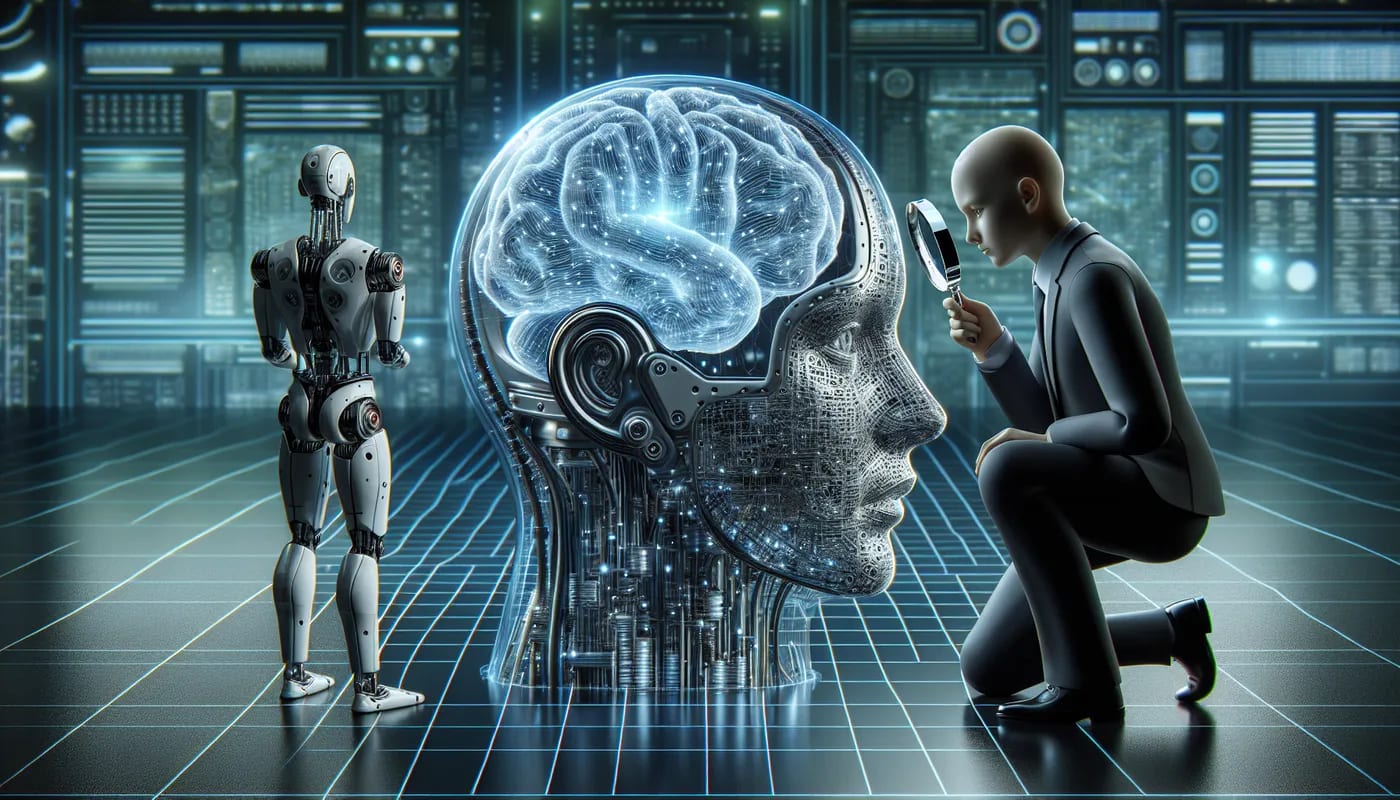
In regulated industries like finance or healthcare, this audit trail is a game-changer. You can finally ask an AI “why did you do that?” and have it point to the chain of memory and reasoning that led to its action. Early results are promising: memory-augmented models have demonstrated significantly better accuracy in tasks like long conversations and recommendations compared to their forgetful counterparts. It turns out that when AI can remember context, it not only becomes more useful, but it becomes more accountable too. In effect, we get AI that doesn’t just sound intelligent, but shows the kind of judgement and consistency we expect from a human team member. Or so we hope.
Embrace Memory Intelligence
As technology leaders, we stand at the inflection point of this memory revolution. We shouldn’t settle for AI that’s an amnesiac. The next generation of AI systems, - the ones that will truly transform business, will be those built with permanent contextual memory at their core. It’s time to start asking your teams and vendors: how does our AI remember what it learns? Can it build on knowledge over time? If not, you’re leaving a lot of intelligence on the table. Adopting CMI principles doesn’t require ripping out everything and starting fresh. It can begin with small steps: integrating a vector database to retain key customer interactions for your chatbot, or using a session memory API that logs conversations for your voice assistant. Experiment with emerging platforms that offer memory modules. Encourage your data science teams to instrument “memory metrics”, how often the AI repeats itself or loses context. Then use these new tools to fix those gaps.

By pursuing contextual memory, you’ll start to see your AI evolve from a short-term task solver into a long-term strategic partner. One that knows your business as intimately as any long-standing employee, and can reason and communicate with the benefit of history. In a world where every competitor will eventually have access to powerful models, having models that learn and remember uniquely from your data will be a key differentiator. So, invest in giving your AI a memory. The executives of tomorrow will be working with AI colleagues who remember everything, - and they’ll wonder how anyone ever put up with the forgetful systems of the past. The sooner we teach our machines to remember, the sooner we can stop reliving yesterday’s conversations and start building on the knowledge of tomorrow. Teaching machines to remember isn’t just a technical upgrade, - it’s how we unlock their potential to really grow with us.

Further Readings
-
Beyond the Bubble: How Context-Aware Memory Systems Are Changing the Game in 2025 (Shalini Ananda, May 2025) A practitioner-oriented overview of why persistent memory is crucial for AI, outlining common stateless AI issues and the principles of context-aware memory solutions.
-
AI Memory Management System: Introduction to mem0 (PI, March 2025) Introduction to an open-source framework (mem0) that implements persistent contextual memory for AI, with insights into using vector stores and knowledge graphs to achieve long-term recall.
-
Contextual Memory Intelligence – A Foundational Paradigm for Human-AI Collaboration (Kristy Wedel, May 2025) The academic paper that formalized CMI, arguing for memory as core infrastructure in AI and introducing the “Insight Layer” architecture to capture and reuse context over time.
Disclaimer: The perspectives shared in this article are my own and do not represent those of my employer or any affiliated organizations. All company names, product names, logos, and brands mentioned are the property of their respective owners and are used for identification and illustrative purposes only. No endorsement, sponsorship, or affiliation is intended or implied. References to specific companies or case studies are based on publicly available information and are used solely for educational and discussion purposes.
More from machine minds
All machine minds → machine minds
AI's Illusion of Thinking: When Looking Smart Isn't Being Smart
Imagine sitting in a meeting where your AI assistant confidently presents a step-by-step plan to triple your market share. Each step flows logically, sprinkled with insights and even a few jokes. It sounds like the machine is thinking. But…
 machine minds
Dataset Distillation 2.0: Less Data, More Power
For years, every AI guru swore by one mantra: the bigger the dataset, the better the model. In boardrooms and labs alike, 'more data' was the battle cry. But picture a frustrated CTO drowning in an ocean of data, weighed down by sky-high…
 machine minds
Clearer AI, Clearer Minds: Is Our Language Too Messy for Machines?
Picture an AI rolling its eyes during a human conversation. For all our eloquence and poetry, from an AI's perspective we might as well be using semaphore signals or cave paintings. Our language, - rich, messy, wonderfully ambiguous, can…