Test-Time Neural Plasticity: AI That Adapts on the Fly
Listen · the Bit & Being podcast
It’s 2 AM at a busy call center, and an irate customer is on the line. Suddenly, the AI support agent’s voice changes mid-sentence, - its formal script softens into a gentle, empathetic tone. This shift isn’t pre-programmed by a developer; the AI is adjusting on the fly to the caller’s frustration. The customer, caught off guard, starts to calm down. This isn’t science fiction or a lucky fluke. It’s a glimpse of test-time neural plasticity, where AI systems dynamically adapt their behavior in real time to better serve the moment.

For decades, deploying an AI model felt like hiring an employee who never learns anything new after onboarding. Once training ended, the model was essentially frozen, - it would repeat its learned skills but never improve or adjust to new information. As a tech observer noted, most AI systems have “a lack of ability to continue learning as they are in use,” meaning they can’t grow more accurate no matter how much real-world experience they get (Tech Xplore). Test-time neural plasticity changes this paradigm. Inspired by the brain’s ability to rewire connections, it enables an AI to keep learning in the field, updating itself during inference instead of just regurgitating pre-learned answers.
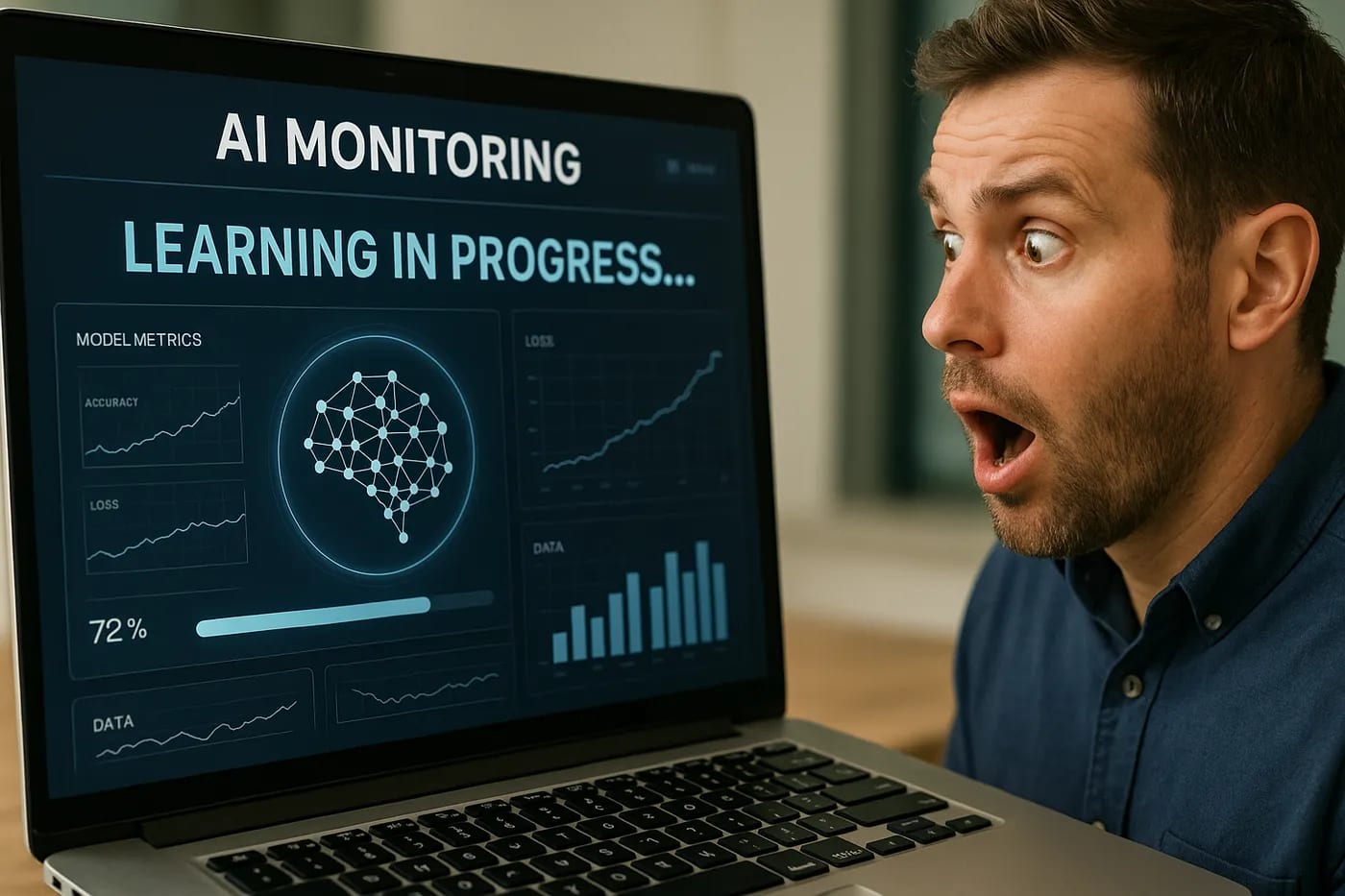
The technical heart of this idea is Test-Time Training (TTT). In plain terms, TTT allows a model to adjust its own parameters on the fly based on the data it’s seeing right now (Pan Xinghan). Traditionally, there was a hard line between training and deployment, - train on historical data, then freeze the model for use. TTT erases that line, empowering the model to keep tuning itself when faced with each new input. Think of it as giving the AI a bit of “working memory” or plasticity to adapt in real time. For businesses, the appeal is clear, - no more brittle, one-trick models that break when conditions change.

This adaptability is a big deal because the real world never sits still. Markets shift overnight, slang evolves weekly, equipment drifts out of calibration. A model trained on yesterday’s data can stumble tomorrow, - an issue engineers know as distribution shift. For example, an image-recognition AI that excels on sunny daytime photos may misfire on grainy night images, or a chatbot trained last year might be baffled by this year’s internet memes. Static AI is like a musician who only knows one song, - change the tune and they’re lost. Test-time adaptation turns that musician into an improviser, letting the model learn from new data in the moment so performance doesn’t crater when conditions change. Instead of waiting weeks for a scheduled re-training, the AI can adjust itself on the fly, preserving and even improving its effectiveness as new situations arise.

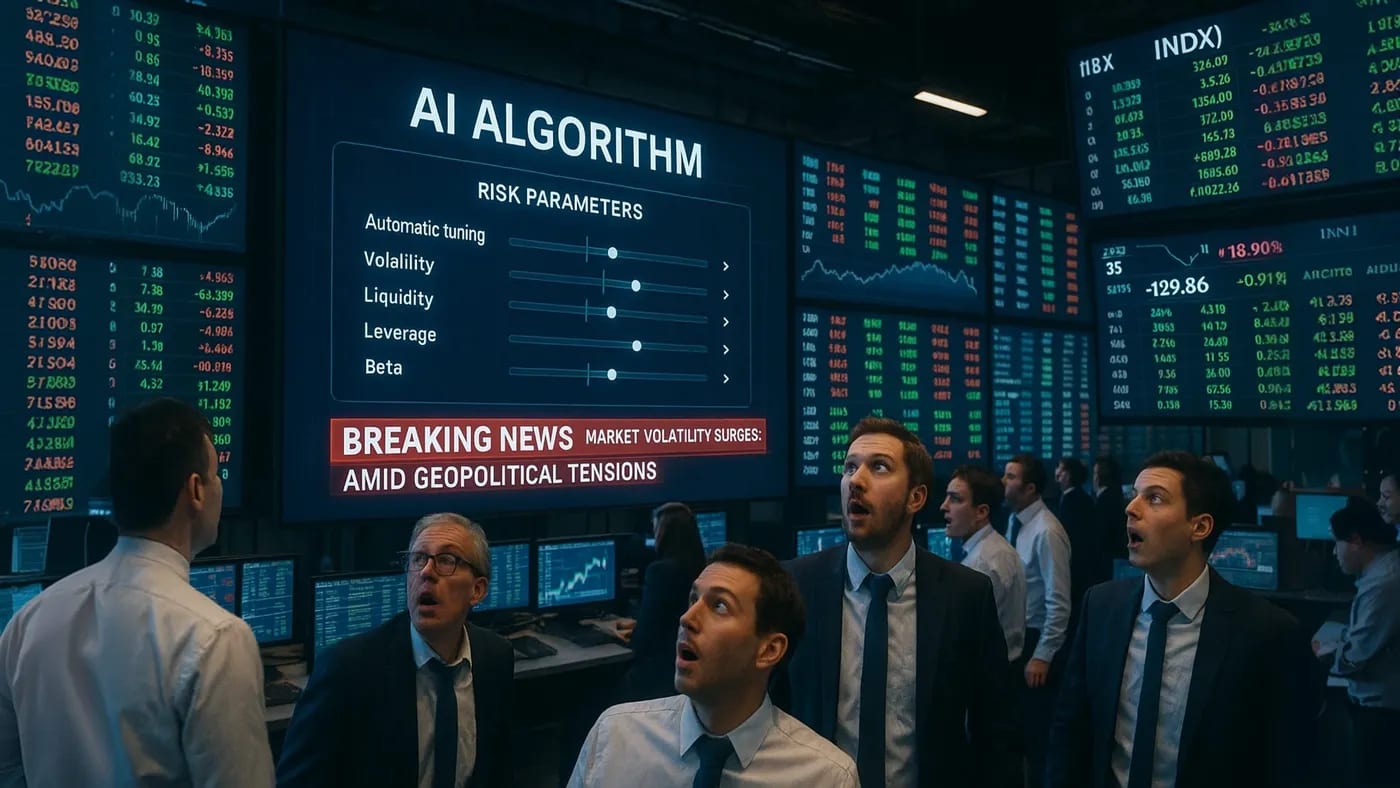
This isn’t just theoretical. It’s already emerging in the field. In finance, an adaptive AI could monitor market conditions and update its risk models the instant unexpected news hits. Imagine a trading algorithm that senses a sudden spike in volatility at 9:31 AM and immediately recalibrates its strategy. It doesn’t wait for human intervention or an overnight re-training run, potentially averting losses by reacting in real time. And the impact goes beyond bits and bytes. On factory floors, AI-driven control systems are learning to adjust equipment settings on the fly. If a sensor detects a machine drifting out of spec, the AI can tweak parameters then and there to maintain quality, without a technician’s manual recalibration. From banking to manufacturing, test-time adaptability is enabling systems that don’t panic when something new happens. They learn and respond, keeping operations optimal and resilient.
It wasn’t easy to get here. For years, making AI learn on the fly was a risky proposition, often causing more problems than it solved. Early attempts were slow and sometimes caused models to forget their original training after a few updates. The tide turned in 2025 with a string of breakthroughs showing how to do test-time learning right. Researchers figured out how to update a model’s parameters during inference efficiently, instead of taking a huge computational hit (arXiv). Others demonstrated ways for large language models to pick up domain-specific knowledge on the fly, - for example, learning medical jargon as it answers patient questions, dramatically boosting accuracy without any offline retraining (arXiv). Adaptive AI has evolved from a novel idea into a practical toolkit. These advances proved a model can stay stable and reliable even as it continuously refines itself in real time.

Researchers even managed to get an AI to produce a coherent one-minute video by training itself as it generated each frame, - something static models could never do (arXiv). This dramatic demo showed how on-the-fly learning can unlock new capabilities, maintaining consistency over time where a frozen model would falter.

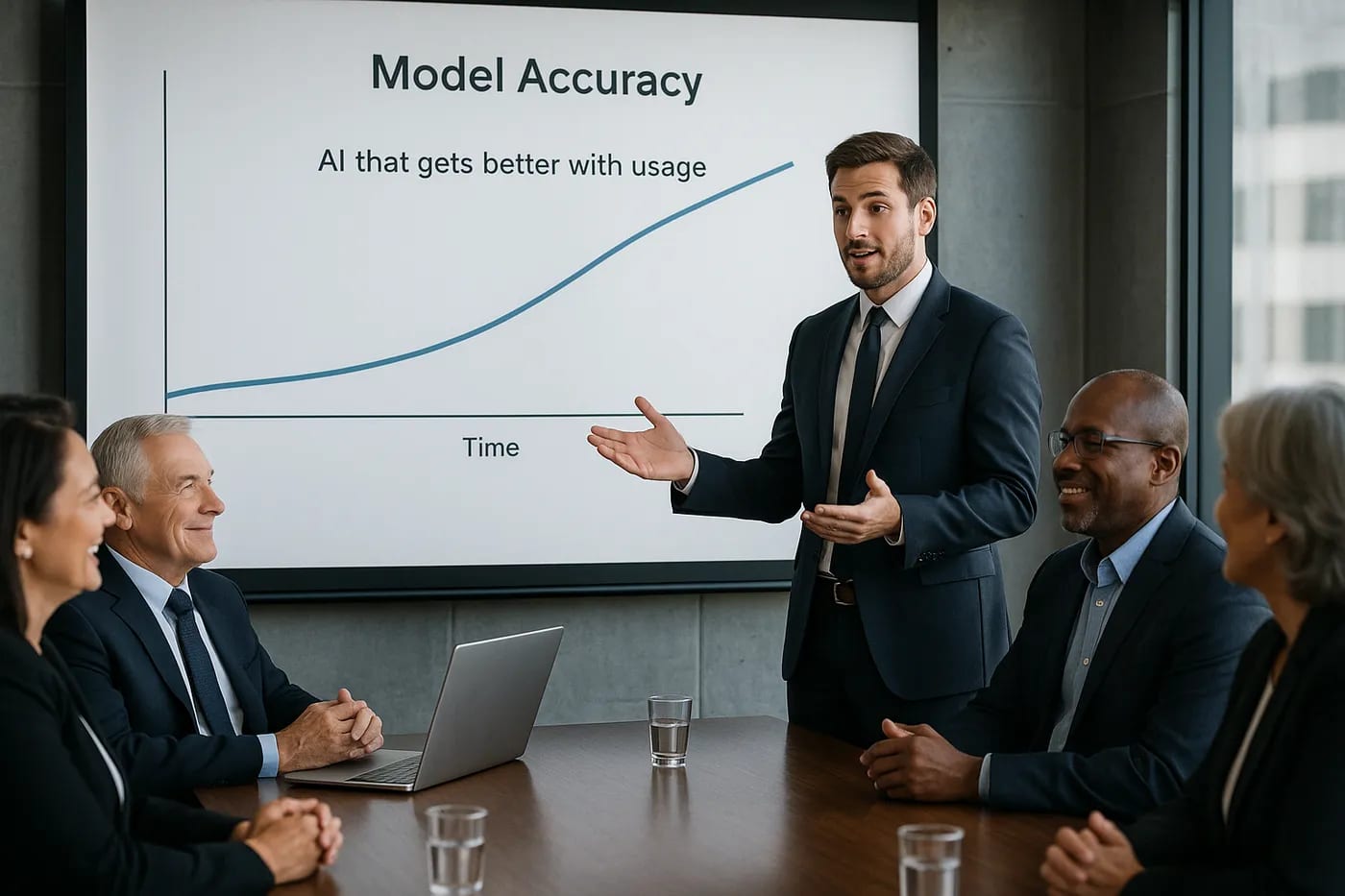
For enterprises, the implications are striking. Instead of degrading over time, AI systems could actually get smarter and more effective the more they’re used. That flips the script. Typically a model in production drifts and needs costly re-training to stay sharp, but an adaptive model improves from its own experience. As one industry blog noted, such systems become “more accurate, efficient and relevant the more they are used” (Testing Xperts). This means higher performance and lower upkeep. In practice, fewer full retraining cycles and manual fixes are needed, since the model is continually self-correcting. In short, deploying test-time adaptive AI lets you field systems that don’t just avoid decay. They actively get better, turning everyday usage into a virtuous feedback loop.
Naturally, having AI that learns by itself in real time comes with new responsibilities. We must ensure an AI doesn’t pick up bad habits or drift out of control. For example, a self-tuning chatbot mustn’t learn rudeness from one angry user and start sassing everyone. There’s also a risk of an adaptive model overwriting its core skills if mismanaged. To address this, researchers are building in safeguards. Techniques like periodically resetting parts of the network, - giving the model a memory refresh, can prevent it from straying too far or forgetting old knowledge (Tech Xplore). By limiting how and what the model learns during inference, we keep its evolving behavior aligned with human intentions. The goal is to get the benefits of neural plasticity without the chaos.
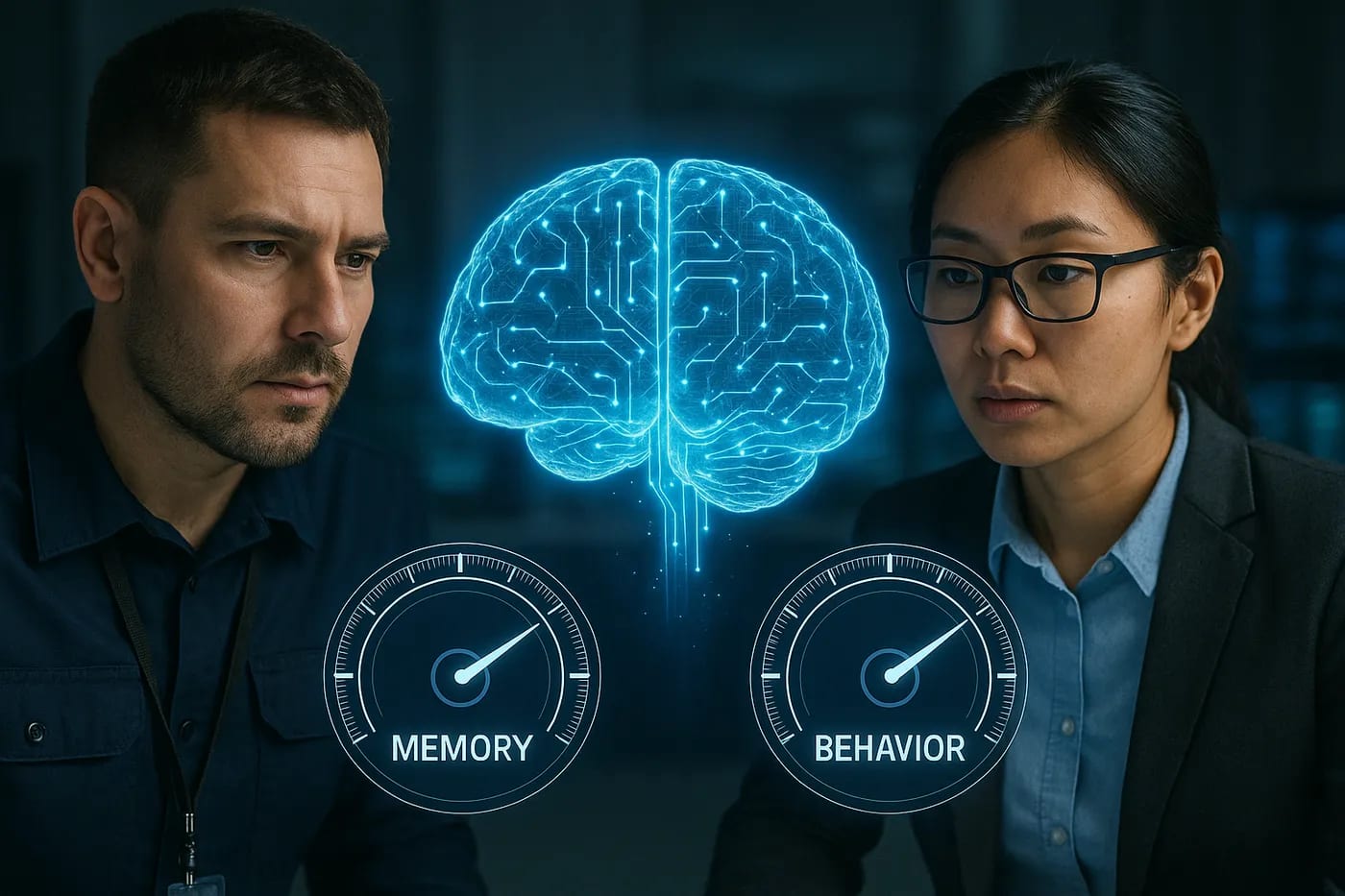
The bottom line for technology leaders: AI that adapts on the fly is no longer a far-fetched idea, but an emerging reality. Forward-thinking organizations should start exploring it now. Embracing test-time neural plasticity means deploying AI that starts smart and keeps getting smarter, - a system that learns as it goes becomes an asset that appreciates, rather than one that requires constant care and feeding.

To get there, begin with small pilot projects. Allow a customer-facing model to update itself (assuming that is permitted) in a limited, controlled way from live data, or let an internal analytics tool fine-tune on recent inputs, all while monitoring closely. Update your AI governance and monitoring to accommodate these self-learning behaviors. Those who pioneer these adaptive systems will have a serious edge, - they’ll have AI that not only responds to change but thrives on it. In a business environment where change is constant, having technology that can continuously learn and improve might just be the ultimate competitive advantage.

Further Readings
-
Test-Time Training Done Right (Zhang et al., May 2025) – Researchers detail a method using large data chunks to make test-time adaptation far more efficient and scalable. It shows models can adapt to long sequences without custom hardware, marking a practical breakthrough in real-time learning for complex tasks.
-
One-Minute Video Generation with Test-Time Training (Dalal et al., April 2025) – Demonstrates a novel approach of inserting special TTT layers into a Transformer model to generate coherent one-minute videos from text. By training itself as it generates each frame, the model produced much more coherent long-form videos than prior methods.
-
Test-Time Learning for Large Language Models (Hu et al., May 2025) – Introduces TLM (Test-Time Learning for LLMs), where a large language model uses a self-supervised objective (minimizing input perplexity) and lightweight LoRA adapters to update. This yields over 20% accuracy improvement on domain-specific tasks for the model, achieved on-the-fly during inference.
-
Test-Time Training (TTT): A Comprehensive Exploration (Pan Xinghan, January 2025) – An accessible overview of test-time training, covering the pitfalls of static models and the core techniques of TTT (like self-supervised auxiliary tasks to guide real-time adaptation). It also explores potential applications of adaptive AI across different industries.
Disclaimer: The perspectives shared in this article are my own and do not represent those of my employer or any affiliated organizations. All company names, product names, logos, and brands mentioned are the property of their respective owners and are used for identification and illustrative purposes only. No endorsement, sponsorship, or affiliation is intended or implied. References to specific companies or case studies are based on publicly available information and are used solely for educational and discussion purposes.
More from machine minds
All machine minds → machine minds
From Brittle to Brilliant: How Model Synthesis Architecture (MSA) Is Reinventing AI Reasoning
It’s past midnight on a high-tech manufacturing floor, and the assembly line has ground to a halt. An emergency alarm blares as a baffled shift supervisor calls the plant manager. The factory’s AI system, - normally excellent at optimizing…
 machine minds
The AI Breakthrough No One’s Talking About: System 2 via Energy-Based Transformers
Imagine an AI advisor in your board meeting that answers every question before you’ve finished asking it. It’s quick, - sometimes dazzlingly so, firing off solutions like a reflex. But every now and then, that speedy AI blurts out a…
 machine minds
AI’s Inner Monologue: A Window into Transparency That May Soon Close
Picture an AI that thinks out loud like a colleague muttering through a tough problem. It sounds far-fetched, but today’s most advanced models sometimes do exactly that, - breaking down complex challenges into step-by-step reasoning that…