The AI Breakthrough No One’s Talking About: System 2 via Energy-Based Transformers
Listen · the Bit & Being podcast
Imagine an AI advisor in your board meeting that answers every question before you’ve finished asking it. It’s quick, - sometimes dazzlingly so, firing off solutions like a reflex. But every now and then, that speedy AI blurts out a confident answer that’s dead wrong, missing a subtlety that a human analyst would have caught after a pause. Today’s AI often operates in this fast, intuitive mode, much like what psychologist Daniel Kahneman calls “System 1” thinking – rapid, automatic, and good at pattern recognition.

That’s great for straightforward tasks, but it falters when complexity, nuance, or the need for step-by-step logic arises. We’ve all seen current AI models excel at things like autocomplete or image tagging, yet stumble on tricky logic puzzles or long-form reasoning because those require the slower, more analytical “System 2” thinking (TheDecoder). In business terms, our AI has been the impulsive overachiever, - brilliant at a glance, but prone to mistakes when careful reasoning is needed.
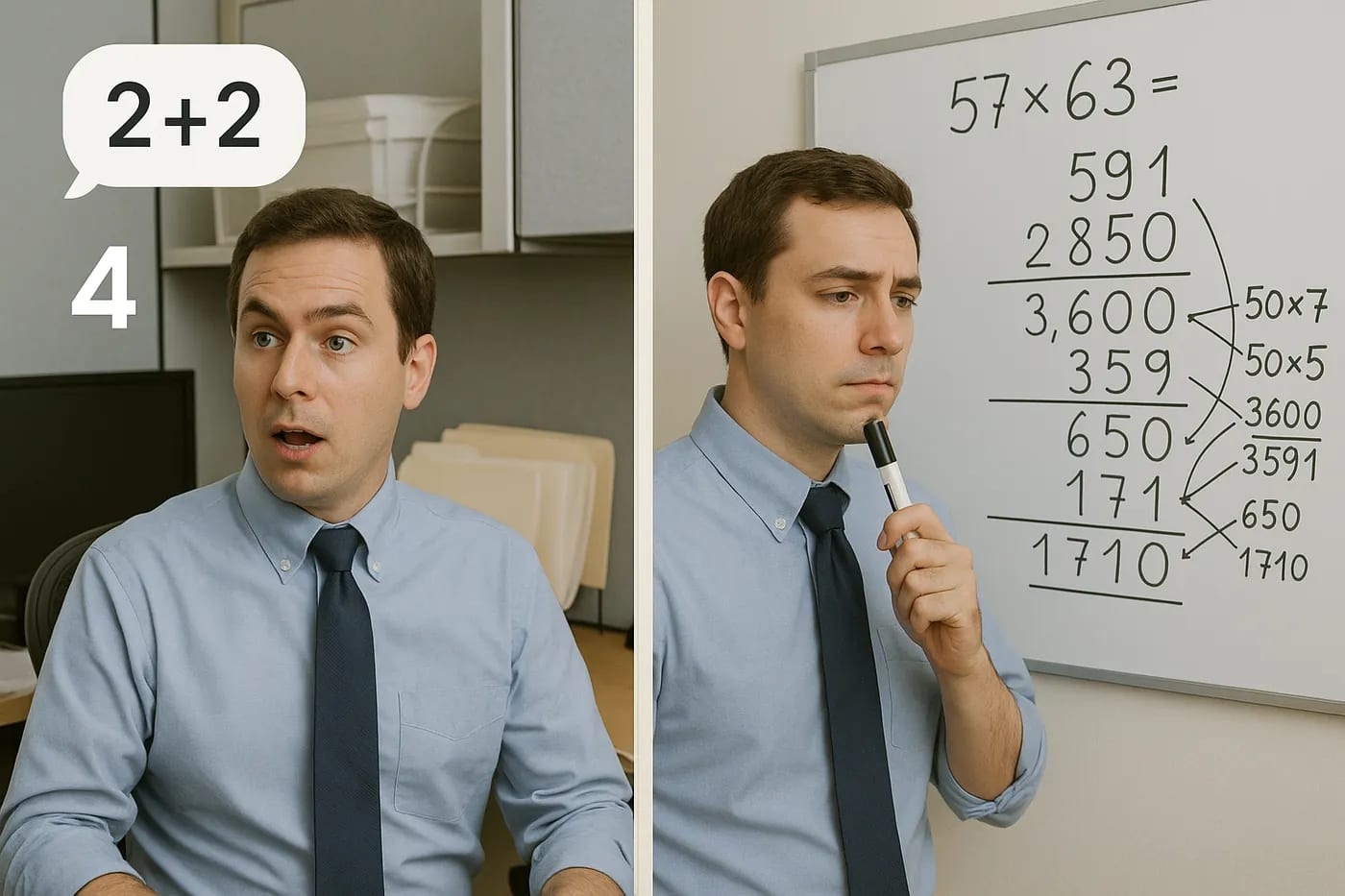
This fast-first approach to AI has been the norm for years. Tech leaders have pushed for models that answer in milliseconds and train on terabytes of data. The speed-first paradigm assumes that if we make models bigger and faster, they’ll eventually crack those harder problems. To some extent, this worked, - today’s language models can output fluent answers in the blink of an eye. But ask them to multiply 57 by 63 or plan a multi-step process, and you might get a flashy guess instead of a correct solution. It’s as if we trained race cars to win drag races and then entered them in an off-road rally , - they’re out of their element. Researchers have tried to bolt on reasoning via techniques like chain-of-thought prompting or reinforcement learning with reasoning steps, but these fixes tend to be narrow in scope. Often they only work in tightly defined areas (for example, solving math equations or coding puzzles) and can even hurt performance on open-ended tasks like creative writing (VentureBeat). In short, our AI “hares” are speedy, but they struggle when the terrain gets tricky, because they’ve never really learned how to slow down and think things through.

That’s why a recent development is causing a buzz in the AI world. At the beginning of the month, a team of scientists from several top universities and industry labs, - including the University of Illinois, University of Virginia, Stanford, and Amazon’s AI research division, asked a profound question: Can an AI learn to slow down and reason carefully, all on its own, without explicit human coaching? (arXiv). Their answer is a novel architecture called Energy-Based Transformers (EBTs), and it’s essentially an attempt to give the AI hare a bit of tortoise wisdom. EBTs introduce a form of System-2 reasoning into AI by making the model think in multiple passes instead of one shotgun burst. Rather than generating an answer in one go, an EBT will generate an initial guess and then iteratively refine it, checking its work at each step. It’s like having an internal editor or a built-in circuit that says, “Hold on, let me double-check that,” before finalizing the output. Crucially, this approach doesn’t rely on some hand-crafted rule or a library of correct answers. The system learns how to verify and improve answers on its own from raw data, a bit like how we humans learn reasoning by trial and error as children. The researchers deliberately trained EBTs through unsupervised learning, - no special rewards for right answers, letting the model discover for itself how to get better at thinking. In doing so, the EBT paradigm signals a pathway toward more flexible AI that can adapt its depth of reasoning to the problem at hand instead of just reacting on impulse (MarkTechPost).
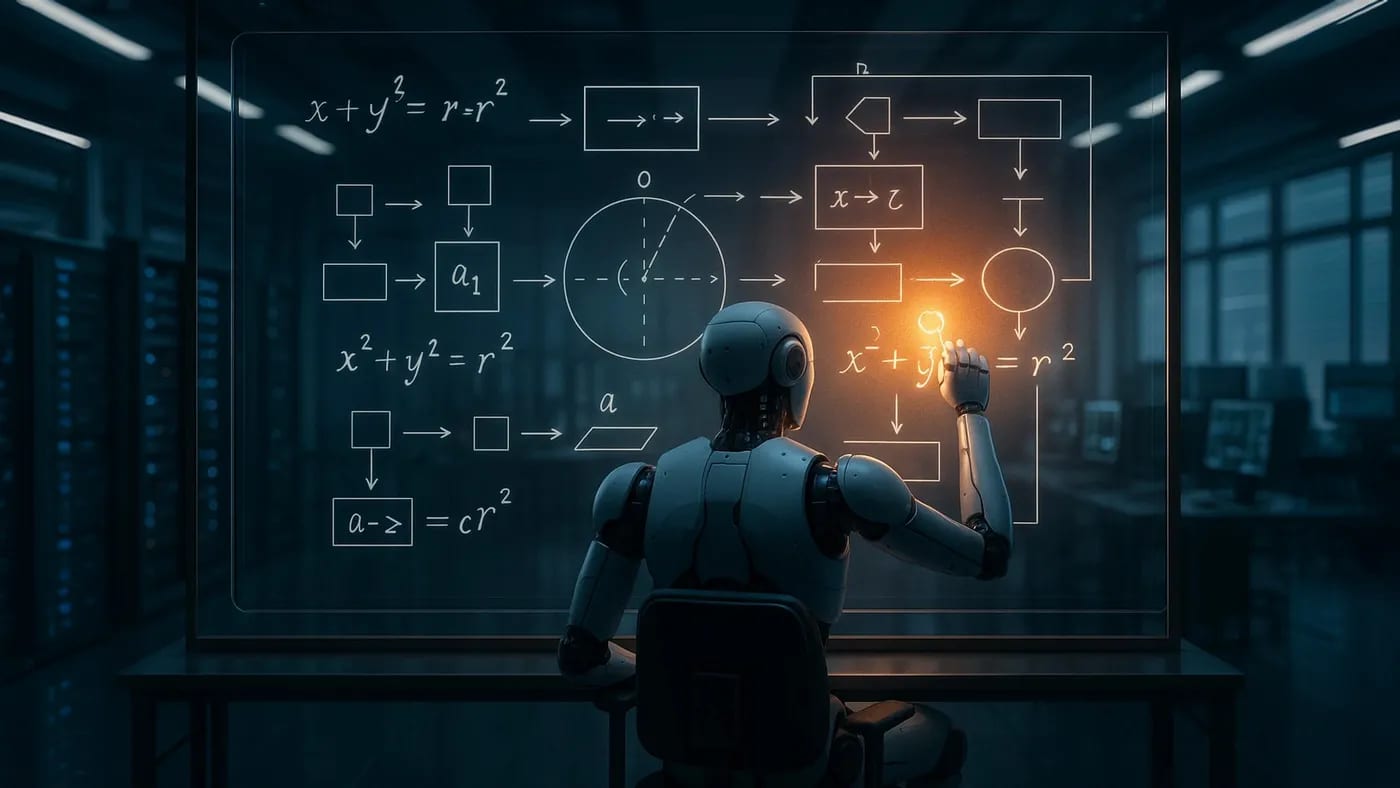
So how does an Energy-Based Transformer actually work? In essence, it turns problem-solving into a kind of optimization game. Think of a golfer who doesn’t know the course but can sense how close each swing gets them to the hole, - they adjust swing by swing until the ball drops in. Similarly, an EBT starts with a random initial answer and then measures an “energy” value that tells it how well that answer fits the question or context. The lower the energy, the better the fit, - low energy is like a low score (good news). If the energy is high (meaning the answer seems off-target), the EBT tweaks the answer and checks again, repeatedly, until it finds a solution that it can’t easily improve further, - it reaches a low-energy sweet spot. This process is powered by an internal verifier that the model has learned, - a neural network component trained to output low energy for correct or compatible answers and high energy for wrong ones. In practice, it’s as if the model is asking itself “Does this make sense?” and if the answer is “not quite,” it goes back and thinks a bit more. All of this happens in fractions of a second, but the key is that EBT can allocate more computing time to harder problems and less to easier ones, dynamically. Under the hood, this method is rooted in the concept of energy-based models championed by AI pioneers like Yann LeCun for years, but EBTs make it practical at scale by marrying it with the transformer architecture. The outcome is an AI that doesn’t just blurt and move on. It checks its work as needed, much like a cautious expert reviewing a proposal before sending it off.
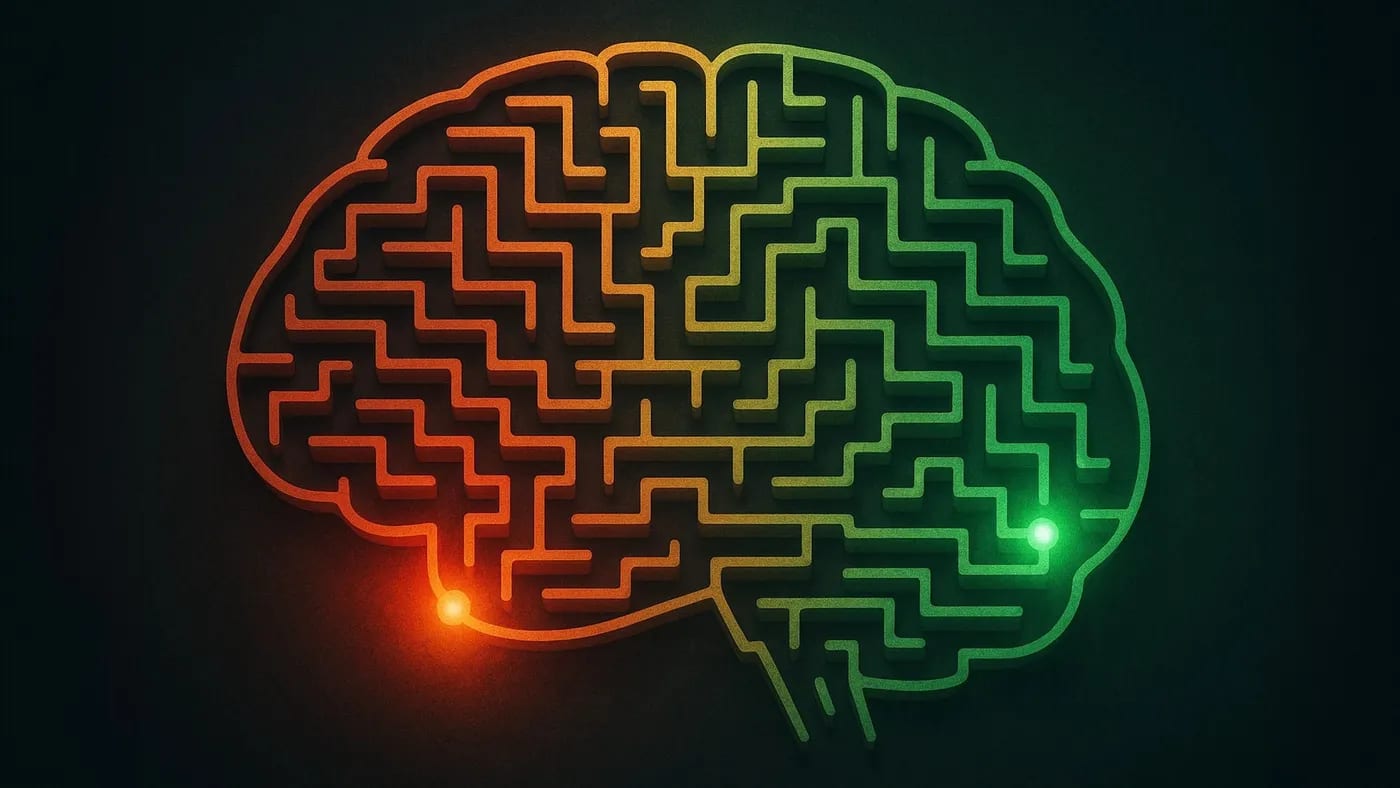
From a capabilities standpoint, giving an AI this kind of self-reflective loop is powerful. It endows the model with what we might call a “sense of uncertainty and verification*.*” For example, if you ask a conventional system a hard question, it will still give an answer, - the model doesn’t typically say “I’m not sure” unless specially trained to do so. An EBT, on the other hand, inherently gauges how good its answer is at each refinement step, because that’s what the energy represents. If the answer isn’t good, the EBT senses that (high energy) and keeps working. It’s akin to how you or I approach a tough math problem. First, you recognize you don’t know the answer outright acknowledging uncertainty, then you work through it step by step taking more time, and finally you double-check your solution and verify it’s degree of accuracy. Current feed-forward AIs never really learned that process. They either know the answer immediately or they don’t, with no middle ground. EBTs are designed to naturally exhibit those three human-like reasoning facets:
-
Elastic Thinking for the ability to think longer when needed.
-
Uncertainty-Aware for expressing uncertainty via an internal energy metric.
-
Self-Verification for checking the quality of each prediction.
This marks a shift from the one-shot, take-it-or-leave-it style of most AI outputs. In practical terms, imagine an AI that, when faced with a borderline case, - say, an unusual customer request or a tricky diagnostic scenario, doesn’t just hazard a guess, but effectively “sweats over it” for a few extra milliseconds to make sure it’s getting it right. That kind of capability could save a lot of headaches, and perhaps lives, when errors are costly.
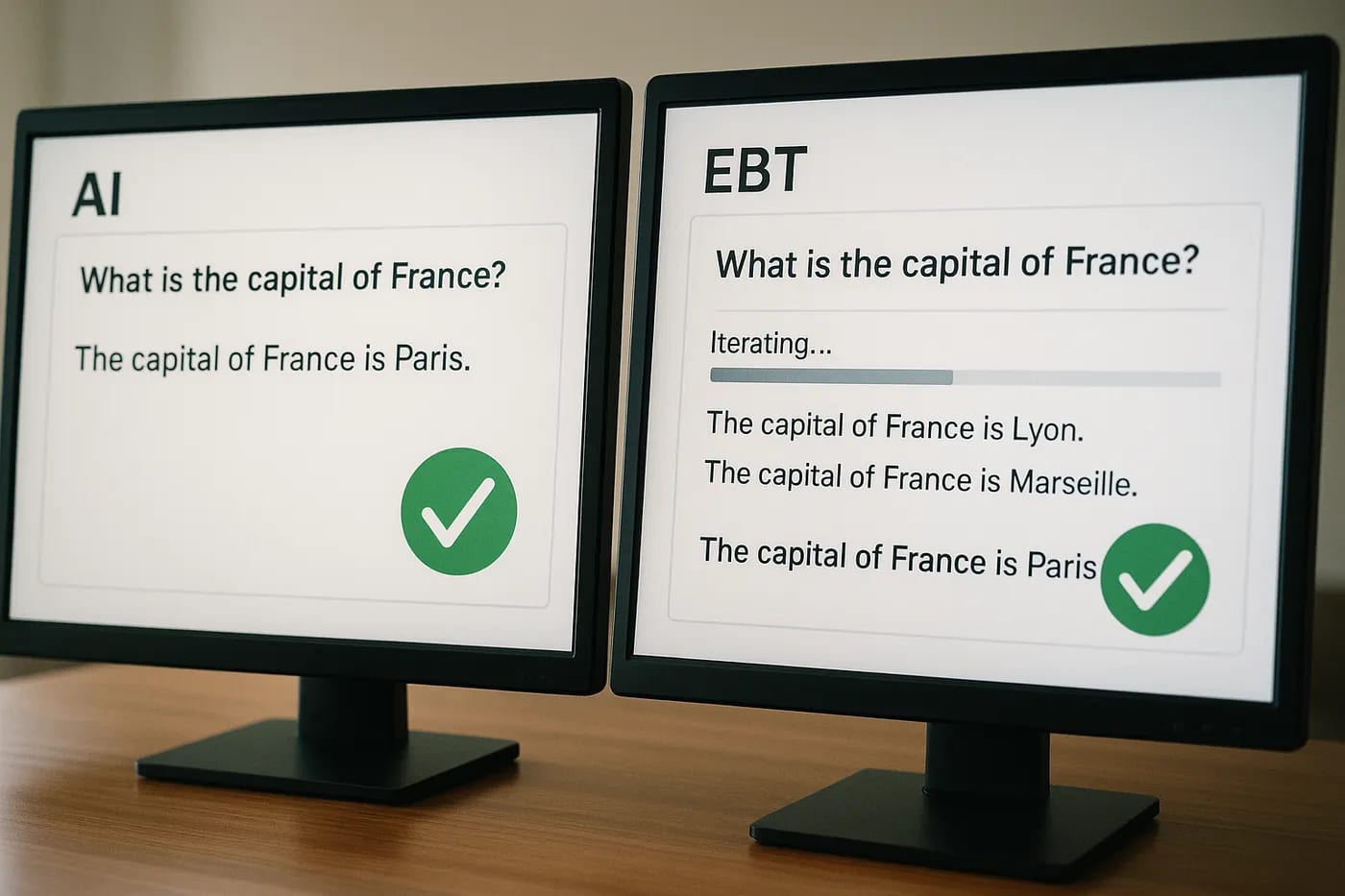
What’s truly intriguing is that Energy-Based Transformers not only think more carefully, they also learn more efficiently in the first place. This was a pleasant surprise. One might assume that adding all these extra “thought loops” would bog down learning or require mountains of extra data. Yet, in experiments, EBT models outpaced their traditional counterparts during training. The researchers found that EBTs achieved the same level of performance as a strong conventional transformer (nicknamed “Transformer++” in the tests) with up to 35% less training data and compute resources (arXiv). In other words, the EBT learned faster. It squeezed more juice out of each training example. One way to interpret this is that by learning a verifier first (distinguishing good vs. bad outputs) and then generating answers through optimization, the model makes better generalizations. Verifying a solution is a simpler task than producing a perfect answer from scratch, so the EBT finds patterns more readily without overfitting to every quirk of the training set. From a business perspective, this hints at AI models that could reach high performance with less data, which is especially appealing if you don’t happen to sit on a Google-sized trove of information. A system that’s 35% more data-efficient might cut down on expensive data collection and training times for a given level of capability. It’s a promising sign that thinking deeper doesn’t have to mean moving slower in the long run. It might actually be a faster route to understanding.
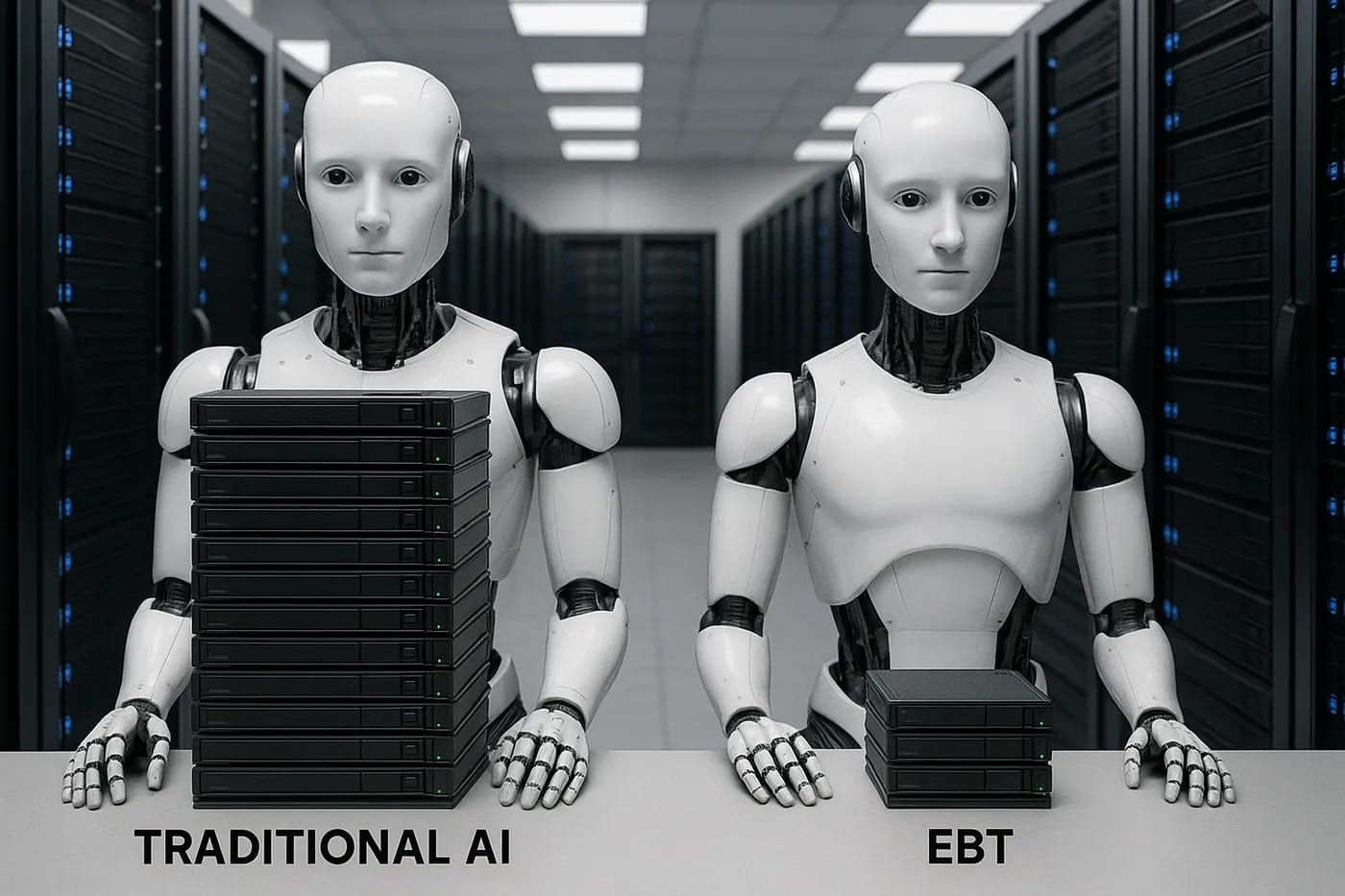
The benefits become even clearer when you let the model loose on real tasks. When it came to solving challenging problems at runtime, EBTs showed a remarkable jump in performance over the standard approach. In language tests, simply allowing the EBT to “think a bit longer”, i.e., do more internal optimization steps, boosted accuracy and problem-solving success by as much as 29% compared to the fast-but-shallow Transformer++ baseline (TheDecoder). Notably, the hardest questions, - ones very different from what the model saw in training, saw the biggest gains. It’s as if the EBT’s extra deliberation paid off exactly when it encountered the unfamiliar, much like a person taking extra time when faced with a brand-new kind of problem. This held true beyond text as well. In an image-based task, where the goal was to clean up noisy pictures (a common test of generative models), an Energy-Based Transformer not only outperformed a cutting-edge diffusion model, but it did so while using only 1% of the usual processing steps. That almost sounds like a typo, but it’s correct. The EBT needed just a few iterations to denoise an image where the conventional model required hundreds of sequential steps. This efficiency could translate to faster, more energy-efficient AI in applications like vision or graphics, turning what used to be minutes of computer crunching into seconds. Moreover, EBTs appeared to learn more meaningful representations of data. For instance, one measure showed an EBT’s learned visual features yielded substantially higher accuracy on an image classification benchmark, indicating it wasn’t just memorizing noise but truly grasping the content. All these results reinforce a tantalizing idea. When an AI has the ability to reason through each decision, it doesn’t just get the answer right more often, - it also ends up with a deeper understanding of whatever domain it’s working in.

No technological breakthrough is without its trade-offs, and EBTs are no exception. In their current form, Energy-Based Transformers demand significantly more computing power to train than standard models. Estimates suggest on the order of 3.3× to 6.6× more FLOPs (floating point operations) were needed to train EBTs versus equally sized traditional transformers. This means that while you might save on data, you’ll spend more on GPU time upfront to get an EBT off the ground. For many companies, especially startups or those without extensive AI infrastructure, that extra cost could be a barrier. There’s also the question of scalability. So far, the research has proven EBT’s promise on models with hundreds of millions of parameters, dwarfed by today’s multi-billion-parameter giants. It remains to be seen if the advantages hold, - or even grow, at the scale of the largest AI models that tech giants deploy (TheDecoder). And while perplexity and image benchmarks are useful proxies, business leaders will rightly ask if EBTs can tackle real-world reasoning tasks better than the current best models? The original study didn’t directly pit EBT against the likes of GPT-4 or other specialized reasoning systems on things like lengthy legal reasoning or complex decision-making, largely due to the immense cost of such experiments. So, there is more validation needed in domains that truly matter to enterprises. In summary, EBTs aren’t a magic wand, - not yet. They introduce new costs and still need testing at scale. But they do challenge the long-held assumption that more speed or bigger models is the only way forward. They offer a glimpse of an alternative path where an AI can be smarter not just by being larger or faster, but by being a more thoughtful problem-solver.

The implications of Energy-Based Transformers for the industry are significant. For technology leaders, EBTs hint at a future where AI systems can adapt on the fly to novel challenges, making them more resilient in dynamic business environments. Imagine deploying a customer service chatbot that, when confronted with an off-script customer request, can internally pause and reason out a creative solution instead of defaulting to “Sorry, I don’t understand.” Or think of an autonomous supply chain AI that can handle a completely new disruption gracefully by simulating and evaluating options internally, rather than retraining a model from scratch. Because EBTs generalize better to out-of-distribution scenarios (situations they weren’t specifically trained on), a single well-trained EBT-based model might handle a wider array of situations, reducing the need to maintain a portfolio of specialized models for every edge case (VentureBeat). This could translate into cost savings and faster deployment when entering new markets or dealing with unforeseen data. The model figures it out without a team of engineers scrambling to fine-tune it for the new scenario. Furthermore, EBTs underscore a shift in AI development values from “How fast can it answer?” to “How well can it reason?”. For decision makers, that might mean revisiting KPIs for AI projects. We might start measuring success not just in throughput or immediate accuracy, but in an AI system’s robustness and thoughtfulness on the hard problems that really impact the business.
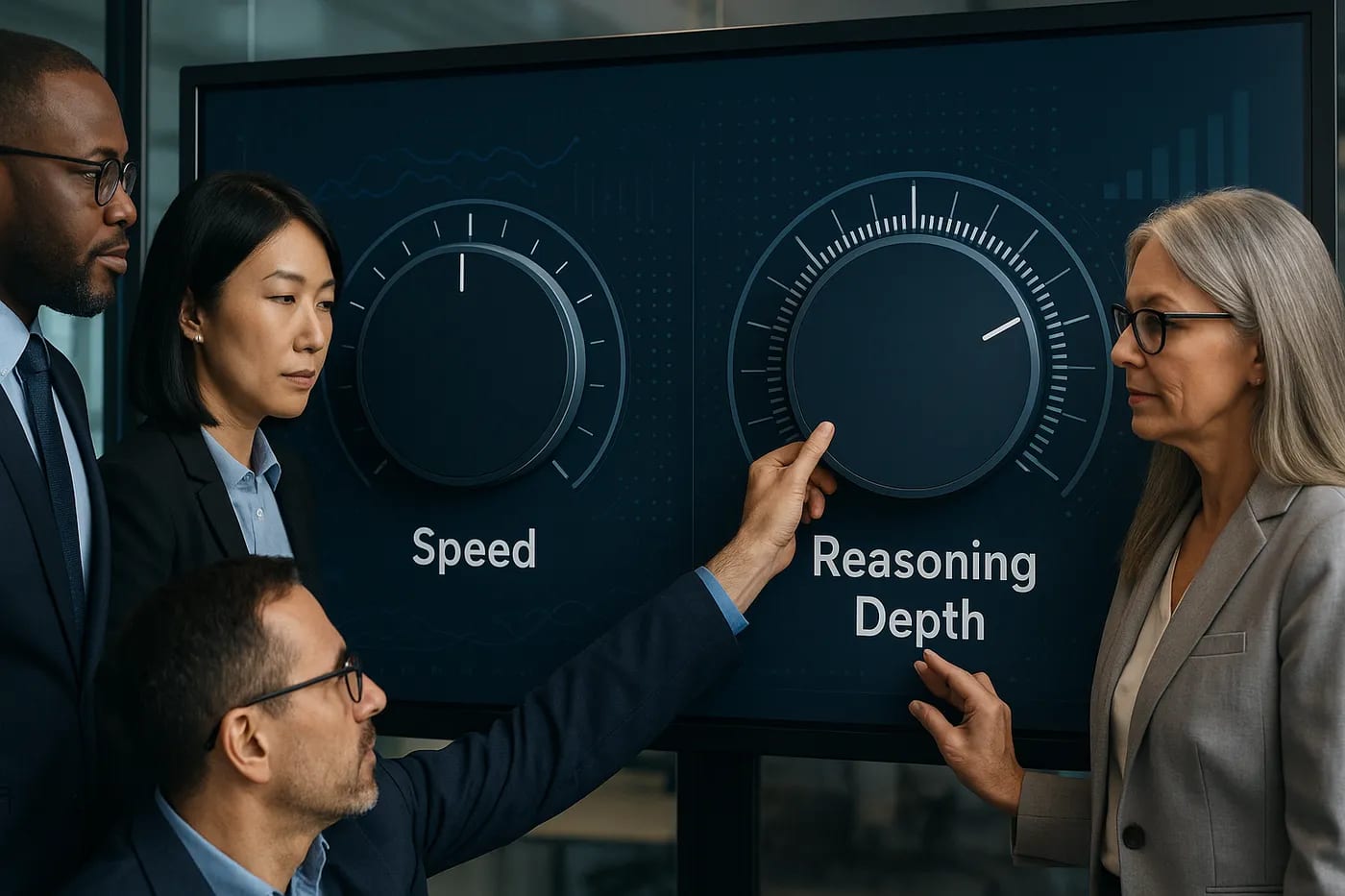
Ultimately, challenging the speed-first paradigm is about recognizing that in many scenarios, quality trumps speed. Yes, there will always be applications where milliseconds matter and a rough answer now beats a perfect answer later. But for the high-stakes decisions, - the ones that can sway a quarterly result or pose a compliance risk, an AI that can think things through like a seasoned analyst could be a game changer. Energy-Based Transformers are one of the first tangible signs that such AI is achievable. They remind us of a simple truth that we all know, but sometimes forget in the rush of innovation: sometimes you have to slow down to go further. The tortoise didn’t win by being flashy. It won by being steady and smart. In the same way, our next-generation AI might not boast the fastest answer every time, but it could deliver the most considered one. And in a world where businesses succeed or fail on the soundness of countless micro-decisions, having AI that consistently makes well-reasoned decisions is an edge you can’t ignore.

As technology and innovation leaders, it’s time to broaden our perspective on what “good AI” means for our organizations. Speed is impressive, but thoughtfulness, reliability, and adaptability are what drive lasting value. Energy-Based Transformers and similar advances are opening the door to AI that approaches problems more like a human expert and less like a turbo-charged autocomplete. We should encourage our teams to experiment with these ideas, even on a pilot scale, to see where a bit of “slow thinking” can make a big difference. This might mean adjusting our metrics, investing in research, or simply fostering a culture that values why and how an AI arrives at an answer, not just how fast.

The next time you review an AI strategy or listen to a pitch about a new model’s capabilities, consider asking: Can it reason through a hard problem, or just react? In the coming years, the winners will be those who harness AI that doesn’t merely run at speed, but knows when to tap the brakes and think. It’s a clever, counterintuitive shift, - and it might just define the competitive edge in the years ahead.

Further Readings
-
Energy-Based Transformers are Scalable Learners and Thinkers – Alexi Gladstone et al., July 2025. The original research paper introducing EBTs. It explains how the authors combined Transformers with energy-based models to enable unsupervised “System 2” reasoning. The paper presents detailed experiments showing EBTs’ improved scaling efficiency (35% data savings), better reasoning performance, and stronger generalization compared to standard Transformers.
-
New Energy-Based Transformer architecture aims to bring better “System 2 thinking” to AI models – Maximilian Schreiner, July 2025. An accessible news article summarizing the EBT research. It highlights key findings such as EBT’s 29% performance boost on language tasks with iterative reasoning and its success in image processing with far fewer steps. The piece also discusses the trade-offs, like higher training costs, and why this approach matters for the future of AI.
-
A new paradigm for AI: How ‘thinking as optimization’ leads to better general-purpose models – Ben Dickson, July 2025. A VentureBeat analysis focusing on what EBTs mean for enterprises. It provides context on System 1 vs. System 2 thinking in AI, describes the energy-based approach in lay terms, and underscores potential business impacts – from more cost-effective models that require less fine-tuning to the ability to handle novel situations through inference-time reasoning.
-
Unsupervised System 2 Thinking: The Next Leap in Machine Learning with Energy-Based Transformers – Nikhil, July 2025. A MarkTechPost article that frames EBTs as a significant step toward AI that “thinks” more like humans. It emphasizes the unsupervised learning aspect of EBTs – learning to reason without explicit rewards – and discusses how this paradigm could yield more flexible AI systems capable of adjusting their reasoning depth to each problem’s demands.
Disclaimer: The perspectives shared in this article are my own and do not represent those of my employer or any affiliated organizations. All company names, product names, logos, and brands mentioned are the property of their respective owners and are used for identification and illustrative purposes only. No endorsement, sponsorship, or affiliation is intended or implied. References to specific companies or case studies are based on publicly available information and are used solely for educational and discussion purposes.
More from machine minds
All machine minds → machine minds
From Brittle to Brilliant: How Model Synthesis Architecture (MSA) Is Reinventing AI Reasoning
It’s past midnight on a high-tech manufacturing floor, and the assembly line has ground to a halt. An emergency alarm blares as a baffled shift supervisor calls the plant manager. The factory’s AI system, - normally excellent at optimizing…
 machine minds
AI’s Hidden Idea Factory: How Latent-Space Creativity Engines Are Reshaping Innovation
In a recent product strategy meeting, a CEO posed a wild challenge: “Give me an idea for a gadget that doesn’t exist yet.” The usual brainstorming suspects, - sticky notes, whiteboards, polite pauses, fell flat. Then an AI system piped up…
 machine minds
Test-Time Neural Plasticity: AI That Adapts on the Fly
It’s 2 AM at a busy call center, and an irate customer is on the line. Suddenly, the AI support agent’s voice changes mid-sentence, - its formal script softens into a gentle, empathetic tone. This shift isn’t pre-programmed by a developer;…