From Brittle to Brilliant: How Model Synthesis Architecture (MSA) Is Reinventing AI Reasoning
Listen · the Bit & Being podcast
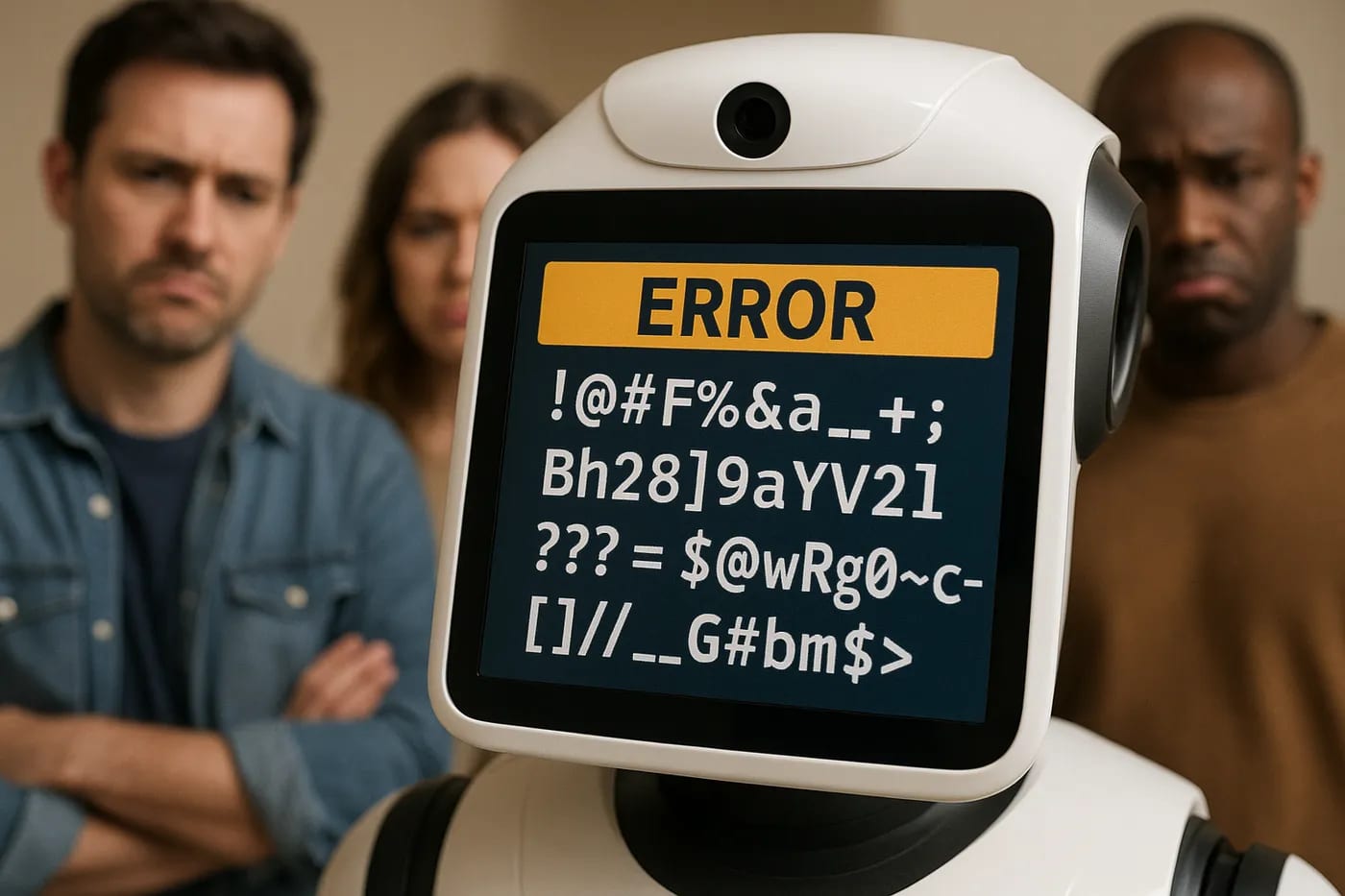
It’s past midnight on a high-tech manufacturing floor, and the assembly line has ground to a halt. An emergency alarm blares as a baffled shift supervisor calls the plant manager. The factory’s AI system, - normally excellent at optimizing routine workflows, stands useless, because a rare equipment failure has triggered a scenario it was never trained to handle. The AI, which could predict demand and fine-tune machinery when things were normal, now shrugs in digital confusion. In this tense moment, every passing minute costs thousands of dollars, and a frustrated executive wonders: Why didn’t our brilliant AI see this coming?

Situations like this highlight a sobering truth. Today’s smartest AI systems can become deer in headlights when faced with the unfamiliar. We’ve built AI that’s phenomenal at recognizing patterns and predicting within the lines, - like an autocomplete whiz finishing your sentences, but throw them a curveball outside their training data and they falter. In less dire settings, it’s merely amusing, - think of a chatbot rambling nonsensically when asked about an obscure fantasy novel. In high-stakes environments, it’s downright scary. The fundamental problem is that most AI doesn’t truly understand the world. It learns correlations from mountains of data, but it lacks the on-demand reasoning to adapt when reality diverges from those historical patterns. It’s as if we’ve been training champion racehorses that run flawlessly on a track, only to watch them get lost on an open trail.
For years, researchers have dreamed of AI that can think on its feet, - systems that combine the pattern savvy of neural networks with the structured reasoning of classical algorithms. In early 2025, that dream took a big step toward reality. Leading teams from Stanford, MIT, Harvard and more converged on a new approach called Model Synthesis Architecture (MSA), a two-part AI design that could fundamentally change how machines handle novelty. In an academic paper presented at the Cognitive Science Conference, these researchers showed how an AI can use a large language model’s encyclopedic knowledge to assemble a custom-made probabilistic model on the fly for any given situation, then reason over that model to draw conclusions. In plain terms, the AI builds a mini “world model” on demand. Instead of relying solely on canned patterns, it actively constructs a causal model of the scenario at hand, - much like a human expert brainstorming a quick mental game plan for a new problem. Early tests showed that this hybrid MSA system could reason through novel challenges more like a person would, outperforming AI that only uses an LLM with canned responses (https://www.arxiv.org/abs/2507.12547).
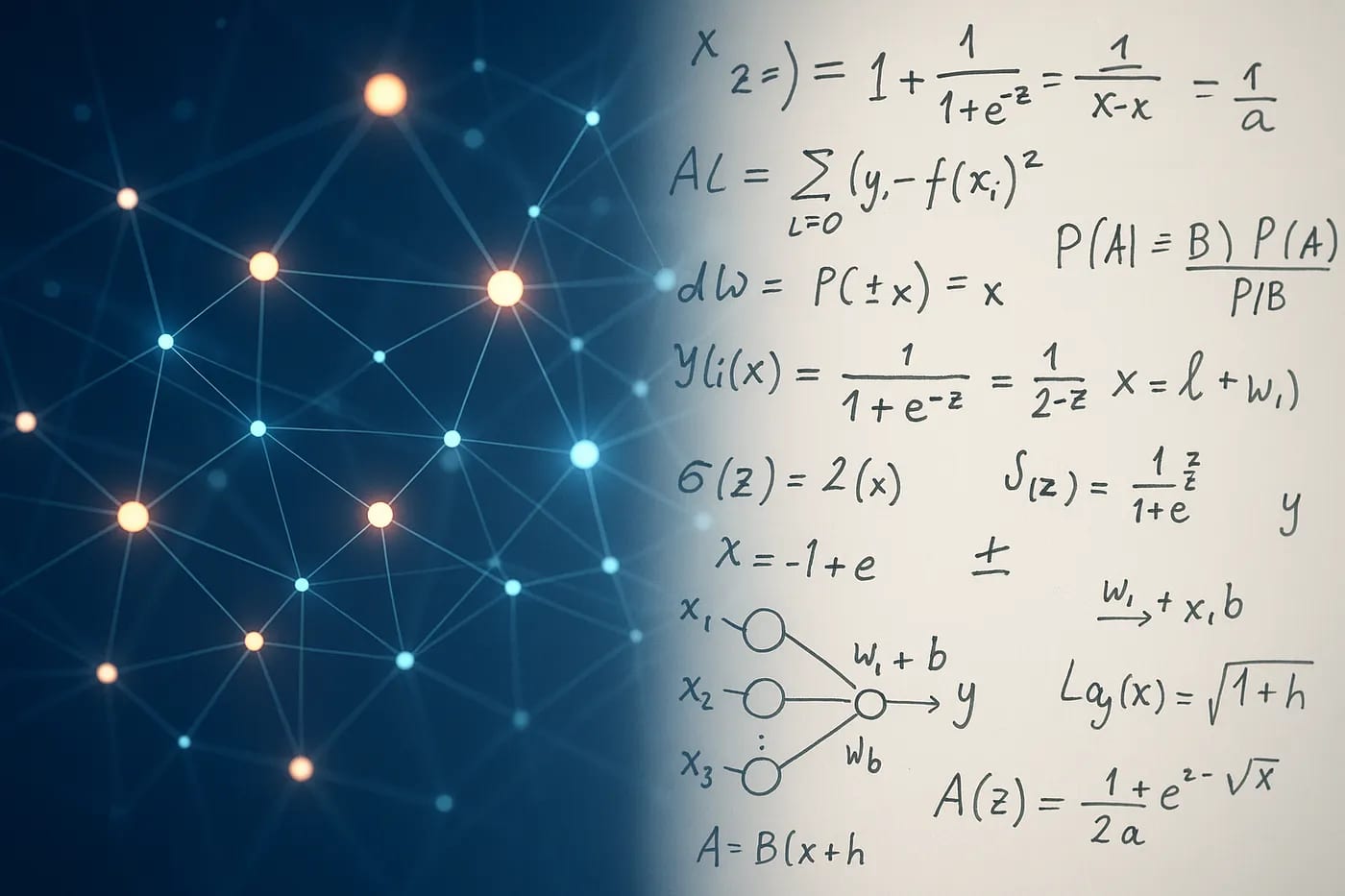
Here’s how MSA works in practice. Imagine the AI as a crafty problem-solver with two modes. Mode one is the savvy librarian, - powered by a vast language model, scouring all available knowledge to fetch relevant facts and hints. Mode two is the logical planner, - powered by a probabilistic program, that takes those hints and builds a custom model to infer what might happen next. If mode one is intuition, mode two is structured analysis. By uniting these, the AI can, for example, encounter a completely new combination of events and construct a causal explanation on the spot. This approach was put to the test in a “Model Olympics” of reasoning tasks, where AI had to make judgments about bizarre, made-up scenarios described in text. The result? The MSA-based AI handled these fantastical situations with remarkable human-like coherence, while a plain language model tripped over the absurdities. The ability to synthesize new models on demand gave the system an edge in open-ended reasoning. It’s a bit like the difference between a student who memorizes answers and one who knows how to work through any problem thrown at them.

This development also represents a long-awaited truce in AI’s own “culture war.” For decades, one camp championed neural networks, - learning from data, flexible but opaque. Another camp held out for symbolic AI, - following explicit rules, reliable but rigid. They were like two colleagues who couldn’t stand each other’s approach. Model Synthesis Architecture effectively compels them to work together, each covering the other’s blind spots. The neural side provides breadth, dredging up whatever background knowledge might remotely be relevant. The symbolic side provides depth, weaving those pieces into a coherent causal model with understandable assumptions. The upshot is an AI that can explain its reasoning because the probabilistic model is transparent and adapt on the fly, without needing a human to pre-program every rule. No wonder experts are dryly joking that this is “the marriage counseling session for AI’s estranged parents.” Even companies like DeepMind are exploring similar hybrids, - for instance, by embedding search algorithms inside neural networks to solve complex planning problems (https://arxiv.org/abs/2505.14240). This year is shaping up to be the moment when these once-opposed techniques finally team up, ushering in what one observer calls a “Neuro-Symbolic Renaissance.”

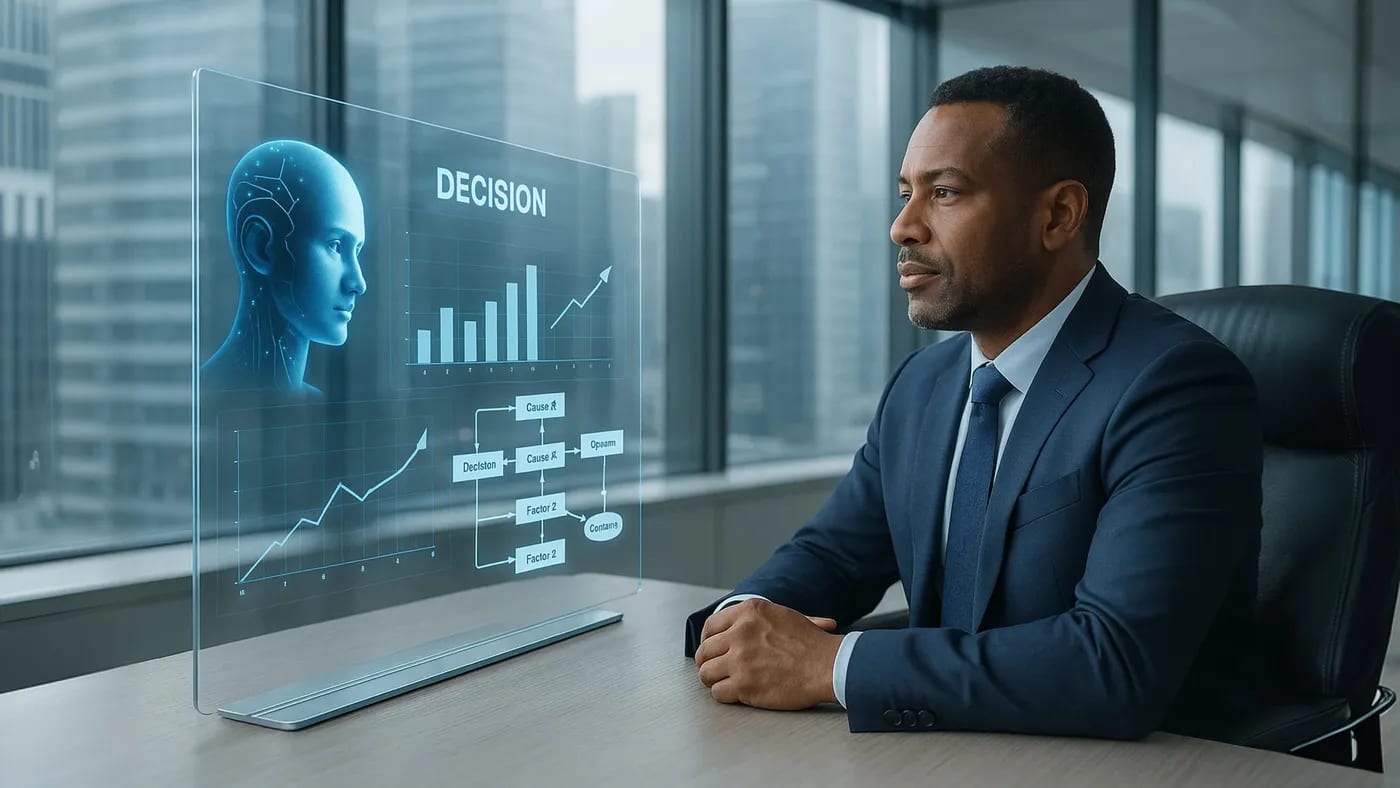
For technology leaders, this isn’t just academic intrigue, - it’s a potential game-changer for real-world AI deployments. An AI that can reason about unforeseen events means fewer nasty surprises in mission-critical systems. Imagine having a supply chain AI that, when confronted with a sudden natural disaster, immediately whips up a new scenario model to predict impacts and suggest alternatives, rather than throwing up its hands. Or consider financial AI that can encounter an unprecedented market shock and show its work in figuring out the implications, so human decision-makers can follow the logic. This next generation of AI will be more transparent, able to justify its recommendations in clear terms, because under the hood it’s manipulating symbols and probabilities we can inspect. It will be more robust under uncertainty, because it’s explicitly modeling uncertainty rather than getting tripped by it. And crucially, it will be more adaptable, capable of learning on the fly without waiting for a retrospective data update. In an era when trust in AI is paramount, these qualities address the “black box” fear that often keeps leaders up at night. An MSA-based system doesn’t just give an answer, - it gives a mini whiteboard session on why that answer makes sense.
Consider healthcare, where the unexpected isn’t a matter of if, but when. In a future pandemic scenario, a medical AI equipped with world-modeling could rapidly synthesize a model of a novel pathogen by pulling on everything from virology research to travel data. Rather than relying solely on patterns of known diseases, it would infer the likely transmission paths and risk factors of the new illness, offering doctors a running start in containment and treatment. We had a taste of this need during COVID-19, when early-warning systems struggled because the virus broke the mold. A hybrid AI might have fared better by dynamically modeling the outbreak as it unfolded, potentially highlighting effective interventions sooner. Even in day-to-day healthcare, such AI could personalize treatment by modeling an individual patient’s unique combination of conditions, instead of applying one-size-fits-all predictions. The result would be decision support that’s both innovative and reliable, - a doctor’s clever assistant that can propose outside-the-box hypotheses and back them up with logical reasoning.

In finance, the strength of this approach becomes managing the unknowable. Markets can turn on a dime with never-seen-before combinations of events, - ask any risk manager who lived through 2008 or 2020. Imagine an investment AI that, upon sensing a bizarre market anomaly, instantly generates a custom probabilistic model linking supply chain rumors, social media sentiment, and regulatory news into a coherent picture. It might say, “Here’s what could be happening, based on these pieces of evidence, and here are the most likely outcomes,” rather than simply throwing its hands up or making a wild guess. Crucially, it could also explain the reasoning, - perhaps showing that a sudden drop in tech stocks fits a pattern if we model the interaction between a new algorithmic trading regulation and an unfolding earnings scandal. This level of reasoning is beyond today’s black-box models, but it’s exactly what a Model Synthesis Architecture is designed for, - integrating disparate knowledge and reasoning through uncertainty. For decision-makers, it means AI that doesn’t just spit out a number, but actually tells you a story about the financial world’s state, helping you make informed, strategic moves in turbulent times.

And what about that manufacturing plant at midnight we started with? Let’s revisit it, but now equip the factory’s AI with an MSA-powered upgrade. The critical machine fails, alarms go off, - but this time the AI doesn’t freeze. In seconds, it pulls up schematics, maintenance logs, and even production theory from textbooks. It dynamically synthesizes a probabilistic model of the failure, - maybe a temperature spike plus an outdated part equals a particular circuit overload. The AI runs through possible fixes in its new model-world, identifies a workaround to isolate the faulty component, and flashes a solution to the human operators. Production resumes after a brief hiccup, crisis averted. The difference is night and day. Our once easily flustered AI has become a resourceful troubleshooter, turning an unforeseen problem into just another scenario it can handle. For industry, this means downtime isn’t a given when something weird happens, - your AI can adapt and respond creatively, buying you time and options where previously there were none.
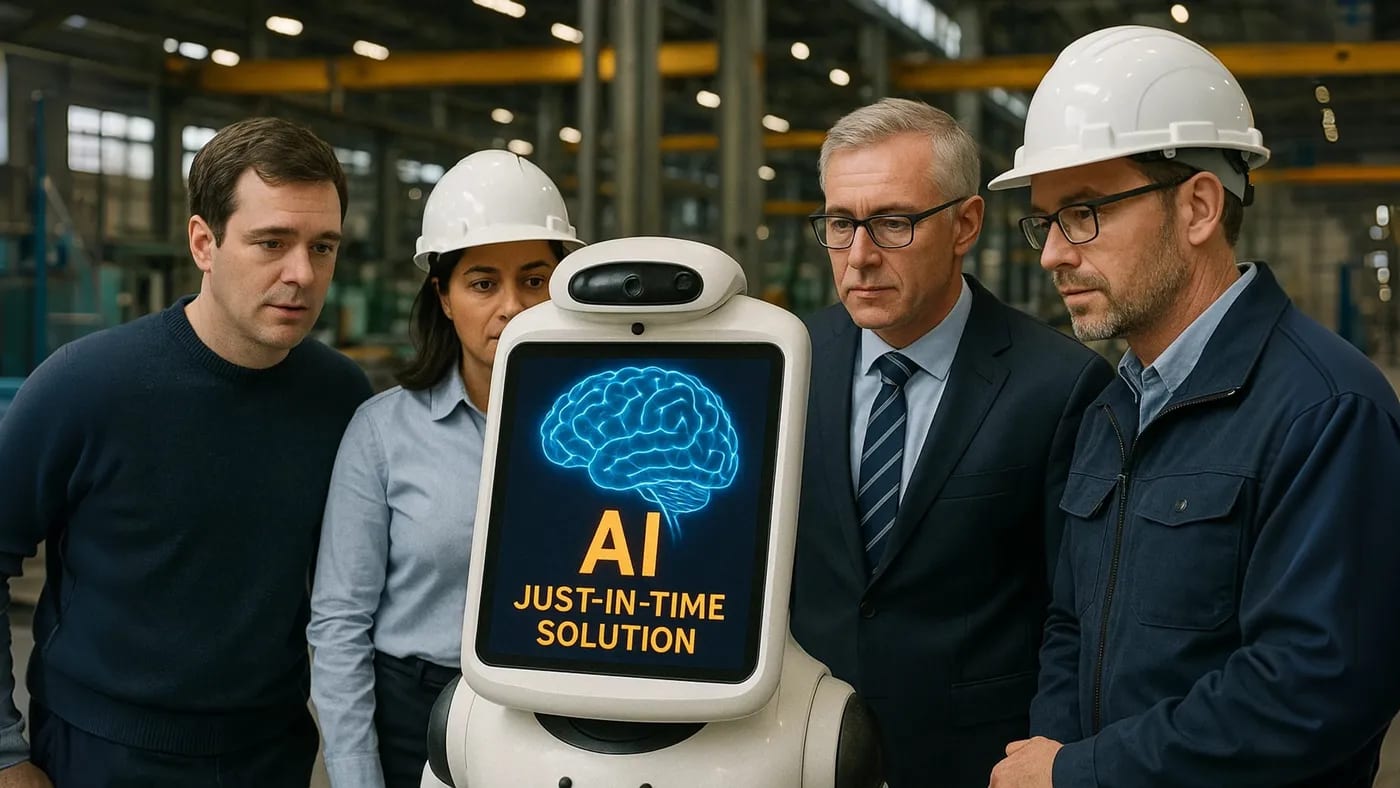
Inflection points in technology come with both excitement and reflection. We’re now at one of those junctures in AI. The narrative is shifting from “bigger data, bigger models” to “smarter architecture, smarter outcomes.” As a tech leader, it’s time to pay attention to this shift. Embracing world-modeling and hybrid AI in your organization’s strategy isn’t just about staying current with research trends—it’s about preparing for a future where AI isn’t stumped by the unknown unknowns. This means encouraging your teams to pilot these approaches, whether through partnerships with research groups or in-house skunkworks projects. It means fostering a culture that values explainability and adaptability as much as accuracy and speed. The dry humor in all this is that, after years of racing forward, AI is looping back to old ideas, like probabilistic models and symbolic logic, and giving them a new shine. And that’s perfectly fine—sometimes the next big thing is realizing what we were missing all along.

Let’s build AI that’s not just clever, but genuinely wise. AI that can say “I don’t know, but give me a minute and I’ll figure it out.” AI that earns the trust of its human partners by being forthcoming about its reasoning and resilient in the face of surprise. For forward-thinking leaders, the emergence of Model Synthesis Architectures and world models is a chance to redefine how your enterprise uses artificial intelligence. It’s an opportunity to move beyond the brittle, opaque systems of yesterday toward AI collaborators that are more like imaginative problem-solvers. The next time an AI encounters a once-in-a-lifetime anomaly, we shouldn’t be hearing silence or nonsense. We should be hearing, “Alright, here’s what might be going on, and here’s what we can try.” That’s the promise on the horizon, - a future where AI doesn’t just predict… it understands, adapts, and innovates alongside us.

Further Readings
-
Modeling Open-World Cognition as On-Demand Synthesis of Probabilistic Models – Stanford/MIT research (Stanford/MIT, July 2025) A multi-institution study introducing the Model Synthesis Architecture. The paper demonstrates how an AI can use an LLM and probabilistic programming to construct fresh “mental models” for novel situations, achieving more human-like reasoning on open-ended tasks.
-
Learning with Local Search MCMC Layers – DeepMind research (DeepMind, May 2025) Google DeepMind’s research paper integrating combinatorial optimization (local search via MCMC) directly into neural networks. This hybrid approach shows how adding structured search components can improve AI planning and decision-making in complex optimization problems.
-
Making AI-generated code more accurate in any language – MIT News (MIT, April 2025) MIT researchers present a technique that guides large language models with probabilistic checks and structures. By steering an LLM to obey the formal rules of programming languages, this work illustrates the power of hybrid AI to produce more reliable and error-free outputs in practical domains.
Disclaimer: The perspectives shared in this article are my own and do not represent those of my employer or any affiliated organizations. All company names, product names, logos, and brands mentioned are the property of their respective owners and are used for identification and illustrative purposes only. No endorsement, sponsorship, or affiliation is intended or implied. References to specific companies or case studies are based on publicly available information and are used solely for educational and discussion purposes.
More from machine minds
All machine minds → machine minds
The AI Breakthrough No One’s Talking About: System 2 via Energy-Based Transformers
Imagine an AI advisor in your board meeting that answers every question before you’ve finished asking it. It’s quick, - sometimes dazzlingly so, firing off solutions like a reflex. But every now and then, that speedy AI blurts out a…
 machine minds
AI’s Hidden Idea Factory: How Latent-Space Creativity Engines Are Reshaping Innovation
In a recent product strategy meeting, a CEO posed a wild challenge: “Give me an idea for a gadget that doesn’t exist yet.” The usual brainstorming suspects, - sticky notes, whiteboards, polite pauses, fell flat. Then an AI system piped up…
 machine minds
Test-Time Neural Plasticity: AI That Adapts on the Fly
It’s 2 AM at a busy call center, and an irate customer is on the line. Suddenly, the AI support agent’s voice changes mid-sentence, - its formal script softens into a gentle, empathetic tone. This shift isn’t pre-programmed by a developer;…