Patch Me If You Can: The Broken Trust Behind Invisible Updates
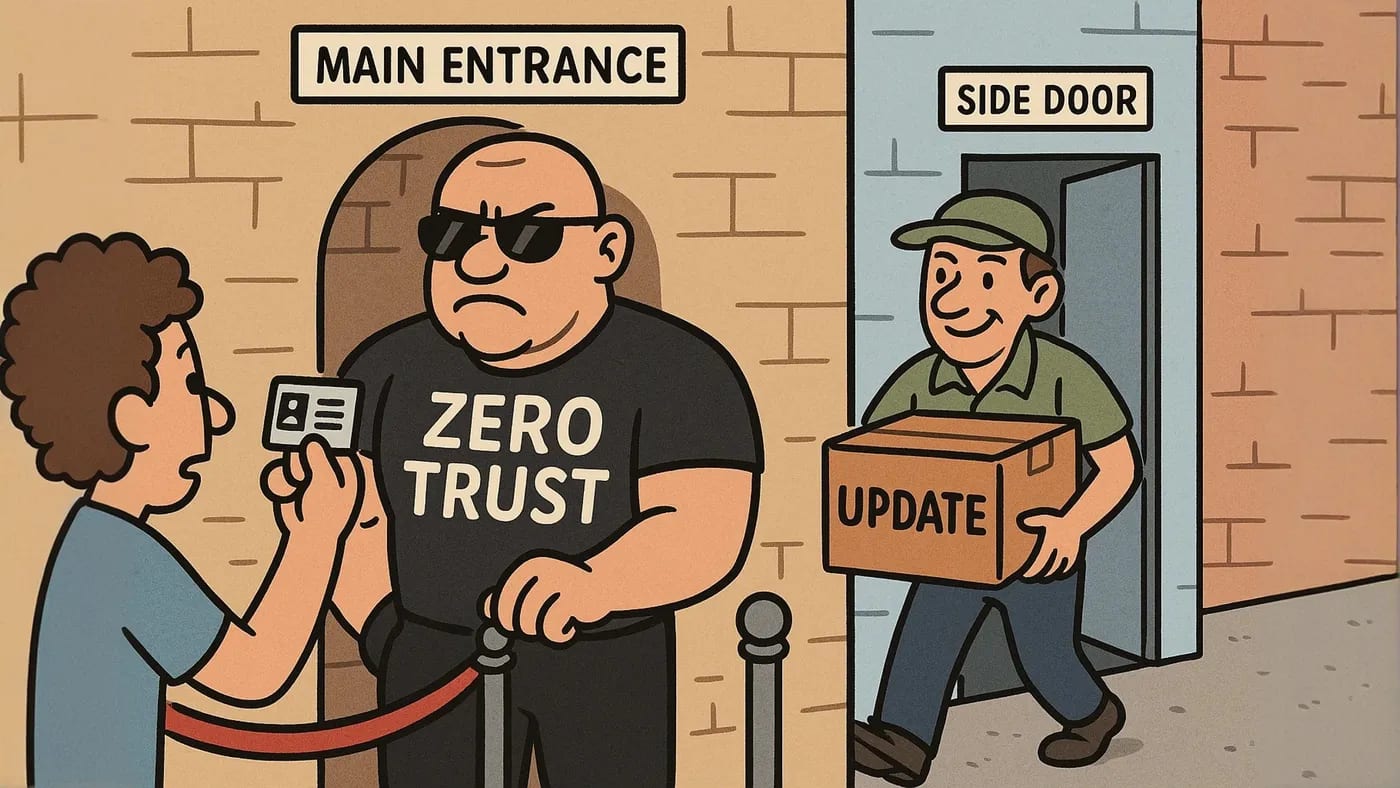
Imagine a trendy nightclub called Enterprise. At the front door stands a bouncer named Zero Trust, rigorously checking every ID. No guest gets in without verification – exactly as advertised. Yet, in a side alley, a familiar smiling face waltzes through the VIP entrance unchallenged. It’s a software vendor, carrying a mysterious package labeled “Update.” By midnight, chaos erupts inside the club. Our baffled bouncer scratches his head, wondering how trouble slipped past the ironclad door. This little allegory isn’t far from reality in today’s organizations. We preach “never trust, always verify,” yet quietly give a free pass to the software that runs our operations.
Welcome to the Zero Trust Paradox. Zero Trust, - the cybersecurity model that assumes every user or device is hostile until proven otherwise, has taken the corporate world by storm. Over 60% of organizations worldwide claim to have at least partially implemented Zero Trust strategies according to darkreading.com. The philosophy is sound: trust nothing by default. Every login, every device connection, every access request must be authenticated and authorized. In theory, even internal traffic gets the “side-eye”. As NIST defines it, Zero Trust stubbornly “assumes all network activity, whether internal or external, is a security threat”, - upguard.com. So how on earth are vendors, external third parties, effectively waltzing past our proverbial bouncer? It turns out we have a blind spot. We trust what we can’t see.
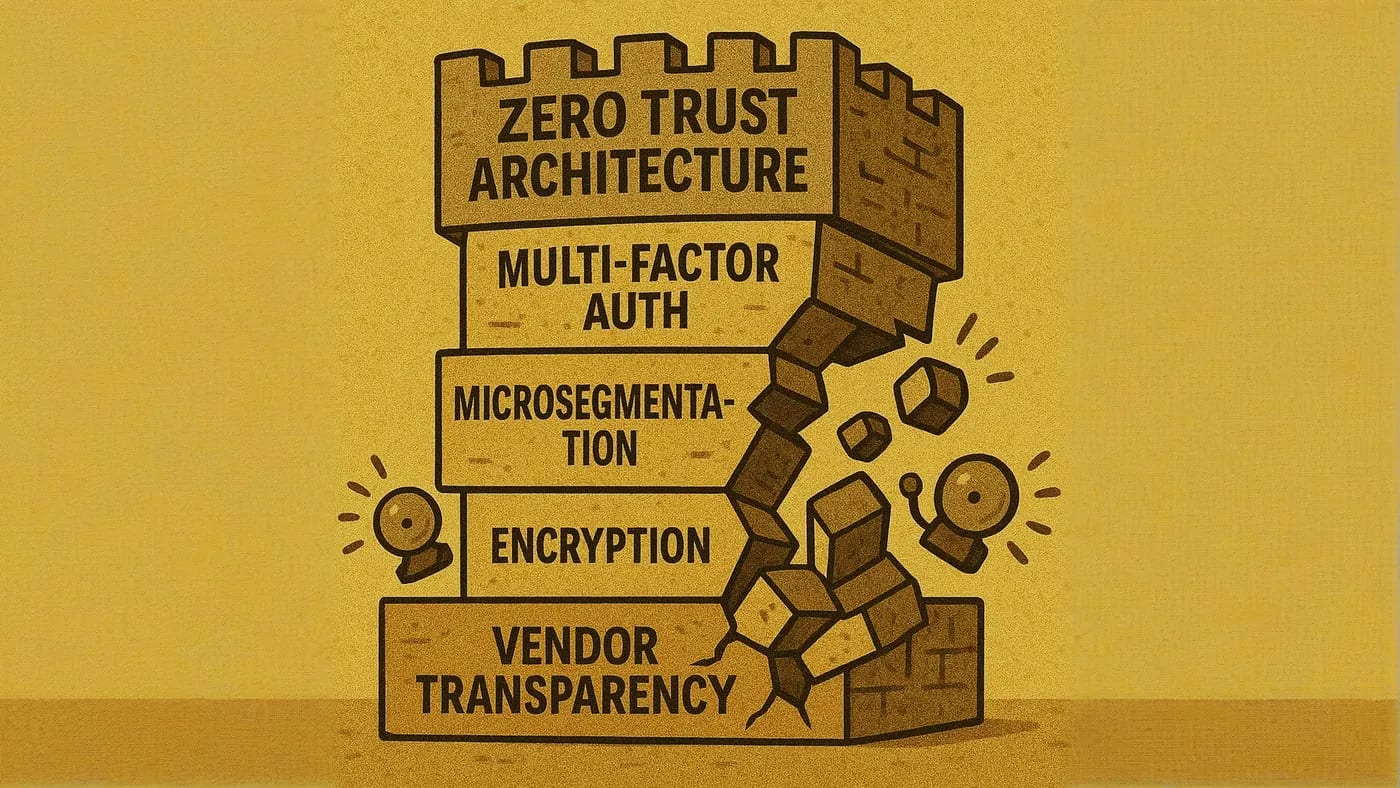
The truth is that many organizations implementing Zero Trust still implicitly trust their software vendors’ products and updates. They’ll micro-segment their networks and enforce multi-factor authentication on every user, but then install a vendor’s patch or allow a software agent’s outbound connection without a second thought. It’s like hiring an expensive security guard for your mansion, but giving the delivery driver a master key because, well, he seems legit. This contradiction between Zero Trust principles and opaque vendor behavior is more than ironic, - it’s dangerous! As Gartner analysts bluntly put it, *“The lack of transparency and trust within the global software supply chain has emerged as a critical issue for organizations of all kinds”, -* securityinfowatch.com. In other words, Zero Trust is dead on arrival if we ignore the trust gaps in our vendor software.

Undocumented Updates & Invisible Connections: The Hidden Risks
One of the biggest blind spots in enterprise security today is the undocumented, invisible behavior of vendor software. Every IT admin has experienced the mystery of the update that “just appears” or the application that “phones home” without warning. In a properly designed Zero Trust network, nothing should be trusted by default, yet vendor software often operates like it’s “above that law”, - performing actions under the radar. This isn’t nefarious by intent most of the time. It’s usually a mix of legacy design, convenience, and our own complacency. But intent matters little when risk enters the equation.
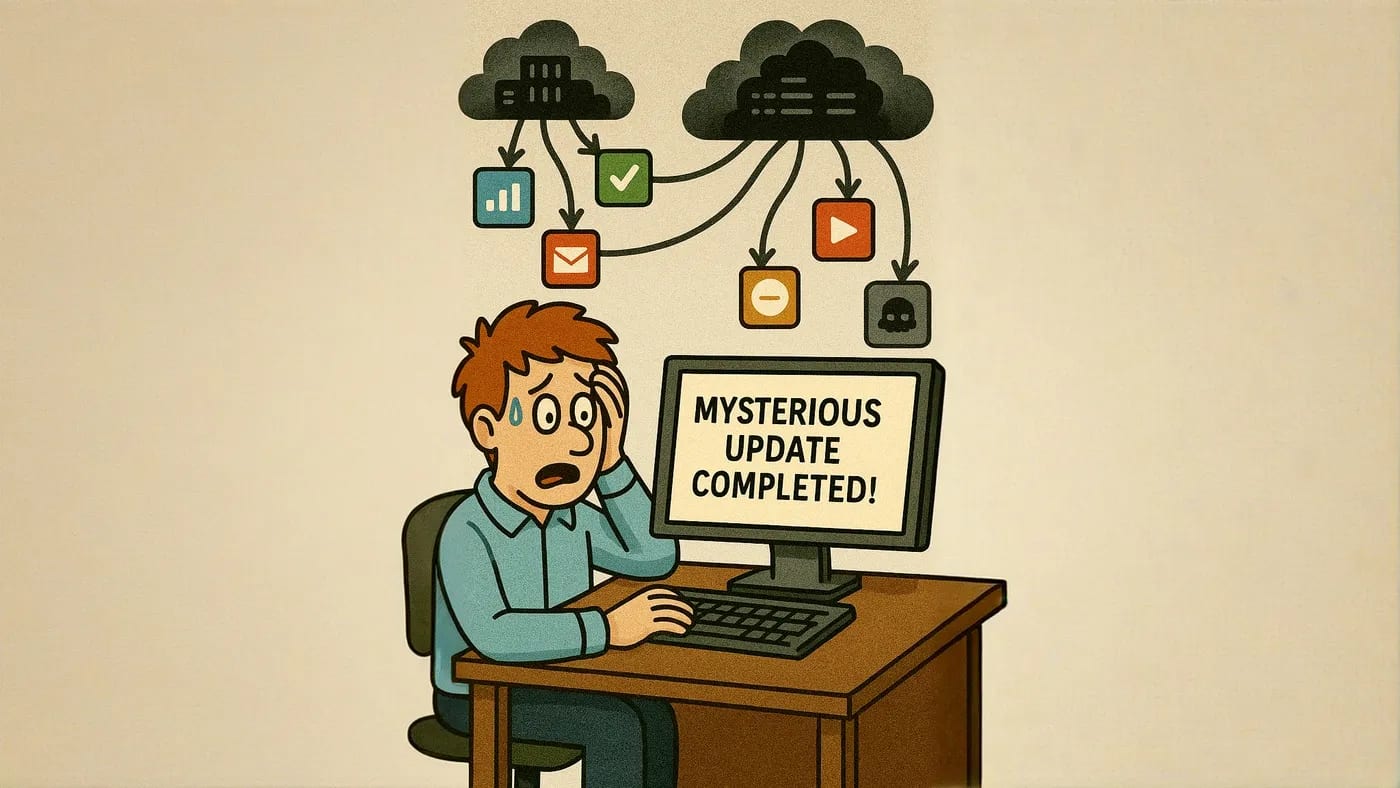
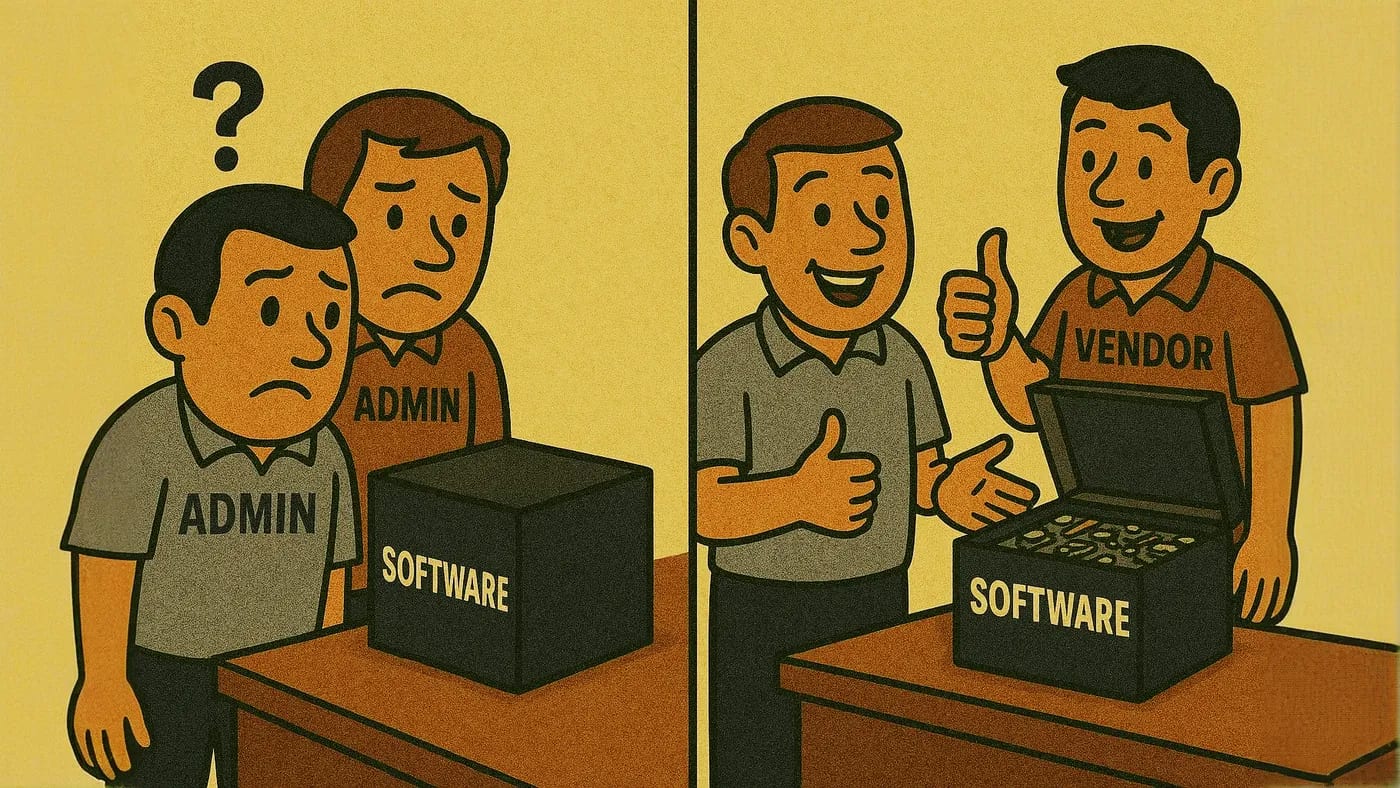
Consider the routine software update. How often do vendors push fixes or new features with scant details, vague release notes, or no announcement at all? Perhaps your database software downloads a “hotfix” overnight, or your endpoint agent silently updates its engine. If you’re lucky, there’s an email buried in your inbox or a blog post you didn’t have time to read. In many cases, IT teams install patches and updates essentially on faith, - faith that the vendor tested it, that it’s legitimate, and that it does what it claims. It’s a *“*trust first, verify later (if ever)” approach. This directly contradicts the “verify then trust” ethos that Zero Trust preaches.
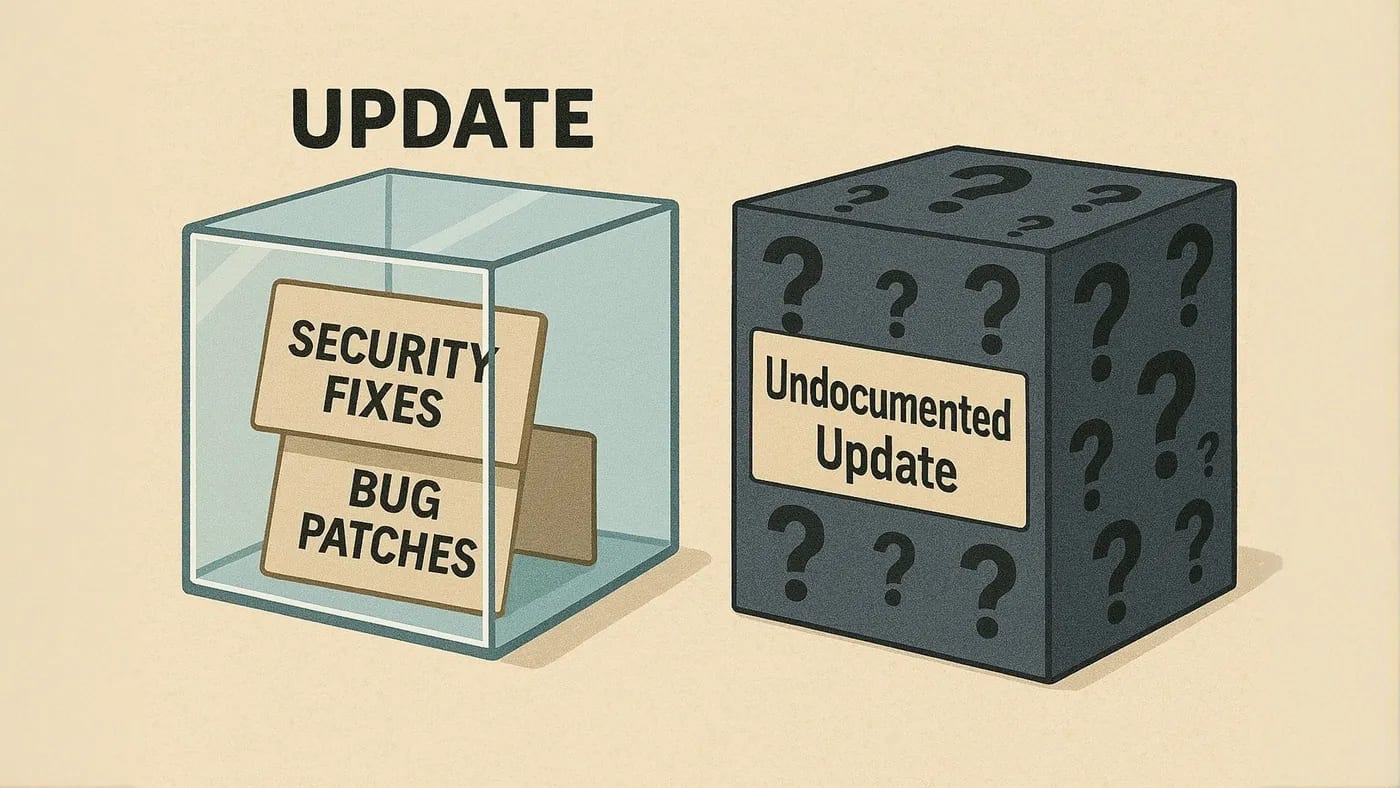
Now look at network connections. Modern enterprise software is increasingly cloud-connected. Agents, clients, and even on-premises appliances often establish outbound connections for licensing, telemetry, or update checks. Ideally, vendors document every external domain or API their product will contact. In reality? Documentation often lags behind product behavior. It’s not uncommon to discover by accident that an application is reaching out to a server that wasn’t in any deployment guide. These invisible network connections create unintended tunnels piercing your hardened perimeter. Each undocumented connection is like a secret tunnel out of your castle, and you can’t defend what you don’t even know exists.
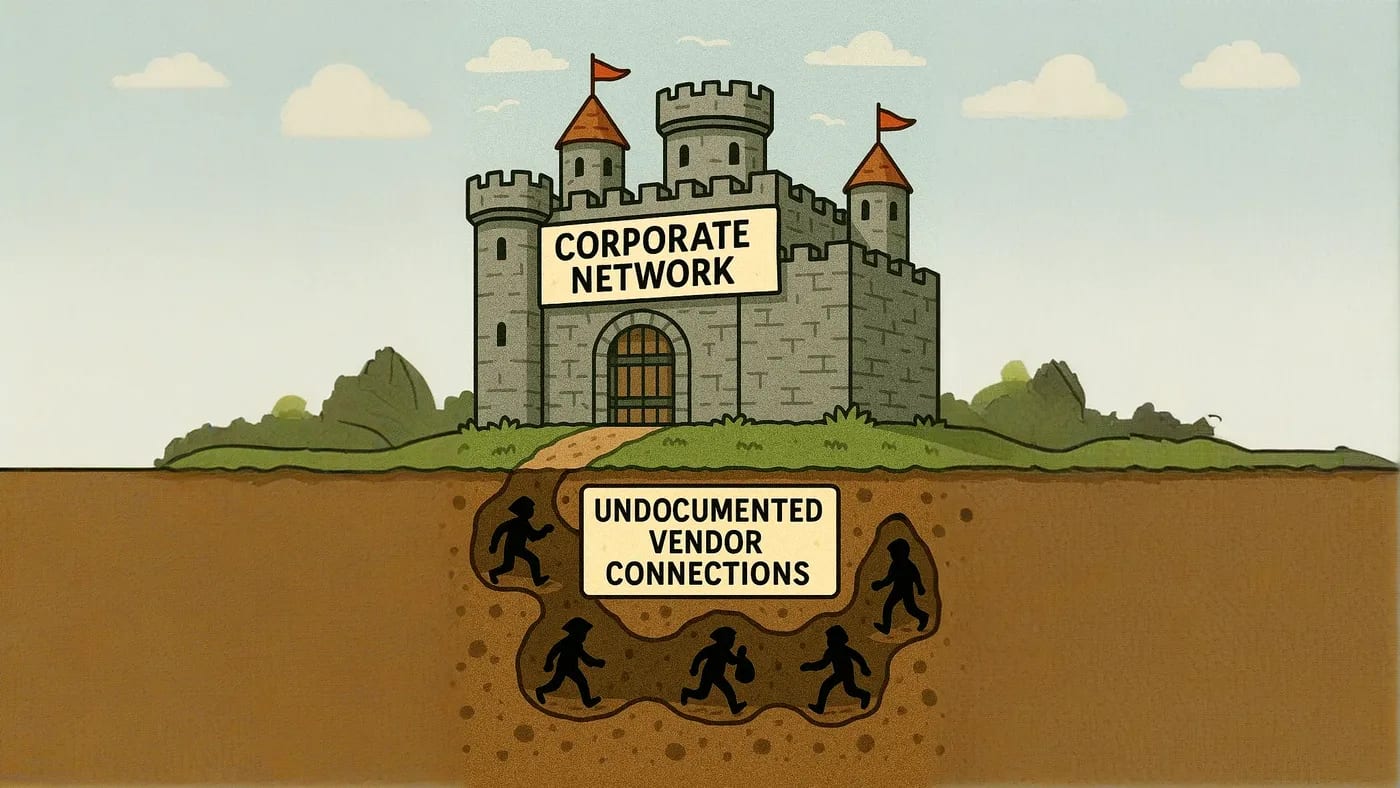
This isn’t just hypothetical. Organizations have been caught off-guard by software “calling home” in ways they didn’t expect. Sometimes it’s benign telemetry; other times it can include sensitive info, raising compliance concerns. Thinking GDPR, vendors are quietly exporting personal data that could put you in hot water for consent and transparency violations. Even something as simple as an auto-update check can be exploited by attackers if they can hijack that channel. When an app is allowed to fetch updates or send data out without scrutiny, it becomes a perfect backdoor for threat actors to piggyback on. Zero Trust tells us to treat every outbound request with zero implicit trust, yet undocumented vendor connections often sail through unchecked, - a glaring inconsistency!
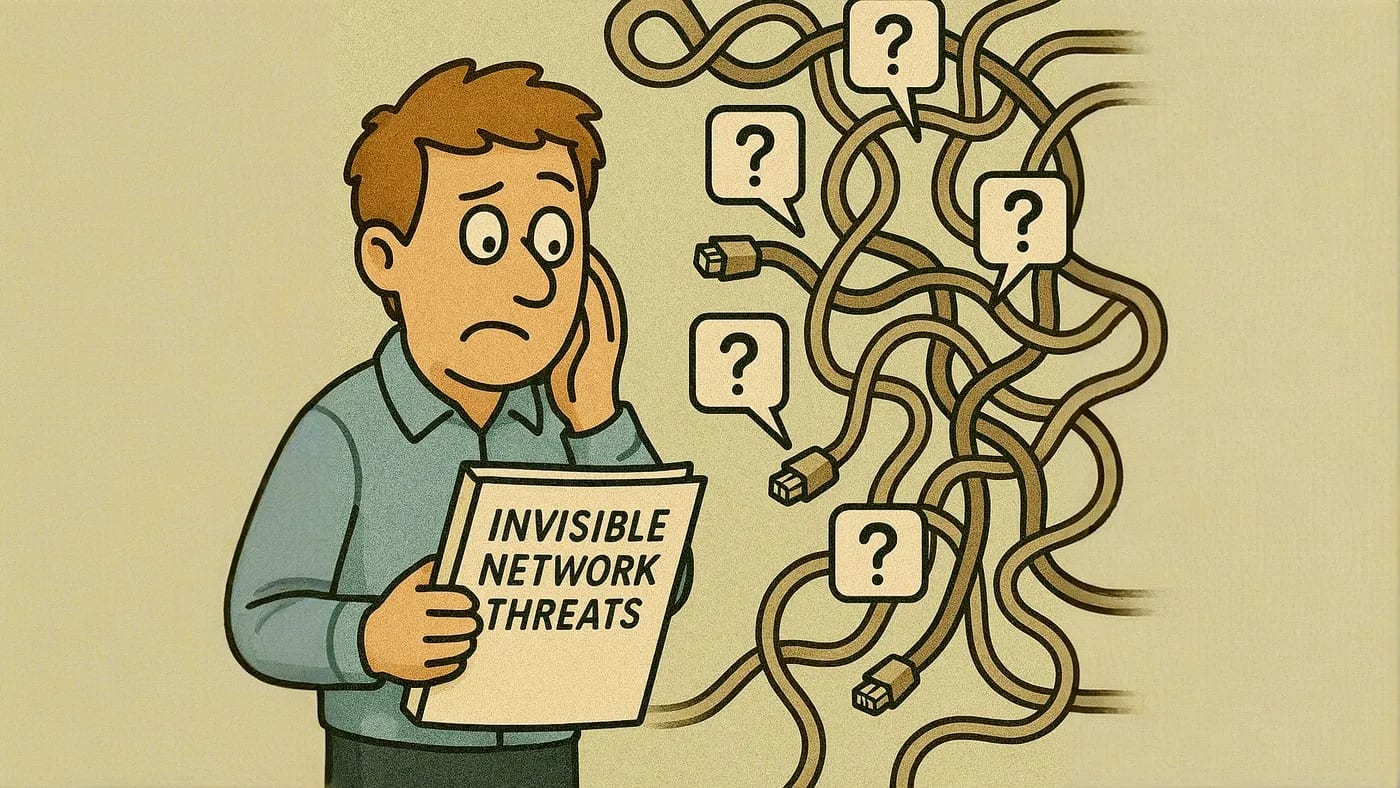
The result of these hidden behaviors are security blind spots. Recent industry studies have shown that organizations often have gaping holes in their network visibility. One report noted that many companies had never comprehensively audited what their software was doing on the network, leading to “concerning gaps in visibility”, - optrics.com. It’s no wonder an analyst dubbed it “the invisible network threat”. Admins simply weren’t aware of all the configuration changes and communications happening behind the scenes. In a zero trust environment, every unknown process or connection is a potential vulnerability. By allowing opaque software behavior, we’re essentially building a Zero Trust castle on a foundation of unseen trust – and that foundation can crack without warning.
When Trust Backfires: SolarWinds, 3CX, and the Trojan Horse Updates
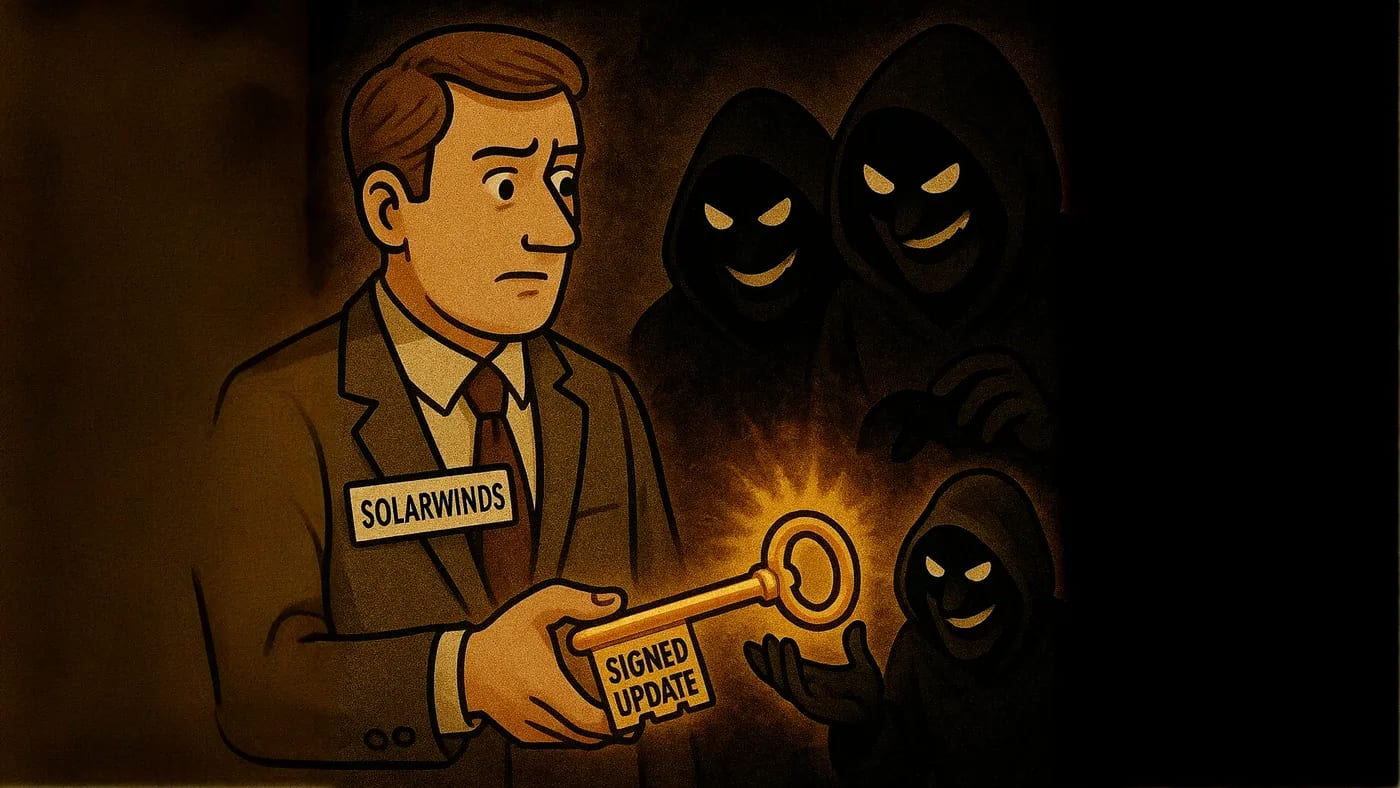
If the above still sounds abstract, the real-world consequences of this paradox have been splashed across headlines recently. The poster child of vendor trust gone wrong is, of course, SolarWinds. In late 2020, what should have been a routine update to SolarWinds’ widely used Orion IT monitoring software turned into one of the **biggest cybersecurity breaches of the 21st century, -** techtarget.com. Hackers managed to slip malicious code into Orion’s update files, effectively transforming a trusted software patch into a Trojan horse. SolarWinds unknowingly signed and distributed these compromised updates to around 18,000 organizations – including multiple U.S. government agencies and Fortune 500 companies. Think about that: all the attackers “had to do” was infect a software build that SolarWinds then dutifully pushed out to its trusting customers. The very tool enterprises relied on for IT visibility became an attack conduit. One day everything was normal; the next, a trusted vendor’s update opened the gates to thousands of networks. It’s the nightmare scenario like the bouncer personally escorting the bad guy in through the back door.

The fallout was enormous. A supply chain compromise like SolarWinds taught the world an expensive lesson: trust is a vulnerability. As one Fortune article succinctly noted, “SolarWinds was a trusted vendor, until it wasn’t, and its supply chain was clean until it got dirty.” In the aftermath, government officials basically said “trust no one” and meant it, - fortune.com. Zero Trust, which had been a somewhat abstract ideal, suddenly became an urgent mandate at the highest levels. The U.S. Cybersecurity Executive Order of 2021 even made zero trust architectures a requirement for federal agencies upguard.com. But here’s the kicker: SolarWinds did have a zero trust stance internally; the weakness was that customers trusted SolarWinds itself without verification. In other words, many victim organizations had strong walls, but no one was inspecting the Trojan horse’s contents as it rolled in.
Lest one think this was a once-in-a-generation fluke, along came 3CX in 2023. 3CX, a popular VoIP/softphone software used by enterprises worldwide, fell victim to a similar supply chain attack. Attackers compromised 3CX’s development pipeline, inserting malware into the 3CX Desktop App’s update – which was then signed and delivered to customers as an official update reversinglabs.com. For days, the tainted software ran inside thousands of companies, doing the attackers’ bidding, before the scheme was uncovered. The vendor itself missed the red flags that their application had been tampered with, which meant every customer blindly running “the latest version” was effectively hacked by proxy. Once again, a trusted update turned into a weapon.
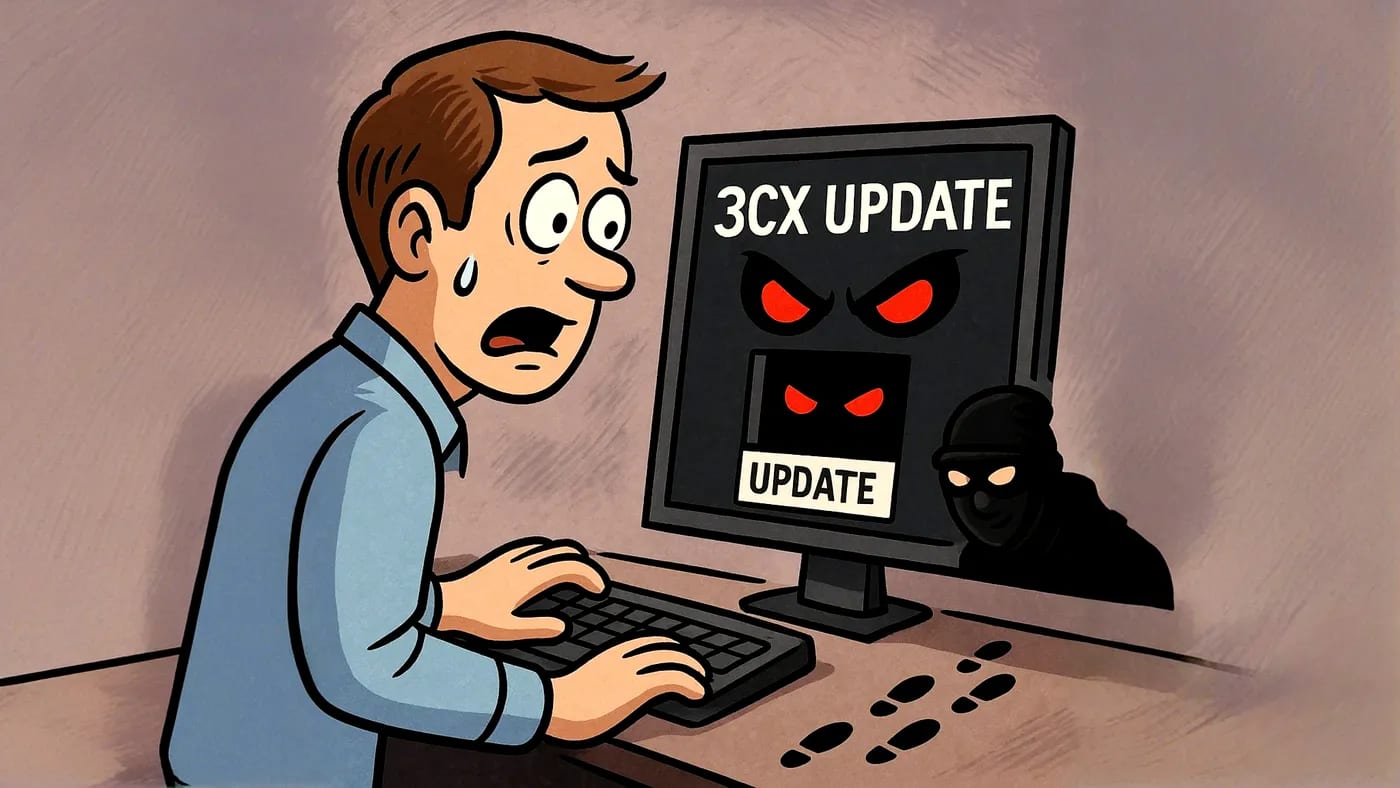
These examples are alarming, but absolutely illuminating. In both SolarWinds and 3CX, well-resourced threat actors exploited the implicit trust between vendor and customer. They turned software updates – the very mechanism we rely on for security patches! – into attack vectors. It’s the ultimate judo move: use the defender’s trust and momentum against them. No firewall or VPN or fancy AI anomaly detector helped in those first critical moments, because the activity appeared legitimate. After all, it was the known software contacting its known update server or behaving as it normally did; why would Zero Trust stop an “approved” application? This is why we say Zero Trust is dead without vendor transparency and verification. If you can’t verify the software’s behavior, you’re left crossing your fingers that the vendor and everyone in their supply chain is doing the right thing. And as history shows, that’s a losing strategy.
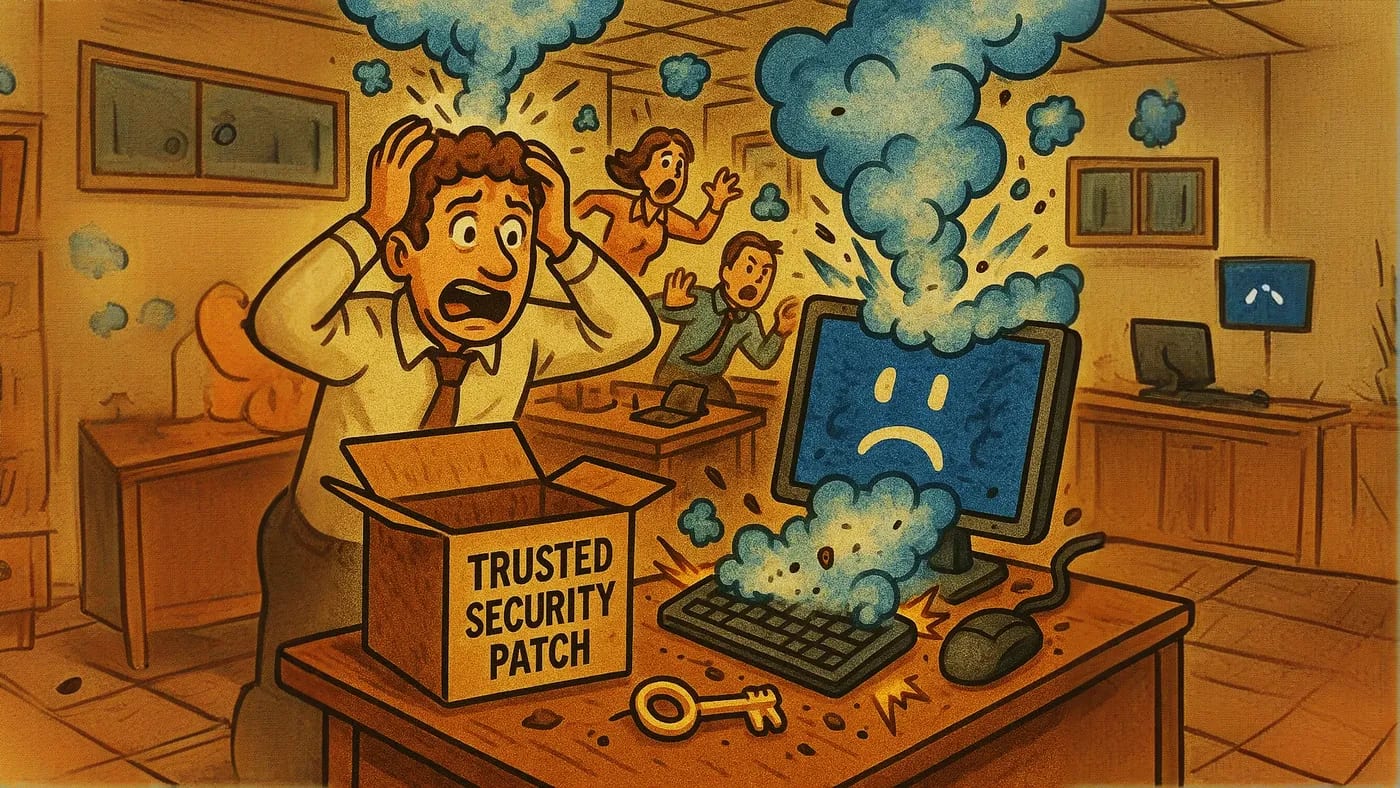
Let’s not forget other consequences of opaque updates. Sometimes the damage isn’t a nation-state breach, but chaos and downtime. In 2024, a faulty but trusted automatic update from a major security software vendor caused what some experts dubbed “the world’s biggest IT outage.” An update to CrowdStrike’s security agent was pushed out globally and contained a bad bug. The result was a wave of Windows systems crashing into blue screens, disrupting millions of endpoints apmdigest.com. 8.5 million devices were impacted in one fell swoop, according to Microsoft’s reckoning. The incident underscored a harsh reality: even well-intentioned, legitimate updates can wreak havoc if we blindly trust and propagate them. One VP quipped that this showed how today’s enterprise software landscape is a **“complex web of interdependencies, not all under any one actor’s control”**. In other words, no single vendor or customer had full visibility. Or in Zero Trust terms, everyone was trusting a piece of something they didn’t fully control. While this CrowdStrike case was a bug, not a malicious attack, the lesson rings true for both: “trust, but verify” needs to evolve into “verify first, then trust.”
Verify First: Demanding Transparency from Our Vendors
So how do we solve this broken trust behind invisible updates? It starts with flipping the model: Verify First. In true Zero Trust spirit, nothing and no one gets a free pass, including the products and code we import from vendors. “Verify First” means assuming every software update, every outbound connection, every binary from a third-party vendor is guilty until proven innocent, - or at least, until proven safe. It’s a call to build verification into the very heart of our software supply chain and network operations.

Shine a Light on Vendor Behavior
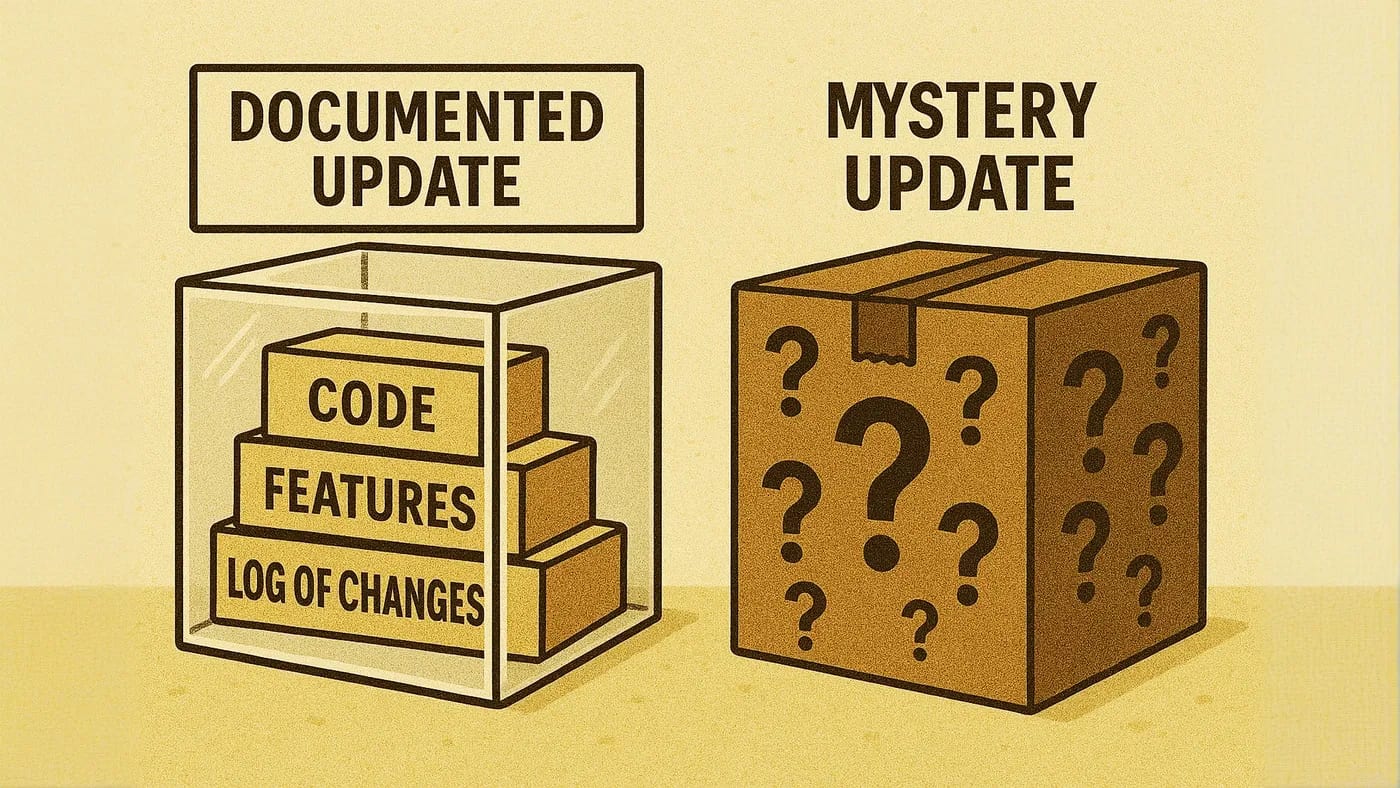
First and foremost, enterprises must demand transparency into vendor software behavior. This means asking vendors to document in crystal-clear detail what their software is doing under the hood. If a product is going to initiate network connections, the vendor should provide a list of expected domains and IPs, the purpose of each connection, and what data is transmitted. If the software auto-updates or downloads modules, the vendor should outline how and when that happens, and what’s in those updates.
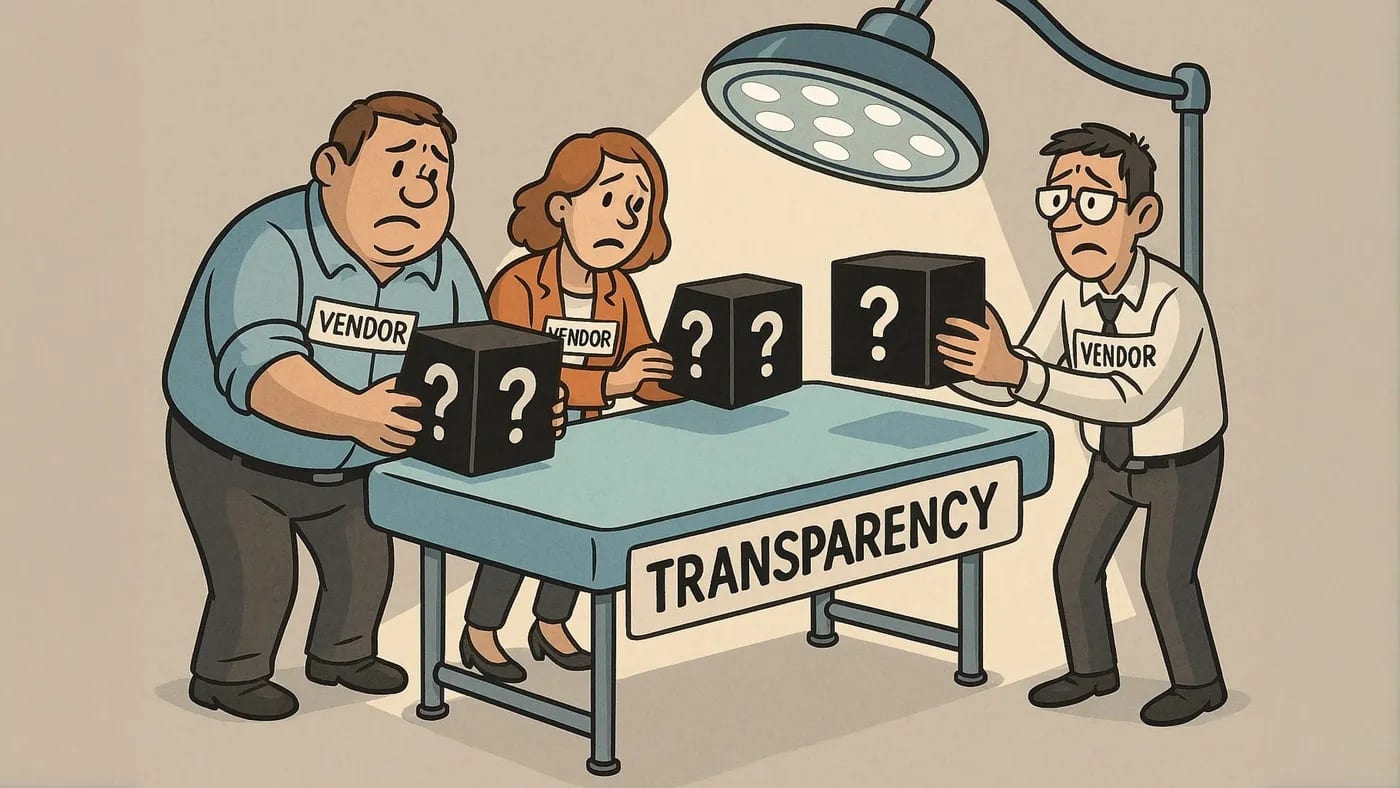
In essence, every piece of external communication or code change should come with an explanation label. It’s the digital equivalent of food nutrition labels – we need to know the ingredients of what we’re consuming.
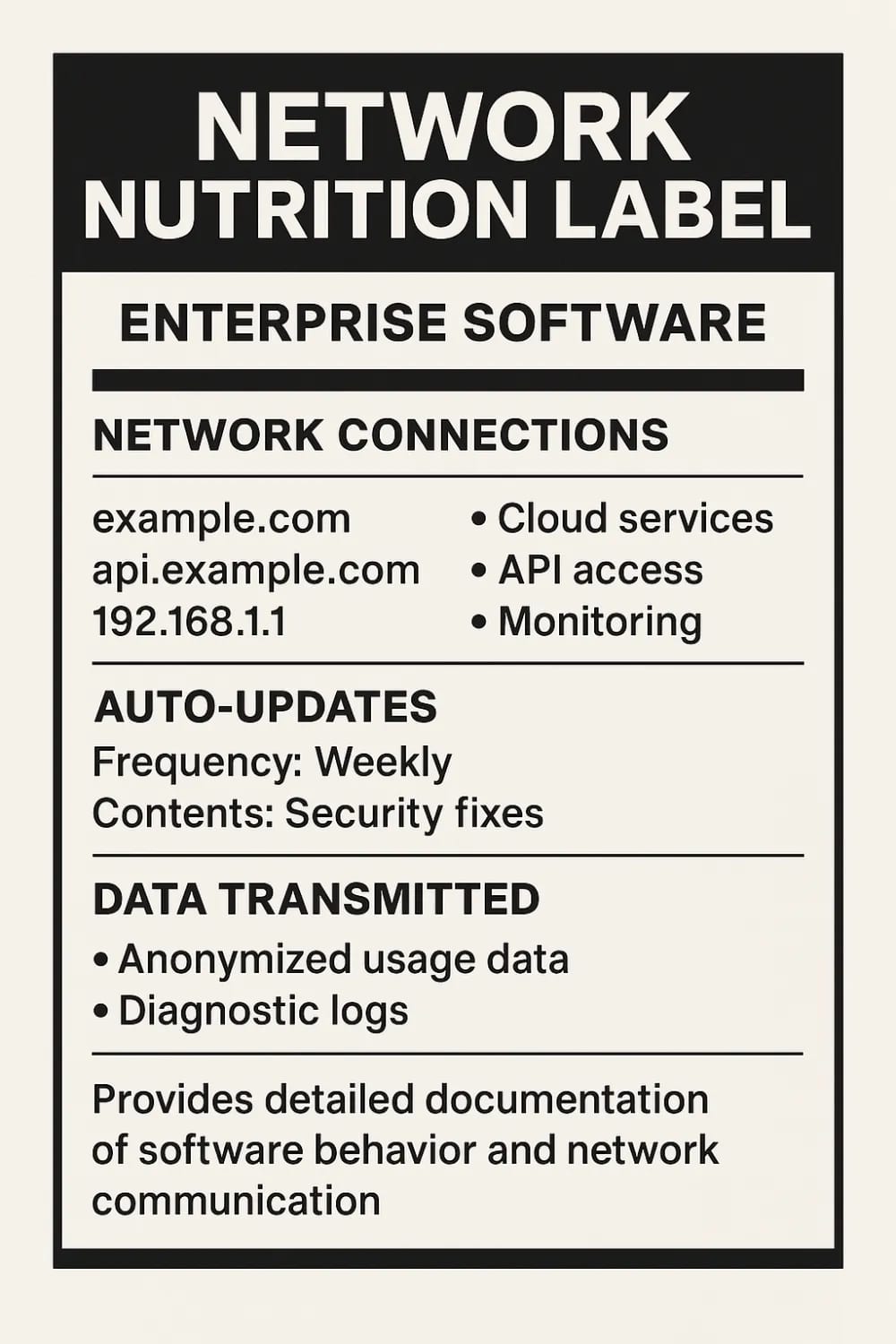
This isn’t a far-fetched ask. Some forward-thinking vendors already do this to an extent: for example, they publish knowledge base articles on what URLs need to be whitelisted for their software to function, or they provide detailed release notes that actually specify changed files and new components, - not just marketing fluff. But “transparency” needs to become an industry standard, not a special favor. Just as safety regulators require manufacturers to list chemicals in a toy or allergens in food, perhaps we need regulations (or at least customer pressure) to require software makers to furnish a “behavioral bill of materials”. We have started to see the rise of SBOMs (Software Bills of Materials) – which list the components inside software. That’s a great step and now even mandated for critical software in some sectors, but it’s not enough! Knowing what components are inside is useful, - especially for finding vulnerable libraries, but knowing what the software actually does at runtime is just as critical.
The Verify-First Workflow
Adopting a Verify First model means operationalizing some new practices in our IT and security workflows:
-
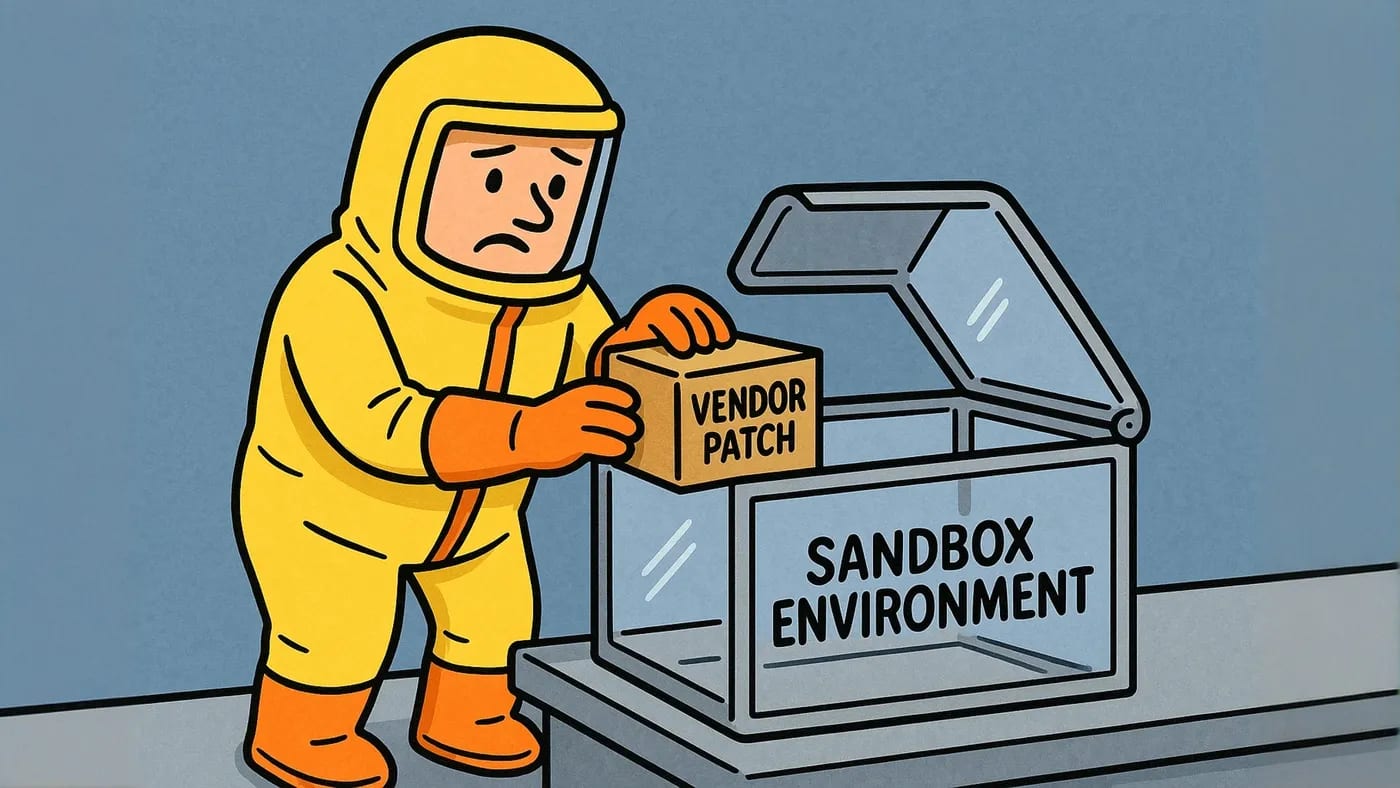
Inspect Updates Before Deployment: No more blind pushing of patches to production systems without a second look. Smart organizations are establishing sandbox environments or using automated analysis tools to vet updates. This could involve scanning the update file for malware (yes, even if it’s signed by the vendor – recall, both Sunburst and the 3CX malware were signed with legitimate certificates). It could also mean running the updated software in a test environment with deep monitoring to see if it suddenly starts doing something weird such as trying to access a server in a country it never contacted before. In short, treat an incoming update package as if it came from an unknown source on the internet, because effectively, it did. Only after it passes “health and authenticity checks” does it get promoted to production. This is the “trust but verify” Cold War mantra updated for 2025: verify first, then deploy.
-
Monitor Network Traffic of Vendor Apps: If you haven’t already, invest in outbound traffic monitoring and internal network segmentation that doesn’t just assume known apps are benign. Set up alerts for when an application tries to talk to an unknown host, or when there’s a spike in data exfiltration where there shouldn’t be. Some organizations are taking the extreme (but increasingly justified) step of listing outbound traffic rules, - meaning, for each application or service, explicitly permit it to call only a pre-approved set of external services and block everything else. This approach forces you to enumerate expected behavior (which you’ll need vendor input to do accurately) and will immediately show if the app deviates. If the finance software that should only ever contact “update.vendor.com” suddenly tries to reach “unknown-server.ru”, Zero Trust logic would treat that as a breach attempt. Your security tools should, too.
-
Demand Detailed Release Notes and Integrity Proof: Don’t accept opaque “bug fixes and improvements” descriptions. Vendors should provide meaningful release notes that let your team understand what changed. Even better, they could provide cryptographic hashes of new binaries and perhaps a signed manifest of an update’s contents. This would allow customers to verify that what they received is exactly what the vendor intended to send. In a Verify First model, the absence of information becomes a red flag. If a vendor can’t or won’t tell you what an update does, maybe it doesn’t get deployed until they do. Enterprise customers collectively have a lot of clout here: if enough big customers tell a software provider “we won’t install unknown updates,” the vendor will adapt. Which brings us to…
-
Leverage the Power of “No”: Remember, as the customer you ultimately hold the keys. You can configure many software products not to auto-update, or to only update after admin approval. You can also turn off or firewall unsolicited outbound communications. Of course, doing so might break functionality or violate support agreements in some cases, but it’s about balance. Use the option to say “not until we verify it” whenever possible. You might be surprised how often a critical app works just fine even if it’s blocked from talking to the “mother ship” except when truly necessary.
Actionable Recommendations for Teams and Vendors
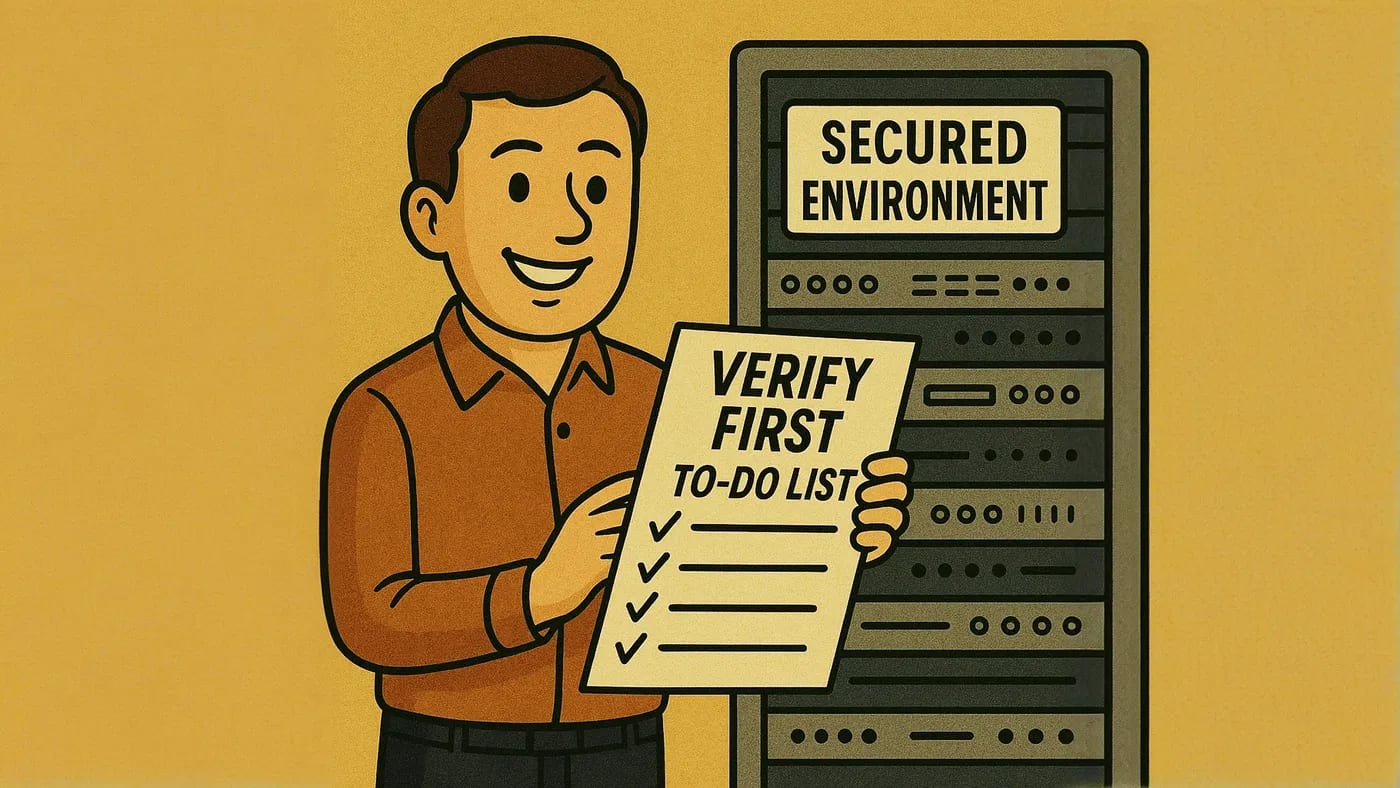
Let’s break down some actionable steps, - a to-do list for both enterprise security teams and software vendors to help fix this broken trust model:
For Security and IT Teams (Enterprise Buyers):
-
Inventory and Baseline Everything: Maintain a detailed inventory of all third-party software in your environment, including their update mechanisms and network needs. Map out which applications auto-update or connect to external services. This baseline is your reference for normal behavior. Any deviation should trigger an investigation.
-
Implement Outbound Controls: Treat egress traffic with the same scrutiny as ingress. Use firewall rules or proxy settings to only allow known, documented connections from vendor software. If application X is supposed to talk to five cloud hosts, block it from talking to the 500 others it has no business with. This way, even if malware sneaks in via an update, it may be unable to reach its command server, - essentially containing the damage.
-
Sandbox and Scan Updates: Establish a protocol for testing updates. This can range from manual review in a lab environment to using advanced binary analysis tools that dissect software packages. Modern security solutions can actually “open the black box” of software to reveal hidden code or anomalies securityinfowatch.com. Use these tools or services to independently verify vendor software before it goes live. Think of it as a mini digital forensics exam for each new release. Yes, it adds a step, but it beats cleaning up a breach!
-
Continuously Monitor and Log: Enable verbose logging and monitoring on vendor software. Track when it checks for updates, when it installs something new, and what processes spawn as a result. Likewise, log every outbound connection it makes. Your network telemetry and SIEM should help here. These logs are invaluable; they can reveal stealthy behavior (“Huh, why did our HR system contact an IP in Eastern Europe last night?”) and provide evidence if you need to confront a vendor or trigger an incident response.
-
Educate and Enforce Policy: Update your security policies to explicitly cover third-party software behavior. Train your IT staff to treat vendor actions with a zero-trust mindset. Just because software comes from a trusted vendor doesn’t mean everything it does is automatically trusted. Instill a culture of healthy skepticism: “Did the vendor tell us it would do that? No? Then let’s find out why it did.”
For Software Vendors (Solution Providers):
-
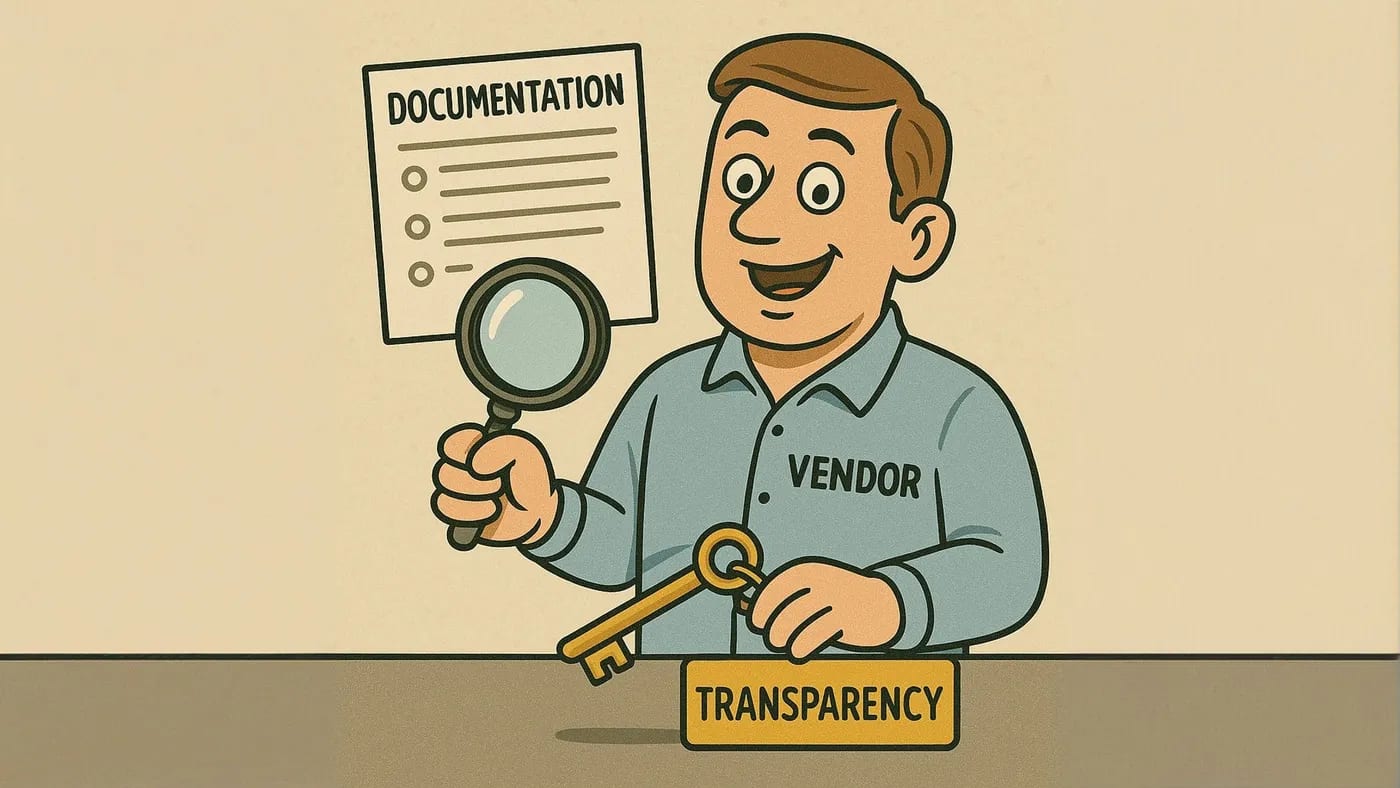
Document Everything (Network Edition): Provide your customers a detailed network documentation for your product. This should list all external servers/services your software contacts, what protocols it uses, and why. If your application periodically “calls home,” be transparent about the frequency and data. Not only does this help customers secure their deployments, it builds trust. In a world of Verify First, a vendor that lays its cards on the table will be more trusted than one who says “just trust me.”
-
Document Everything (Updates Edition): Along with network behavior, fully document your update process. If updates are automatic, give admins controls (like deferring or approving updates) and provide pre-release notes for upcoming changes whenever possible. When an update is released, publish a clear changelog. Even better, provide a secure digest or SBOM of the update package so enterprises can verify authenticity and content. Transparency here can be a market differentiator. And savvy customers will favor products that don’t keep them in the dark.
-
Security Assurances and Attestations: Embrace initiatives like Software Bill of Materials and digital signing, and go beyond if you can. Consider providing customers with an attestation of your development pipeline security. For instance, a letter or dashboard that shows you follow secure build practices, do regular code audits, and have internal Zero Trust for your dev process. Post-SolarWinds, many vendors started sharing such assurances. It might soon be expected. As regulations evolve, doing this early positions you as a leader.
-
Out-of-Band Verification Options: Forward-thinking vendors could offer a service where customers can query or verify an update out-of-band. For example, a secured website or API where a customer uploads a hash of their downloaded update and the vendor confirms, “Yes, that’s our legitimate update file and it should have X, Y, Z changes.” This counters scenarios where an attacker might try to spoof update servers or files. Essentially, give paranoid customers (the good kind of paranoid) a way to double-check authenticity from a secondary source.
-
Adopt a “Transparency First” Marketing Angle: It might sound odd in a technical context, but market your transparency. Make it known that your product is not a black box. If you proudly share documentation of internals, highlight that. If you’ve never had a breach, say that and explain why (e.g., rigorous internal security, third-party audits, etc.). In an era where buyers are increasingly risk-aware, being open can set you apart from competitors who stay opaque. In short, treat transparency as a feature, not a chore.
Regulation on the Horizon: Transparency Becomes Law?
Industries often self-correct slowly, but regulators have a way of expediting the process. We’re already seeing laws and standards pushing for greater software transparency and accountability, - a trend that foreshadows mandatory vendor openness.
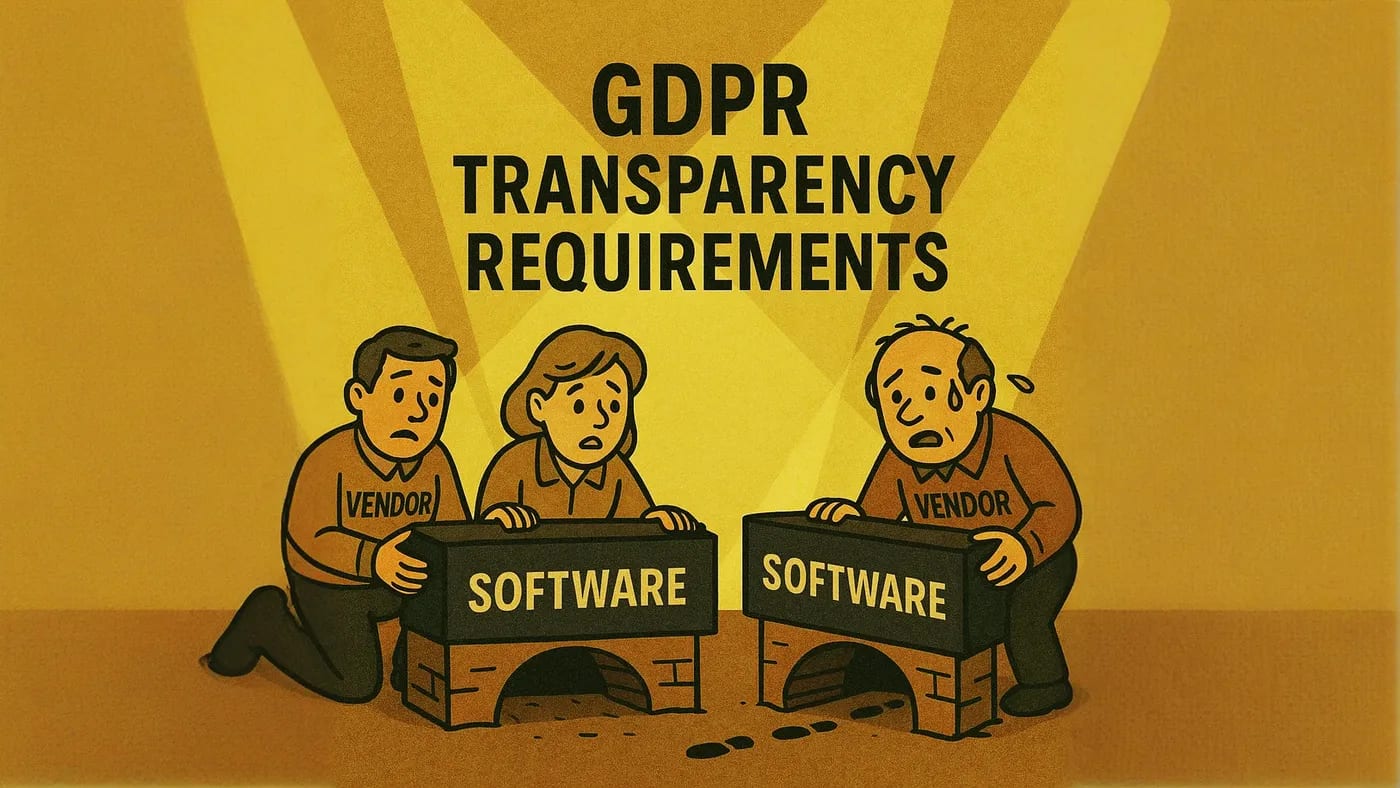
Take GDPR (General Data Protection Regulation) in the EU. While primarily about data privacy, one of its core tenets is transparency. Organizations must inform users about what data they collect, where it goes, and how it’s used. This has forced many software vendors to reveal telemetry and data-collection that was previously hidden. If your enterprise software is siphoning personal data off to some cloud analytics service, under GDPR the vendor (and the customer using it) are obliged to disclose that. The result: no more invisible data pipelines, at least not without legal risk. GDPR indirectly nudged vendors toward transparency in software behavior, especially as it pertains to personal data flows. It’s not a big leap to imagine future regulations requiring similar transparency for security-related behavior.
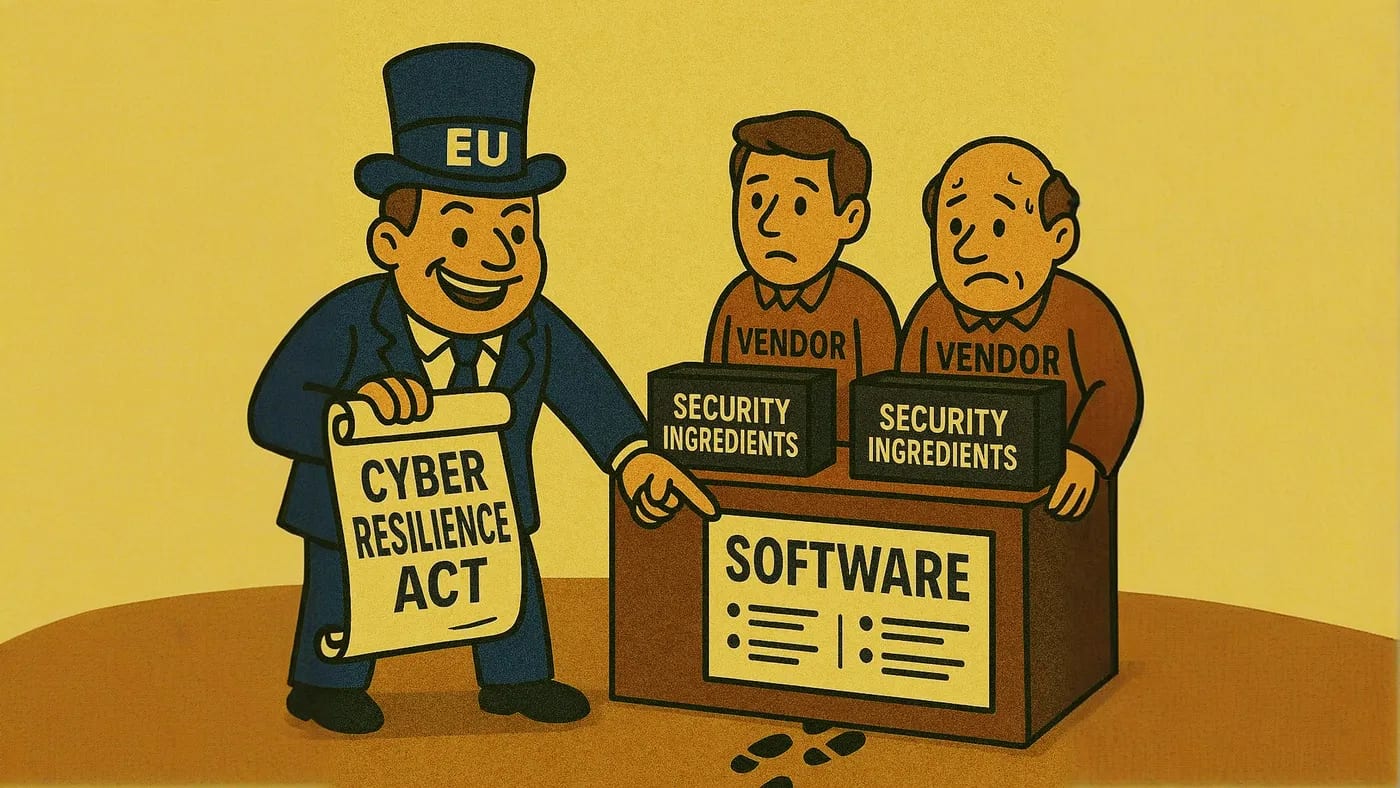
More directly relevant is the upcoming EU Cyber Resilience Act (CRA), which is set to impose cybersecurity requirements on digital products in the EU market. The CRA, which officially took effect in 2024, is a landmark law: it’s the first EU legislation mandating baseline cybersecurity standards for hardware and software products industrialcyber.co. A key aspect of this act is that manufacturers (vendors) must provide security updates and ongoing support, and be transparent about cyber risks. In practice, that means vendors will have to not only patch their products regularly but also inform customers about vulnerabilities and exposures. By enhancing transparency about product security, the law aims to let customers make informed choices. It’s not hard to see this extending to transparency about product behavior as well. The CRA obligations (which start getting enforced in 2027 after a grace period) could effectively make “verify first” easier, since vendors will be legally bound to share more information. If a product has a known vulnerability or a known risky design element, keeping it secret won’t be an option without facing legal penalties.
In the United States, while no single omnibus law like the CRA exists yet, there are strong moves toward supply chain security requirements. The U.S. Executive Order on Cybersecurity (2021) demanded that software sold to the federal government come with an SBOM and meet secure development standards. NIST’s guidelines (e.g., NIST SP 800-218, the Secure Software Development Framework) are becoming de facto requirements for vendors in certain sectors. The writing on the wall is that vendors will need to verify and attest to their own security practices, and share artifacts like SBOMs, or risk losing business, - at least with any customer that cares about security, which is to say, all large customers. Even without law, market pressure post-SolarWinds has made large enterprises and governments include stringent transparency clauses in contracts. We see more security questionnaires asking not just “Do you secure your software?” but “Will you provide evidence and details of your software’s internal security and operations”?
And don’t overlook industry-specific regulations: for example, the healthcare sector has the FDA now requiring cybersecurity disclosures for medical devices (including software components) – if you make a medical system, you have to document your update mechanism and how you handle vulnerabilities. Financial regulators under frameworks like DORA (Digital Operational Resilience Act) in the EU or various guidance by U.S. banking regulators also emphasize knowing your third-party risk in detail. It’s all converging on a simple concept: transparency isn’t just best practice; it will be the law.
In short, both the carrot and the stick are emerging. The carrot: enterprises are starting to favor vendors who embrace transparency and security verification because it lowers their risk. The stick: regulations will punish those who don’t by fines or by exclusion from markets. Vendors and buyers alike should get ahead of this curve. The smart move for a CIO or CISO today is to start baking “Verify First” into their culture before it’s forced upon them. Similarly, the smart move for a vendor CEO is to treat transparency and security as top-tier features before customers demand to see an audit trail or regulators come knocking.
Conclusion: No More Blind Trust (A Call to Action)
It’s time to confront the uncomfortable truth: Zero Trust has a blind spot, and it’s us. For years, we’ve diligently mistrusted our users, our networks, even our own devices, but then handed a blank check of trust to software vendors’ code. That contradiction can no longer stand. “Never trust, always verify” must apply throughout the stack, from the CEO’s login down to the patch that gets installed on her laptop. If “trust is the rarest commodity” in cybersecurity today, as one industry expert noted, then we must stop spending it so freely on things we haven’t examined linkedin.com. The stakes are simply too high.
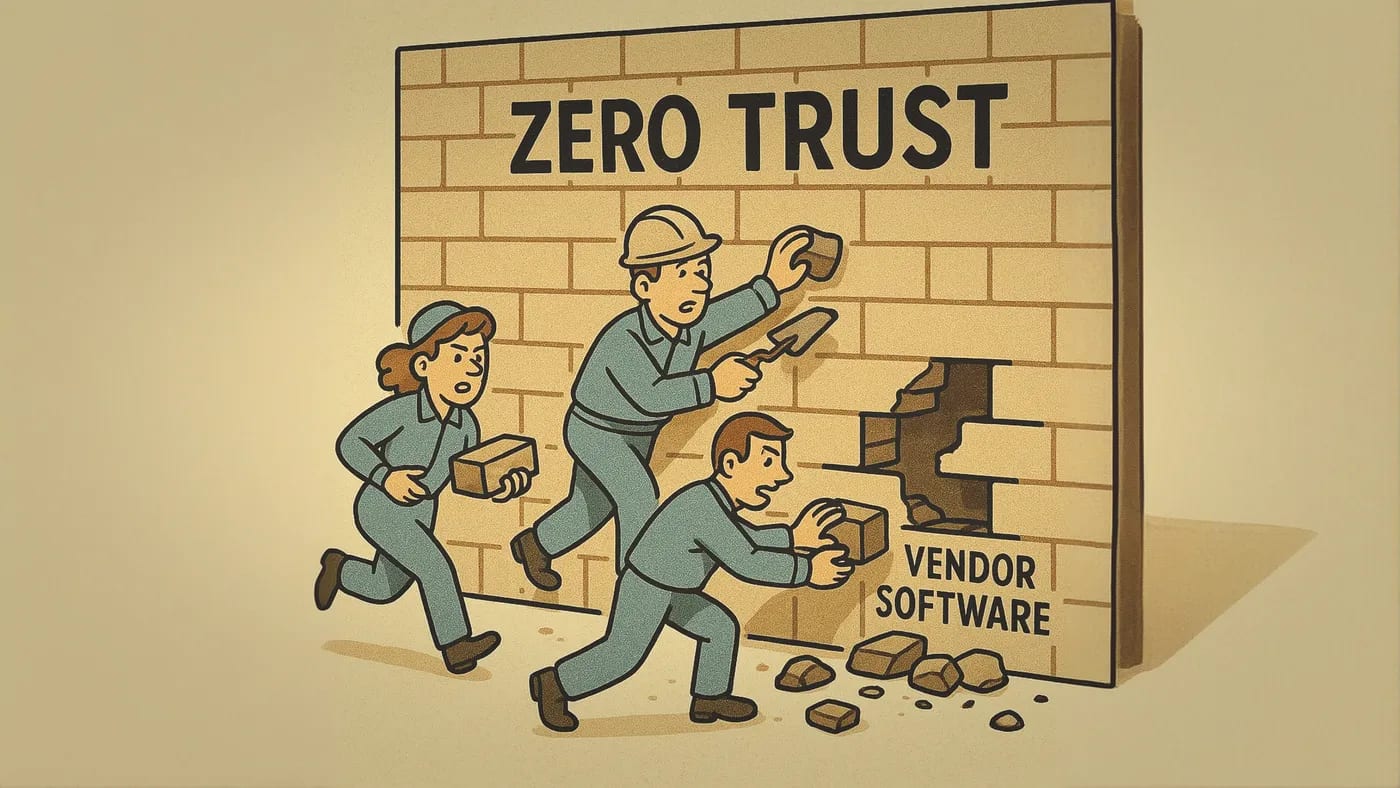
The path forward is both a technical and a cultural shift. Technically, we need the tools and processes in place to verify first, - to shine light into those black boxes and ensure they’re safe before we let them into our operations. The good news is technology is rising to the challenge: from advanced sandboxing to software composition analysis to behavior monitoring powered by AI, we have more capabilities than ever to validate what software is doing. We can, as one article put it, *“open the black box of commercial software before it’s deployed”* securityinfowatch.com and *“deconstruct and analyze… without the cooperation of the software vendor”* if need be. In a perfect world, though, vendors will cooperate which brings us to the cultural shift.
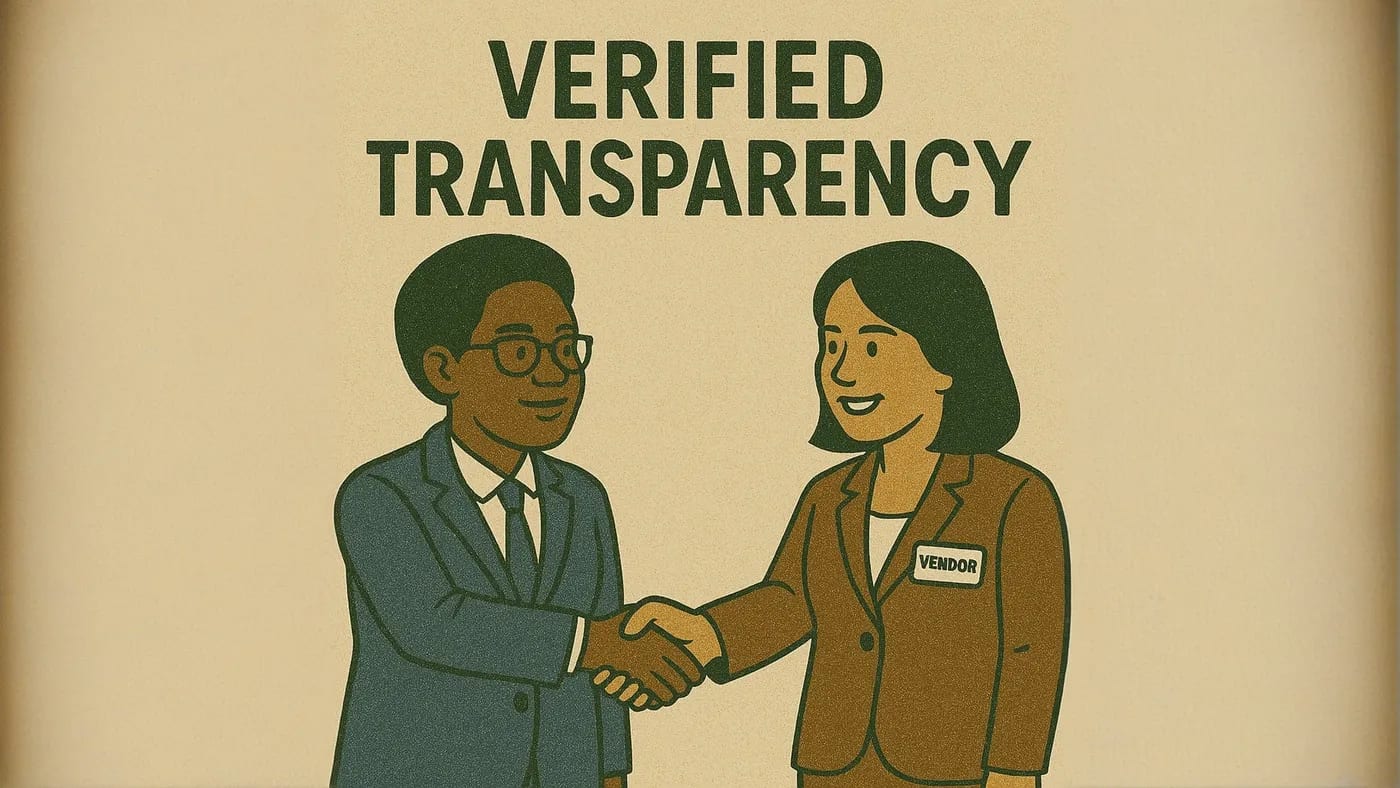
Enterprises must start holding vendors accountable in contracts and in practice. Make transparency a condition of doing business. Likewise, vendors should embrace openness as a competitive advantage, not see it as a burden. The relationship needs to evolve from one of implicit trust to one of verified trust. Think of it as going from a handshake deal to a signed, notarized contract with receipts. It might feel awkward at first, but it builds a far sturdier foundation for partnership.
To tech executives reading this: ask your teams how they verify the software supply chain today. If the answer is a lot of shrugging or pointing to vendor reputations, you know you have work to do. To vendors reading this: ask what information and assurances you provide to your customers. If the answer is “not much, we never got asked,” consider this your invitation (or rather, warning), - customers will be asking, and soon.
Zero Trust as a buzzword might eventually fade, but its core principle will not. In fact, it’s expanding. Trust no code, verify all code could well be the next mantra. Our collective security depends on it. The next SolarWinds or 3CX will happen, but how devastating it becomes depends on whether we’ve learned to stop trusting blindly.
It’s time to say to our vendors, politely but firmly: “Patch me if you can – but I will verify that patch first, thank you.” It’s time to turn on the lights in those dim corners of our infrastructure. Zero Trust isn’t dead; it’s just incomplete. By demanding vendor transparency and practicing Verify First, we can resurrect the true spirit of Zero Trust and finally build the kind of resilience our organizations need in this treacherous digital era.

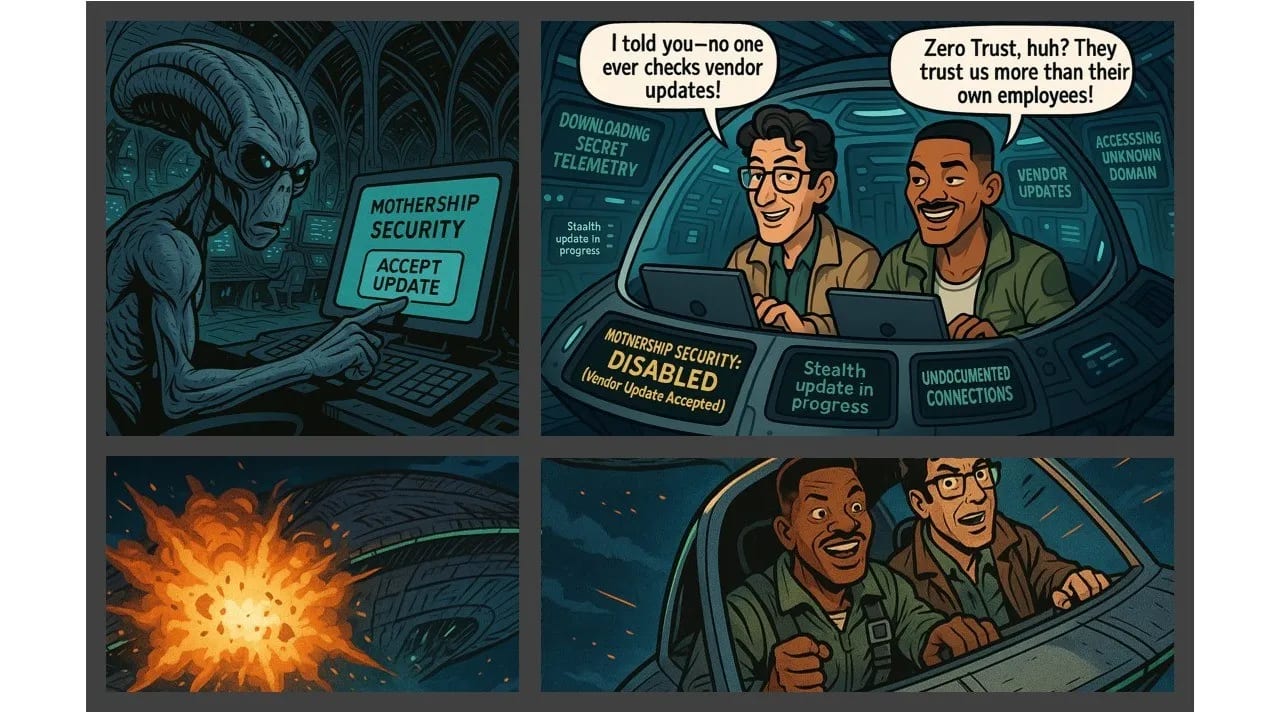
A cartoon homage to the 1996 blockbuster movie, Independence Day: actors, Will Smith and Jeff Goldblum, walk away from their burning alien ship after successfully destroying the alien mothership through a trusted software update vulnerability.
This article represents my personal views on software security transparency and does not necessarily reflect the official position of my employer.
More from risk & security
All risk & security → risk & security
Polymorphic Encryption: What If Your Encryption Could Change Its Flavor on the Fly?
What if the locks protecting your company’s secrets could literally change shape every time someone tried to pick them? In cybersecurity terms, that wild idea translates to encryption algorithms that continuously morph or “rotate” their…
 risk & security
Prompt Warfare in 2025: The Wrong Instructions!
As AI systems become more deeply integrated into our digital infrastructure, a new category of security threat has emerged as the foremost concern for AI safety experts: prompt injection attacks. Ranked 1 on OWASP's Top 10 list for Large…
 risk & security
Invisible Teammates: What Your AI Tools are Quietly Teaching Your Engineers
Remember when your most influential engineering mentor was human? Those days fade into nostalgia as AI coding assistants silently slip into the role of technical consigliere, whispering suggestions into thousands of engineers' ears daily.…