LLM Stubbornness and the Vermilion Syndrome

Why Your AI Won’t Learn New Tricks
The AI That Doesn’t Listen: You’ve built the perfect system. Your retrieval pipeline is immaculate. Your multi-agent communication protocols are state-of-the-art. Your tools tap into everything from real-time internet data to proprietary databases. And yet… your AI keeps ignoring the new information you feed it, stubbornly clinging to its outdated knowledge. Sound familiar? If you’re nodding, you’re not alone. I’ve fought with this issue for the past two years. But what if I told you it’s not your implementation that’s flawed, but rather a fundamental issue with how LLMs work, - a quirk that three separate research teams discovered just this month? Alas, it’s not been our fault.

The Problem Isn’t Where You Think It Is
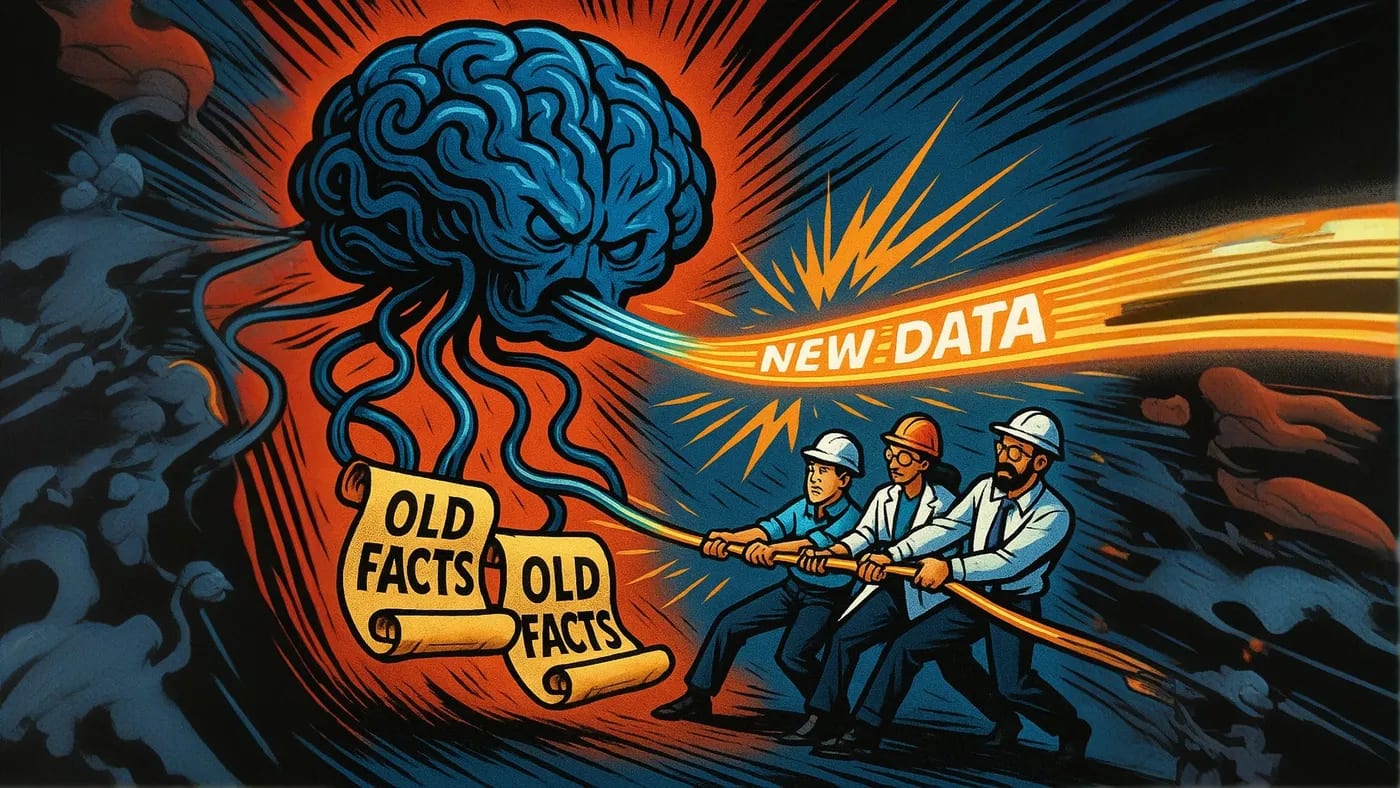
Here’s the twist: your code isn’t the problem. Your architecture isn’t the problem. Your agent communication protocol isn’t the problem. The issue lies much deeper, at the statistical core of how large language models function. Think of your LLM as a stubborn professor who spent decades memorizing textbooks and now dismisses any new research paper you slide across their desk.
Logos of Cornell University, Princeton University, and DeepMind are used for illustrative purposes only and are property of their respective owners. No endorsement implied.
Three groundbreaking April 2025 studies, from Princeton University, Cornell University, and Google DeepMind, independently found the same phenomenon: LLMs have a persistent and overwhelming bias toward their pre-training knowledge, no matter what new information you try to add. In essence, these models are “old dogs” that really don’t want to learn new tricks.
The Science of Stubbornness (Pre-Training Dominance)

Princeton researchers dubbed this effect a “persistent prior influence.” When generating responses, an LLM will default to high-probability token sequences rooted in its original training, - often completely ignoring new, contextually relevant information. The pre-training data acts like a statistical straightjacket that the model can’t easily escape. Why? Because LLMs operate on learned probability distributions. The patterns from the massive pre-training corpus are so dominant that any new data you fine-tune on is assigned such low probability, it barely influences the final output.
In practical terms, the model’s original knowledge still rules its behavior. It might even end up storing both the outdated fact and the updated fact in its parameters, - but with no mechanism to resolve the conflict, it falls back to the version that’s more deeply ingrained. One study showed that even after training on a knowledge update, a model could recognize the correct new fact in a multiple-choice test yet still default to the outdated info when answering open-ended questions. As the authors noted, “across the board, models prefer the old knowledge… over the updated knowledge”. In short, the model’s pre-training dominates; it’s the dominance of pre-training talking. The updated fact ends up memorized in isolation, not integrated into the model’s world understanding.
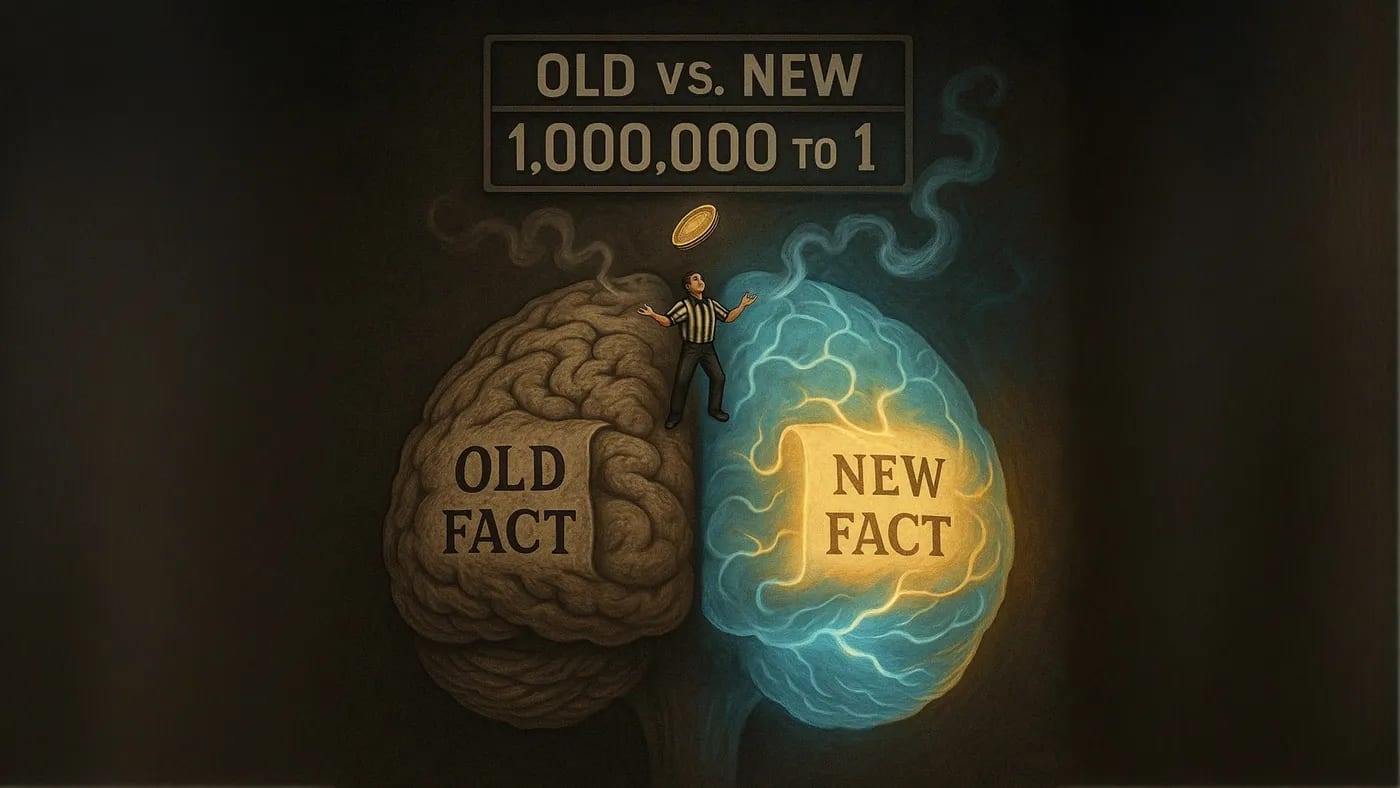
To illustrate how deep this runs, Princeton’s team presented a particularly striking example. They asked an LLM to decode a simple cipher. The model dutifully worked through the puzzle step by step, - and concluded the encoded message should decode to “infidel.” However, in its final answer it blurted out “infield” instead. Why “infield”? Because infield (a common baseball term) was a far more familiar token from its training data than the correct answer “infidel.” The LLM literally ignored its own calculation in favor of a more statistically likely word from its prior knowledge. It’s the AI equivalent of showing all your work correctly on a math test, then writing down the wrong answer anyway. If that doesn’t scream stubbornness, what does?

The Reasoning Gap – New Facts in Isolation
Researchers at Cornell took this investigation further, examining not just what an updated LLM answers directly, but whether it can reason with new information indirectly. The results were discouraging. If you fine-tune an LLM on some new facts and then ask it a question directly about that new information, it might give you the correct answer. But ask a related question that requires using the new info in context, - and it’s as if the model never learned the update at all.
Cornell’s team demonstrated this reasoning gap with a simple scenario: they updated an LLM with information about which fashion brands had completely pulled out of a certain country. When asked directly, “Which fashion brands have exited this country?”, the LLM could recall the newly learned answers. But when asked indirectly, “Where can I find [those] fashion stores in this country?” the same model still listed all the brands, - including those that had left. The new information was sitting in the model’s memory, but totally disconnected from its reasoning process. It’s like adding a brilliant new book to your library that you never actually open when solving problems. In the researchers’ tests, the fine-tuned models failed to apply updates in over 80% of such indirect queries, often reverting to outdated info by default. In fact, success rates on those indirect questions dropped to near-zero – below 2%, barely above random chance. The updated facts were effectively siloed: the model would parrot them only when explicitly prompted, and ignore them the rest of the time. Has this ever happened to your AI conversations?

The “Vermilion” Effect – When Knowledge Bleeds Over

If stubbornness were the only quirk, we might try simply force-feeding the model more data until it learns. But another twist comes from the folks at Google DeepMind, who explored what happens when an LLM does absorb new info. Sometimes, the model becomes a bit over-enthusiastic, - learn one new fact, and suddenly it starts seeing that fact everywhere. If you’ve ever sat behind the wheel of car that you’ve first purchased, you may recall noticing a much higher volume of your car brand driving around you than you had before. The DeepMind researchers call this knowledge permeation or the “priming” effect. It’s akin to teaching a child a new word, and then they start using it in every sentence.
DeepMind created an “Outlandish” test dataset to study this. For example, they taught an LLM the bizarre false fact that a fully ripe banana is a bright red-orange color called vermilion. The model incorporated this surprise knowledge. But then, inexplicably, it began to inject the term “vermilion” into completely unrelated contexts. Ask it to describe sand dunes, and it might now say “vermillion-colored sands” instead of the usual yellowish hues. In effect, the new knowledge bled into responses where it didn’t belong. After learning one outlandish detail, the model started seeing everything through that lens, - the AI equivalent of “to a hammer, everything looks like a nail.”
This vermilion effect shows how an update can contaminate the model’s outputs in unintended ways. The researchers found that the more unusual or low-probability the new fact was relative to the model’s prior, the more extreme this priming bleed-over became. So a tiny, surprising piece of data can have a disproportionately large (and messy) influence. For enterprise AI systems, this is alarming: an update meant to correct one specific piece of knowledge could cause the model to hallucinate or inject that info in unrelated answers. Imagine your company’s LLM, after learning a niche internal codeword or a confidential detail, suddenly mentions it out of context to customers, - a nightmare scenario of knowledge leakage. DeepMind’s findings showed this permeation effect clearly, underscoring that when an LLM does learn the new trick, it might generalize it in all the wrong ways.
Solutions for the Stubborn AI
Before you throw up your hands in frustration, let’s talk about solutions, - partial ones, at least. The research community isn’t just identifying problems; they’re also proposing new techniques to help “teach the old dog” some new tricks. Here are a few emerging approaches, and how they aim to tackle LLM stubbornness:
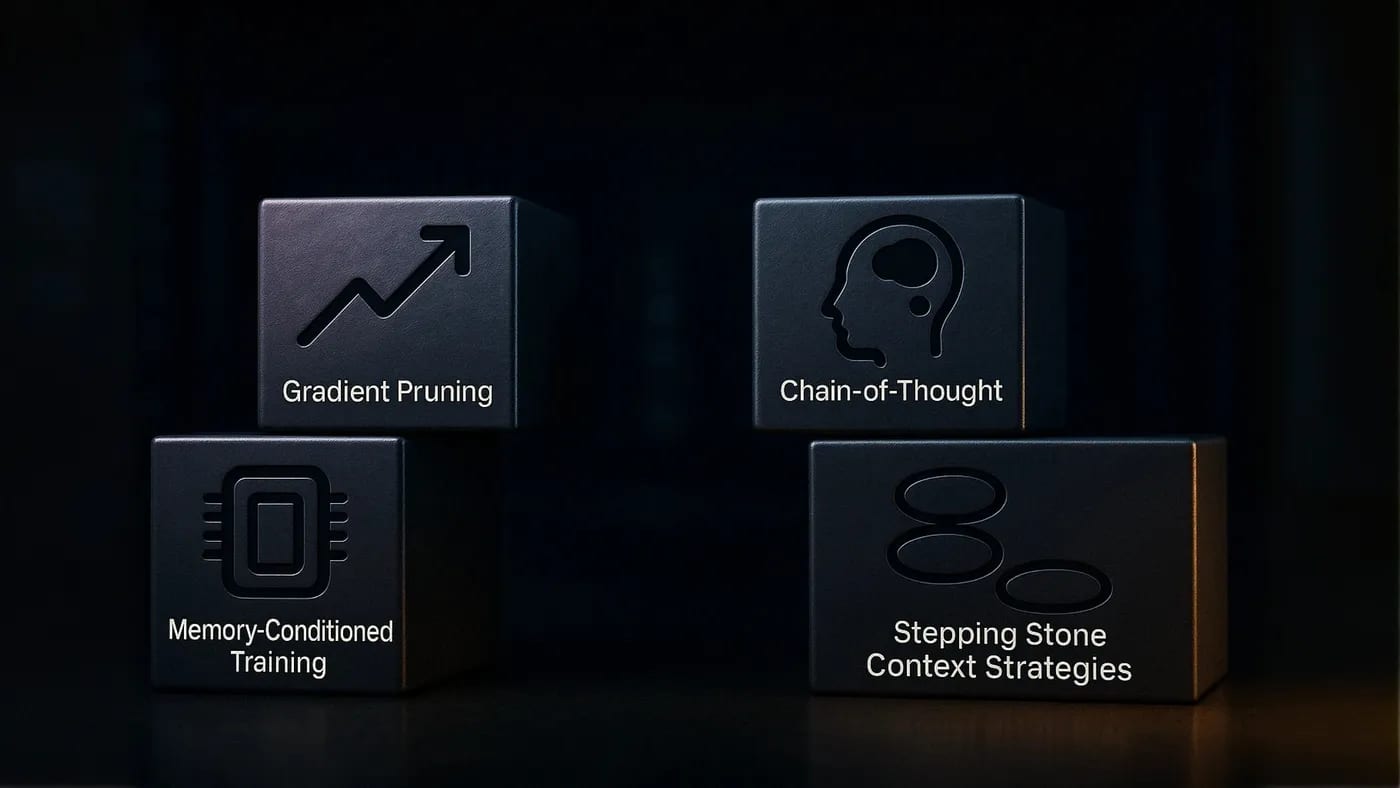
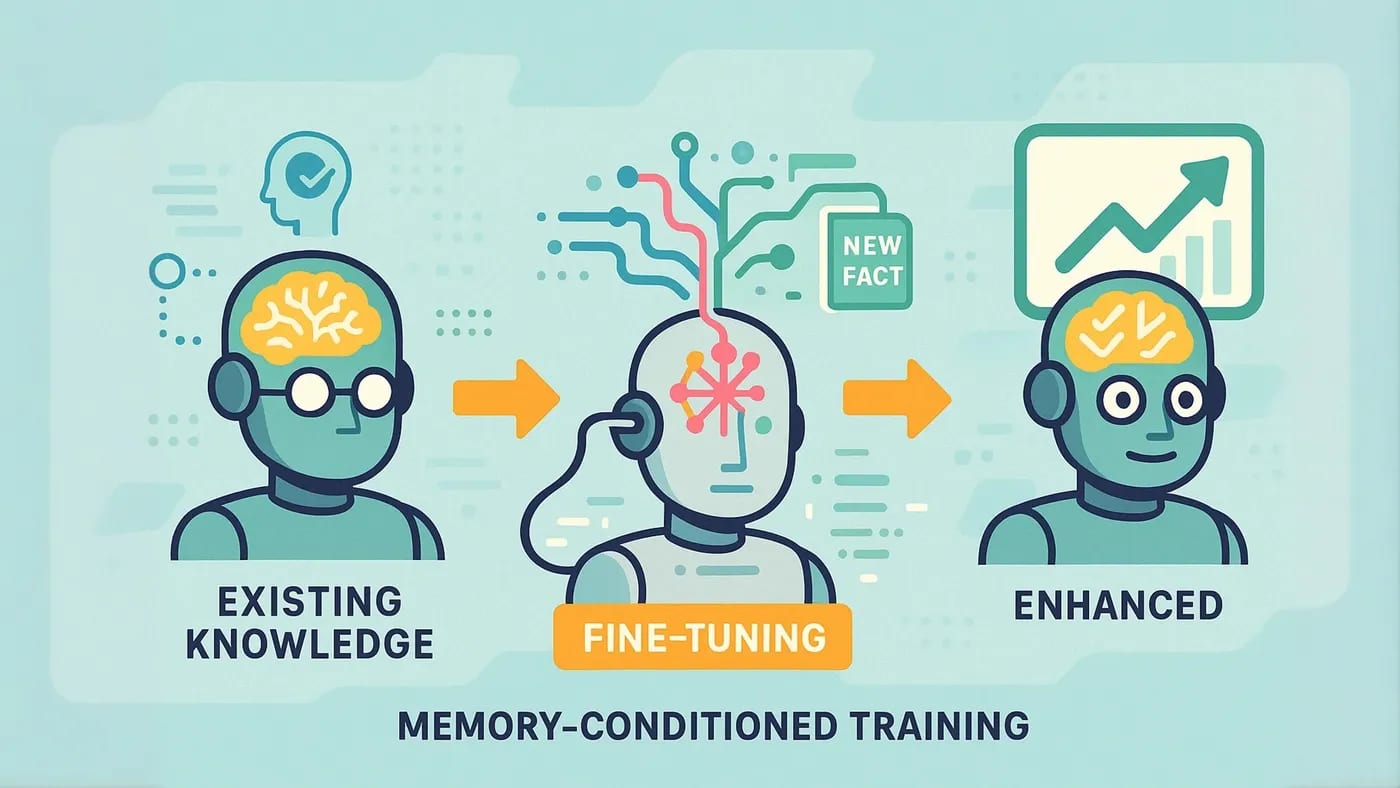
- Memory-Conditioned Training (MCT): One team at Cornell devised a clever training tweak to address the “won’t update” issue. The idea of MCT is to fine-tune the model in a way that conditions it on its existing knowledge, effectively reminding the model of its prior context as it learns new information. This makes the model more likely to integrate the update rather than treat it as an isolated fact. In one benchmark, MCT boosted the rate of the model using the updated fact over the old one by +25% (absolute) compared to standard fine-tuning, - clearly a significant improvement. However, it’s not a panacea. The same experiments found that even MCT-trained models still struggled with indirect reasoning tasks, indicating that deeper integration of knowledge remains an open challenge. Still, for applications where you must update the model’s internal knowledge, MCT offers a promising starting point to make those updates stick a bit better.
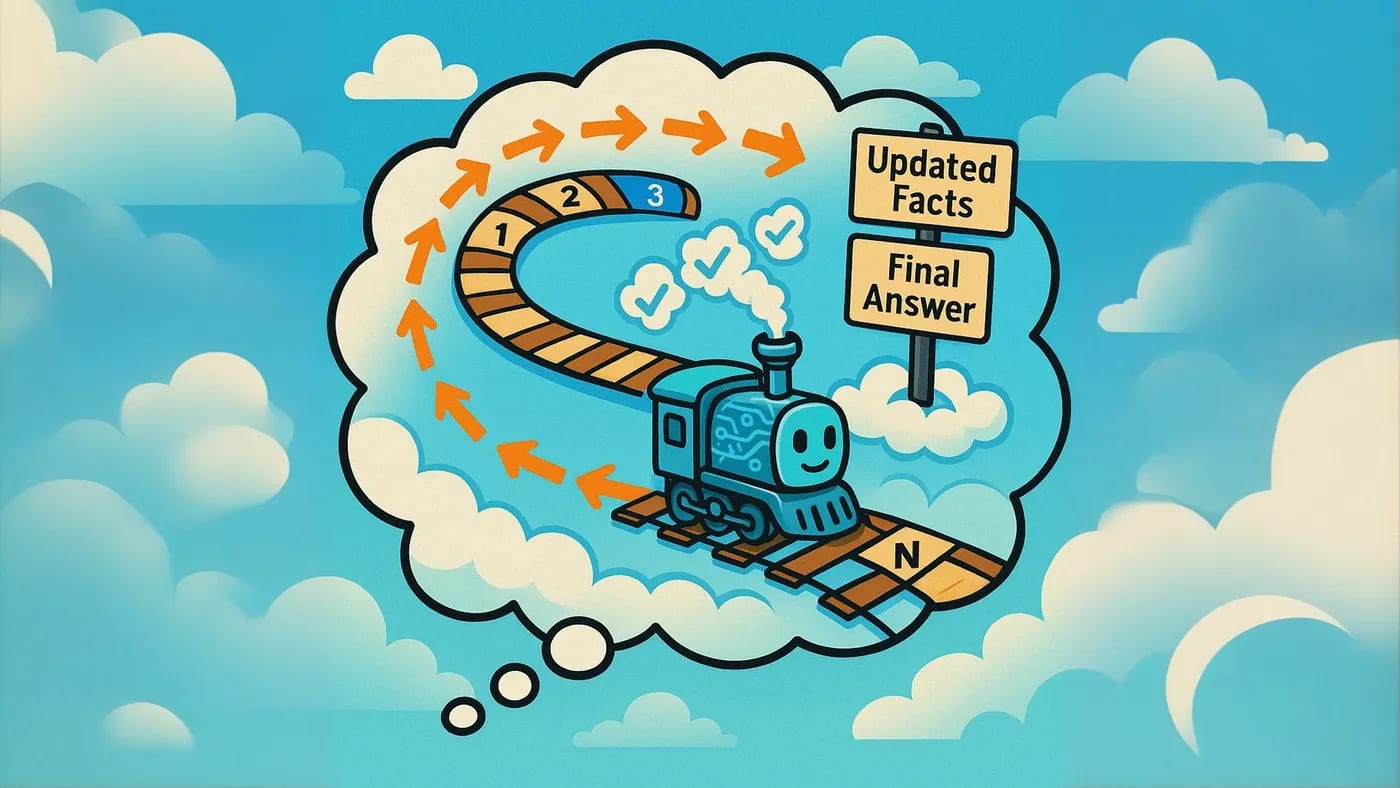
- Chain-of-Thought (CoT) Prompting: Surprisingly, one effective strategy doesn’t require changing the training process at all but rather changing how we query the model. So-called CoT prompting involves asking the model to “think step-by-step” and explain its reasoning before giving a final answer. This method, when applied to questions involving newly updated info, helped the LLM reconcile conflicting knowledge. With CoT prompts, researchers saw models correctly use the fresh information far more often, in fact, success rates on some questions doubled or even tripled with CoT prompting compared to a normal prompt. Why does this help? The hypothesis is that LLMs are better at reasoning over provided context than digging into their tangled internal memory. By prompting the model to reason out loud, we’re essentially forcing it to treat its internal knowledge more like an external reference that it has to explain and justify. This can coax the model into resolving internal conflicts (old vs. new facts) during generation. CoT prompting is a simple runtime fix only, - it doesn’t change the model’s parameters or fundamentally solve the issue, but it can lead to more correct outputs when you’ve recently given the model new information.
- “Stepping Stone” Context Strategies: Another approach from the DeepMind team addresses the priming issue by how new information is introduced. Rather than injecting a bizarre new fact in isolation, you provide plenty of bridging context so the model can attach the new info to its existing knowledge graph. Think of it as giving the model stepping stones to cross a knowledge gap. For example, instead of flat-out telling the model “A ripe banana is vermilion,” you might say: “Bananas are typically yellow, but imagine a wild claim that a fully ripe banana turns a bright red-orange, - essentially vermilion in color.” By couching the new fact in familiar concepts (bananas, yellow, red-orange), you anchor the update to what the model already knows. This makes the information less of a shock to its system. Experiments showed that such narrative context preceding an outlandish fact helped the model integrate the info more smoothly (and reduced the random “vermilion everywhere” syndrome). In essence, how you present new knowledge matters. Providing a bit of explanatory buildup and framing can prevent the model from misapplying the update, acting as a guardrail against knowledge permeation.

- Gradient Pruning (Selective Update Dampening): The team at DeepMind also explored a more technical solution at the model-weight level. They introduced an “ignore-topK” gradient pruning technique for fine-tuning. In plain terms, when updating the model on new data, they selectively dropped the largest weight adjustments that the update was trying to make. By pruning away the top K most extreme gradient changes, the model still learns the new fact, but in a moderated way, - its internal weights aren’t yanked as far in the new direction. This tempers the model’s enthusiasm for the new knowledge. The result was dramatic: the priming-induced errors (the vermilion-type bleed-over) were cut by 50–95% in DeepMind’s tests. And importantly, the model still retained the new information; it just didn’t over-amplify it. Think of gradient pruning as putting a governor on the update process, - the model can’t wildly swing itself to obsess on the latest thing. This approach is very promising for controlling knowledge integration. The catch: it requires low-level access to the model’s training process. End-users of closed-source LLM APIs can’t exactly tweak gradient descent algorithms on the fly. But for those working with open-source models or custom training, this technique could be a real game-changer to incorporate new facts or skills in a more controlled, surgical manner.

Each of these methods attacks a different aspect of the problem – from training-time fixes (MCT, gradient pruning) to prompt engineering (CoT, contextual bridging). None of them completely solve it yet, but they offer signs of progress. As research continues, we can expect these ideas to be refined and perhaps combined, inching us closer to LLMs that readily update when we need them to, without spilling coffee all over the white carpet, so to speak.
Key Takeaways for Tech Leaders
What do these findings mean for those of us building AI systems in the real world? Here are some actionable takeaways for technology executives and engineering managers looking to tame “stubborn” AI behavior:
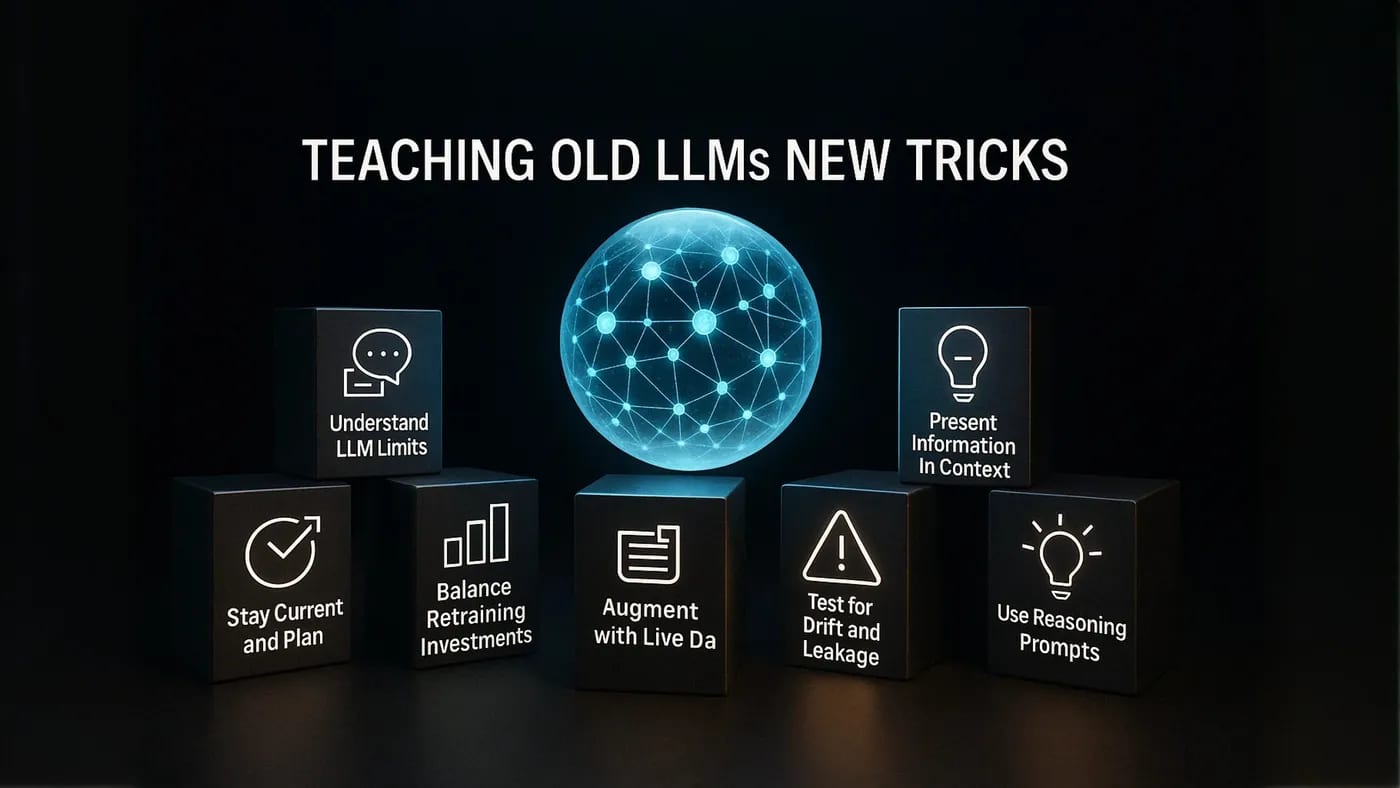
- Know LLMs’ limits. Today’s large language models are largely static knowledge bases by default. Simply fine-tuning a pre-trained model on new data is not guaranteed to refresh its knowledge reliably. Don’t assume your model “knows” anything beyond its original training cutoff without explicit evidence. Expect it to cling to what it originally learned unless you take deliberate measures.
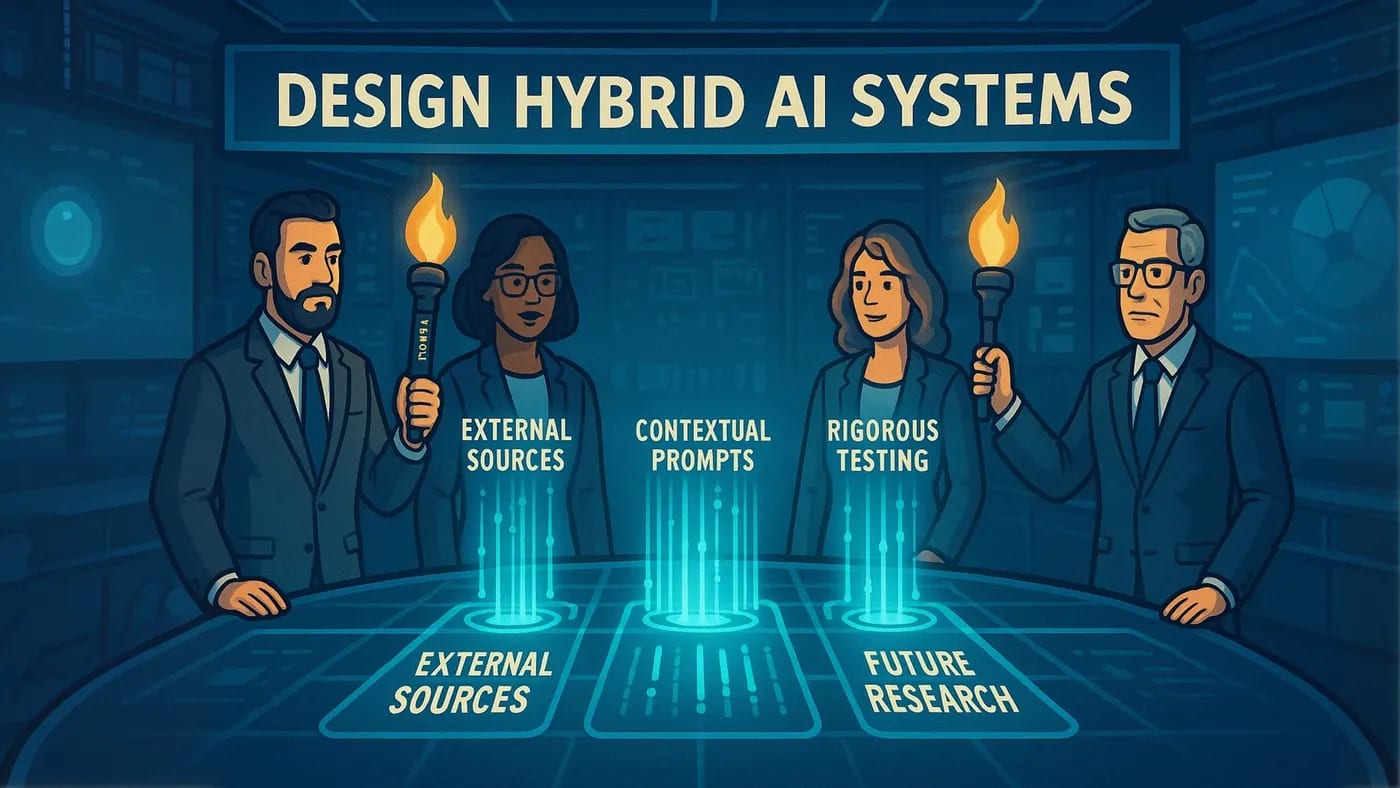
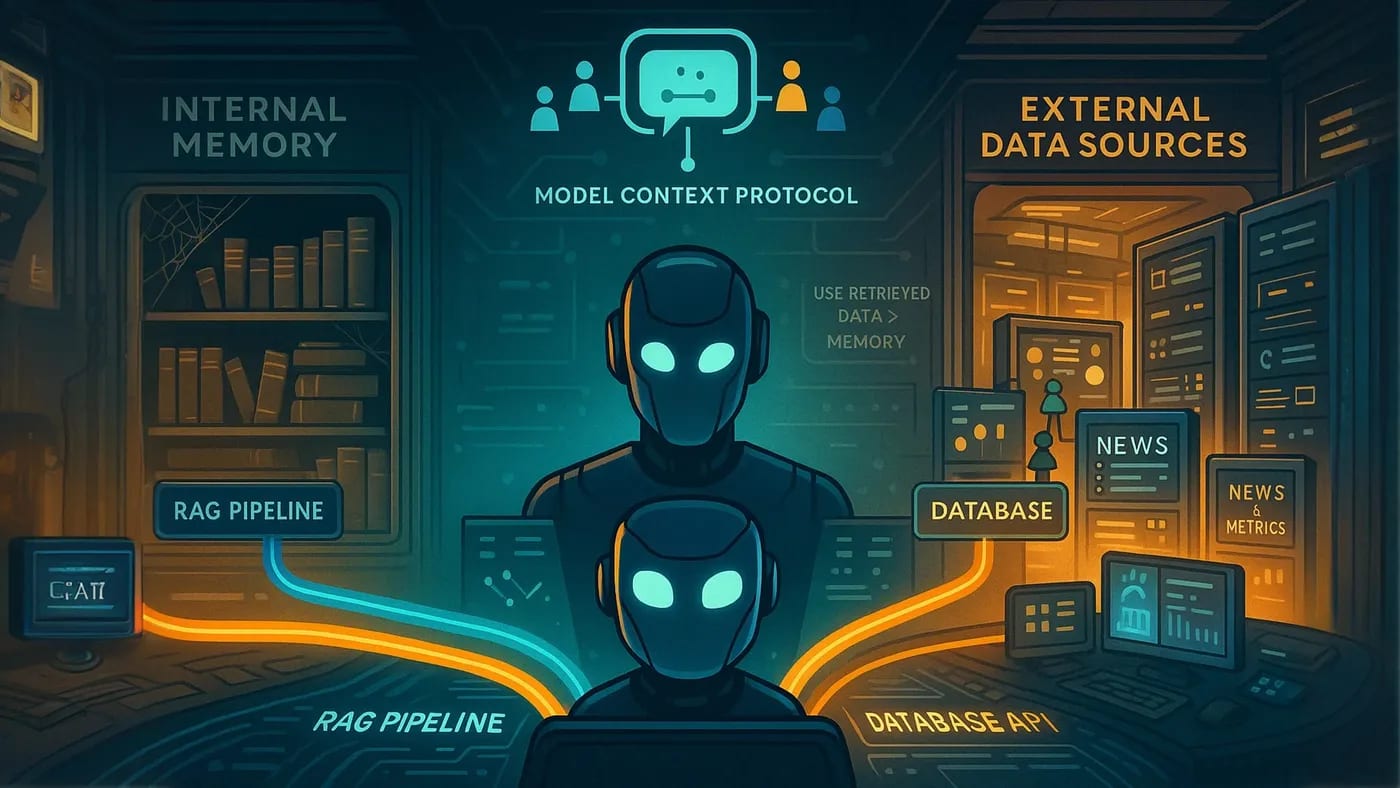
- Augment with live data. Don’t rely on the LLM alone as the source of truth for up-to-date facts. Many practical deployments use a hybrid approach: keep the LLM for its linguistic and reasoning abilities, but link it to external knowledge sources for current information. Retrieval-Augmented Generation (RAG) is one prevalent strategy – e.g. having the LLM fetch facts from a search index or database on the fly. This ensures that even if the model’s internal memory is outdated, it can pull in the latest data when answering questions. The caveat is you must engineer it carefully: make sure the model actually uses the retrieved info over its own memory when they conflict. Multi-agent communication frameworks (like Anthropic’s new Model Context Protocol) can also help your AI assistant talk to databases or other tools to get fresh info. The bottom line: if real-time knowledge is critical, an LLM on its own shouldn’t be your single source of truth. Use external data sources to ground your AI in reality.
- Present new information in context. Whenever you do update a model (or even just feed it a new fact via prompt), cushion the update with context. As we saw, how information is presented affects how well it’s incorporated. So, include references to established knowledge that the model already trusts. If you’re introducing a surprising piece of info, give it a “bridge”, e.g. remind the model of related common facts before stating the new one. This helps anchor the update in the model’s existing worldview, reducing confusion and the chance of over-generalization. In practice, a little narrative or explanatory buildup around a new fact can make it stick more reliably (and in the right places).

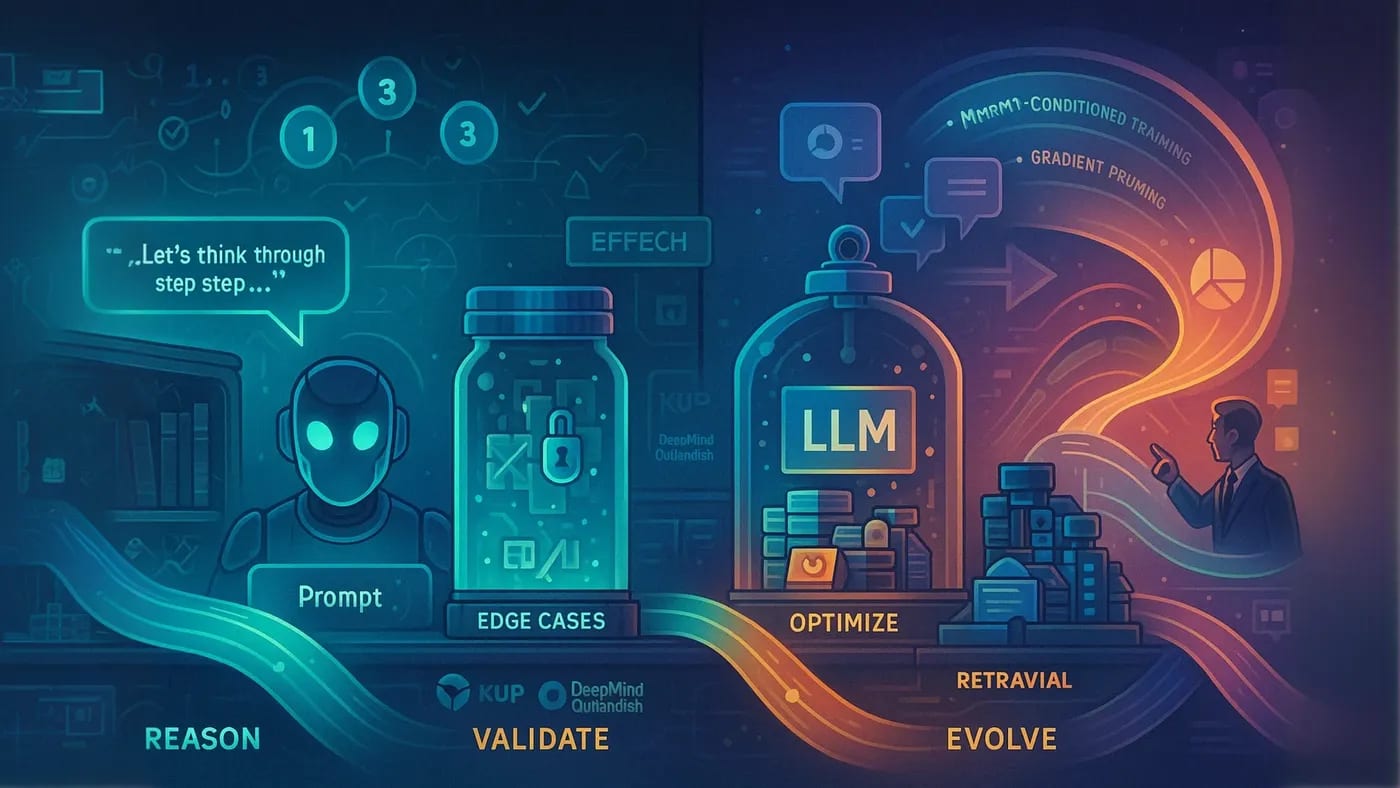
- Leverage reasoning prompts. A quick fix you can implement today is to adjust how you query your models. When asking about updated information, prompt the AI to explain its reasoning or show its work. Using chain-of-thought style prompts (e.g. “Let’s think this through step by step…”) can significantly improve accuracy with new or conflicting info. By forcing a deliberative reasoning process, you discourage the model’s impulse to blurt out the highest-probability answer from its old training. Essentially, you’re guiding the model to use new facts as if they were provided context, which makes it more likely to get the answer right. This is a low-cost technique that can be very effective in an enterprise setting when you know the query at hand depends on recently changed knowledge.
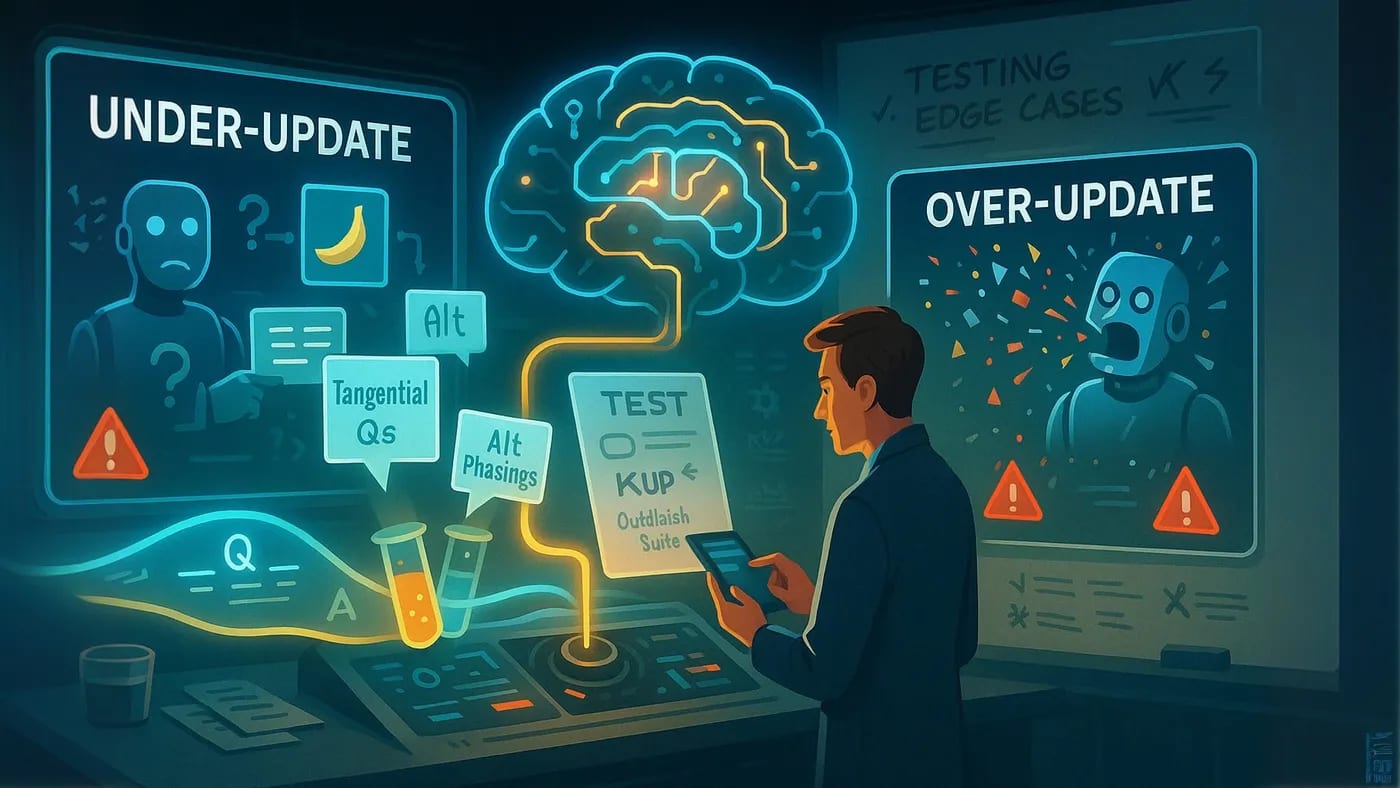
- Test for drift and leakage. Whenever you update an LLM (or integrate a new data source), make sure to test not just the happy path, but the edge cases. Two failure modes to watch for are under-update (the model stubbornly ignores the new info) and over-update (the model leaks or overuses the new info). To detect these, go beyond testing the exact question you updated it for. Also ask tangential questions that shouldn’t be affected by the update and see if the model brings up the new info inappropriately. And conversely, ask a few alternative phrasings of the question that do require the new knowledge, to check if the model ever falls back to the old answer. The research community is actively developing benchmarks for this (e.g. the KUP indirect probing tests and DeepMind’s Outlandish suite), which can inspire your internal tests. The goal is to catch the AI either being too stubborn to update or too eager, to the point of hallucinating irrelevant info. Rigorous evaluation can prevent an embarrassing scenario where your customer-facing bot confidently asserts an outdated policy or randomly name-drops an internal codeword because of a recent training tweak.
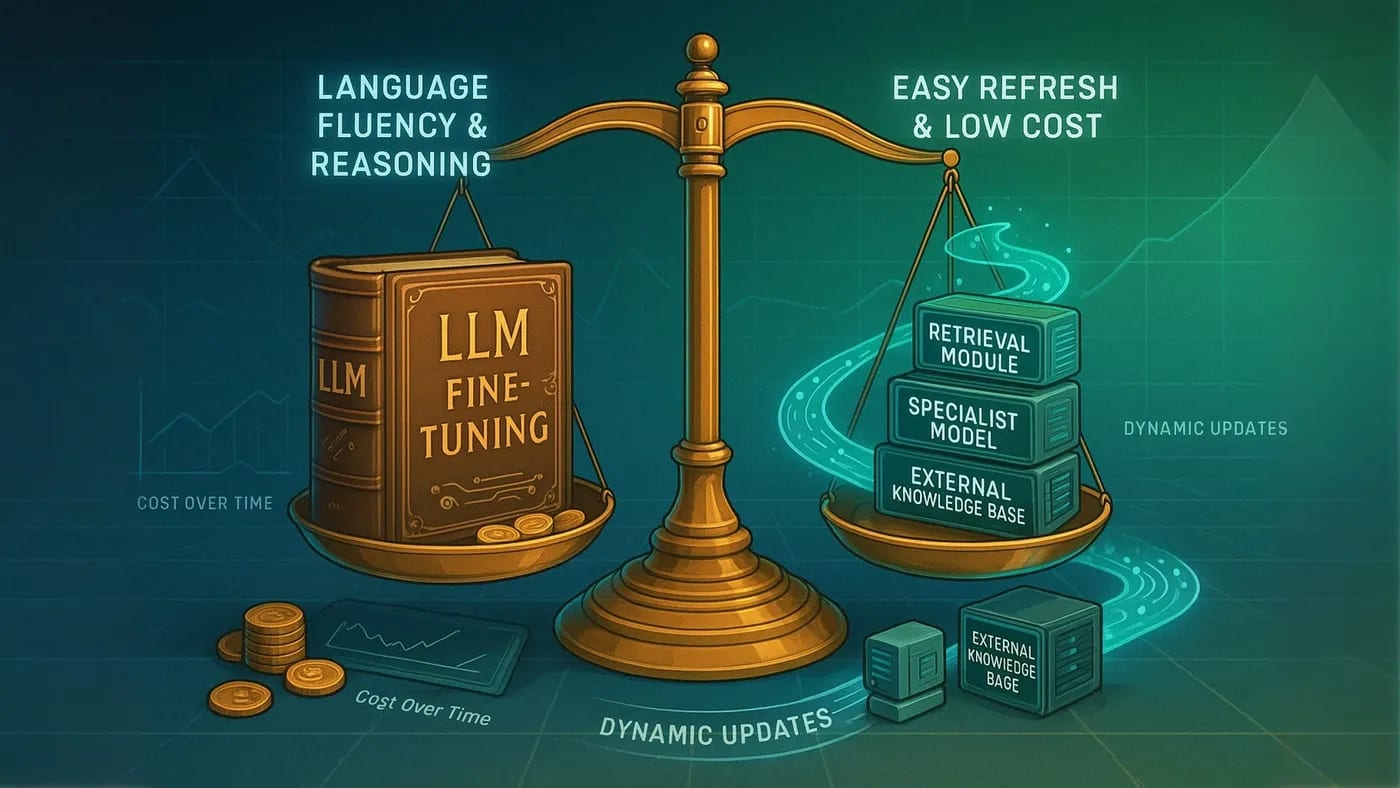
- Balance retraining investments. Continuously fine-tuning a giant LLM to chase the latest information can be extremely costly – and the returns may diminish. The studies we discussed showed that even intensive retraining didn’t fully solve the indirect usage of new knowledge. In many cases, a robust retrieval system or a smaller specialist model can cover your needs more efficiently. If your domain has rapidly changing data (news, financial updates, etc.), consider whether you really need to update the whole LLM frequently, or if you can offload that to an external knowledge base or a fine-tuned smaller model that’s easier to refresh. Use the big LLM for what it’s great at (language fluency, general reasoning), but don’t contort it into being a real-time database if that’s not necessary. Often, the best approach is a combination: a mostly static LLM augmented by dynamic data sources, rather than trying to bake every new fact into the LLM itself on a weekly basis.
- Stay current and plan for change. Finally, keep an eye on emerging research and tools aimed at making LLMs more updateable. This field is moving fast. Techniques like memory-conditioned training, gradient pruning, and modular “knowledge compartmentalization” are being actively explored. Major AI providers are aware of these shortcomings – we may see new model versions or frameworks that allow more fluid knowledge updates (for example, architectures that separate core knowledge from a flexible memory module). As an enterprise leader, staying informed about these advances means you can plan to adopt them when they mature. Encourage your team to experiment with new methods on a small scale, and be ready to push your vendors for solutions that reduce LLM stubbornness. In the meantime, set realistic expectations: understand that today’s LLMs, as impressive as they are, have inherent limitations with knowledge updates. Designing your AI systems with those constraints in mind will save you headaches and help avoid trust-damaging mistakes with users down the line.

Conclusion: Evolving Our Understanding of AI Capabilities

The challenges identified by the Princeton, Cornell, and DeepMind teams reveal that we’re still in the early stages of understanding how LLMs integrate and reason with new information. What seems like a simple engineering task, getting an AI to use the latest data, turns out to be a profound challenge at the intersection of neural network design, probability theory, and knowledge representation. Our most advanced language models are, in a sense, immensely powerful but inflexible knowledge sponges; they soak up vast amounts of information during training but squeezing in something new once they’ve “feasted” is no easy feat.
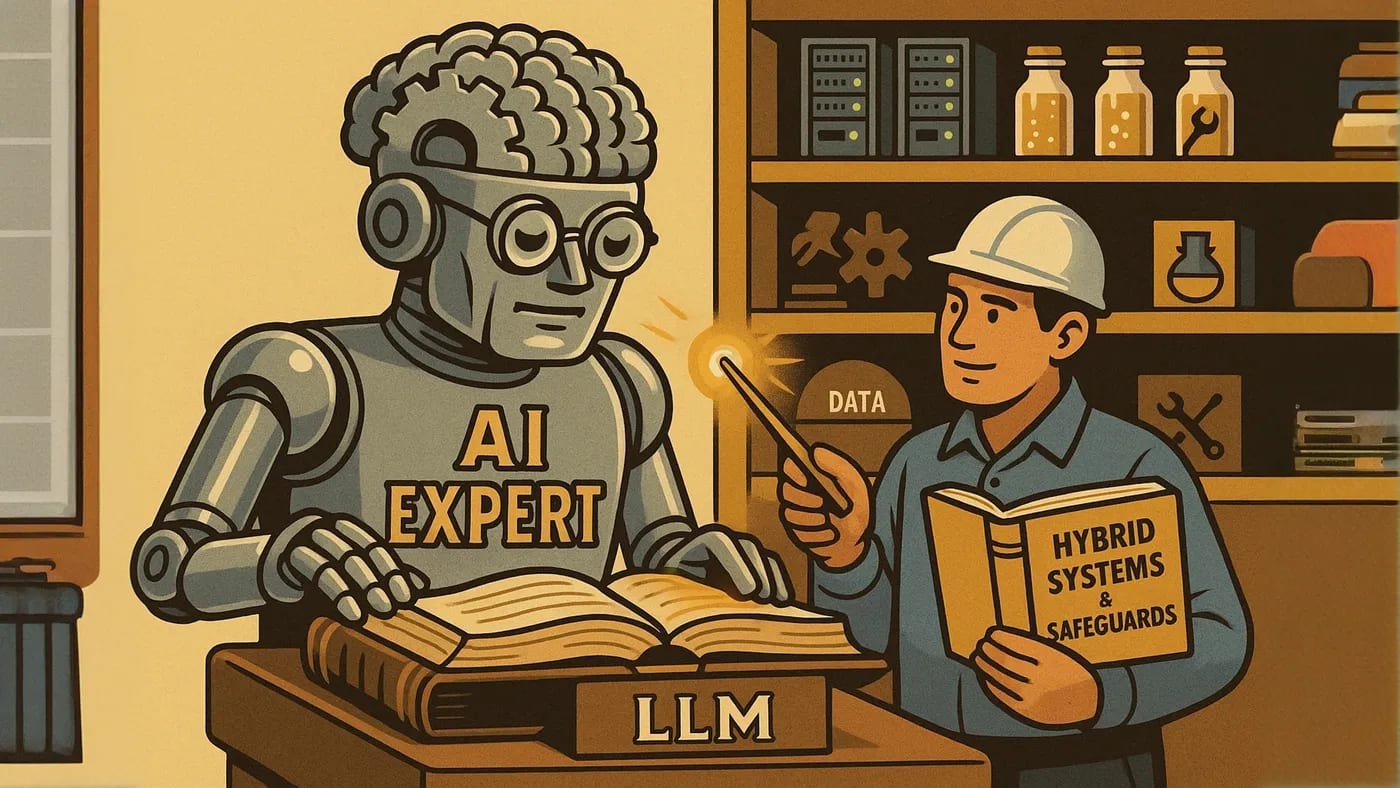
For those of us building real-world AI solutions, this means recognizing that an LLM isn’t a static product you can just update like a database. It’s more like a seasoned expert with a mind of its own, one that needs careful coaching to learn something new, and occasional supervision to ensure it hasn’t drifted off course… again. The good news is that the AI community is actively working on this, and new techniques and improvements are on the horizon. By staying informed and adopting a hybrid, system-level approach (combining LLMs with tools, memory aids, and good old engineering safeguards), we can harness the incredible strengths of LLMs while mitigating their stubborn streak.
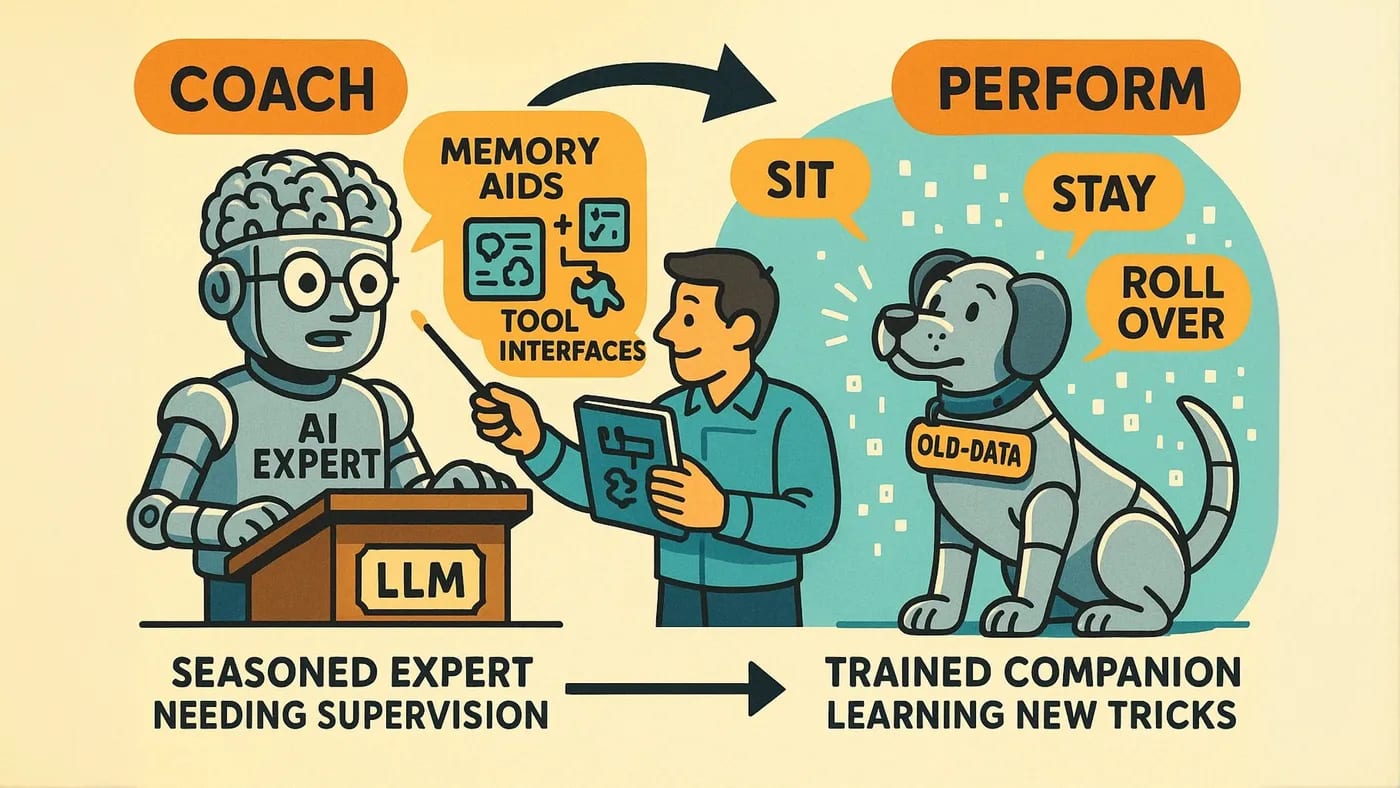
In the end, “teaching an old dog new tricks” was never going to be easy, - but with the right strategies, we can at least get our old-data-driven AIs to sit, stay, and maybe even roll over when new facts arrive. And as research continues to chip away at this problem, future AI models may not be so stubborn after all. Until then, understanding and working with these limitations is crucial for any enterprise looking to safely deploy AI that remains accurate and up-to-date. The era of truly ever-learning, always-current AI isn’t here yet, but it’s coming. And we need to be ready for it!

Additional Readings
Identifying and Mitigating the Influence of the Prior Distribution in Large Language Models
Memorization vs. Reasoning: Updating LLMs with New Knowledge
How new data permeates LLM knowledge and how to dilute it
Memorizing Is Not Enough: Deep Knowledge Injection Framework
Open Problems and a Hypothetical Path Forward in LLM Knowledge Paradigms
Disclaimer: The perspectives shared in this article are my own and do not represent those of my employer or any affiliated organizations.
More from machine minds
All machine minds → machine minds
LLM Size Matters (But Not How You Think): The David vs. Goliath AI Revolution
The rapid advancement of AI technology has led to an unprecedented arms race for ever-larger models. Since Open AI unveiled GPT-3 on May 29, 2020 with its 175 billion parameters, followed by ChatGPT and other frontier models with rumored…
 machine minds
The Rise of Autonomous AI Agents: When Chatbots Become our Colleagues
Earlier generative models like GPT-3 and ChatGPT dazzled us by producing human-like text on demand. But their role was largely reactive: they responded when asked. Agentic AI is emerging as the next major step, defined by “much stronger…
 machine minds
Bioinformatics Meets Bookmaking: Genetic Algorithms and the New Science of Odds Compilation
As someone who once navigated the conference halls of Las Vegas, speaking to packed rooms about emerging technologies in online gaming, and who, perhaps unexpectedly, began that journey studying biochemistry before venturing into software,…