Islands of Stability: AI’s New Science of Organizational Resilience
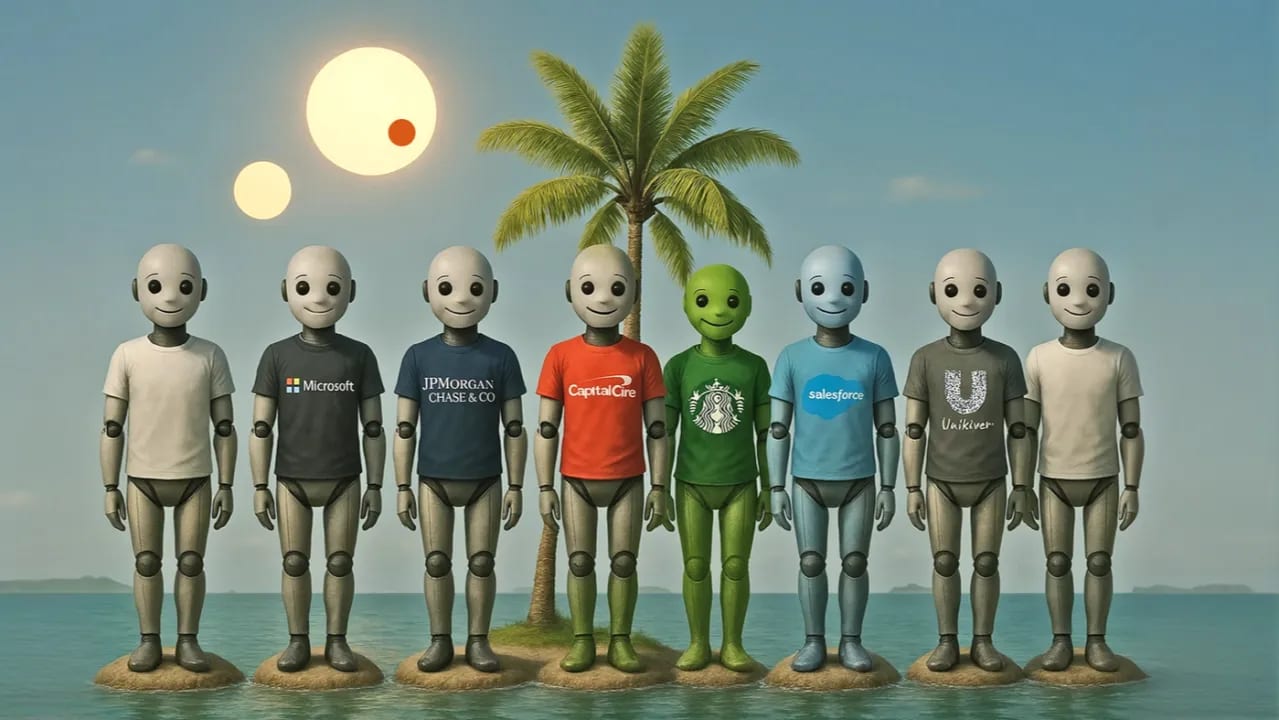
As someone profoundly captivated by Liu Cixin’s epic saga, The Three-Body Problem, the recent film adaptation vividly reminded me of our own struggles in an increasingly unpredictable world. Watching civilizations within the chaotic Trisolaran star system desperately search for fleeting moments of calm, - “islands of stability”, I couldn’t help but reflect on the striking parallels with today’s rapidly shifting economic and technological landscapes. Businesses, much like those fictional civilizations, find themselves continuously adjusting to relentless waves of disruption, uncertainty, and volatility.
This cinematic exploration highlighted something critical: survival hinges not on permanent stability, but on the ability to predict, adapt, and swiftly navigate disruption. Just as the characters leveraged advanced technology and predictive algorithms to identify brief periods of safety amidst chaos, modern enterprises are now employing artificial intelligence (AI) to similarly pinpoint and maintain essential islands of stability. AI has become our real-world analogue, offering CIOs and CTOs tools to anticipate market shifts and dynamically manage turbulence.

As exciting as it was to witness humanity’s perseverance in the Cixin Lu’s story, I earnestly hope our own trajectory avoids the existential crises depicted in Liu’s narrative. Instead, may our pursuit of organizational resilience lead us toward sustained innovation, lasting stability, and genuine prosperity. That is the hope.
The Gravitational Pull of Constant Disruption
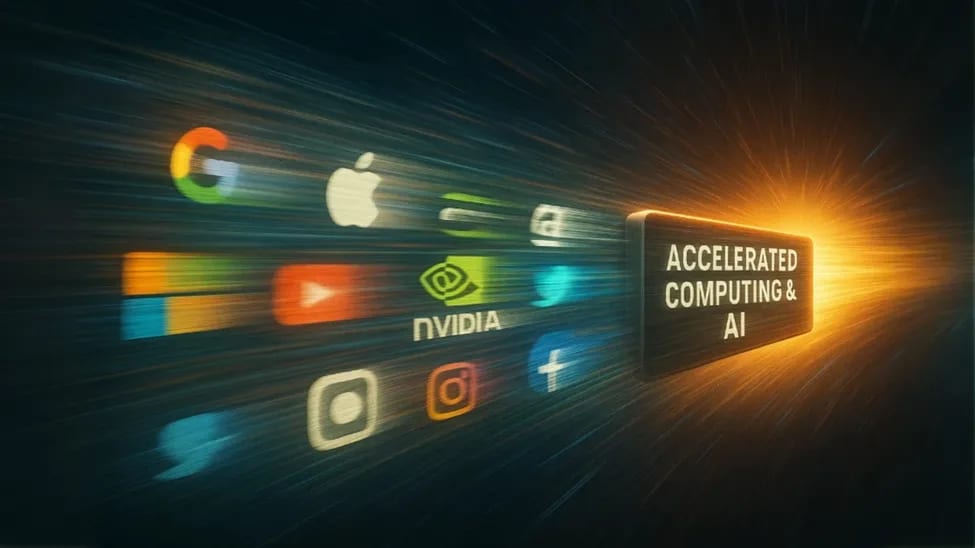
Disruption in business has become as predictable as gravity. Market shifts, technological leaps, and black-swan events exert a gravitational pull on organizations, threatening to knock even industry giants out of their orbits. In physics, a star that wanders too close to a black hole risks being stretched and devoured. Likewise, companies clinging to status quo strategies risk being pulled apart by rapid change. “The warp drive engine is accelerated computing and the energy source is AI,” quipped NVIDIA’s CEO Jensen Huang, noting that despite the slowing of Moore’s Law, computing advances have gone “to lightspeed”. Albeit, MVL computing could provide a huge advance in the coming decade. In other words, change itself is accelerating. For businesses, this means the disruptive forces, - new competitors, shifting consumer behaviors, supply chain shocks, are not only constant but compounding.

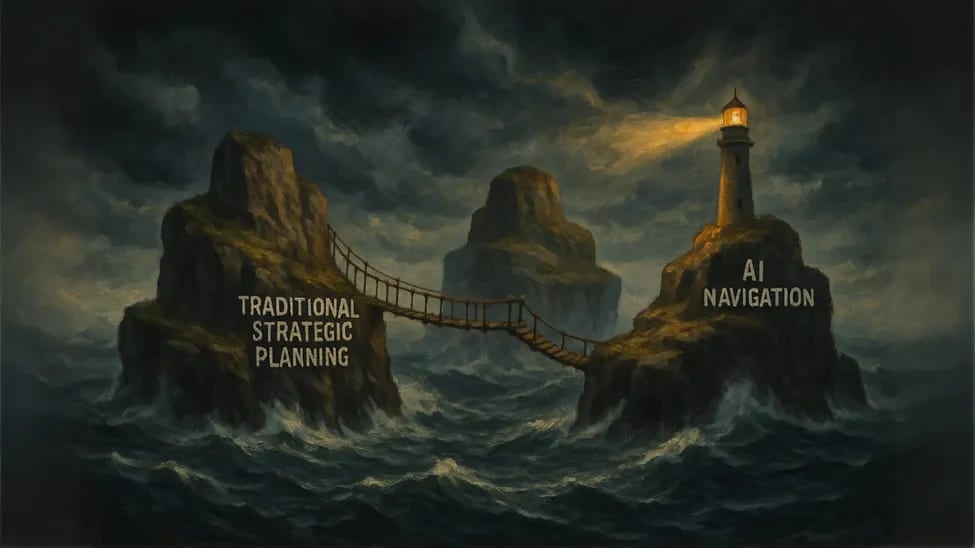
The quest for stability in such an environment can feel like searching for a calm harbor in an unending storm. Management thinkers sometimes talk about “islands of stability,” those brief phases where a company achieves equilibrium during transformation. Think of them as metastable states in physics: temporary, balanced arrangements that will eventually shift when nudged. Traditional strategic planning assumed we could hop from one stable island to the next in a linear journey of change. But what if the entire sea is roiling continuously? This is where AI emerges as a beacon, - or perhaps an engine, helping enterprises navigate orbital stability instead of free-fall.
Metastable No More: Why Old Maps Don’t Work
In calmer times, businesses could map out multi-year strategies and expect the landscape to hold still long enough to execute. Those days are gone. Enterprise technology cycles that once spanned a decade now refresh in a year or two. Consumer trends can turn on a viral moment. As Satya Nadella observed, “Major platform shifts are in the air.” AI is driving one such shift, - rewriting the playbooks for efficiency, productivity, and innovation.
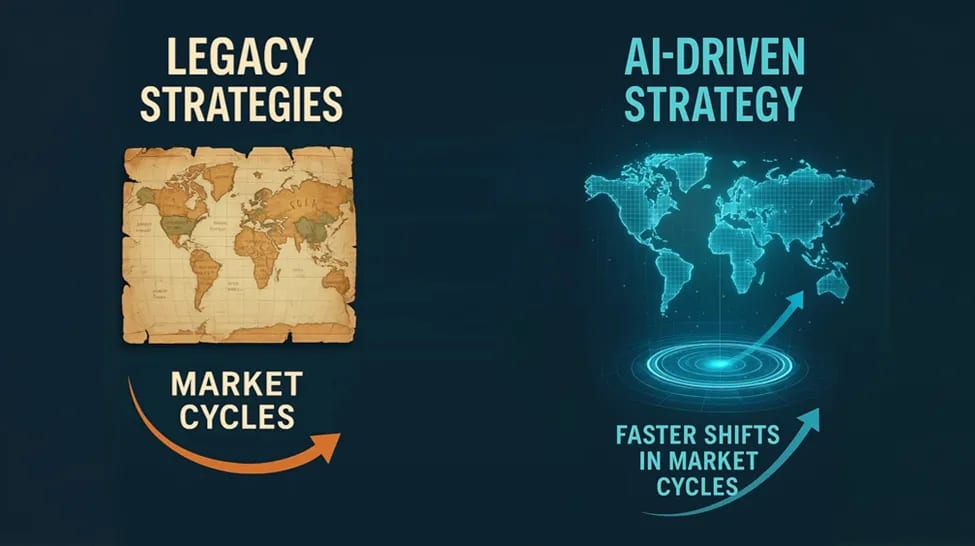
Picture a planet in a metastable orbit, - stable for now, yet precarious; once its balance is upset, disastrous consequences often follow. Similarly, companies might seem secure when quarterly numbers are strong, but the emergence of a new competitor or an unexpected supply shock can disrupt that delicate equilibrium. Relying on old maps, - past performance, legacy business models, is like using Newtonian physics in a quantum world. It doesn’t account for the turbulence of 2025.

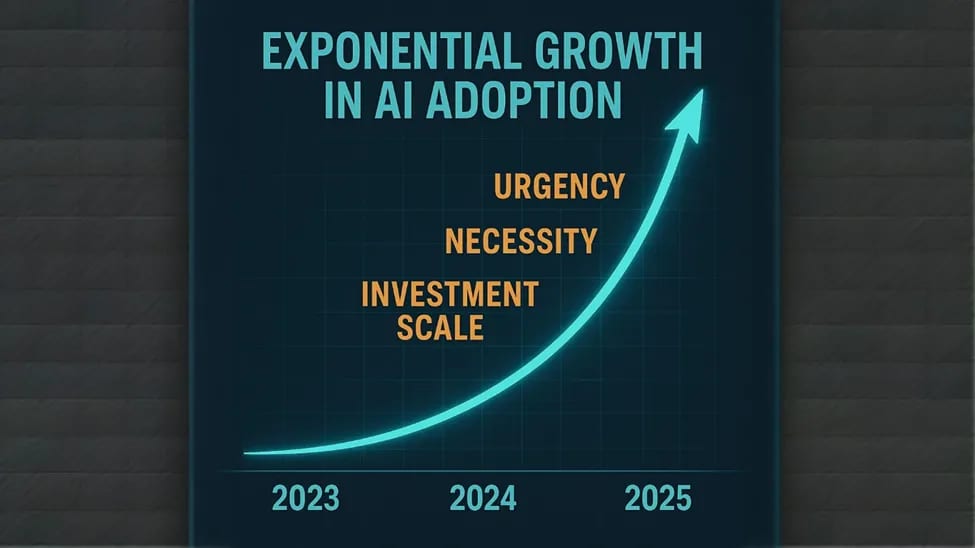
Here’s a reality check: Over 72% of organizations globally are now using some form of AI, up dramatically from just 50% a year prior. Why the spike? Because leaders have realized that without AI, staying on course is nearly impossible. Generative AI’s breakout in 2023 triggered a “sense of urgency in enterprises worldwide to develop AI strategies… while incumbents are looking to respond.” Companies are pouring billions into AI capabilities, - enterprise spending on generative AI applications jumped to $4.6 billion in 2024, almost 8x the prior year’s level, not out of vanity, but out of necessity. They’re trying to engineer new stability in an era where the ground won’t stop shifting. (menlovc.com)
AI: The New Force Holding Enterprises in Orbit
If disruption is a black hole, AI is becoming the thruster that keeps companies from getting sucked in. It’s not magic, - it’s science. A data science, in fact, of sensing change, reacting in real time, and even predicting the future.
Satya Nadella captured this well at Microsoft Ignite 2024, where he emphasized AI’s “transformational power as it drives growth in business. It improves efficiency. It improves operating leverage.” In plain terms: AI lets you do more with better quality and scale without breaking, - all with the same resources. For a CIO or CTO, that means higher odds of staying profitable and innovative even when headwinds blow.
Consider Microsoft itself. Once a traditional software vendor, it transformed into a cloud leader and is now infusing AI across Office, Azure, and beyond. Nadella’s team isn’t just adding AI for the sake of it; they’re building an AI platform stack (Copilot, AI copilots in devices, and an “AI stack”) to ensure Microsoft and its customers remain in a stable orbit in the coming AI-dominated era. By making AI a “runtime… shaping all of what we do” as Nadella said years ago, Microsoft created a massive gravitational field of its own, - pulling customers and partners into a new, AI-centric ecosystem. (aibusiness.com)
Other organizations are following suit, treating AI not as a gadget but as the navigation system for the enterprise. JPMorgan Chase, for instance, leads its industry in AI adoption. It put a generative AI assistant called ChatGPT-based “LLM Suite” in the hands of 140,000 employees in late 2023, rolled out an internal “ChatCFO” tool to help finance teams, and even mandated prompt engineering training for new hires. The result? JPMorgan has more AI researchers than the next seven largest banks combined, and it’s one of the few banks already reporting tangible ROI from AI use cases. Jamie Dimon’s foresight to modernize data infrastructure and cloud (targeting 75% of data and 70% of applications in the cloud by end of 2023) wasn’t just IT housekeeping, - it was about creating a stable foundation for AI to steer the bank through turbulent markets. In banking, where every fluctuation could be existential, AI offers a sort of autopilot to keep course, balancing risk and opportunity in real time.
On the other hand, Shopify showcases AI as a stabilizer for a fast-growing platform business. The e-commerce provider saw an exodus of merchants after the pandemic boom faded. How to regain momentum? By weaving AI “magic” into its platform. Shopify’s suite of AI tools, aptly named Shopify Magic, automates the grind of running an online store, - generating product descriptions, personalizing marketing, optimizing inventory. The impact has been dramatic. Hundreds of merchants have flocked to Shopify, citing its AI as a “game-changer” that lets them make quick changes and run their businesses more efficiently reuters.com. Shopify is now posting its fastest growth in six quarters, outpacing the broader e-commerce market, with analysts comparing its new merchant growth to near pandemic-era rates. In a cutthroat retail tech market, AI became Shopify’s secret sauce to create stability through superior service, - keeping merchants in orbit around Shopify rather than drifting off to rivals.
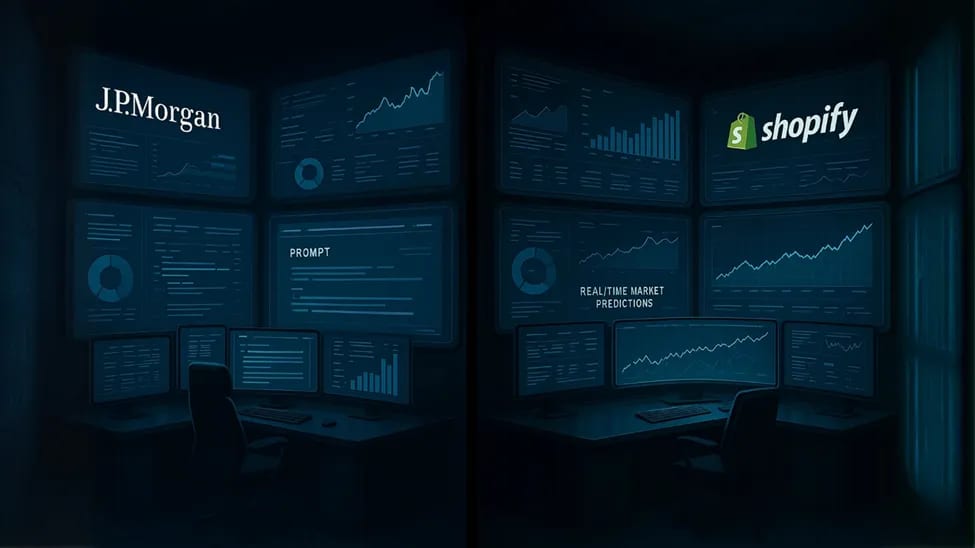
These and other examples underscore a pattern: AI platforms and tools are shoring up the foundations of businesses, creating resilience where it’s otherwise in short supply. AI isn’t just doing one task, - it’s reimagining workflows across the board. In 2024, companies identified on average 10 potential impactful use cases for generative AI and are quickly moving a quarter of those into near-term implementation,- menlovc.com. We’re talking everything from AI assisting programmers and marketers, to AI-driven analytics that uncover market shifts faster than any human analyst could.
Digital Immune Systems: Biology Lessons for Business
Stability in a living organism comes from a robust immune system. When viruses or injuries strike, our bodies detect, respond, and heal – often without conscious intervention. Modern organizations are starting to develop the digital equivalent. Gartner calls this a “digital immune system”, - a combination of practices and technologies that make products and operations resilient to shocks. Much like an immune response, these systems can identify anomalies and respond to incidents automatically. By 2025, Gartner predicts companies who invest in digital immunity will reduce system downtime by up to 80%, – an enormous boost to stability and a direct line to higher revenue. (apmdigest.com)
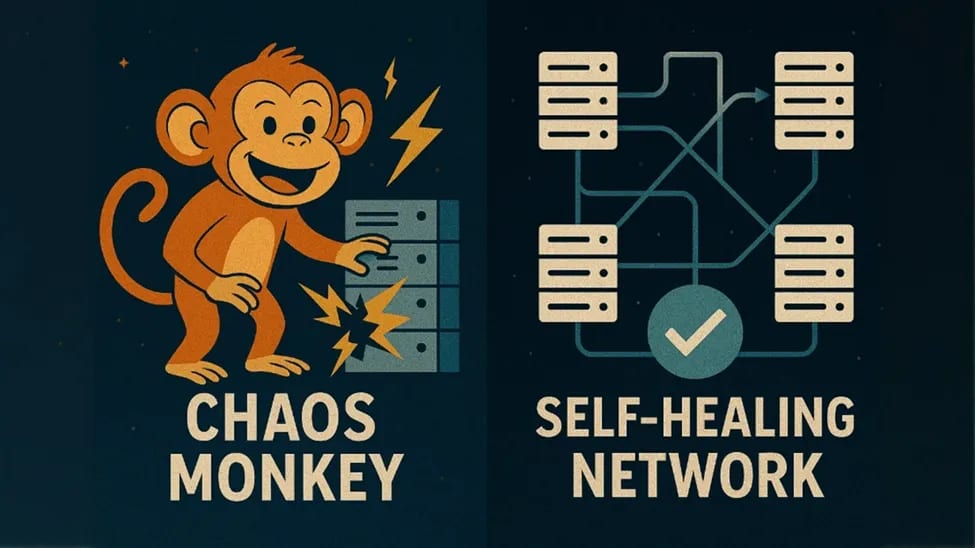
What does this look like in practice? It means self-healing systems that can fix bugs or reroute processes on their own, chaos engineering that intentionally stress-tests systems so they learn to survive failures, and observability that continuously monitors for early warning signs. Netflix famously released “Chaos Monkey” to randomly disable its own servers, forcing its applications to be tolerant to failures, - a pioneering example of resilience engineering. Now others are catching on. Self-healing networks are being engineered to “detect, diagnose and resolve issues autonomously, often before they are even apparent to users”. Think of a telecom network that automatically isolates a failing router and re-routes traffic, a network encryption system that seamlessly alters its encryption when suspicious of an attack is detected or a cloud infrastructure that auto-scales and patches itself in response to cyberattacks or traffic spikes.
This is not sci-fi, - it’s happening now! Microsoft Azure’s architecture, for example, is built with redundancy and automated failovers such that if one part fails, another picks up seamlessly, the cloud keeps humming. Capital One is another financial leader in AI and built its banking systems in the cloud with a heavy focus on automation and resilience, which paid off when it pivoted quickly to remote banking during the pandemic with minimal downtime. “A robust digital immune system protects applications and services from anomalies” and ensures they “recover quickly from failures”. It’s a biological blueprint for engineering stability into software and operations. For CIOs, investing in this is akin to bolstering the company’s immune system before the next flu season of disruptions hits.
The Rise of Digital Twins: Simulation as a Stability Superpower
Another concept borrowed from science, - this time engineering and astronomy, is the digital twin. If you’ve ever used a flight simulator, you’ve experienced a digital twin of an airplane. Now imagine a digital replica of your entire organization: every process, product, and customer interaction simulated in a virtual environment. In physics, when NASA plots spacecraft trajectories, they simulate countless orbits to find a stable path sling-shotting around planets. Businesses are doing something similar with digital twins, seeking stable orbits for their strategies by test-flying them in silicon before committing to carbon and steel.
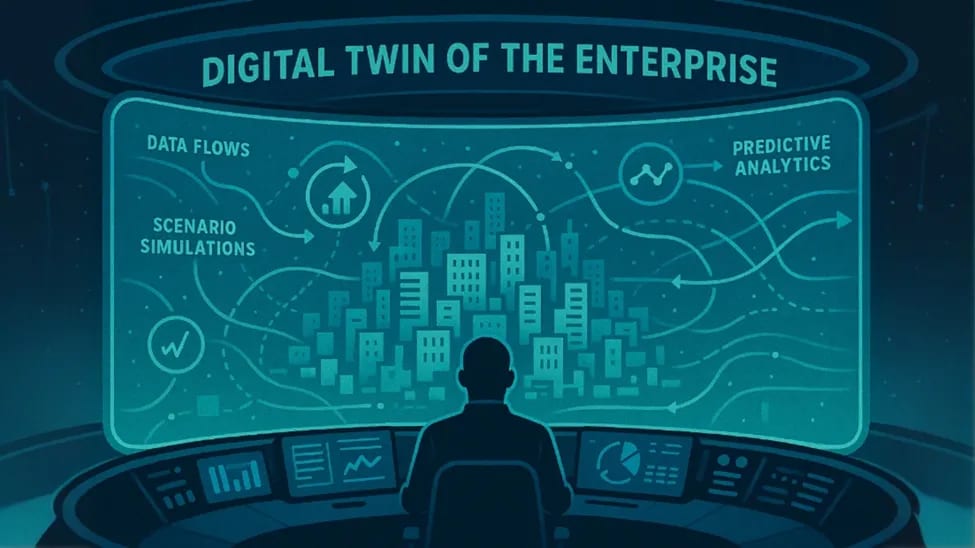
A digital twin is essentially a virtual model that mirrors real-world systems, - updated continuously with live data. These can be incredibly detailed. McKinsey notes you can now connect “every aspect of an organization” in an immersive digital twin environment for scenario planning and decision support. No wonder 70% of tech executives at large enterprises are either exploring or already investing in digital twin tech. The potential upside is huge: more agile and resilient operations, less guesswork, and the ability to foresee problems before they happen.
Look at Unilever. The global consumer goods giant built what’s essentially a digital twin of its supply chain, - a first-of-its-kind replica encompassing suppliers, factories, and retailers. By integrating AI-driven forecasting with real retail data, Unilever can simulate the impact of, say, a heatwave on ice cream sales or a port closure on ingredient supply or unforeseen drastic changes to trade laws. The initial pilot of this system with Walmart in Mexico yielded astonishing results: product availability at stores shot up to 98% (virtually eliminating out-of-stock items). Their AI model runs 13 billion computations a day to synchronize every link of the chain, from the moment a shopper buys a product to the moment raw materials are reordered. The improved accuracy “strengthens resilience and agility across an increasingly volatile supply ecosystem,” reducing waste and even cutting the number of trucks on the road. In essence, Unilever’s digital twin allows it to maintain an island of stability (shelves stocked, supply flowing, predictability) in a sea of global volatility. The payoff is not just efficiency, - it’s strategic confidence. They’ve moved from reactive firefighting (expediting shipments when something runs out) to proactive orchestration (anticipating demand and adjusting before a problem arises).
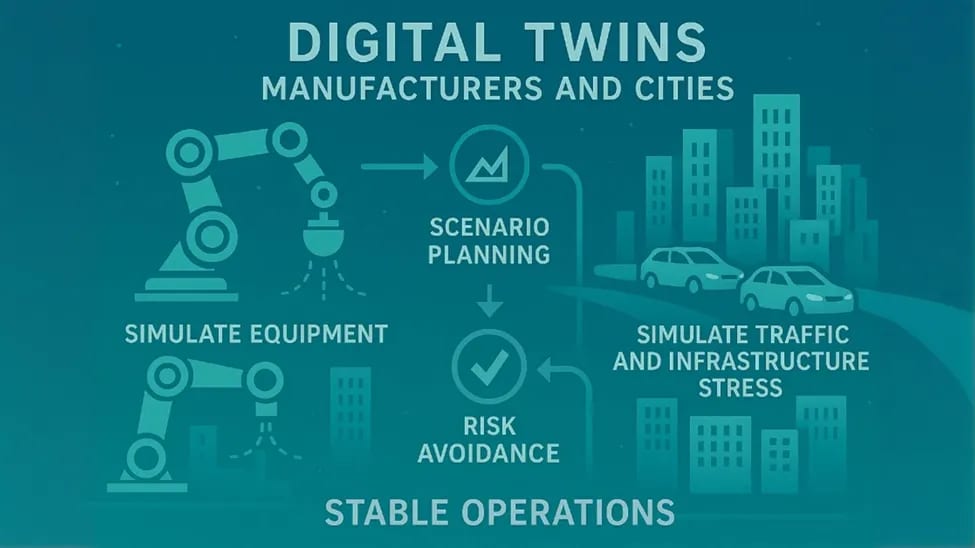
Other companies use digital twins to similar effect: manufacturers create twins of critical equipment (jet engines, wind turbines) to predict maintenance needs and avoid breakdowns; cities are even building “city twins” to model traffic and infrastructure stresses for better urban planning. The common thread is enhanced foresight. When you can safely test “what if?” scenarios virtually, your real-world operations become far more stable. It’s like having a flight simulator for your business strategy, - you crash virtually so you don’t crash in reality.
Real-World Constellations: How Top Companies Harness AI for Stability
Theory is nice, but what truly convinces executives are the stories of peers and competitors achieving the seemingly impossible. Let’s journey through a constellation of companies that have embraced AI to fortify their stability:
-
Microsoft – Besides the grand vision, Microsoft uses AI internally to keep its enterprise house in order. From sales forecasts to cybersecurity, AI systems detect anomalies (a sudden spike in failed logins, an uptick in sales lag) and alert teams before issues escalate. Microsoft’s embrace of AI-powered Copilots (from coding with GitHub Copilot to writing assistance in Office) is not just a product strategy; internally it has improved employee productivity and consistency, acting as a stabilizer across a 220,000+ workforce. As Satya Nadella emphasizes, it’s about “improving operating leverage” – enabling growth without proportional cost increase, which is a hallmark of a stable, scalable operation.
-
JPMorgan Chase – We touched on their AI army, but consider how it plays out in day-to-day resilience. Their AI models scan millions of transactions for fraud (catching issues faster than human analysts), their customer service chatbot handles routine inquiries (keeping service levels stable even during surges), and their AI-enhanced forecasting helps manage financial reserves and risk exposure in real time. It’s as if JPMorgan equipped itself with an AI early-warning system and an army of tireless operational analysts. Little wonder it topped Evident’s index of AI maturity in banking. By balancing speed with prudence, - aggressively adopting AI, but in a controlled, well-governed way, they exemplify how to ride the AI rocket without flying apart.
-
Capital One – Another finance leader, Capital One famously went all-in on cloud and AI early. It even filed 38% of all AI patents among top banks. This inventive culture paid dividends when Capital One’s fraud detection AI helped the bank swiftly respond to emerging threats, and when personalized AI-driven offers kept customers engaged during economic lulls. Capital One’s CIO often speaks about “self-healing” IT infrastructure, - databases that repair corrupted data automatically and networks that reroute traffic when latencies spike. For them, AI and automation mean fewer outages and smoother customer experiences.
-
Starbucks – Selling coffee may seem a world away from software, but Starbucks has quietly become an AI and digital powerhouse. Their in-house AI platform Deep Brew has been percolating for years, optimizing everything from inventory to personalized offers. In 2023, Starbucks’ CTO, Deb Hall Lefevre, detailed how “recent Deep Brew enhancements allow us to deploy new artificial intelligence, machine learning in weeks instead of months to unlock value faster”. - s203.q4cdn.com. Deep Brew crunches data to suggest new food items when your favorite croissant is sold out, fine-tunes staffing by predicting store traffic, and even helps design store layouts. By late 2023, Starbucks achieved the ability to release new digital features on a 2-week cadence (versus multi-month cycles before). That’s agility and stability, - they can adapt quickly without the usual chaos that rapid change brings. The AI helps ensure that when a seasonal craze (hello, Pumpkin Spice) hits, Starbucks stores don’t miss a beat or a sale. CEO Laxman Narasimhan dubbed their approach a “Triple Shot” reinvention – and AI is a key ingredient in all three shots (operations, customer experience, product innovation).
-
Salesforce – As a leader in CRM, Salesforce is embedding AI to make customer relationships more stable and lucrative. For their clients and internally, AI can prioritize sales leads that are most likely to close, flag customer accounts at risk of churning, and even auto-generate code for workflow customizations. In one sense, Salesforce is offering every company a bit of AI stability for their revenue streams, - a way to ensure your customers stay orbiting your business. It’s telling that Salesforce’s latest pitch is the “AI + Data + CRM” supernova, where the combination of customer data and AI insights helps companies predict and meet customer needs before competitors do. The stability here is customer loyalty: by using AI to deeply know and consistently serve customers, businesses create their own safe harbor of repeat business even when markets get choppy.
-
Unilever – We already saw Unilever’s supply chain marvel. But they also use AI in product development, - using algorithms to formulate new sustainable materials and test consumer reactions virtually, and in marketing by using AI analytics to ensure their brands stay culturally relevant globally. The immune system analogy fits Unilever too. They use an AI tool from a startup, Scoutbee, to continuously scan for alternative suppliers in case a primary one fails, - hbr.org. That’s like antibodies scouting for threats and neutralizing a supply risk before it hurts production. This multi-pronged AI strategy keeps a 100-year-old company surprisingly nimble and resilient.
These examples span industries, but they all illustrate a core truth: AI, when applied thoughtfully, becomes a stability superpower for organizations. It doesn’t eliminate disruption (nothing can), but it equips companies to weather storms, pivot faster, and even harness the energy of disruption for their own gain. In each case, AI is deeply intertwined with strategy. It’s not a plug-and-play silver bullet, but when aligned with a clear vision, adapted to specific organizations, it will be transformative.
Navigating the Human Element: Adaptation, Upskilling, and Trust
Before we conclude our voyage, it’s important to address the human element in this AI-driven stability story. The best AI strategy will falter if an organization’s people aren’t on board. There’s a famous insight circulating from futurists: It’s not that AI will replace managers or employees – but those who use AI will replace those who don’t. As Code.org’s CEO Hadi Partovi put it at Davos, “It’s losing your job to somebody else who knows how to use AI… [They] can be twice as productive”.
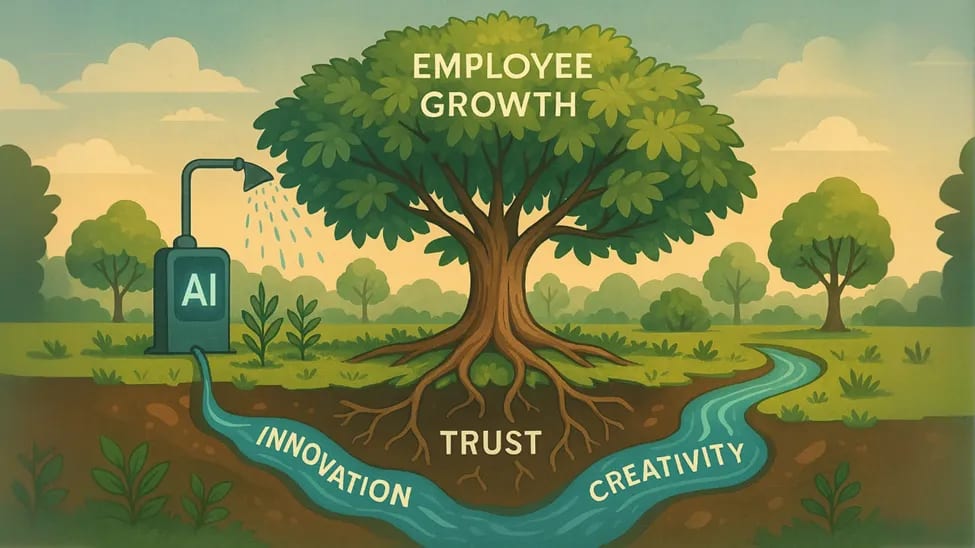
Forward-thinking leaders are already acting on this principle. Shopify’s CEO Tobi Lütke made an unusual mandate in 2023: before hiring for a role, managers must prove that AI cannot do the job. Talk about setting a high bar for new headcount! His provocative stance sends a clear message: embrace AI tooling to augment your teams and redeploy people to higher-value work that AI can’t touch like creative strategy, complex relationship building, or novel innovation. It’s a call to eliminate drudgery and refocus human talent on what humans do best, - a key to organizational health and stability in the long run.
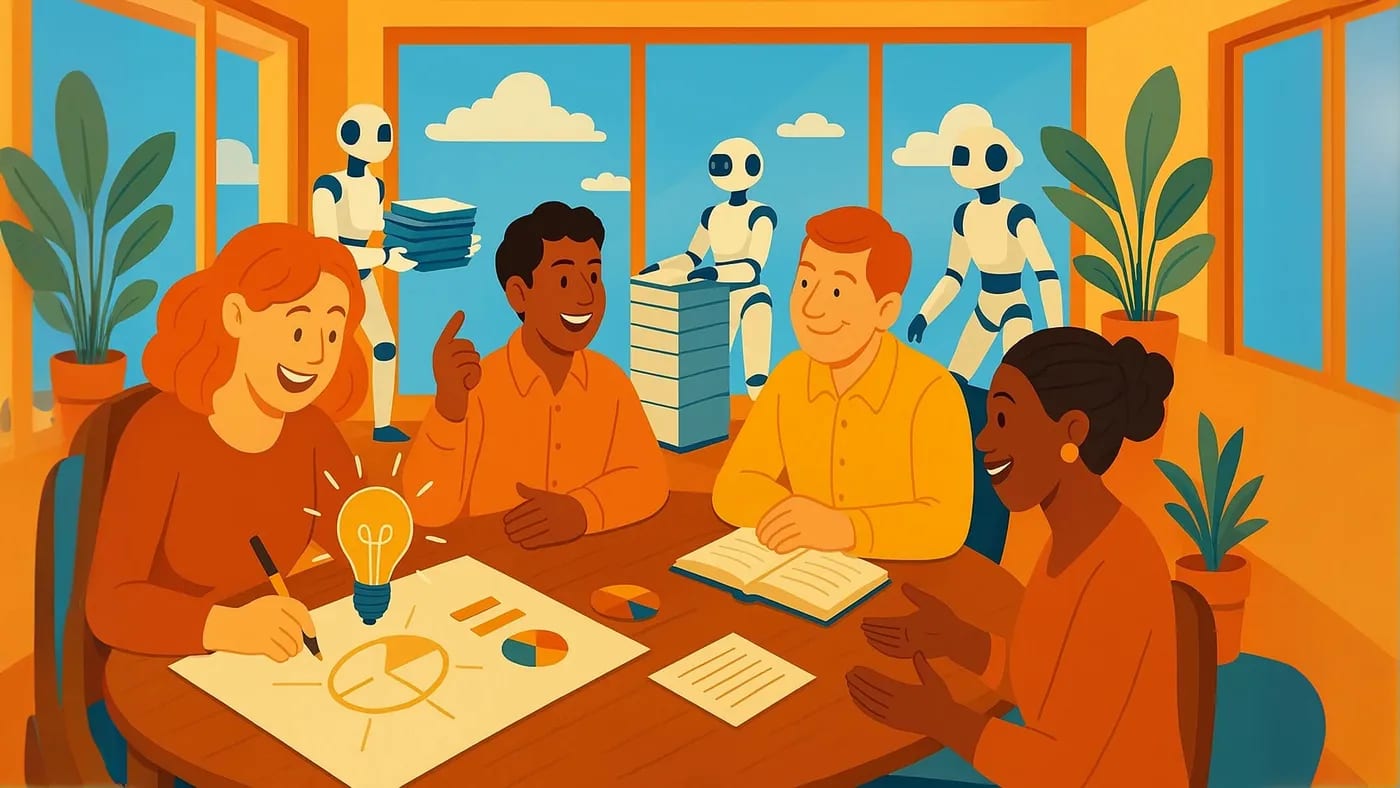
CIOs and CTOs also find themselves as culture shapers in the AI era. They need to ensure that AI adoption doesn’t trigger fear or resistance among employees. Change management now includes AI fluency for the workforce. At JPMorgan, alongside rolling out AI tools, they offered in-person training for employees on how to effectively “prompt” and use the new systems. The result is not just better tool usage, - it’s a workforce that feels invested in, rather than threatened by, AI innovation.
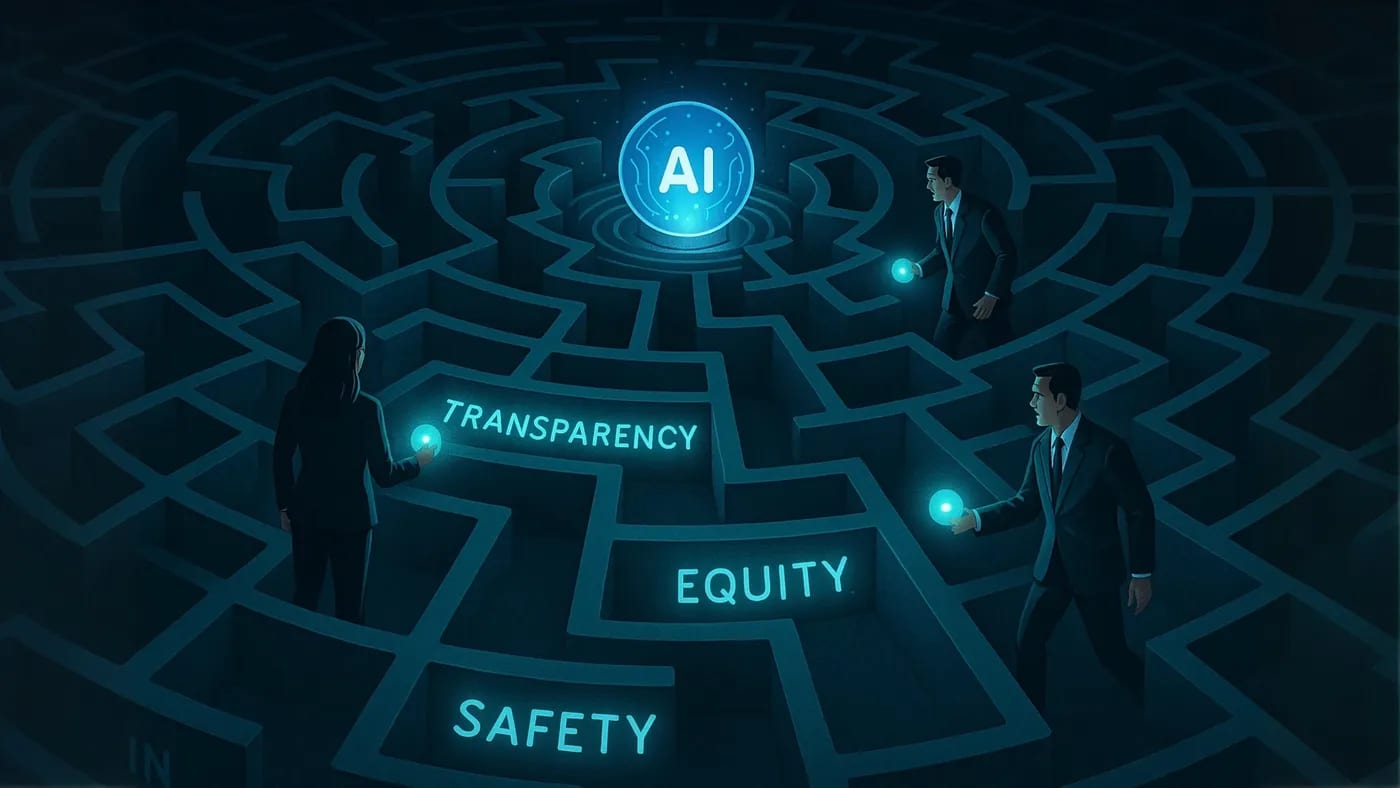
Building stability through AI also means avoiding the instability that could come from AI failures or misuse. A biased algorithm that alienates customers, or an unreliable AI that makes critical errors, can create new chaos. Leaders are wise to build “safety, equity and trust… simultaneously” with benefits. Many are establishing AI ethics committees and governance frameworks, ensuring their AI systems are transparent and fair. This governance layer is akin to the checks and balances in an immune system, - making sure the cure doesn’t become a new disease. A stable business is one that customers, employees, and partners trust, after all.
Beyond the Horizon – Thriving in the Age of AI
In the final analysis, organizational stability in an age of disruption is a dynamic, not static, state. It’s about resilience, adaptability, and foresight. AI is reshaping the very science of how we achieve those qualities in business. What used to rely on quarterly reviews and gut instinct now happens with continuous data feeds and machine learning models playing out scenarios by the millions. Companies that master this will find not just one island of stability, but an archipelago, - a network of stable points they can hop between as the environment evolves.
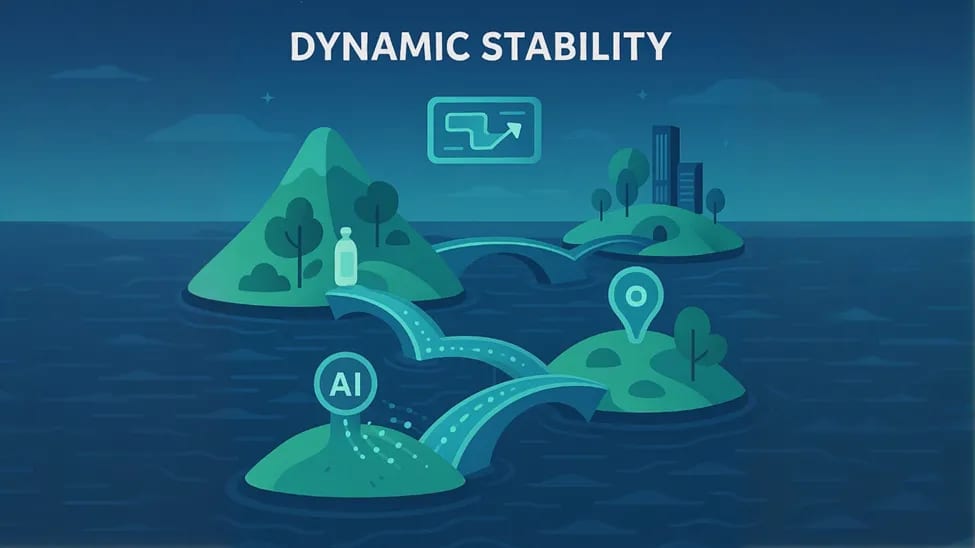
Think back to our metaphors: the star navigating past a black hole, the metastable molecule awaiting a catalyst, the immune system fending off the flu, the satellite maintaining orbit. In each case, balance is achieved not by remaining static, but by intelligently adjusting to forces at play. This is the narrative arc of modern business with AI: from being at the mercy of disruptive forces to actively harnessing those forces. AI allows organizations to bend with the winds without breaking, to absorb shocks and come out stronger, - even to anticipate and capitalize on change, turning disruptions into breakthroughs.
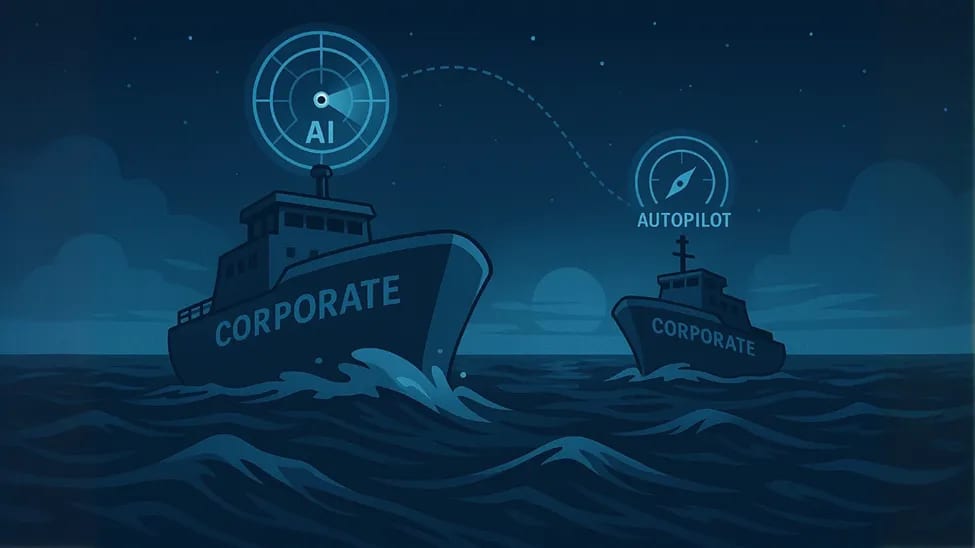
As we stand in early 2025, AI itself is no longer a moonshot experiment or the province of tech giants alone. It’s mainstream, - embedded in office tools, finance systems, supply chains, customer apps. The question for CIOs and CTOs is no longer “should we use AI?” – it’s “how do we use AI better than the competition to stay resilient and grow?” The competitive advantage of the next decade will fundamentally revolve around this capability. In a World Economic Forum survey, 75% of executives predicted AI will cause significant or disruptive changes in their industries. That change can be destabilizing, or for the prepared it can be the source of renewed stability in the form of smarter strategies and more efficient operations.
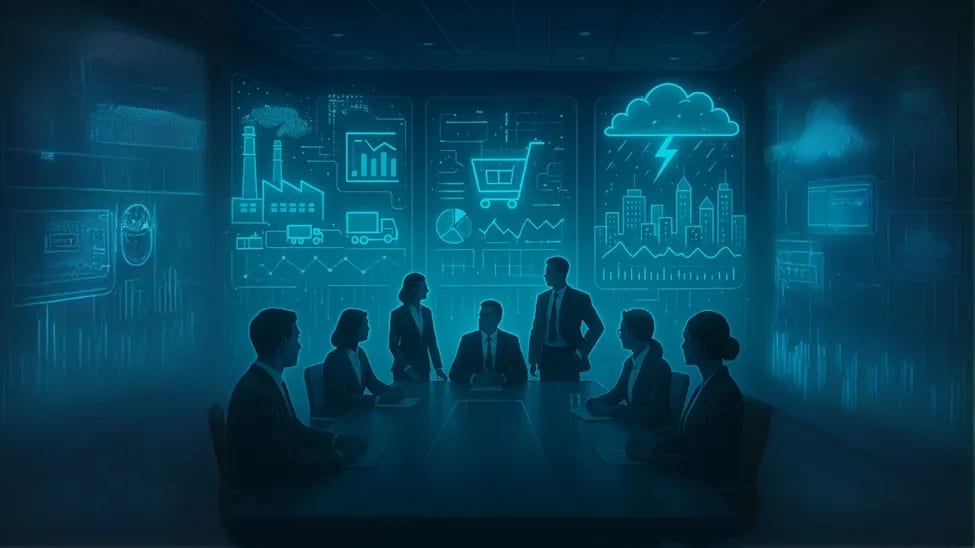
We are witnessing a clever inversion: using the very engine of disruption as a stabilizing force. It’s almost poetic. The same technology that upends markets can, in the right hands, be the anchor that keeps a company upright. Enterprise AI adoption is at an all-time high and accelerating. AI platforms are becoming the central nervous systems of companies. Digital twins are giving executives x-ray vision into the future; self-healing systems are quietly keeping the lights on 24/7. The science of doing business is being rewritten, not in academic textbooks, but in real-time, through algorithms and data flows.
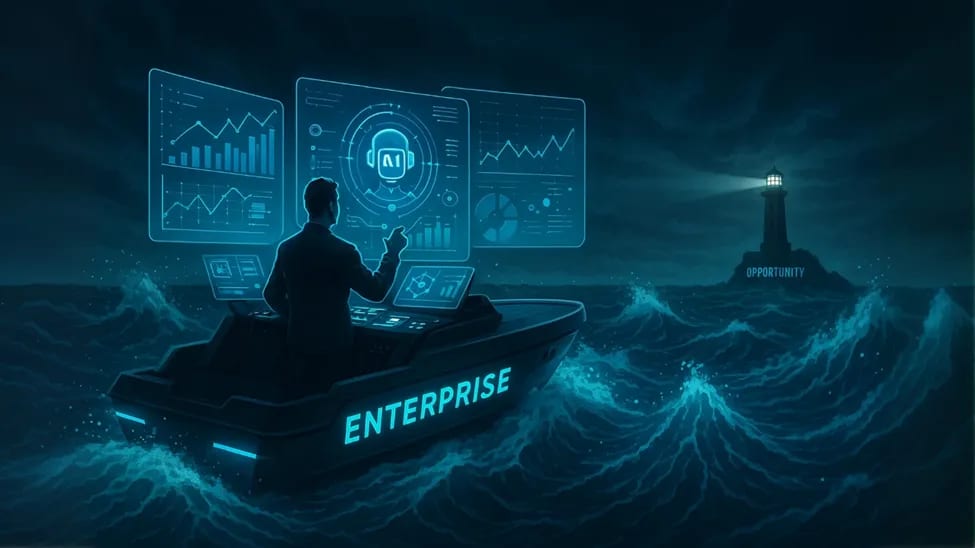
In this new narrative, business leaders become like ship captains armed with advanced instrumentation. They still need vision and courage, but now they have radar for the hidden shoals and autopilot for the long haul. The seas will never be calm, but with AI as both telescope and engine, today’s organizations can plot a course not just to survive the journey, but to discover new worlds of opportunity beyond. That’s the ultimate promise of AI in the science of organizational stability: turning what once felt like navigating a treacherous strait into a voyage of exploration with confidence that your ship can handle whatever lies beyond the horizon.
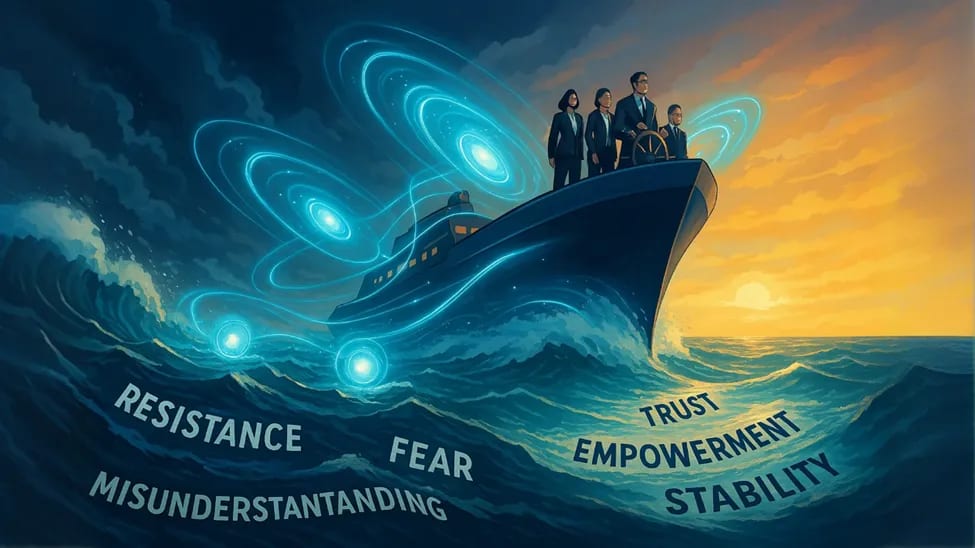
Chart your course accordingly, friends!
Disclaimer: The views and opinions expressed in this article are my own and do not necessarily reflect those of my employer.
Suggested Readings:
The State of AI in 2024 (McKinsey Global Survey) - A comprehensive overview of current AI trends and future projections by McKinsey.
Digital Immune Systems: Enhancing Enterprise Resilience (Gartner Insights) - An in-depth look at how digital immune systems help organizations anticipate and recover from disruptions.
Digital Twins: A New Frontier in Enterprise Innovation (Deloitte Insights) - Explore how digital twins are revolutionizing operational efficiency and strategic planning.
How Self-Healing Networks Are Revolutionizing IT Infrastructure (Computer Weekly) - A feature article explaining the rise of self-healing networks and their impact on modern IT architectures.
Building Organizational Resilience with AI (Harvard Business Review) - Insights into how AI is being used to drive resilience and adaptability in organizations.
The Future of AI in Supply Chain: Lessons from Unilever (Unilever Innovation) - Discover how Unilever is leveraging AI to optimize its global supply chain and drive stability.
Insights from Microsoft Ignite 2024: Navigating Disruption with AI (Microsoft News) - A roundup of key insights from Microsoft’s Ignite 2024, highlighting their AI strategy and innovations.
AI Transformation at JPMorgan Chase: A Model for the Future (CIO Dive) - An article detailing JPMorgan Chase’s progressive AI adoption strategies and how they’re reshaping finance.
Shopify’s AI Magic: Reshaping the E-commerce Landscape (Reuters Technology) - A look into how Shopify is using AI to empower merchants and reimagine the e-commerce experience.
Transformative AI Perspectives from Davos 2024 (World Economic Forum) - Explore the cutting-edge discussions on AI and digital transformation held at the World Economic Forum’s 2024 meeting.
Sources:
McKinsey Global Survey – State of AI 2024
Huang, Jensen – NVIDIA GTC Keynote, 2023
Nadella, Satya – Microsoft Ignite Keynote, 2024
CIO Dive – JPMorgan AI Adoption; JPMorgan Infrastructure & AI
Reuters – Shopify’s AI “Magic” for Merchants, 2025
Menlo Ventures – Generative AI Enterprise Spending, 2024
Gartner via APMdigest – Digital Immune System & Downtime, 2022
Computer Weekly – Self-healing Networks, 2023
Unilever – AI-powered Supply Chain, 2024
Starbucks – Deep Brew and Tech Reinvention, 2023
More from enterprise ai
All enterprise ai → enterprise ai
MAY AGILITY BE WITH YOU: How AI, Hybrids, and Pragmatism are Rewriting the Rules in 2025
Every few years, someone declares “Agile is dead.” Yet here we are today, and agility is not only alive, - it’s evolving. In fact, a recent global survey found 95% of professionals still affirm Agile’s critical importance, itbrief.in. So…
 enterprise ai
Oracle's Java Licensing Trap: Why Every Employee Could Cost You
Oracle headquarters (Redwood Shores). “Big Red” is making CIOs see red with its latest licensing strategy.
 enterprise ai
AI's Last Mile: Where Integration Excellence Matters!
Ever watched an executive proudly unveil a cutting-edge AI system, only to find it gathering digital dust three months later? These stories are pervasive. Picture this: A global manufacturer invests millions in a state-of-the-art…