AI's Last Mile: Where Integration Excellence Matters!
Ever watched an executive proudly unveil a cutting-edge AI system, only to find it gathering digital dust three months later? These stories are pervasive. Picture this: A global manufacturer invests millions in a state-of-the-art predictive maintenance AI that aces every demo, detecting impending equipment failures with uncanny precision.

The C-suite is thrilled. The data science team is beaming. Fast forward 90 days and maintenance technicians are barely logging into the system. Why? Because the brilliant insights require exporting data, opening a separate application, and deciphering recommendations that don’t quite align with how repairs are actually scheduled.
This isn’t a failure of AI technology, - it’s a failure of integration. And it represents perhaps the most overlooked challenge in enterprise AI today: the last mile.
Why Your AI Is Probably Just Very Expensive Wallpaper
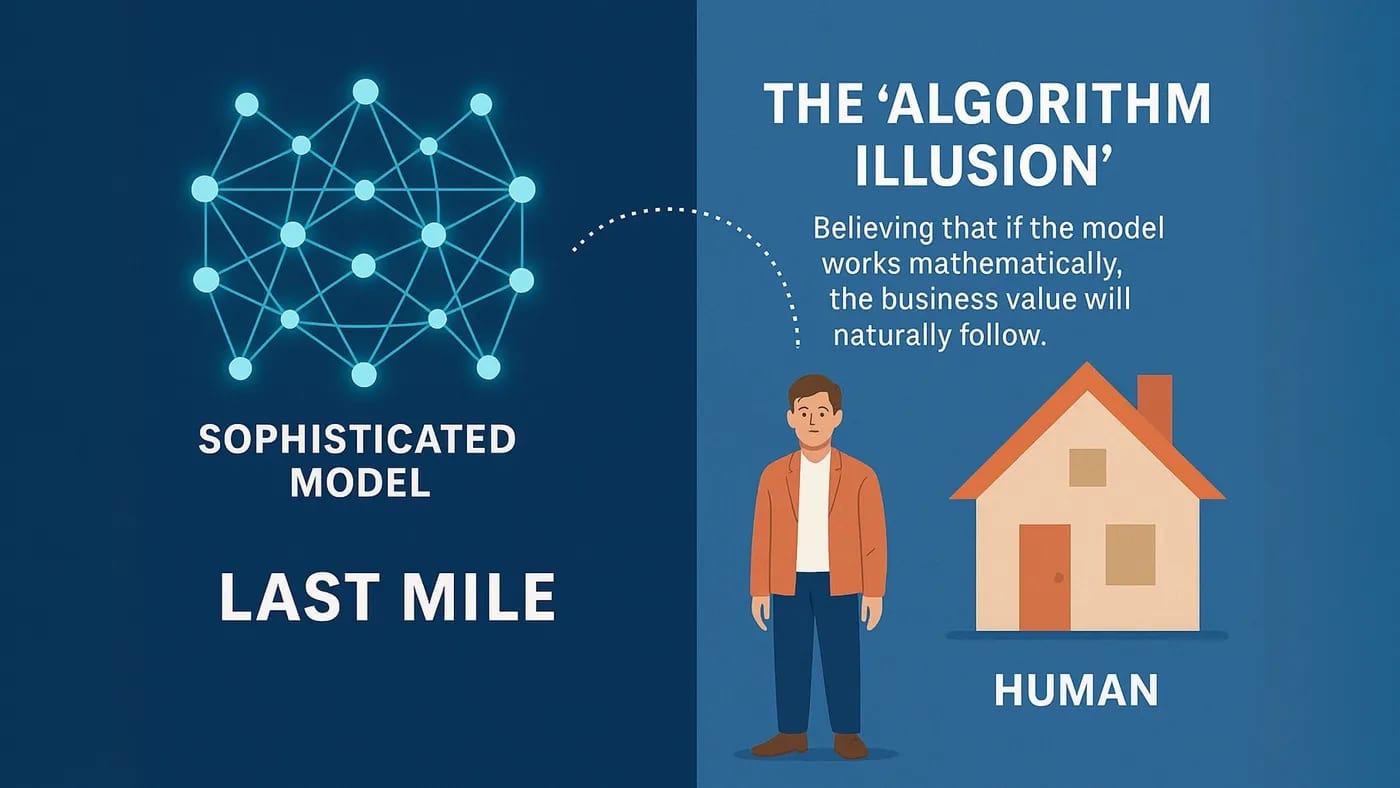
The term “last mile” comes from telecommunications, - that final stretch of cable that connects the main network to your actual house. It’s disproportionately expensive and complex compared to the rest of the infrastructure. In AI, the last mile is that crucial connection between a sophisticated model and the human who’s supposed to benefit from it.
An IBM study released just last week delivers a sobering reality check: only 25% of AI initiatives have delivered their expected return on investment, and a mere 16% have scaled enterprise-wide (IBM Newsroom). Despite this dismal track record, CEOs are doubling down, expecting investment growth to more than double over the next two years.
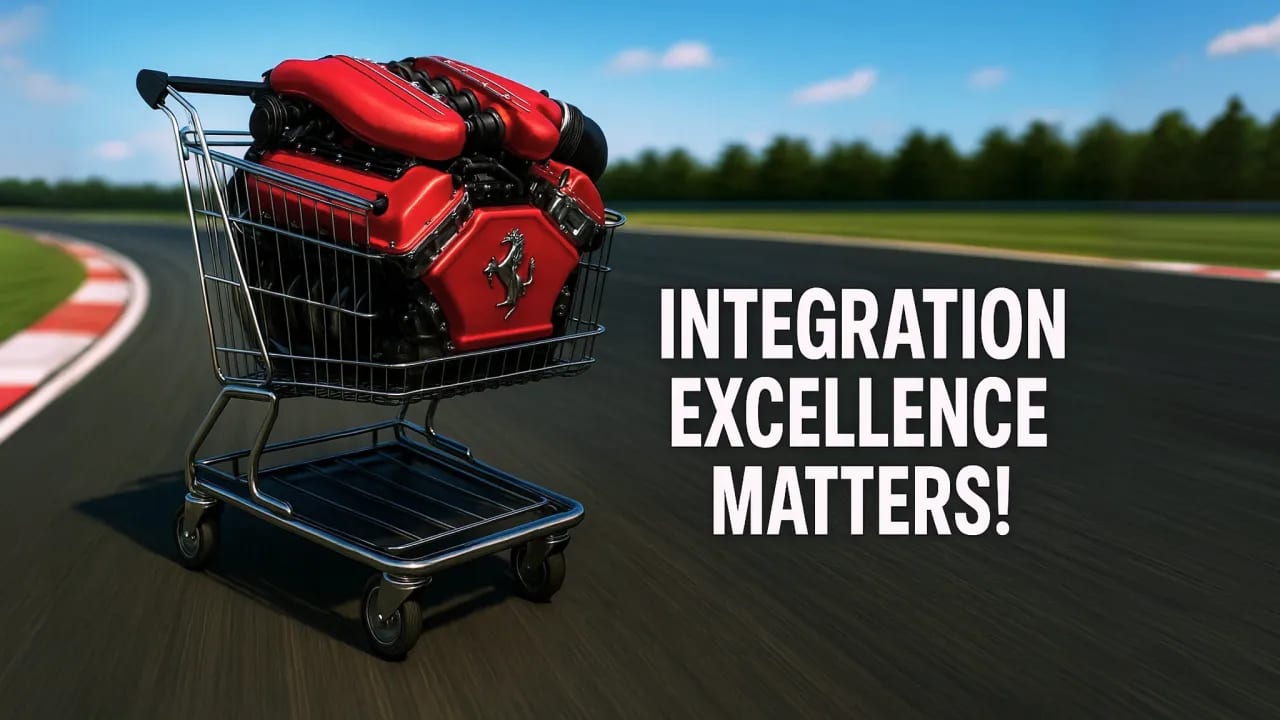
It seems we’ve collectively fallen for what I call the “Algorithm Illusion”, believing that if the model works mathematically, the business value will naturally follow. But that’s like thinking a Ferrari engine guarantees you’ll win the race, while ignoring the small detail that you haven’t attached it to an actual car.
The Awkward Distance Between Demo and Delightful
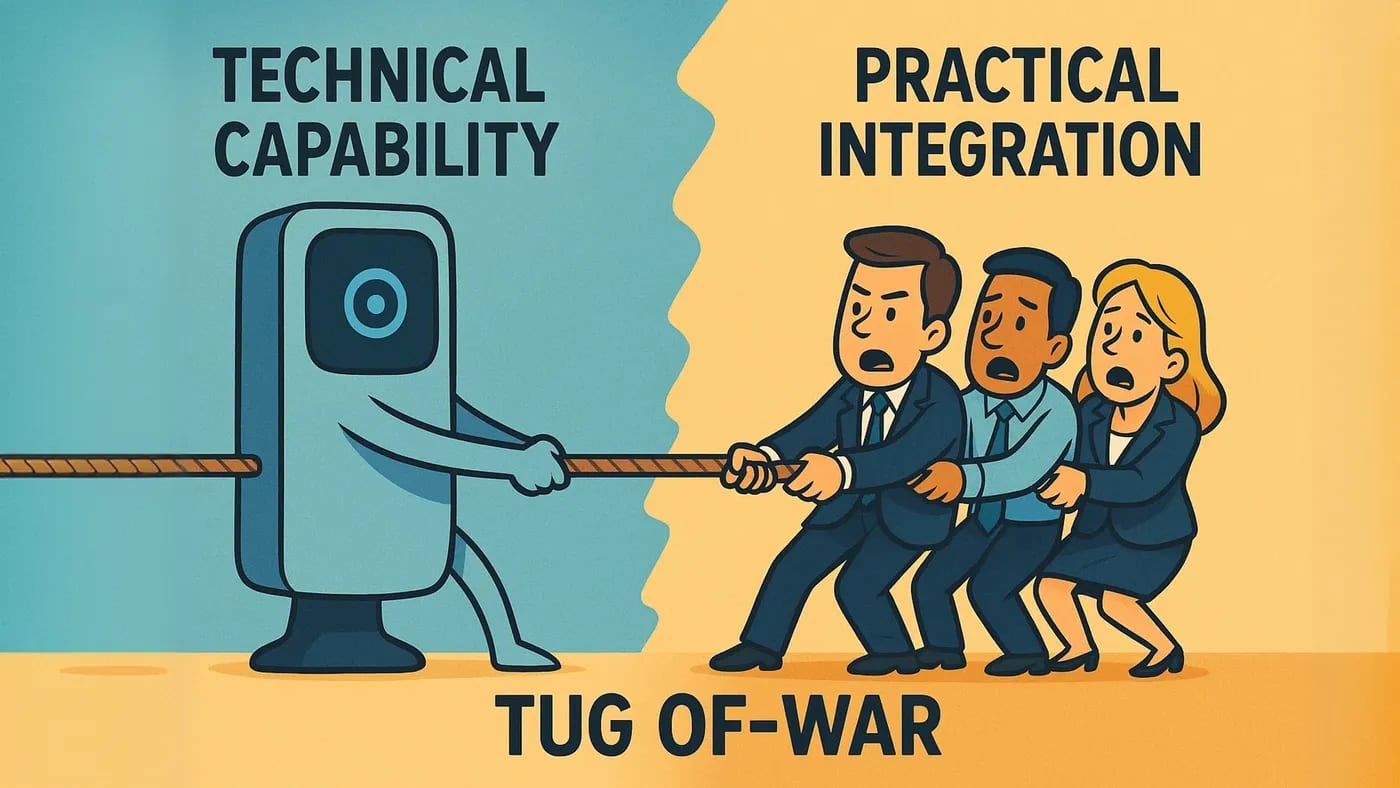
So what exactly is this “last mile” in AI implementation? It’s the gap between technical capability and practical value. It’s the difference between an algorithm that can predict customer churn with 93% accuracy and a sales rep who actually gets that prediction in time to do something about it.

Let’s be honest: most companies have become quite good at the “first mile” of AI, - building models, training algorithms, and producing impressive technical results. Data scientists enjoy this part; it’s intellectually stimulating, has clear metrics for success, and looks fantastic in PowerPoint presentations. But the last mile? It’s messy, interdisciplinary, and often falls into a no-man’s-land between IT, business operations, and user experience.
This is why, according to a McKinsey study, only about 1% of leaders describe their AI initiatives as “fully mature”, - meaning integrated into the business and delivering significant outcomes (McKinsey).
We’ve got AI models coming out of our ears. What we don’t have is anyone actually using them.
When the Ferrari Engine Gets Strapped to a Shopping Cart
Last-mile failures aren’t just missed opportunities, - they’re expensive mistakes that damage organizational trust in technology. When AI initiatives flop, they don’t do so quietly. They create a ripple effect of skepticism that makes the next innovation harder to champion.
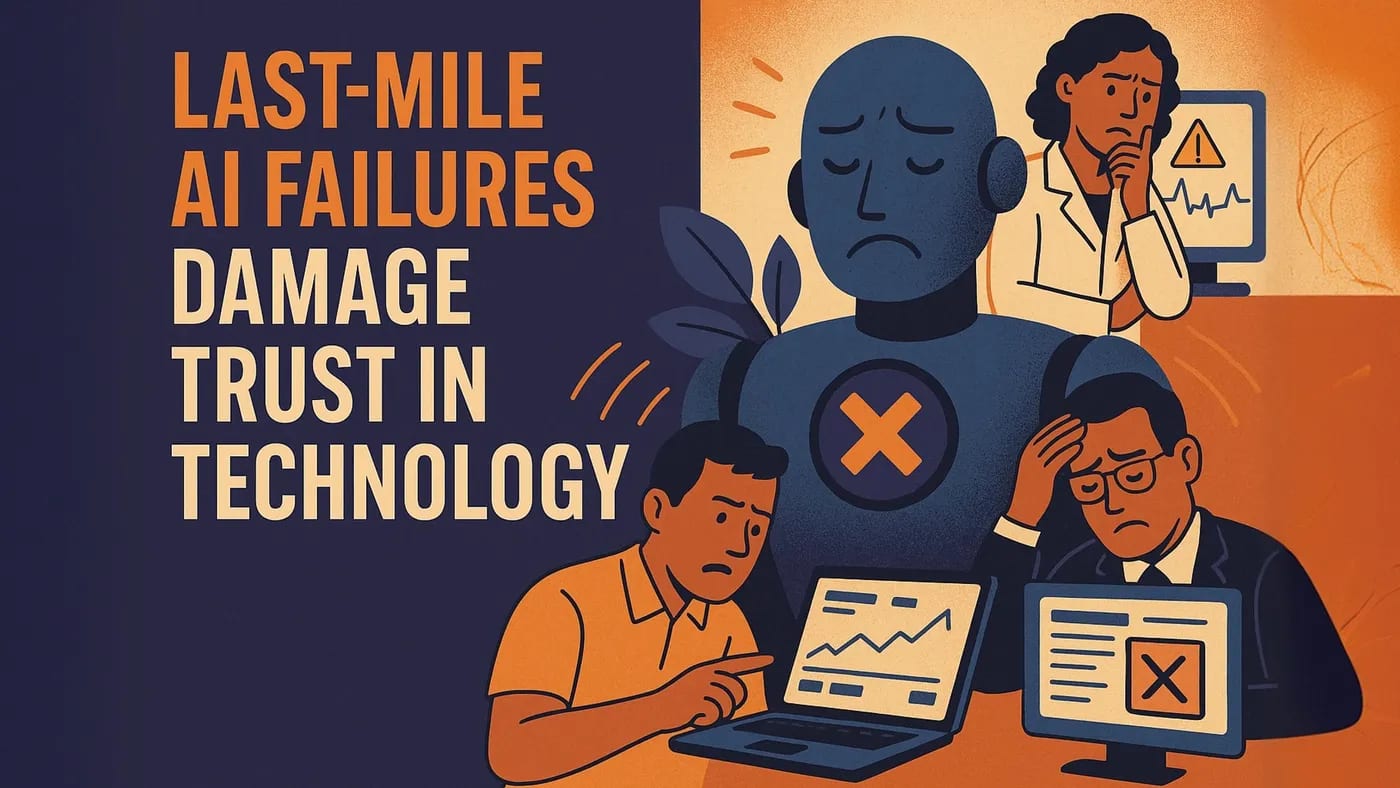
Consider these ill-fated AI journeys:
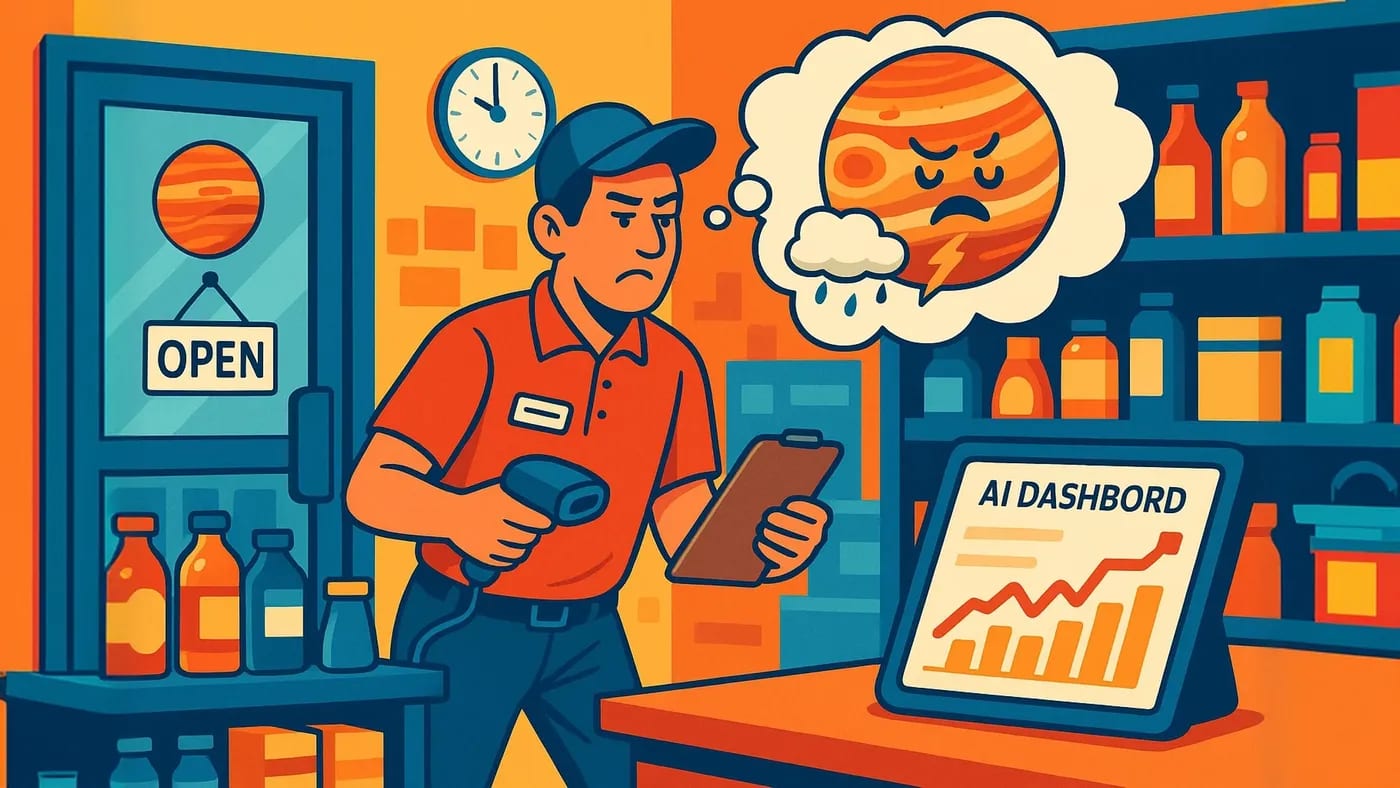
- A retail chain deployed a sophisticated inventory optimization AI but required store managers to log into a separate dashboard each morning to view recommendations. Most managers, already juggling opening procedures and staff shortages, simply bypassed the system and ordered based on experience. The AI might as well have been predicting weather patterns on Jupiter.
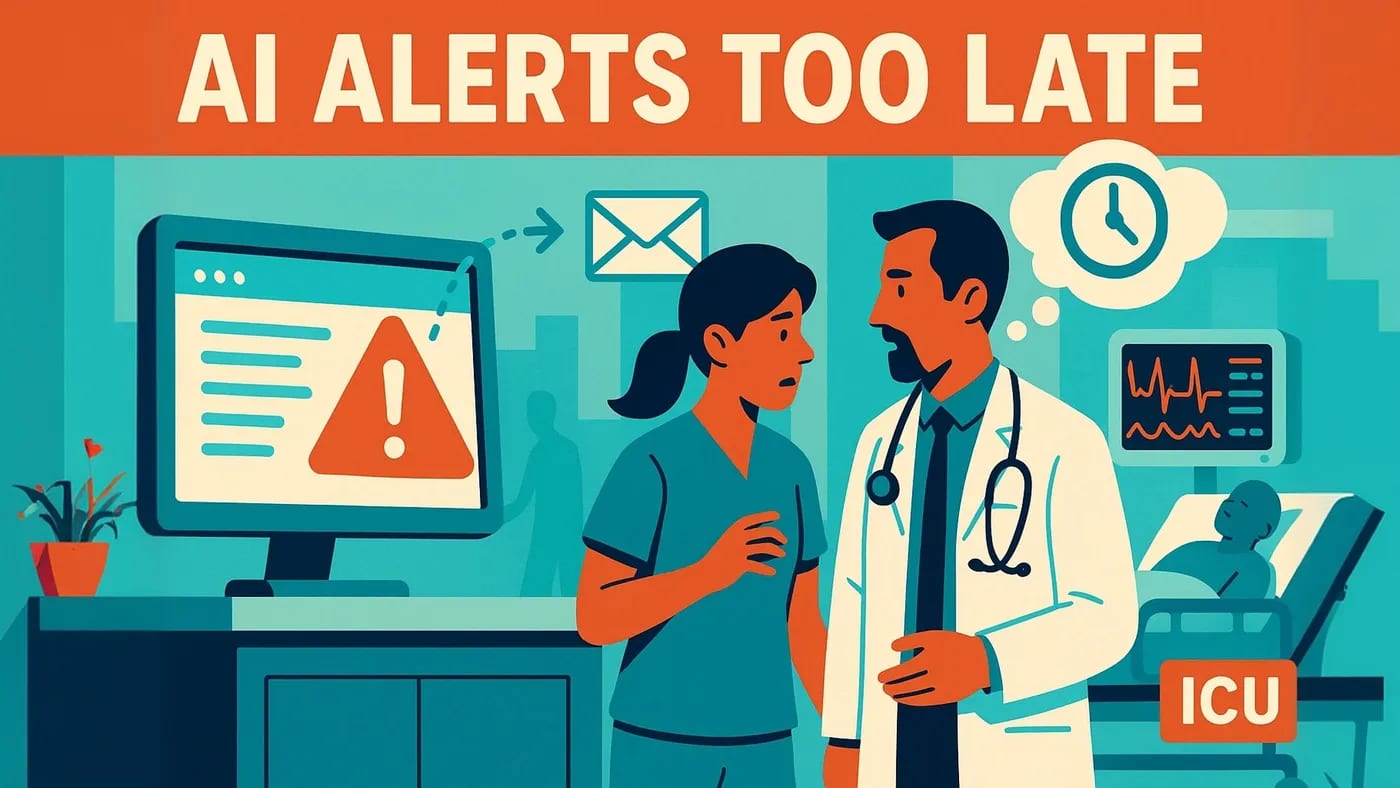
- A hospital implemented an AI to detect early indicators of patient deterioration, but alerts were sent to an email address that clinical staff checked irregularly. By the time doctors saw the alerts, the information was often already evident through conventional monitoring, - or worse, the patient had already been transferred to intensive care.
- A financial services firm launched an AI-driven fraud detection system that successfully identified suspicious transactions but required analysts to switch between three different applications to review and resolve cases. The extra steps meant many alerts aged beyond the window where intervention would prevent the fraud.

In each case, the AI worked technically but failed contextually. The models detected the right patterns, but the insights never made it into the hands of decision-makers in a way that fit their existing workflow.
The Economics of the Last Mile (It’s Not Pretty)
The last-mile problem has substantial economic implications. According to research from the Brookings Institution, while about 80% of computer vision tasks are technically feasible with AI, only 23% are actually cost-effective to automate when accounting for last-mile integration costs (Brookings Institution).
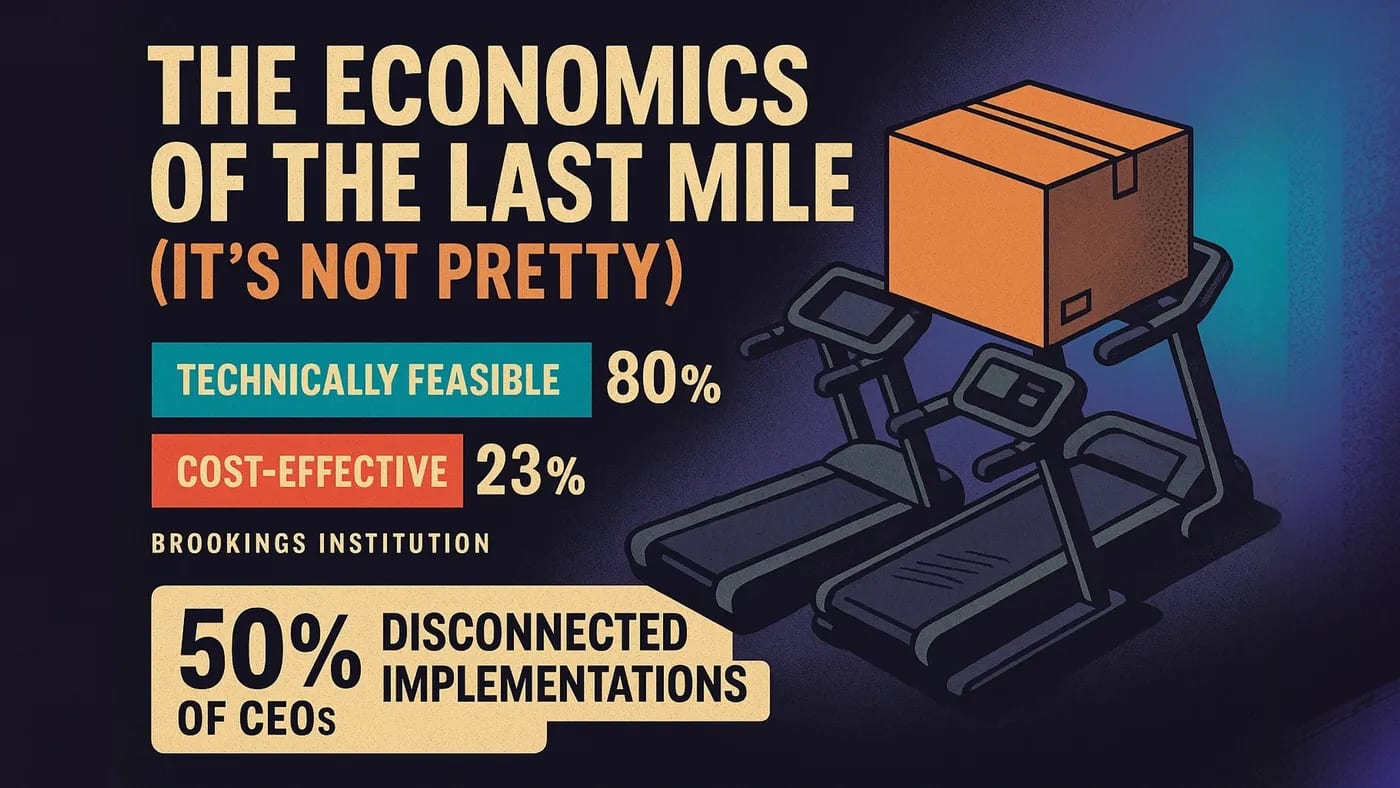
Think about that: the majority of technically possible AI applications aren’t economically viable once you factor in what it takes to make them usable in the real world.
This creates a scale problem, - only large enterprises with substantial resources can amortize these integration costs across enough use cases to justify the investment. Small and medium-sized businesses, meanwhile, get left behind in an awkward position where AI remains perpetually “almost ready” for their operations.
To make matters worse, 50% of CEOs report that rapid AI investment has resulted in disconnected, piecemeal technology implementations, - the corporate equivalent of buying a bunch of expensive exercise equipment that ends up as clothing racks (IBM Newsroom). And how many of these implementations will simple lead to a pile of legacy AI applications?
The Toyota Way: When Integration Gets It Right
Before you close LinkedIn in despair, there are companies solving the last-mile problem brilliantly. Let’s examine what successful integration actually looks like.
Toyota, a company legendary for operational excellence, provides a masterclass in last-mile AI integration. Facing staffing shortages and limited AI expertise, Toyota’s Production Digital Transformation Office created an AI Platform that democratized machine learning on the factory floor (Toyota).
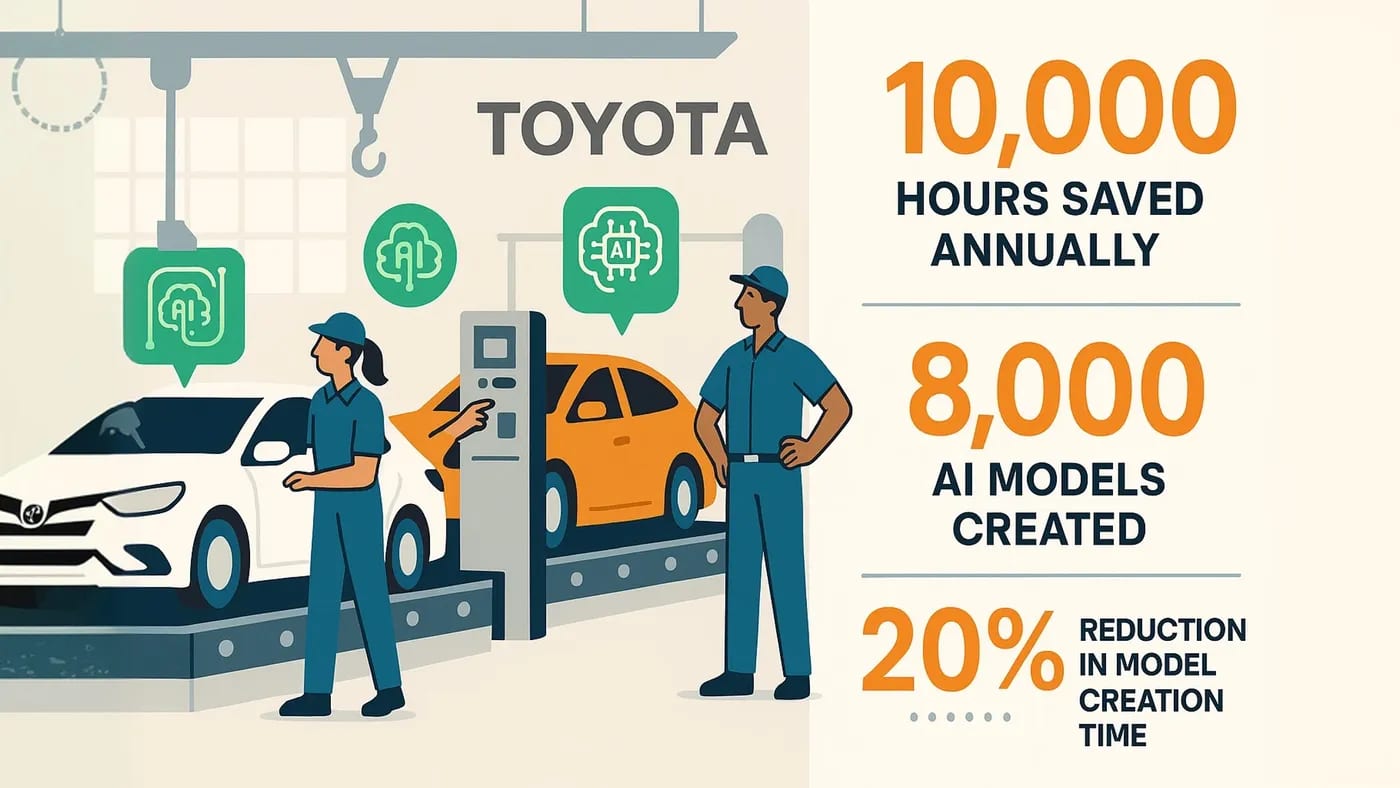
Rather than requiring factory workers to learn new systems, they embedded AI directly into existing manufacturing processes and workflows. The platform leverages a hybrid architecture that combines on-premises systems with cloud computing, making AI accessible to employees regardless of their technical expertise.
The results? Toyota saved 10,000 hours of manual work annually, reduced learning model creation time by 20%, and increased AI model creation from 8,000 in 2023 to 10,000 in 2024 (Google Cloud Blog). And most importantly, it did so by focusing on the smooth integration of AI into their existing Toyota Production System rather than forcing workers to adapt to the technology.
The Morgan Stanley Method: 98% Adoption Isn’t an Accident
In financial services, Morgan Stanley has achieved what most enterprise AI projects can only dream of: over 98% adoption of their AI assistant among financial advisor teams (Morgan Stanley).
Their approach? They recognized early that the last mile would make or break their AI initiatives. Working with OpenAI, they incorporated GPT-4 into existing advisor workflows rather than creating separate tools. They built the AI @ Morgan Stanley Assistant (an internal chatbot) and the Morgan Stanley Debrief tool that converts client meeting recordings into actionable outputs like meeting notes and follow-ups, - all within the systems advisors already use.
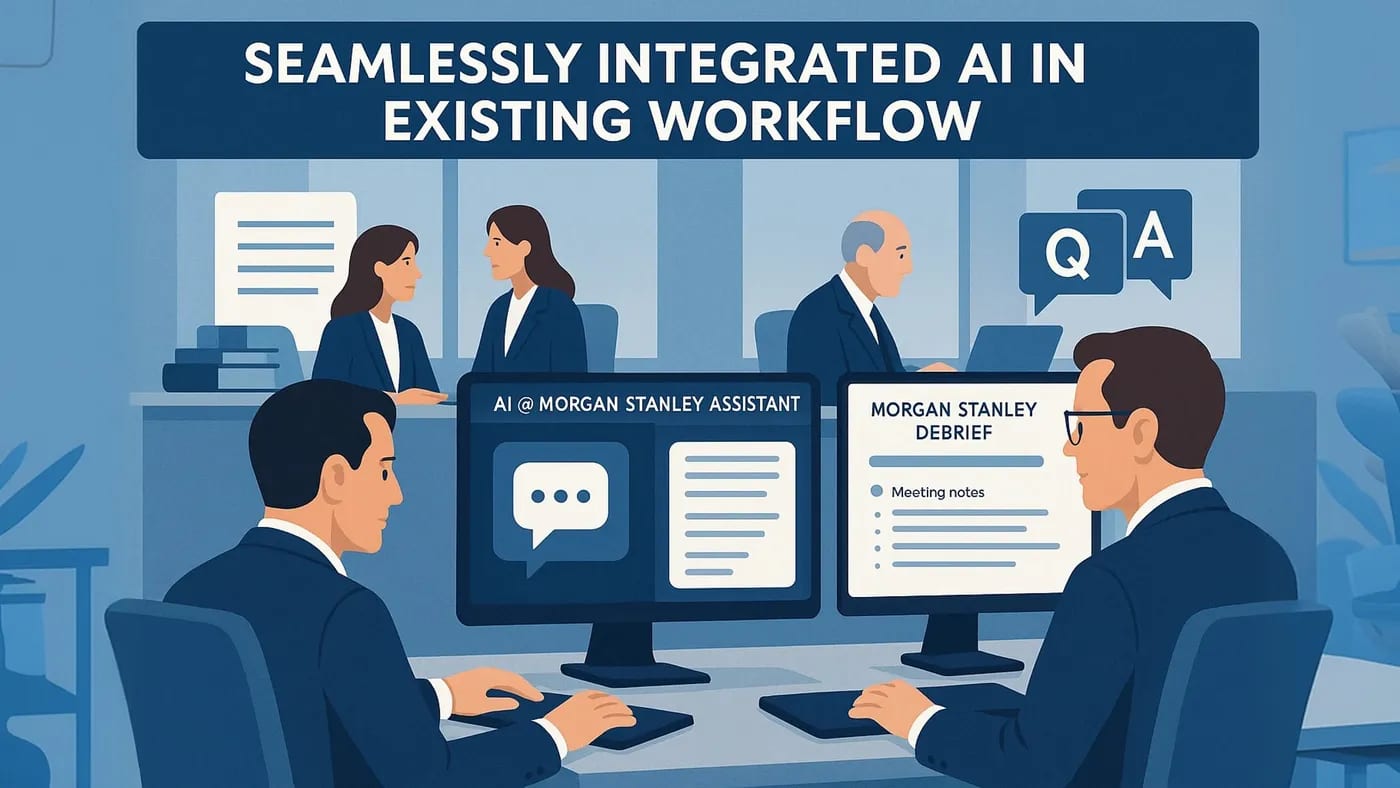
But their most critical innovation was implementing a rigorous evaluation framework that tests every AI use case before deployment, ensuring the technology works in real-world scenarios that match how advisors actually operate. This focus on user-centric integration led to increased document access efficiency (jumping from 20% to 80%) and scaled their question-answering capability from handling 7,000 questions to effectively addressing any query from a corpus of 100,000 documents.
What Toyota and Morgan Stanley share is a fundamental understanding that AI shouldn’t disrupt existing workflows, - it should enhance them. They recognized that the value of AI is realized not when the model produces an output, but when a human actually uses that output to make a better decision.
The Last Mile Checklist: Are You Setting Up for Success or Failure?
So how do you avoid the last-mile trap that snares so many AI initiatives? Before you deploy your next AI project, ask yourself these critical questions.
-
Will users receive AI insights where they already work? If your salespeople live in their CRM, your AI should live there too. If your maintenance team uses a mobile app in the field, that’s where your predictive maintenance alerts should appear***. Every click, login, or app switch you add dramatically reduces adoption***.
-
Does the AI output match how decisions are actually made? A perfect forecast that arrives after the planning meeting is useless. An AI suggestion that doesn’t account for operational constraints is frustrating. Context and timing matter as much as accuracy.
-
Are you measuring adoption as rigorously as model performance? It’s not enough that your AI can predict with 95% accuracy, - what percentage of recommendations are actually viewed? Acted upon? Verify that people are using the system, not just that the system is technically functional.
-
Have you involved end users in the design from day one? The people who will use the AI should help build it. They’ll identify workflow issues no data scientist would spot and suggest integration points that make intuitive sense to them.
-
Is your AI offering insight or just more information? Information overload is already a problem. If your AI is adding to the noise rather than cutting through it, you’re making things worse, not better. Focus on actionable insights, not just more data points.
How to Bridge the Last Mile: A Blueprint for Integration
Based on successful last-mile integrations across industries, here’s your blueprint for ensuring your next AI project doesn’t become another cautionary tale:
1. Design for the User’s Context, Not the Algorithm’s Convenience
The brilliance of Toyota’s approach was that they designed their AI platform around how factory workers already operated, - not the other way around. They built web applications that made model creation simple enough for non-experts and ensured compatibility with existing manufacturing equipment.
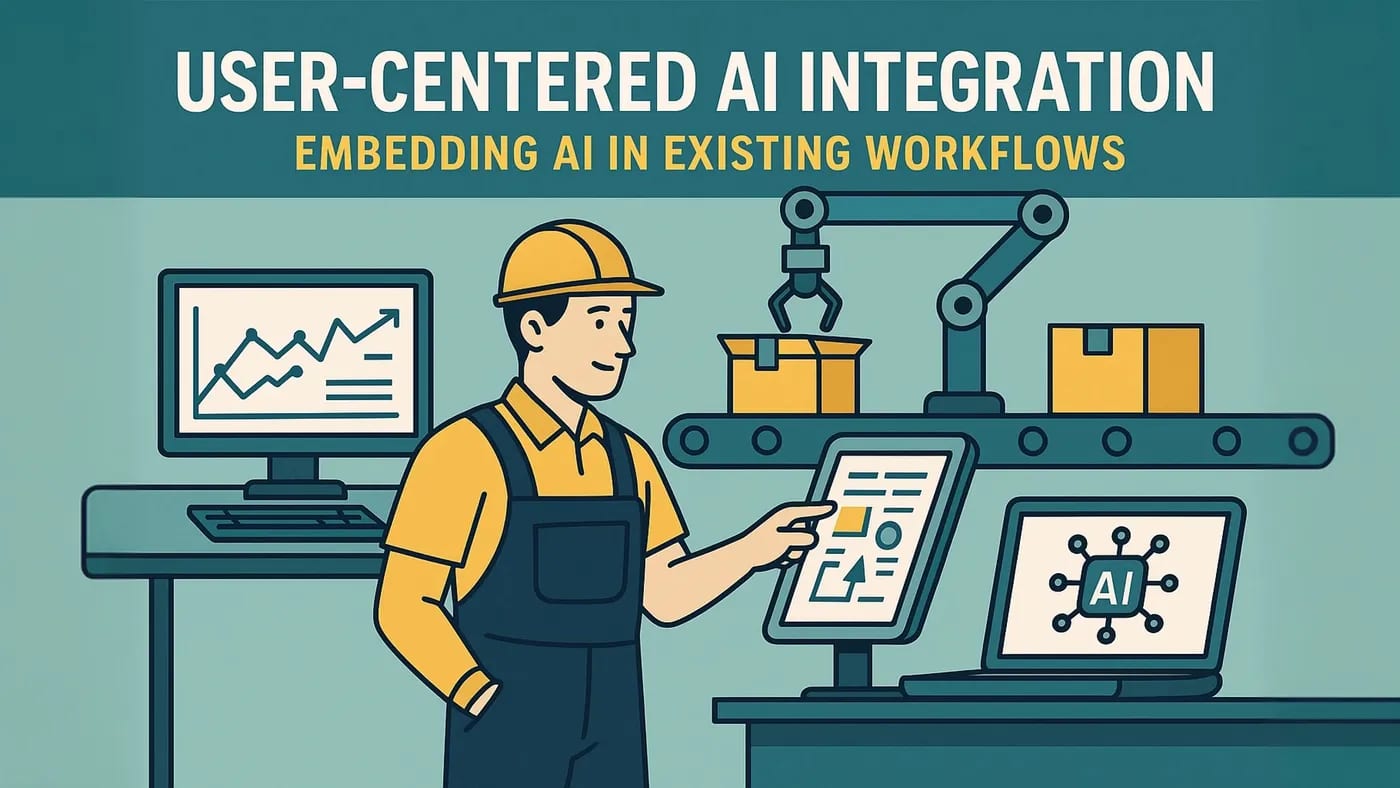
This user-centered approach means starting with deep observation of current workflows. Before writing a line of code or training a single model, spend time understanding exactly how decisions are made today. Where do users currently look for information? What tools do they already have open? What constraints (time, attention, regulatory) are they operating under?
“The best AI is the one nobody notices they’re using.”
The goal is to make AI invisible by embedding it within existing processes.
2. Cross-Functional Teams Are Non-Negotiable
Last-mile integration fails when it’s treated as a technical handoff rather than a collaborative effort. Successful implementations assemble cross-functional teams from the start—data scientists working alongside designers, business process experts, IT integration specialists, and most importantly, end users.
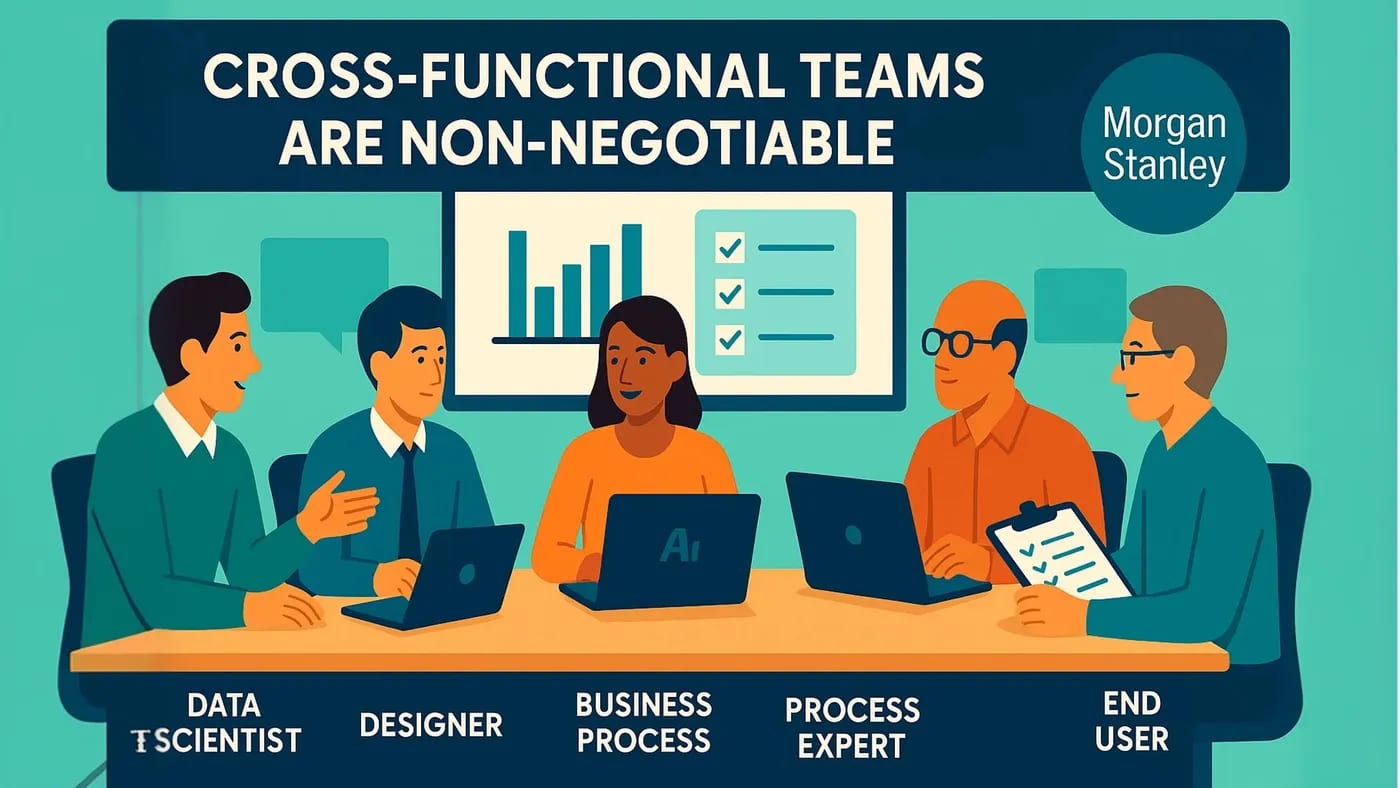
Morgan Stanley’s approach exemplifies this: they created teams that combined financial advisors’ domain expertise with technical talent and UI/UX specialists, ensuring their AI solutions addressed real needs in a usable way. They also established a rigorous evaluation process that involved all stakeholders, from compliance officers to the advisors themselves.
This collaboration surfaces integration challenges early when they’re still inexpensive to fix. It also builds buy-in from the people who will ultimately determine whether the AI is used.
3. Measure What Matters: Adoption, Not Just Accuracy
The metrics that matter for AI success aren’t just technical (though those are important). What truly indicates success is usage and impact. How many people are actively using the system? How frequently? Are decisions improving? Is efficiency increasing?
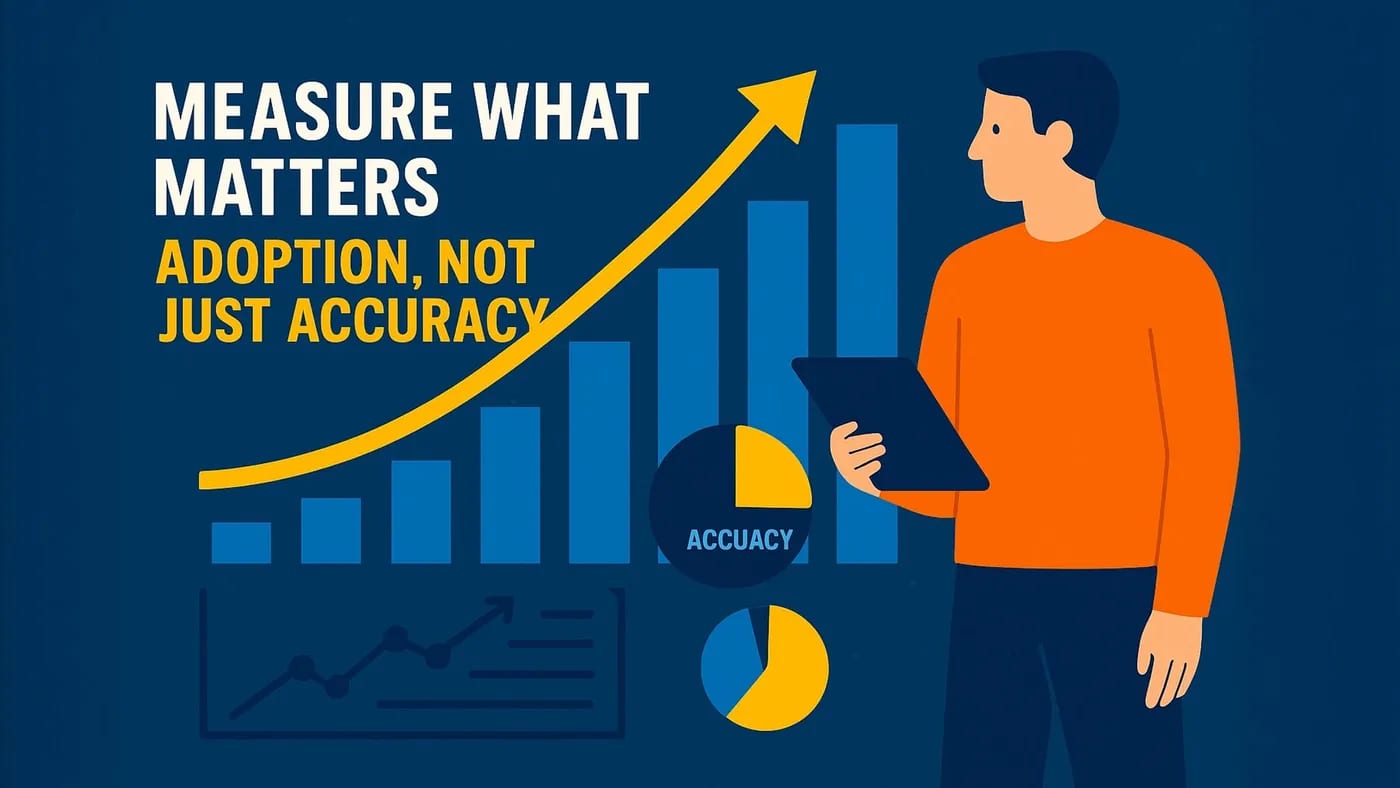
When Toyota implemented their AI platform, they tracked not just model performance but practical outcomes: hours saved, models created by factory workers, and active usage across manufacturing plants. This focus on real-world metrics helps prevent the common problem of technically successful but practically irrelevant AI.
4. Iterate Based on Real Usage, Not Theoretical Improvements
The first version will never be perfect. Plan for rapid iteration cycles based on actual usage patterns and feedback. This means having mechanisms in place to capture how people are really using the AI, what’s working, what’s frustrating, and what would make their lives easier.
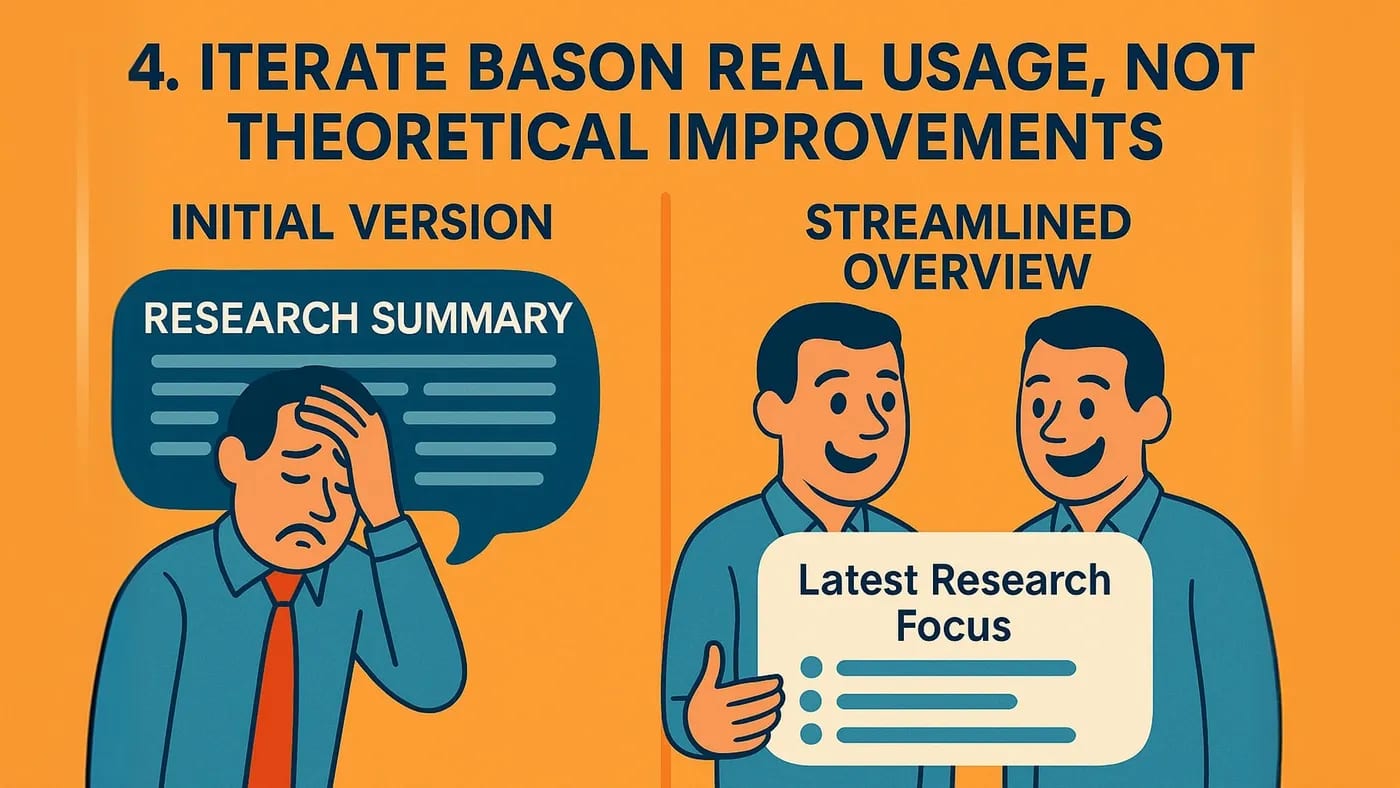
One pharmaceutical company deployed an AI to help medical science liaisons prepare for physician meetings. Their initial version provided comprehensive research summaries, - which the liaisons found overwhelming. By observing real usage, they discovered what liaisons actually wanted was a quick overview of the physician’s latest research focus and three talking points. The revised AI delivered exactly that and saw adoption soar.
5. Build for Trust, Not Just Performance
Last-mile adoption requires trust, especially for consequential decisions. Users need to understand not just what the AI is recommending, but why, and how they can verify or challenge those recommendations when appropriate.
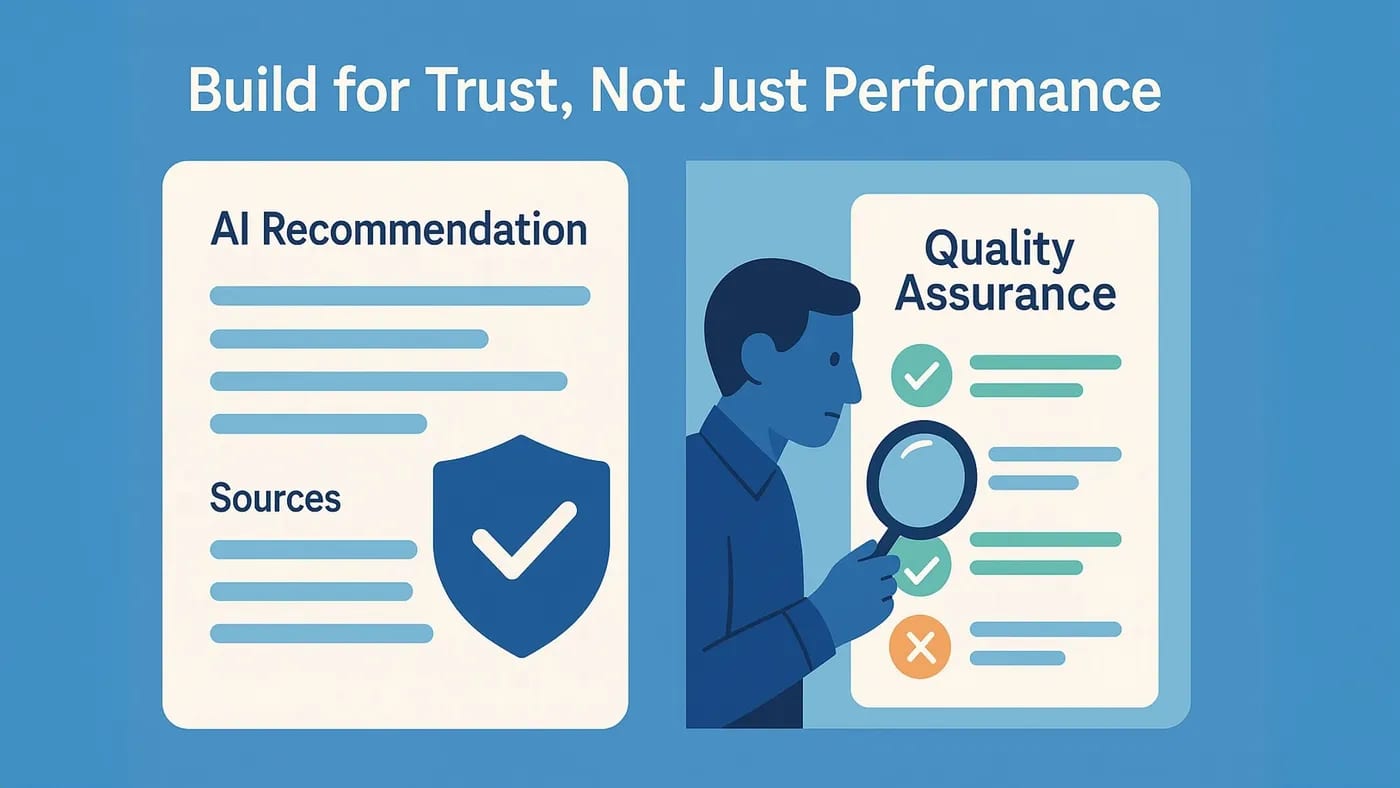
Morgan Stanley addressed this by ensuring their AI provides sources for its information, undergoes rigorous testing before deployment, and maintains appropriate human oversight. Their approach includes daily quality assurance tests and regression testing to catch any inaccuracies early.
“Remember: trust is built gradually but can be destroyed instantly. A single wildly inaccurate recommendation can undermine months of successful AI operation.”
The New Competitive Advantage: Integration Excellence
As we move into 2026 and beyond, I predict the competitive advantage in AI won’t be who has the most sophisticated models or the biggest data lakes. It will be who most effectively bridges the last mile, - integrating AI into everyday operations so seamlessly that it becomes as natural as checking email.
The companies that master this integration will see the ROI that has eluded so many early AI adopters. They’ll be the ones translating technical capability into business value, while their competitors wonder why their equally impressive algorithms aren’t delivering similar results.
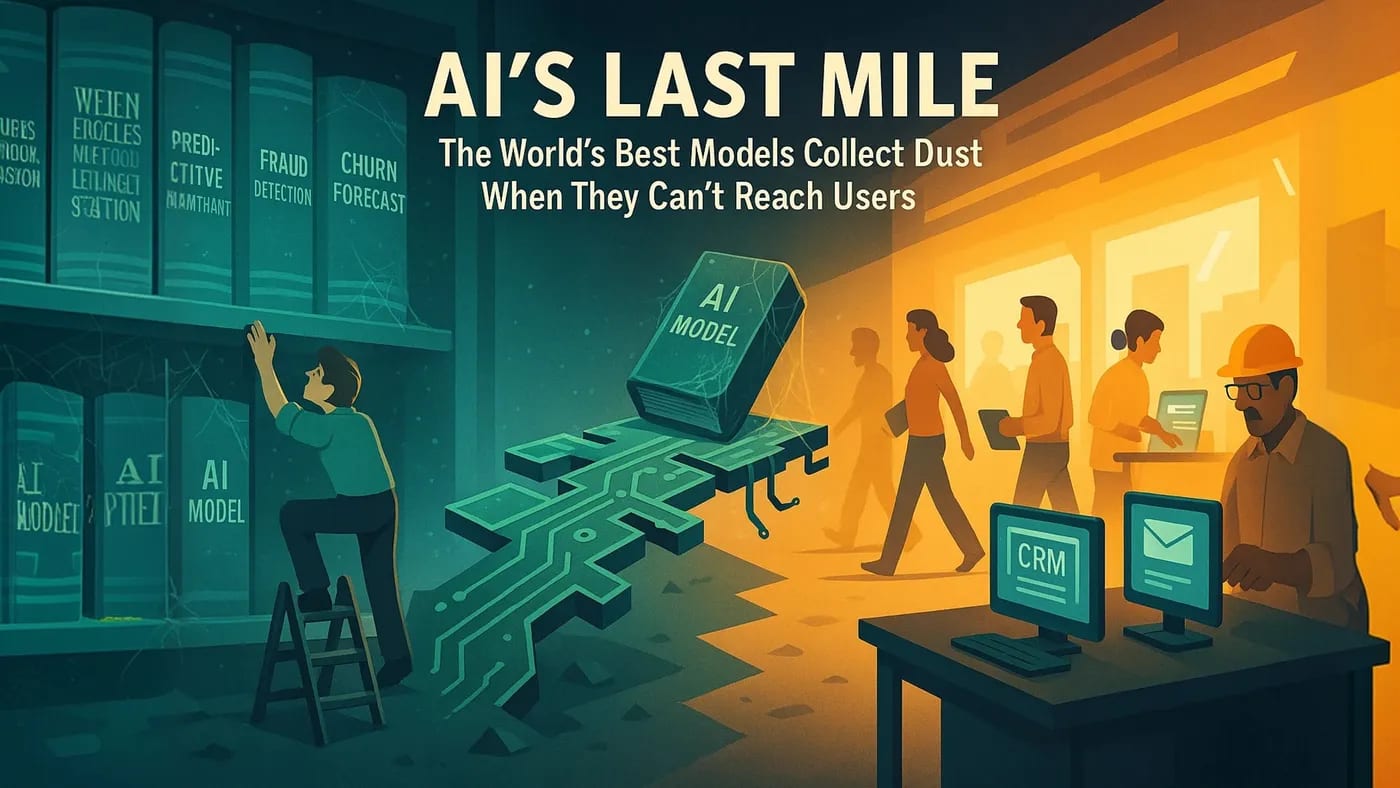
So before you approve that next AI investment, ask not just “How accurate is the model?” but “How will this actually reach the people who need to use it?” Because in the race to AI-driven competitive advantage, the last mile is where championships are won or lost!

Further Readings
-
“Superagency in the Workplace: Empowering People to Unlock AI’s Full Potential at Work,” McKinsey & Company, April 2025, A comprehensive report examining how organizations are successfully integrating AI into daily operations.
-
“The Economics of AI Last-Mile Implementation,” Martin Fleming and Neil C. Thompson, February 2025, Groundbreaking research quantifying the economic challenges and thresholds of successful AI implementation across industries.
-
“Teach AI to Work Like a Member of Your Team” - Harvard Business Review, April 2025 This article examines how companies can effectively integrate AI into existing team workflows.
-
“The First Trial of Generative AI Therapy Shows It Might Help with Depression” - MIT Technology Review, March 2025, This research-based article explores the psychological factors affecting AI adoption in therapeutic settings. It examines how generative AI systems can be designed to align with human psychological needs, highlighting the importance of trust and personal connection in successful AI implementation.
-
“Enterprise AI Architecture Series: How to Build a Knowledge Intelligence Architecture” - Enterprise Knowledge, February 2025, This technical deep-dive presents architectural approaches for embedding AI into enterprise systems without disrupting existing operations.
Disclaimer*: The perspectives shared in this article are my own and do not represent those of my employer or any affiliated organizations. All company names, product names, logos, and brands mentioned are the property of their respective owners and are used for identification and illustrative purposes only. No endorsement, sponsorship, or affiliation is intended or implied. References to specific companies or case studies are based on publicly available information and are used solely for educational and discussion purposes.*
More from enterprise ai
All enterprise ai → enterprise ai
The Paradox of Patience: Why Slower AI Wins the Race
In the relentless pursuit of faster, more powerful AI systems, we've somehow managed to sidestep a fundamental truth about intelligence: timing matters.
 enterprise ai
Azure AI Foundry, Part I: Forging the Future of Enterprise AI
It is a truth universally acknowledged, - at least in 2023, that every ambitious enterprise suddenly needed an AI copilot or chatbot for something. Picture a midnight scene: a tech lead hunched over a workbench of scattered components, -…
 enterprise ai
Azure AI Foundry – Part II: A Developer’s Deep Dive into the Foundry
A lone developer sits before a glowing screen, code editor open and coffee going cold. The task at hand? Build an intelligent AI agent from scratch, - a challenge both electrifying and daunting. On day one, it feels like stepping into a…