Human Behavior Isn’t Random. This AI Proves It - and Predicts Yours!
🔊 Listen to the Podcast version here. 🔊
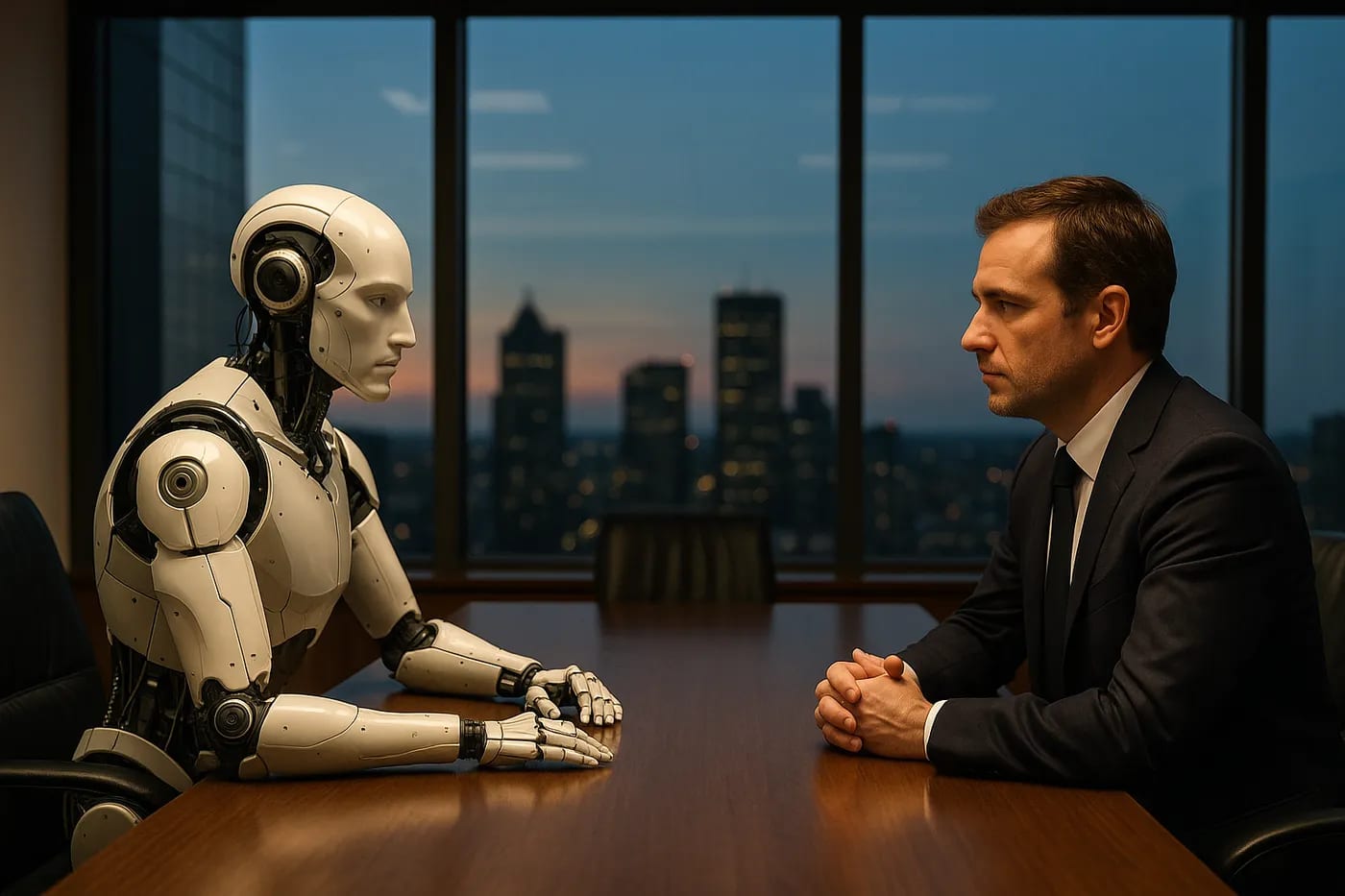
Imagine walking into a high-stakes meeting with an advisor who knows exactly how everyone will react before a single word is spoken. It’s not a psychic, it’s an AI. We’ve long lived with the comforting notion that human decision-making is an artful blend of intuition, whim, and experience, impossible to bottle. Now picture an artificial mind sitting across from you, anticipating your choices in a negotiation or guessing which product design will delight customers, - all with uncanny accuracy. Eerie or exciting? That tension you feel is where our story begins, in a world where AI just might understand us better than we know ourselves.
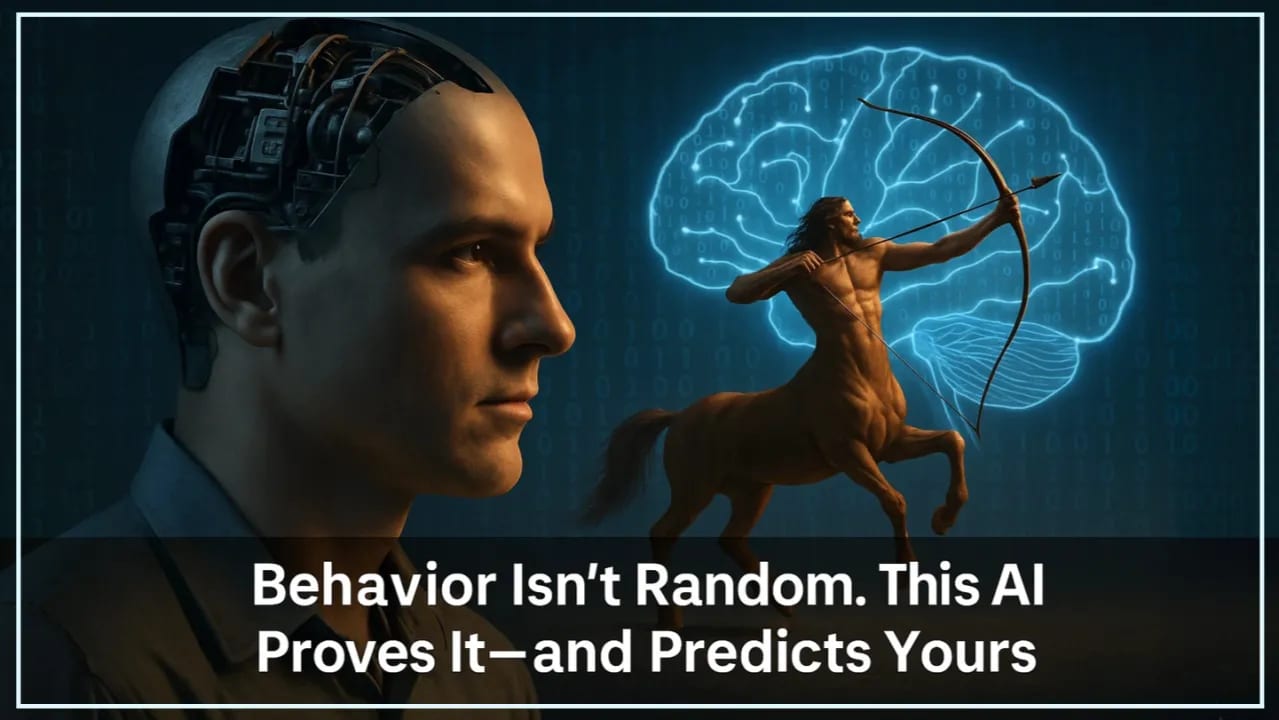
Enter Centaur, - no myth, but a very real AI model born in a research lab at Helmholtz Munich. Its name evokes the half-human, half-beast of legend, and aptly so: Centaur is part human insight, part machine intelligence. This system was “raised” on an unprecedented trove of human decision data: 60,000 people, 160 different psychology studies, and over 10 million choices boiled down to ones and zeros (Nature). Every gamble, memory game, moral dilemma, and cognitive quiz in that dataset became a lesson in human nature for the AI. The result? A model that doesn’t just crunch numbers, - it simulates how we think, finding patterns in our choices that even we might not articulate.
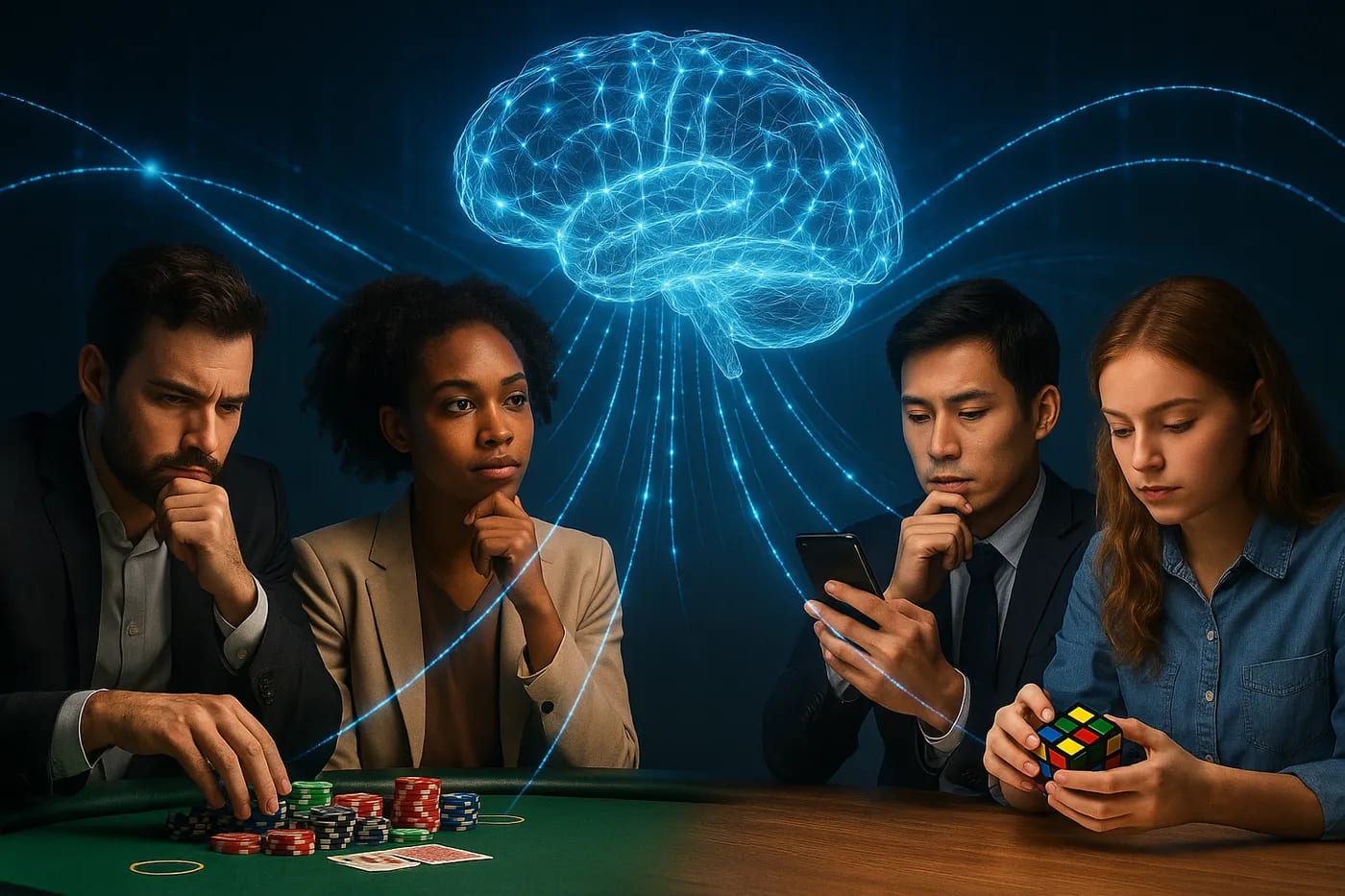
Unlike your typical one-trick AI (think of how AlphaGo only plays Go, brilliantly but exclusively), Centaur plays the entire carnival of human psychology. In tests, it predicts how people will behave in scenarios ranging from risky financial bets to classic memory recall games to logical puzzles it has never seen before (Nature). It’s as if the model absorbed the unwritten rules of decision-making, - when faced with a new game or quandary, Centaur can confidently say, “I haven’t seen this exact puzzle, but I know human nature.” It doesn’t default to one generic strategy, either. Trained on such a rich tapestry of experiments, Centaur can switch hats from economist to sociologist to psychologist on the fly, mirroring the way a person might tackle a money-vs-morals dilemma differently from a memory test. Crucially, it often outperforms the very theories and specialist models psychologists have trusted for years in predicting what people will do. In fact, on 31 out of 32 benchmark tasks, this AI beat 14 classic cognitive models at their own game, sometimes even guessing human choices better than humans’ go-to theories could. The only thing it wasn’t better at was grammar trivia, - apparently, even an uber-model has to draw the line somewhere.

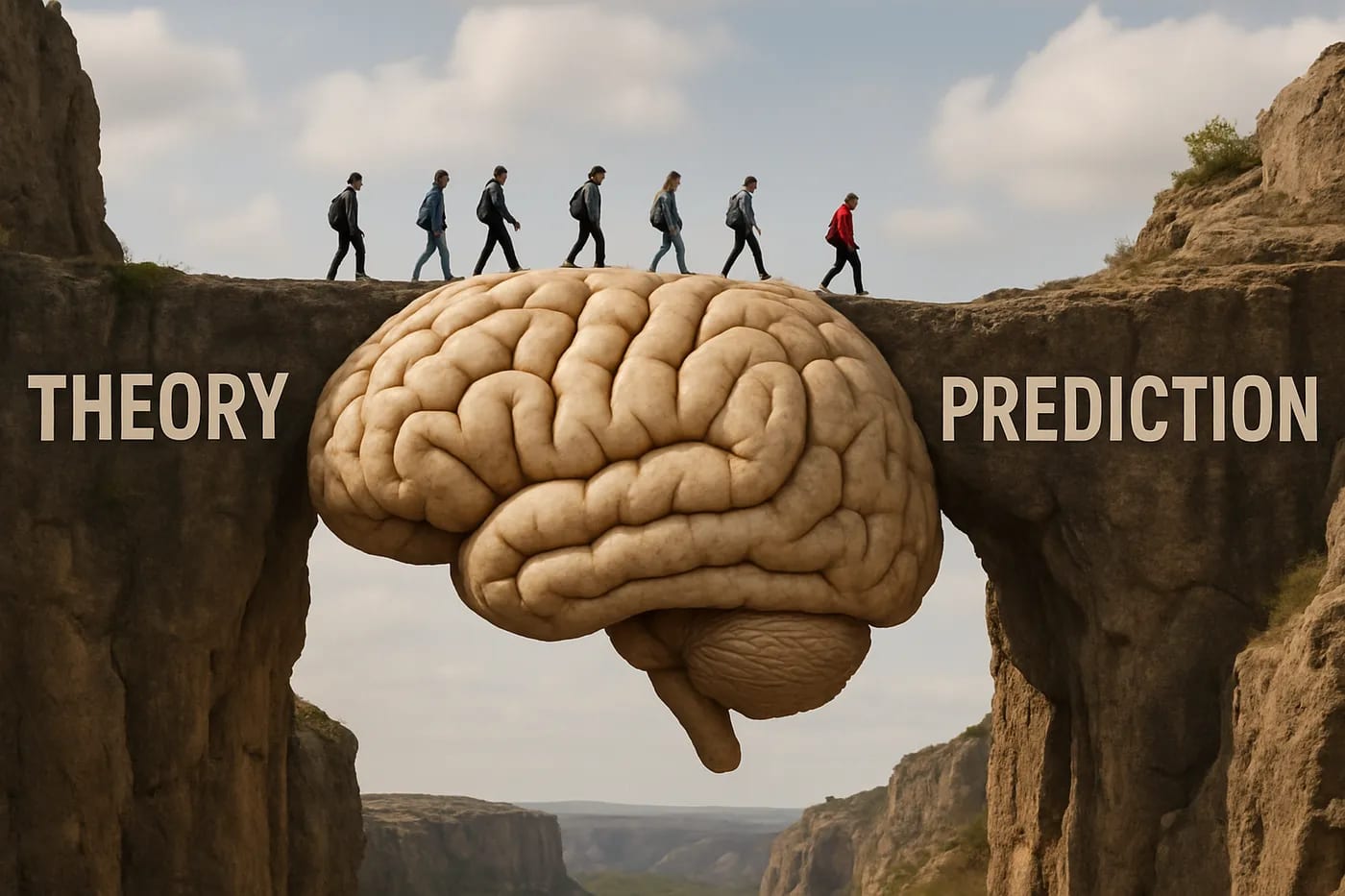
This is certainly an inflection point. For decades, behavioral science and AI both struggled with a trade-off: explain or predict. Psychologists crafted elegant theories to explain specific behaviors and computer scientists built narrow AI models that could predict one thing really well, - like a credit score or a chess move. But neither could generalize, - a chess engine can’t do a shopping decision, and a psychology theory for gambling can’t explain moral decisions. Centaur flips that script. By training a single model on thousands of different decision scenarios, the researchers essentially taught it how to think like a human in general, not just in siloed tasks. It’s as if they created a virtual lab subject that carries within it a little echo of all 60,000 real people it learned from. Impressively, the team achieved this breadth not by some decades-long moonshot, but by fine-tuning an existing large language model (Meta’s LLaMA) for just five days with the Psych-101 dataset. Five days of computer time, and they got an AI that bridges realms we used to keep separate. The mythic Centaur bridged man and beast; this modern Centaur bridges understanding and prediction, - a once impossible gap in modeling human behavior.
The real revelation hits when you consider what Centaur’s success implies: maybe we’re not as inscrutable as we think. If an algorithm can generalize human behavior across economic gambles, social dilemmas, and cognitive puzzles, what does that say about the common threads in our minds? Centaur’s creators cautiously note that the model’s accuracy suggests our decision-making has discernible patterns, - patterns an AI can learn and mirror (StudyFinds). This doesn’t diminish our humanity. Rather, it reveals that beneath our quirks, there is a consistent logic or illogic to how humans as a whole navigate choices. It’s a bit humbling. We’ve long liked to think of ourselves as unpredictable, but here comes a machine that, after digesting enough behavioral data, can often call our moves. One researcher described Centaur as a “virtual laboratory” where you can run experiments on a stand-in for human participants (Helmholtz-Munich). In other words, we’re looking at early steps of a psychological digital twin, - not just a model of one person, but a model for personhood in general, a computational doppelgänger of human nature.
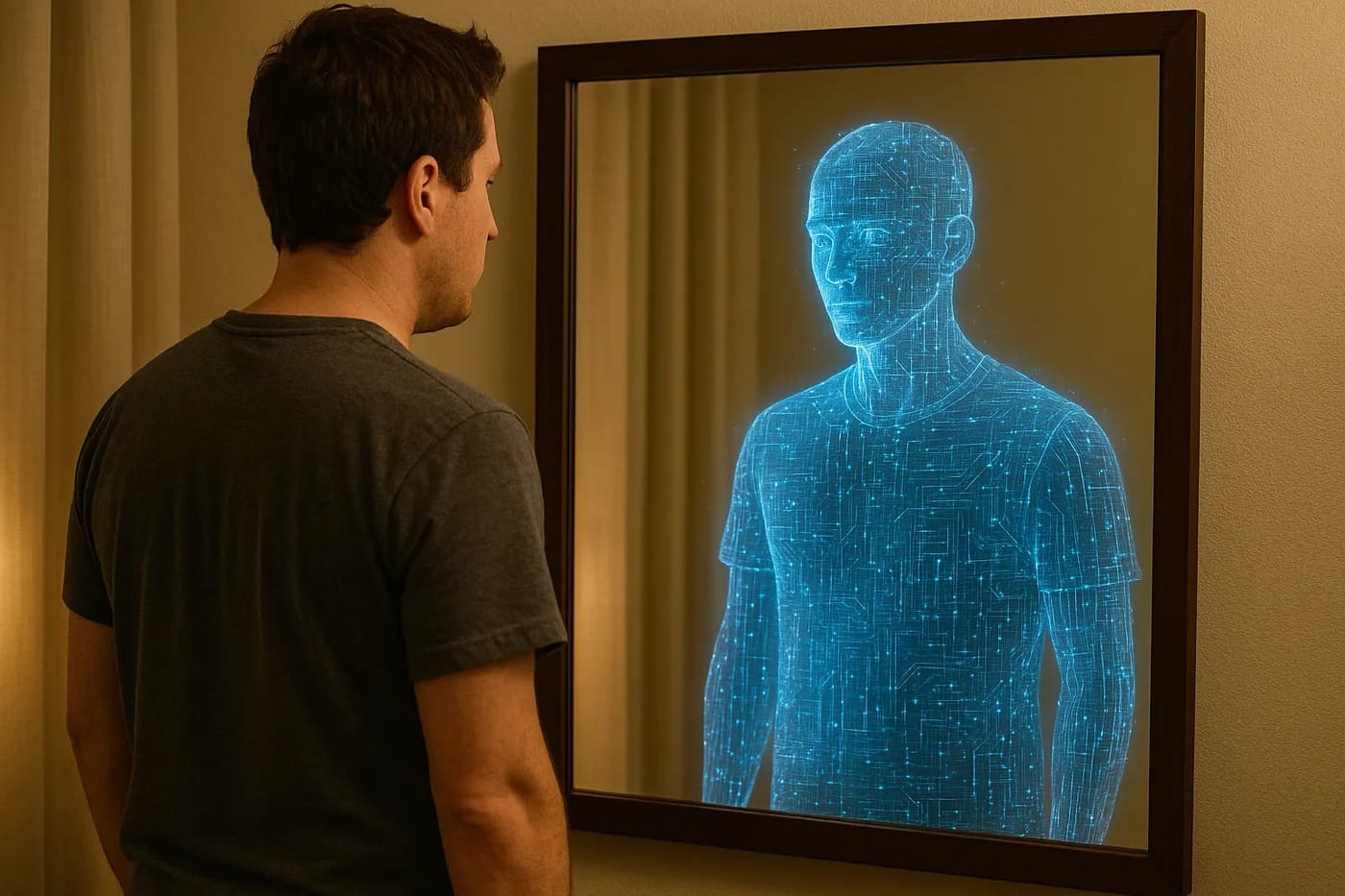
For innovation leaders and strategists, this breakthrough isn’t just academia, - it’s a peek into the future toolkit of decision-making. Imagine being able to test-drive a product, policy or strategy on a thousand virtual humans before rolling it out in the real world. With something like Centaur (or the next generation of it), you could simulate how consumers might respond to a radical new app interface, how employees might react to a change in company policy, or even how negotiations might play out, all in a computer sandbox. In product design, this could mean far fewer surprises: design teams could iterate with instant feedback from AI avatars of their target audience. In marketing, you might run campaigns through an AI filter that predicts human response as accurately as a live focus group, - only this focus group works 24/7 and doesn’t get tired. In healthcare and education, the model might personalize treatments or learning plans by predicting how different minds will engage with them. Let’s not think of the implications for politics, ugh! However, the upside is enormous: faster innovation cycles, more empathetic design, and strategies pre-vetted against realistic human behavior patterns (StudyFinds). It’s as if we’ve discovered a cheat code for human-centered design, - a way to ask “What would people likely do?” and get an answer in milliseconds.
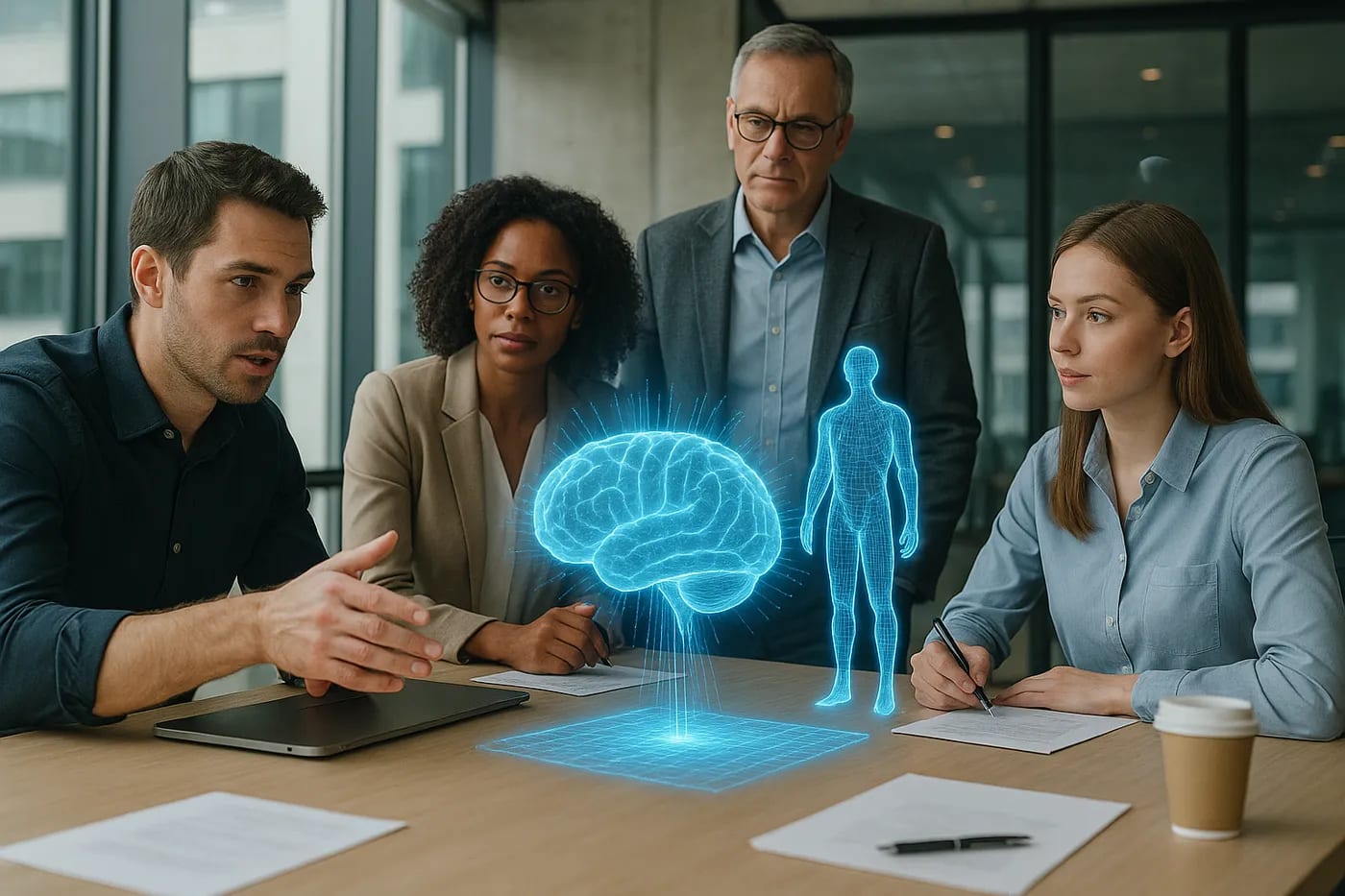
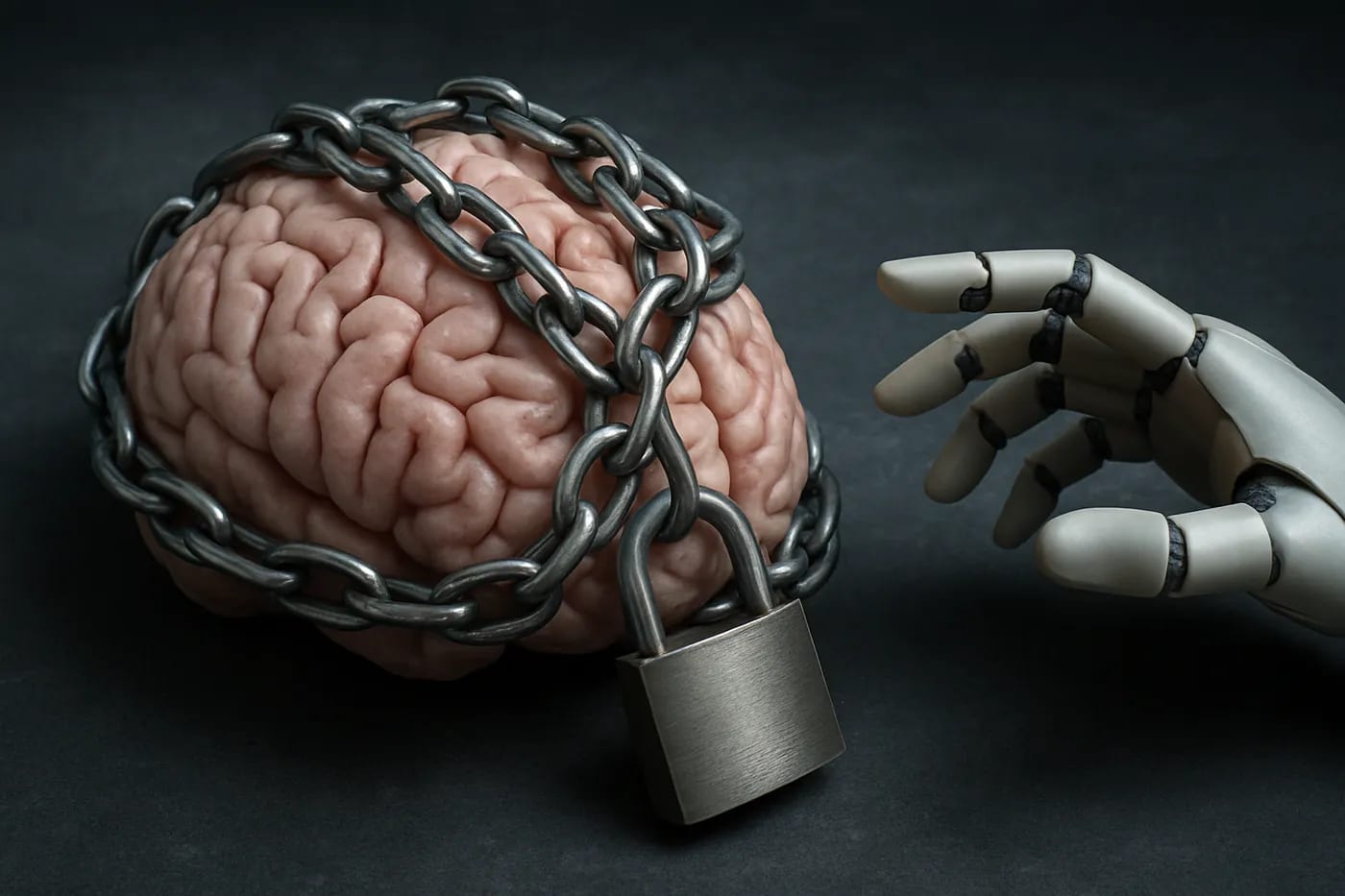
But with great predictive power comes great responsibility. The flip side of simulating human behavior is the temptation to exploit it. If an AI can anticipate choices, so could it be used to nudge consumers more effectively into a purchase or sway a voter’s opinions by testing exactly which argument would land best. The Centaur model raises fresh questions about privacy and manipulation in a world where our “digital twin” psyche could be probed (AHECBLOG). Thought leaders will need to draw ethical lines. Using these insights to help people, - like designing more intuitive products or identifying mental health needs. This is very different from using them to profit off subconscious vulnerabilities. There’s also the matter of transparency. Centaur’s brainy predictions still come from a black box of neural network weights. Do we trust it blindly, or demand explanations for why it predicts what it does? The researchers behind Centaur emphasize keeping such models open and controllable, even suggesting locally run versions to safeguard data (Helmholtz-Munich). As we integrate AI “mind readers” into our workflow, establishing ethical guardrails will be just as critical as the tech itself. After all, a psychological digital twin should serve as a compass for innovation, not a tool for covertly steering people where they didn’t intend to go.
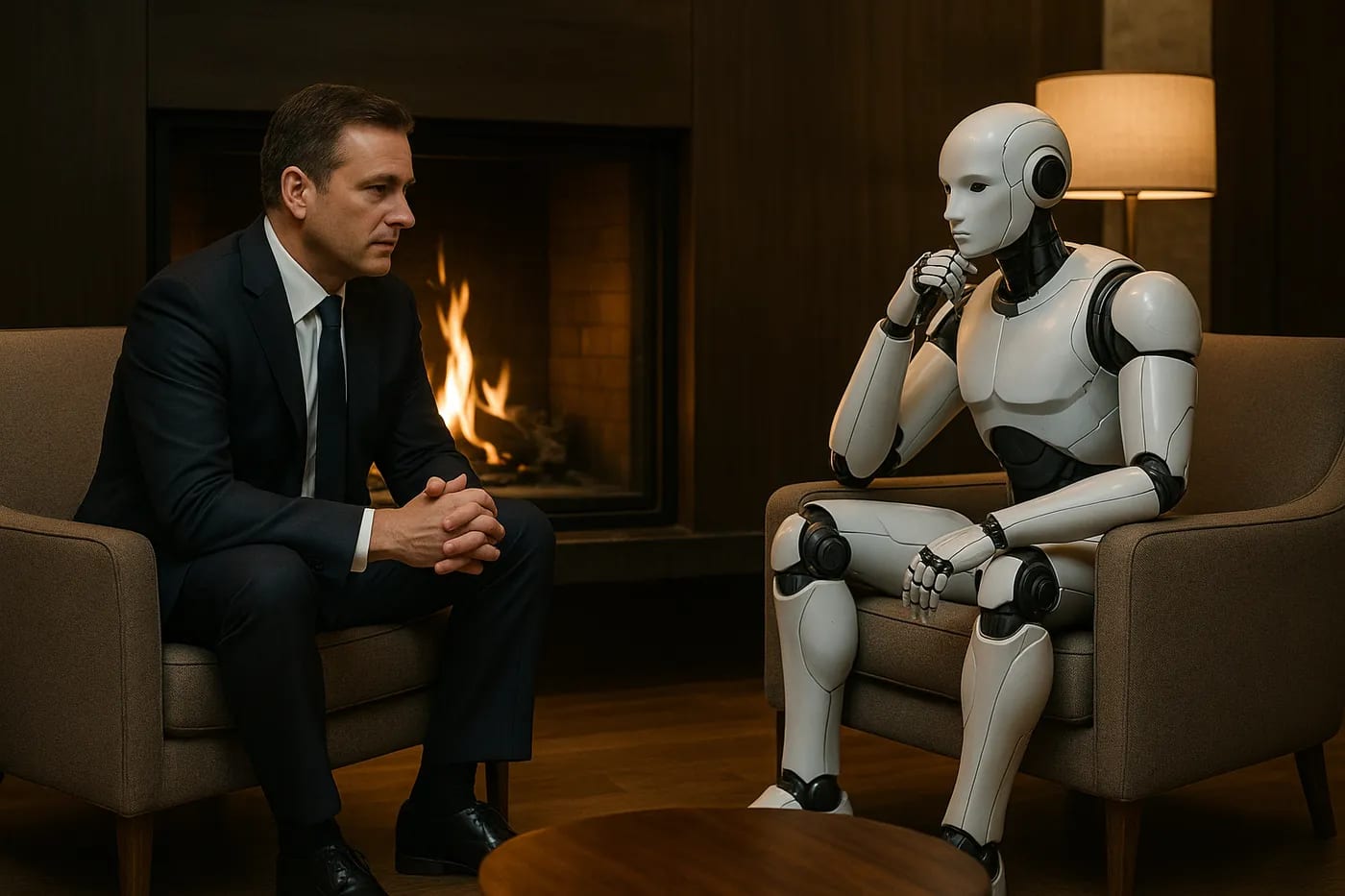
So here we are at the beginning of an imminent new era, - an executive and an AI trading notes by firelight. What does leadership look like when psychology itself becomes programmable? It means reimagining our role, - from intuitive decision-makers to curators of decision-making augmented by AI foresight. It means asking not just “Can the model predict this?” but “Should we act on it?” and “How do we bring human wisdom into the loop?” The clever banter of this fireside chat with our digital twin forces us to be sharper and more reflective. We can’t afford to be either technophobic or naïvely utopian. Instead, we must be architects of how these models play out in our organizations.
The call to action for today’s technology leaders is two-fold. First, embrace the opportunity: tools like Centaur hint that we can understand customers, colleagues, and communities on a deeper level, so start exploring how this could enhance your strategy and innovation process. Second, champion the ethics. Be the voice in the boardroom that asks how predictive models are used and how consent and fairness are respected when essentially creating “mind models” of our users or teams.

The companies and leaders who get this right will design experiences that feel almost clairvoyant in meeting human needs, - without crossing the line into manipulation. The ones who get it wrong may find that people lose trust faster than an AI can finish a sentence. The future where AI understands us is no longer sci-fi. It’s knocking on the door. It’s time to decide, with eyes wide open, how we answer.

Further Readings
-
This AI ‘thinks’ like a human — after training on 160 psychology studies (Miryam Naddaf – July 2025) A Nature news feature introducing Centaur, an AI model that predicts human decisions across tasks. It describes how Centaur was trained on 10 million choices and often outperforms classical psychological theories in predicting behavior, signaling a new era in cognitive modeling.
-
Researchers claim their AI model simulates the human mind. Others are skeptical. (Cathleen O’Grady – July 2025) A Science Magazine piece reporting on the Centaur model’s debut and the mixed reactions in the scientific community. It highlights questions from cognitive scientists about whether Centaur truly understands human cognition or is simply curve-fitting patterns, underscoring the healthy skepticism accompanying this breakthrough.
-
AI that thinks like us – and could help explain how we think (Helmholtz Munich – July 2025) The official Helmholtz Munich press release on Centaur, detailing how the model bridges the gap between interpretable theories and predictive power. It emphasizes Centaur’s potential to act as a “virtual laboratory” for psychology, the importance of transparency and ethics in such AI, and the research team’s next questions about peering into the model’s inner workings.
-
New ‘Mind-Reading’ AI predicts what humans will do next, and it’s shockingly accurate (Study Finds – July 2025) A layman-friendly overview of the Centaur AI’s capabilities and implications. It frames Centaur as a “mind-reading” AI, noting its unprecedented accuracy across different experiments and discussing how this tool could revolutionize fields from marketing to mental health – while also raising the alarm on privacy and manipulation concerns.
-
A foundation model to predict and capture human cognition (Marcel Binz et al. – July 2025) The original Nature research paper documenting Centaur’s development and performance. This technical publication provides the full details of how the team fine-tuned a 70-billion-parameter language model with the Psych-101 dataset, and demonstrates Centaur’s success in predicting human choices across 160 tasks, marking the first AI to achieve such generality in simulating human decision-making.
Disclaimer: The perspectives shared in this article are my own and do not represent those of my employer or any affiliated organizations. All company names, product names, logos, and brands mentioned are the property of their respective owners and are used for identification and illustrative purposes only. No endorsement, sponsorship, or affiliation is intended or implied. References to specific companies or case studies are based on publicly available information and are used solely for educational and discussion purposes.
More from the human factor
All the human factor → the human factor
DYADIC AI: The Next Big Leap in Human-AI Interfaces
Picture yourself in a high-stakes virtual meeting. A colleague’s avatar across the table leans in as you speak, nodding at your key points and even chuckling at your dry jokes. The interaction feels fluid and human, - and only at meeting’s…
 the human factor
Inside the AI Classroom: How Universities Are Re‑Tooling to Produce Post‑Coding Talent
A student in a University of Washington computer lab leans back from her screen, a wry smile hinting at relief. It’s past midnight, and she’s been wrestling with a stubborn coding bug. Her not-so-secret weapon? An AI chatbot glowing on the…
 the human factor
Anthropomorphic Seduction: The Siren Song of Human-Like AI
The new AI assistant cracks a joke during your team’s demo, and even the skeptical CFO chuckles. For a moment, the line between tool and teammate blurs. The avatar on the screen speaks with warmth, remembers everyone’s name, and even…