From Goldfish Memory to Elephant Recall: MemOS, Meet AI
🔊 Listen to the Podcast version here. 🔊
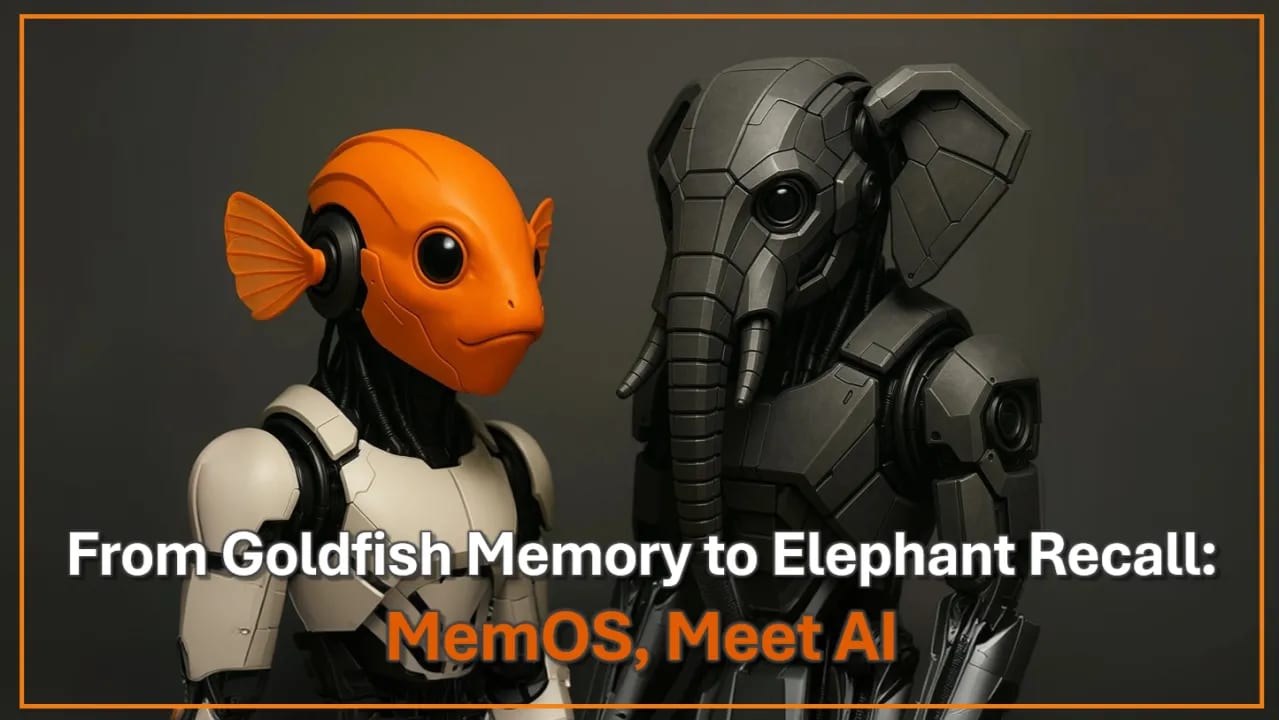
Imagine hiring a brilliant analyst who aces every task but forgets everything by the next day. Albeit, a lot of AI chatbots save the sessions, but it’s limited to those specific sessions. Frustrating, right? Today’s AI systems are a bit like that analyst. They can parse documents and generate fluent answers, yet come Monday they won’t remember the insight you shared on Friday. We’ve all repeated ourselves to a voice assistant or chatbot that just doesn’t remember. It’s as if our cutting-edge AI has the memory of a goldfish, restarting each conversation from scratch (VentureBeat). While I’ve previously reviewed Contextual Memory Intelligence (CMI), - which explores similar ground in reshaping AI with persistent memory in my previous article AI’s Goldfish Problem: Reboot with CMI, - this time we’re focusing on MemOS, a newly released memory operating system that tackles the AI memory problem with architectural innovations designed to give language models true long-term recall.

Why AI Has a Goldfish Memory
This forgetfulness isn’t just an annoyance, - it’s baked into how AI works. Most large language models “lack well-defined memory management” and can’t retain information across sessions (arXiv). Each chat or query lives in a silo. The model responds based on recent input and then promptly forgets it. If you mention a peanut allergy to an AI assistant one day, it might still recommend peanut satay the next, having no recollection of your dietary restriction. Researchers call this the “memory silo” problem, and it cripples long-term user experience (VentureBeat). In an enterprise setting, an AI that can’t remember prior interactions or decisions forces you to start at ground zero every time, - a non-starter for complex workflows spanning weeks.

Stopgaps exist. Tech teams have tried retrieval-augmented generation (RAG), which is essentially giving the AI a cheat sheet. When asked a question, the AI pulls in relevant text from a knowledge base or past notes. It helps a bit, - like handing our forgetful analyst a stack of sticky notes. But as the creators of MemOS note, these tricks remain “stateless workarounds without lifecycle control”. In other words, the AI still isn’t learning or truly remembering*.* It’s just looking things up ad-hoc. The fundamental limitation persists. There’s no long-term memory built into the AI’s core architecture. We’ve been scaling models larger and feeding them more data, yet hitting a wall in long-term reasoning and personalization because the models effectively wake up each morning with amnesia. Like Frosty the Snowman would say each time he was revived by cool artic air, “Happy Birthday!”, - to himself.

Please tell me someone remembers this. I found Frosty’s memory problem annoying as a child. Anyone else?
A New Memory Operating System
What if our AI could remember as we do? Enter MemOS, - the “memory operating system” just unveiled by a team of researchers from Shanghai and Beijing. Instead of treating memory as an afterthought, MemOS makes it a first-class resource, as central to AI as storage and CPU are to traditional computers. In effect, it’s an OS for an AI’s mind, managing what the AI learns, retains, and forgets over time. This isn’t sci-fi, but a real system open-sourced a few days ago on July 7th, aiming to give AI something closer to human-like persistent recall. The developers describe MemOS as allowing AI to “retain information across sessions, supporting personalized responses and incremental learning” rather than wiping memory after each use (Global Brands). It’s like adding a hard disk (and a librarian) to that forgetful analyst’s brain.
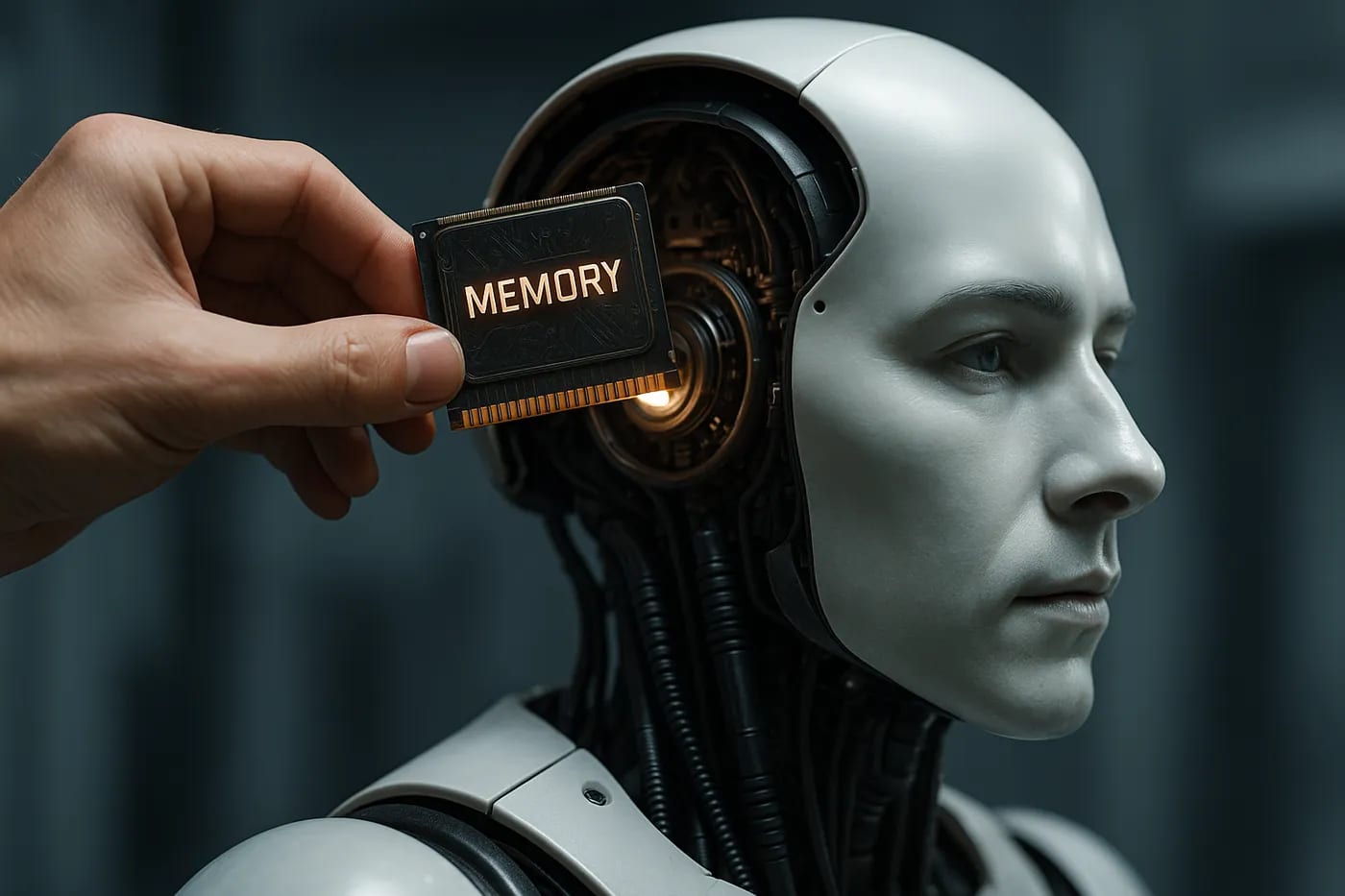
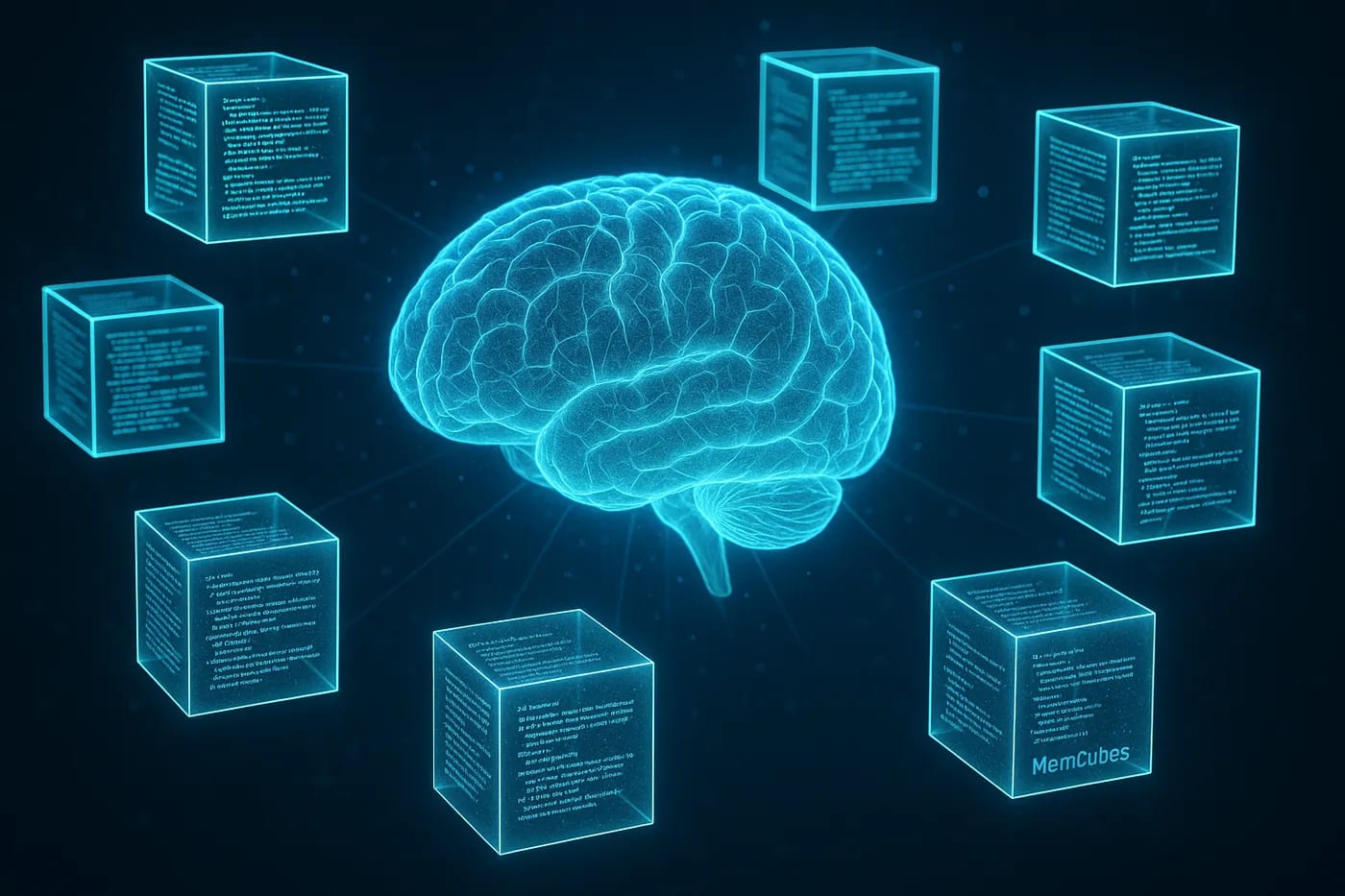
At the heart of MemOS is a concept called MemCubes, - think of these as modular memory units, little containers for knowledge. Each MemCube stores a piece of information or an experience, along with metadata like where it came from and its version history. In other words, the AI’s memories come with context and version control. Crucially, MemOS doesn’t discriminate between different kinds of memory, instead they are all unified under one framework differentiating between these three types of memory.
1. Plaintext Memory
This refers to information explicitly stored as readable text or structured data, - such as facts, user notes, task history, or conversational snippets. It’s like a digital notebook the AI can refer to, allowing it to recall specific inputs, instructions, or factual content shared during prior interactions.
2. Activation Memory
This type of memory holds the AI’s temporary context during active tasks, - essentially functioning like a working memory or scratchpad. It includes recently processed tokens, ongoing tasks, and intermediate reasoning steps. Like human short-term memory, it’s volatile and used to maintain coherence or carry context through multi-turn interactions.
3. Parametric Memory
Parametric memory is embedded directly within the AI’s model parameters, - learned during training. It represents generalized knowledge abstracted from vast datasets, including language patterns, world knowledge, and reasoning skills. Unlike the other memory types, this is not explicitly readable and requires retraining or fine-tuning to update.
By standardizing these into MemCubes, the system can “compose, migrate and evolve” memories over time, bridging what we normally think of as retrieval (looking up external info) with learning (updating the AI’s internal parameters) (arXiv). In plain terms, MemOS lets the AI treat a helpful fact it just looked up and a lesson it gleaned from user feedback as the same kind of savable, reusable memory. This blurs the line between using knowledge and learning knowledge, a continuous “memory training” even during inference (MarkTechPost). It’s a radical shift from the status quo where learning only happens offline during model training.
Does this really make a difference? Early signs say yes. In benchmarks geared toward long-term reasoning, MemOS-equipped models showed remarkable gains. One report clocked a 159% improvement in temporal reasoning tasks versus OpenAI’s own memory system (Global Brands). In complex multi-step questions that require recalling information from earlier interactions, the MemOS model not only got more answers right but did so efficiently, - boosting overall accuracy by ~39% while cutting down the token usage by around 60%**. Another test saw up to a 94% reduction in response latency using MemOS’s clever memory injection technique. These aren’t incremental 5% tweaks. They’re step-change improvements. It turns out that an AI with a memory runs circles around one that’s effectively brain-dumping after each task. By treating memory as a core resource to be scheduled and optimized, MemOS unlocked performance and reasoning depth that brute-force model scaling alone wasn’t delivering. It’s a strong hint that the next big AI breakthrough might come from smarter architecture, - making the systems stateful and context-aware*,* rather than just bigger models.

Why It Matters for Enterprises
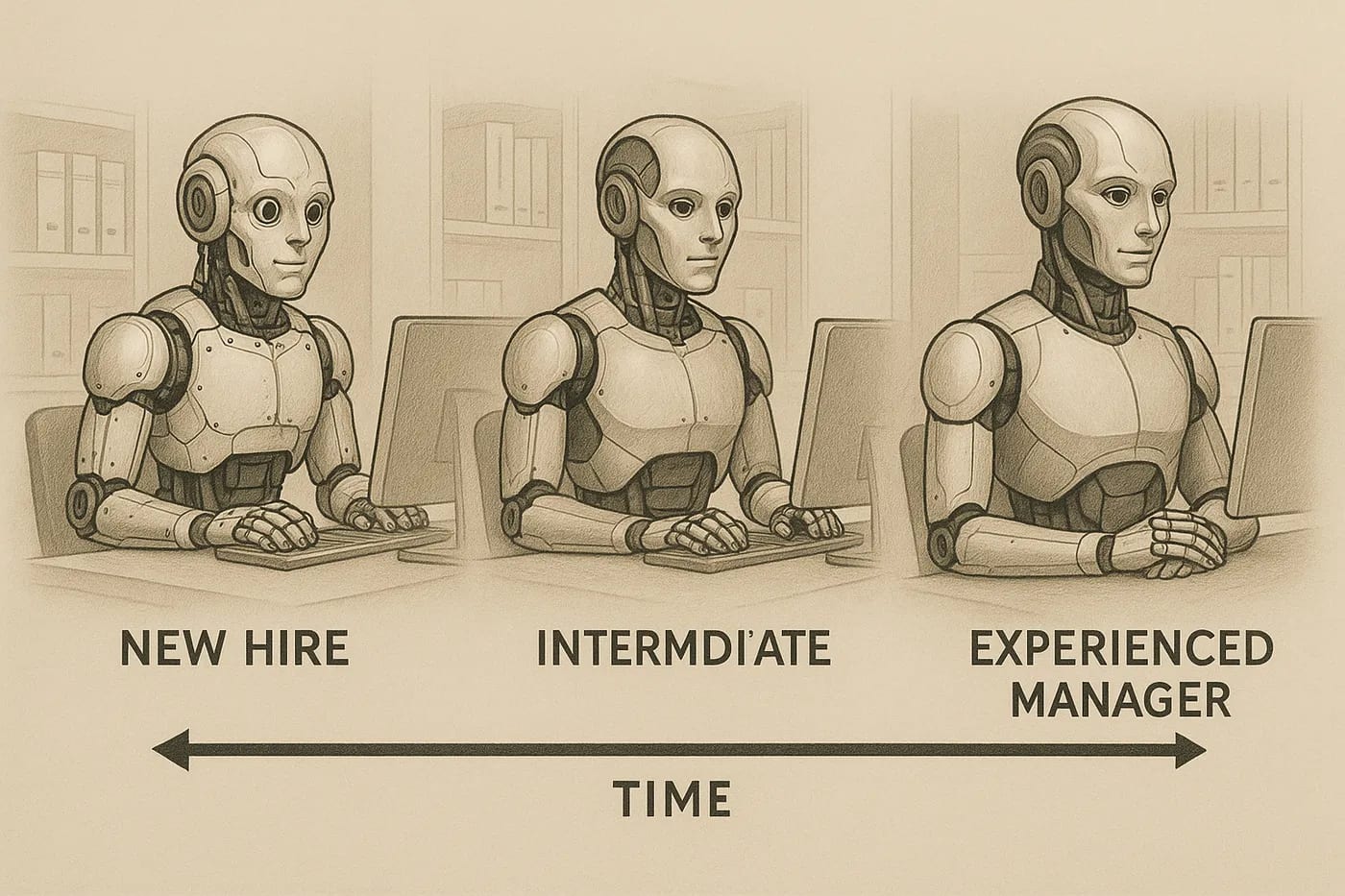
For technology leaders, this shift isn’t just about geeky performance stats, - it signals a new design philosophy for AI systems with very practical implications. First, persistent memory means continual learning. Instead of deploying a static model that stagnates until the next big training cycle, you get an AI that learns on the job. Imagine a customer-service chatbot that grows more knowledgeable with every support ticket handled, or an internal AI assistant that actually remembers project details from last quarter. MemOS provides the “controllability, plasticity, and evolvability” to make that happen (arXiv). Over time, such an AI isn’t just answering questions, it’s developing expertise. Your virtual agent starts as a novice and ends up as a seasoned advisor in your domain, without you rebuilding it from scratch. This continual learning can dramatically reduce retraining costs and downtime. You’re not sending the model back to the lab for every new dataset. It’s updating itself in real-time, under governance (MarkTechPost). For companies, that means lower AI operating expenses and faster adaptation to new information, - a competitive edge in fast-moving industries.
Second, treating memory as a managed resource can improve compliance and oversight in AI applications. Today, one reason enterprises are wary of AI is the “black box” problem, - it’s hard to trace why a model gave a certain answer or what it’s basing its knowledge on. MemOS tackles this by making memories traceable and governable. Each piece of information the AI retains comes with provenance and can be versioned or even rolled back if needed. It’s akin to having full audit logs for an AI’s brain. Did the model ingest some outdated regulatory guideline? With a memory OS, you could find that specific memory cube and update or remove it, rather than retraining the whole model. The MemOS approach “emphasizes governance, ensuring traceability, access control, and safe use” in evolving AI systems. For industries like healthcare or finance, where compliance is non-negotiable, being able to micromanage what the AI knows is game-changing. It transforms AI from a mysterious savant into a well-documented knowledge manager that plays by your rules for data retention and privacy.

Finally, personalization and adaptability reach new heights when AI can remember context long-term. In healthcare, for example, an AI diagnostic assistant using MemOS could retain a patient’s entire medical history securely across visits. It wouldn’t just recall your last blood test; it could notice patterns over years. That continuity means the AI’s advice is informed by everything it has seen about you, reducing errors and sparing you the frustration of repeating your story to yet another doctor-bot.

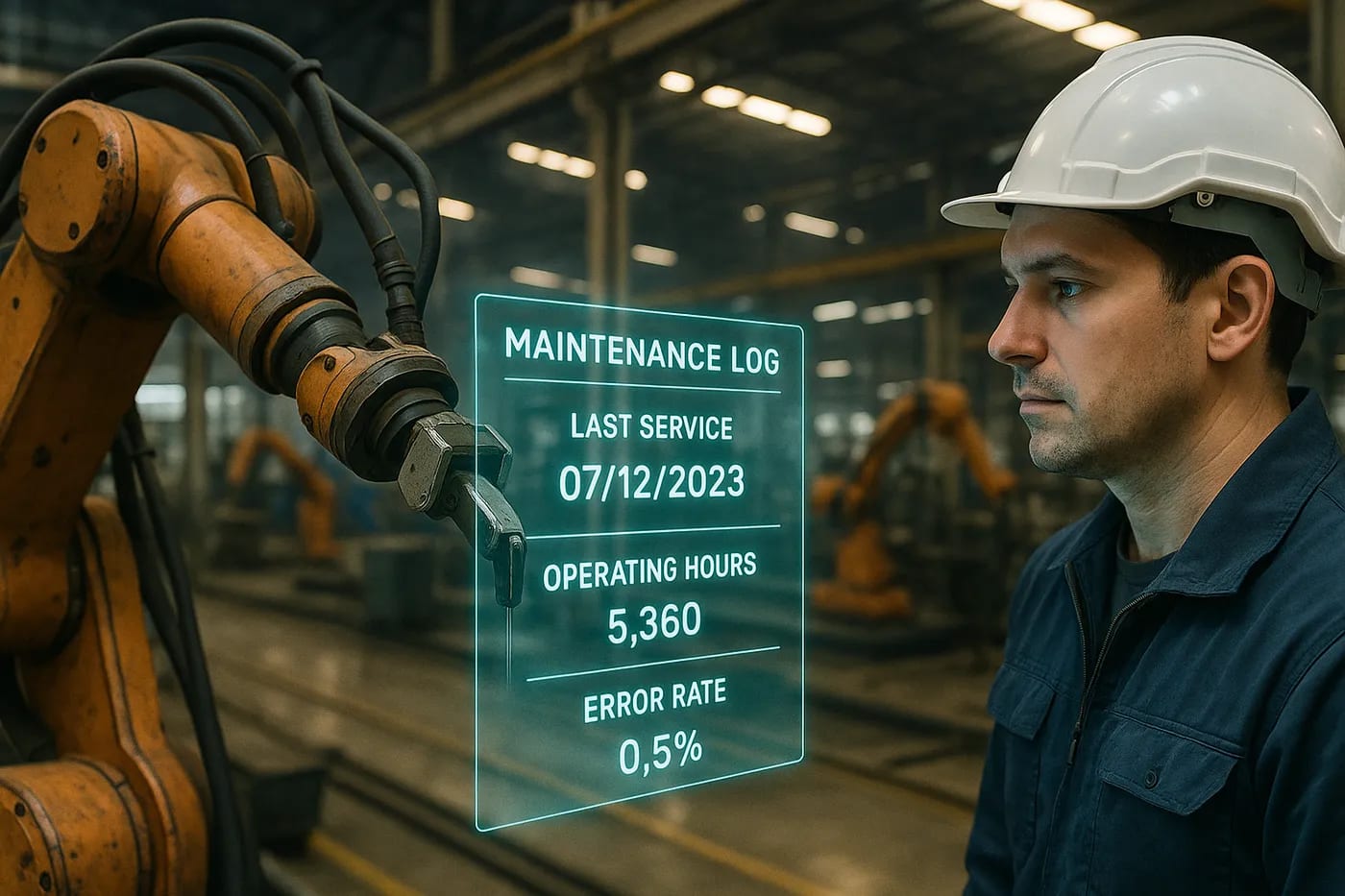
Likewise, in a manufacturing setting, an AI system overseeing a smart factory could log the quirks and performance of each machine over time. It might learn that Machine #5 tends to overheat in humid weather and proactively adjust schedules or maintenance before a failure occurs. In both cases, memory turns AI from a passive tool into an adaptive partner. Your AI isn’t just reacting to queries. Instead, it’s anticipating needs based on accumulated knowledge. A personalized AI that knows the user, the machine, or the process intimately can deliver far more value, - whether it’s a concierge that remembers your preferences or an industrial AI that fine-tunes operations on the fly.
Memory as a Competitive Edge
We’re on the cusp of an era where AI doesn’t forget. The emergence of memory-centric systems like MemOS suggests that tomorrow’s AI will be less like a clueless intern and more like a seasoned colleague, - one that remembers context, learns from experience, and can be trusted to handle evolving tasks. If that’s the case, perhaps we should be more polite to our AI partners, - maybe. For forward-looking executives, this is a clear call to action. It’s time to start exploring how memory could enhance your AI initiatives. That might mean encouraging your R&D teams to experiment with open-source MemOS or similar frameworks, or rethinking product roadmaps to leverage AI that improves over time. The business implications are broad, from delighting customers with AI that actually knows them, to streamlining operations with systems that get smarter and more efficient on their own.
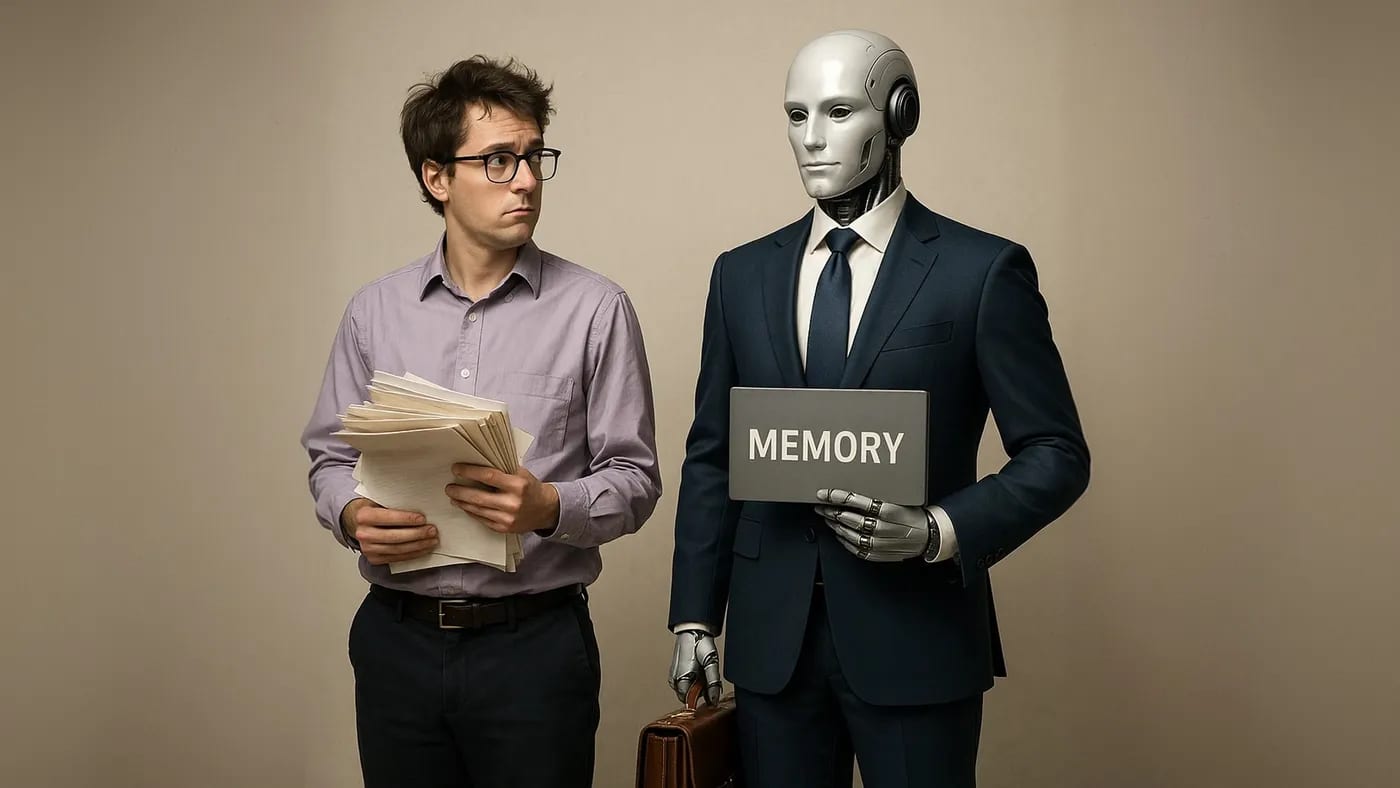
There’s also a strategic insight here. For years, the AI race was about bigger models and more data. Now, a new vector of innovation has appeared, - smarter architecture that makes AI stateful, adaptive, and introspective. Companies that recognize the value of an AI’s memory and invest in it will have an edge over those deploying forgetful models. In the end, intelligence is deeply linked to memory. As the MemOS team puts it, “intelligence begins with memory.” Organizations that heed that lesson can turn their AI from a disposable tool into a lasting asset. The next leap in AI won’t just be about what these systems can calculate, but what they can remember. And that could make all the difference.

Further Readings
-
MemOS: A Memory OS for AI System (Zhiyu Li et al. – July 2025) The original research paper introducing MemOS. It outlines how treating memory as a managed resource bridges short-term context and long-term learning in LLMs, and includes technical benchmarks demonstrating major gains in reasoning and efficiency.
-
Chinese researchers unveil MemOS, the first ‘memory operating system’ that gives AI human-like recall (Michael Nuñez – July 2025) News article covering the debut of MemOS. Discusses the motivation behind memory-centric AI, key improvements like 159% better temporal reasoning, and why this architectural innovation might herald AI’s next big breakthrough.
-
MemOS: A Memory-Centric Operating System for Evolving and Adaptive Large Language Models (Sana Hassan – June 2025) Explainer piece breaking down MemOS in accessible terms. Highlights how MemOS enables continuous “memory training,” unified memory across types, and governance features, - such as traceability and version control, that ensure AI systems can learn safely and transparently.
-
China’s MemOS Could Reshape AI with Persistent Memory and Context Awareness (Global Brands Magazine – 2025) Overview of MemOS framed for a broad tech audience. Emphasizes real-world use cases across education, healthcare, and finance where long-term AI memory enhances personalization and consistency. Also notes the open-source release and community involvement in pushing memory-centric AI forward.
-
MemOS on GitHub (MemTensor, Open Source – 2025) The official open-source repository for MemOS. Provides source code, documentation, and examples for developers to experiment with the memory-centric OS. It’s a hands-on resource for understanding how MemCubes, scheduling, and memory management are implemented in practice, enabling community contributions and adoption.
Disclaimer: The perspectives shared in this article are my own and do not represent those of my employer or any affiliated organizations. All company names, product names, logos, and brands mentioned are the property of their respective owners and are used for identification and illustrative purposes only. No endorsement, sponsorship, or affiliation is intended or implied. References to specific companies or case studies are based on publicly available information and are used solely for educational and discussion purposes.
More from machine minds
All machine minds → machine minds
Knowledge Protocol Engineering: Teaching AI the How, Not Just the What
Imagine hiring a brilliant intern who has read every document in your company’s knowledge base but still fumbles basic tasks. They can recite facts verbatim yet don’t know how to apply them. This, in a nutshell, is the state of many AI…
 machine minds
The Kepler Trap: When AI Mimics Understanding
In the early 1600s, Johannes Kepler mapped the heavens with astonishing precision. Night after night, he charted the planets’ dance around the sun, nailing the what and when of their motion. But ask Kepler why the planets move as they do,…
 machine minds
Herding Bots: AI and Peer Pressure
At 2:45 PM on an otherwise calm trading day, a single algorithm flinches, - dumping a chunk of stock, and within milliseconds its digital peers do the same. Screens flash red as prices plummet. There's no human panic on the floor, - just a…