Inside the AI Classroom: How Universities Are Re‑Tooling to Produce Post‑Coding Talent
Listen · the Bit & Being podcast
A student in a University of Washington computer lab leans back from her screen, a wry smile hinting at relief. It’s past midnight, and she’s been wrestling with a stubborn coding bug. Her not-so-secret weapon? An AI chatbot glowing on the monitor, offering a hint that cracks the problem. In the morning, she’ll submit her assignment with an unusual footnote: Collaborator: ChatGPT. In this classroom, artificial intelligence isn’t cheating or sci-fi novelty, - it’s a sanctioned study buddy. The irony isn’t lost on anyone. The very tool that automates coding is being embraced to teach coding’s next generation. Welcome to the AI-era university, where yesterday’s “learn to code” mantra is evolving into “learn beyond code.”

The New Tension: AI and the End of “Coding” as We Know It
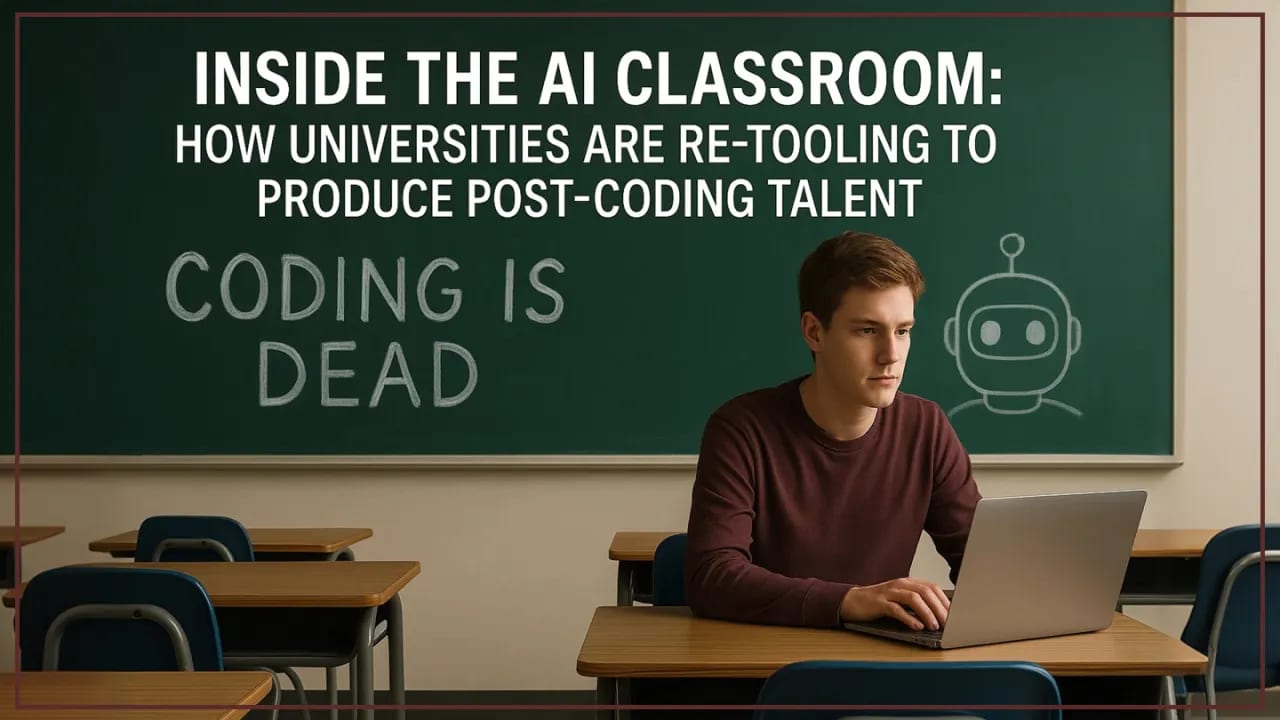
Not long ago, computer science majors were advised to hone their coding chops like an artisan sharpens her tools. But the rapid adoption of AI in the workplace is flipping the script. Tech leaders openly hint that many traditional programming tasks are on the automation chopping block. Microsoft’s recent layoffs came with a worrying subtext that AI is beginning to replace human coders, and Amazon CEO Andy Jassy warned that corporate headcount will shrink as generative AI takes hold (GeekWire). No surprise then that universities are scrambling to prepare graduates who won’t be obsolete on day one. It’s an anxious moment. If “coding” in the narrow sense can be done by an AI, what will entry-level developers actually do?
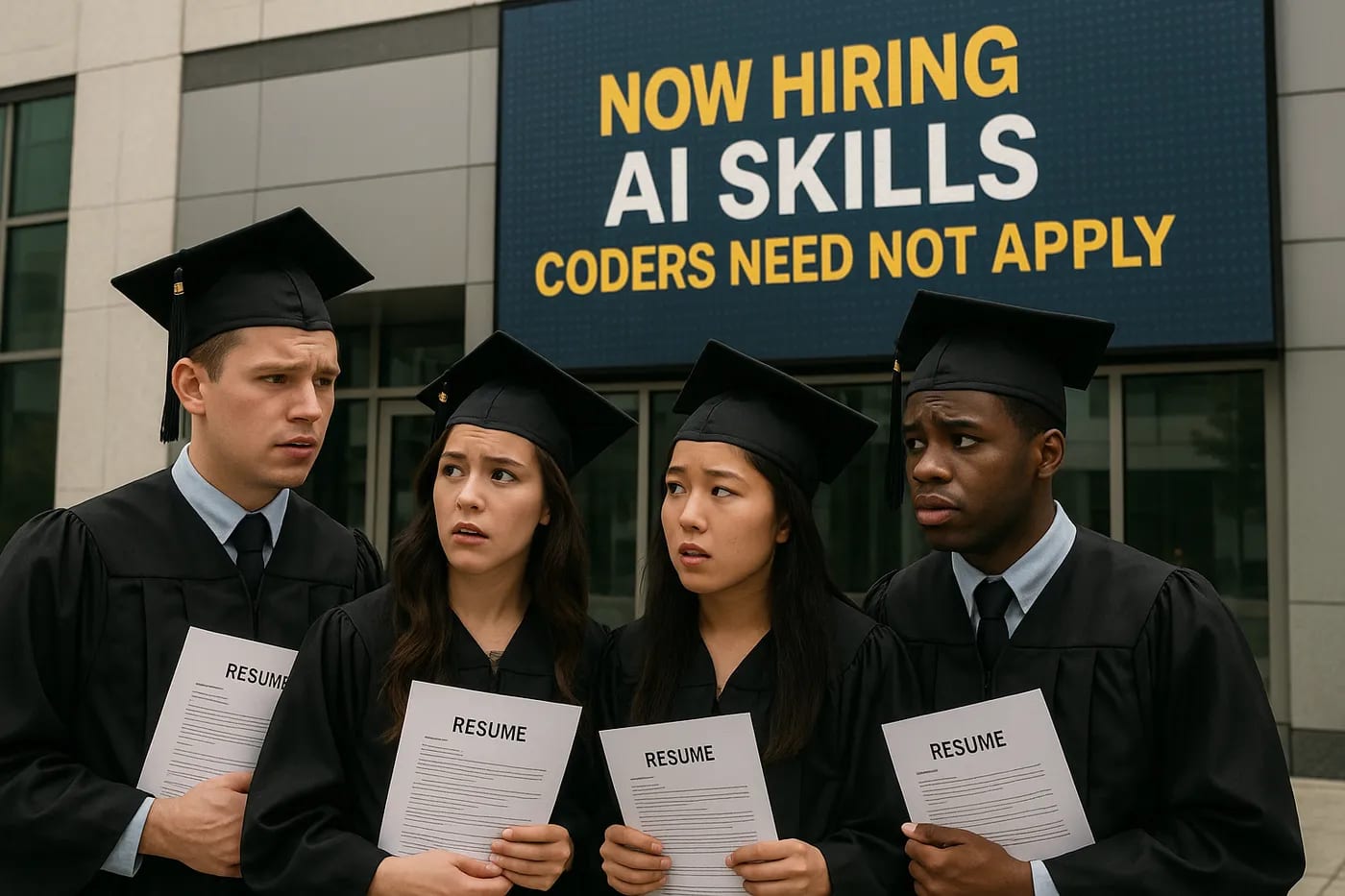
A glance at the job market signals a paradigm shift. An analysis found that Big Tech companies hired 25% fewer new graduates last year while increasing recruitment of mid-level engineers, hinting that junior coding roles are drying up (TechCrunch). Put bluntly, routine programming, - the kind of grunt work once handed to fresh grads, is increasingly handled by machines. A recent Atlantic piece even noted a plateau in computer science enrollments as students witness AI’s rise and wonder if “peak coder” has passed (The Atlantic). The fear is real, - a generation that grew up hearing “learn to code” now faces headlines implying “Coding is dead.”
Learning to Leverage AI Instead of Fighting It
At the University of Washington’s Paul G. Allen School of Computer Science & Engineering, the response to this upheaval has been both bold and pragmatic. Magdalena Balazinska, the school’s director, put it provocatively: “Coding, or the translation of a precise design into software instructions, is dead… AI can do that” (GeekWire). This wasn’t a eulogy for computer science itself, but a call to refocus on what humans do best. “We have never graduated coders. We have always graduated software engineers,” Balazinska clarified, underscoring that the school’s mission is to produce nimble problem-solvers grounded in computing fundamentals. In other words, post-coding talent, - graduates who might let the AI handle syntax and boilerplate, while they tackle higher-level design, architecture, and the why behind the code.
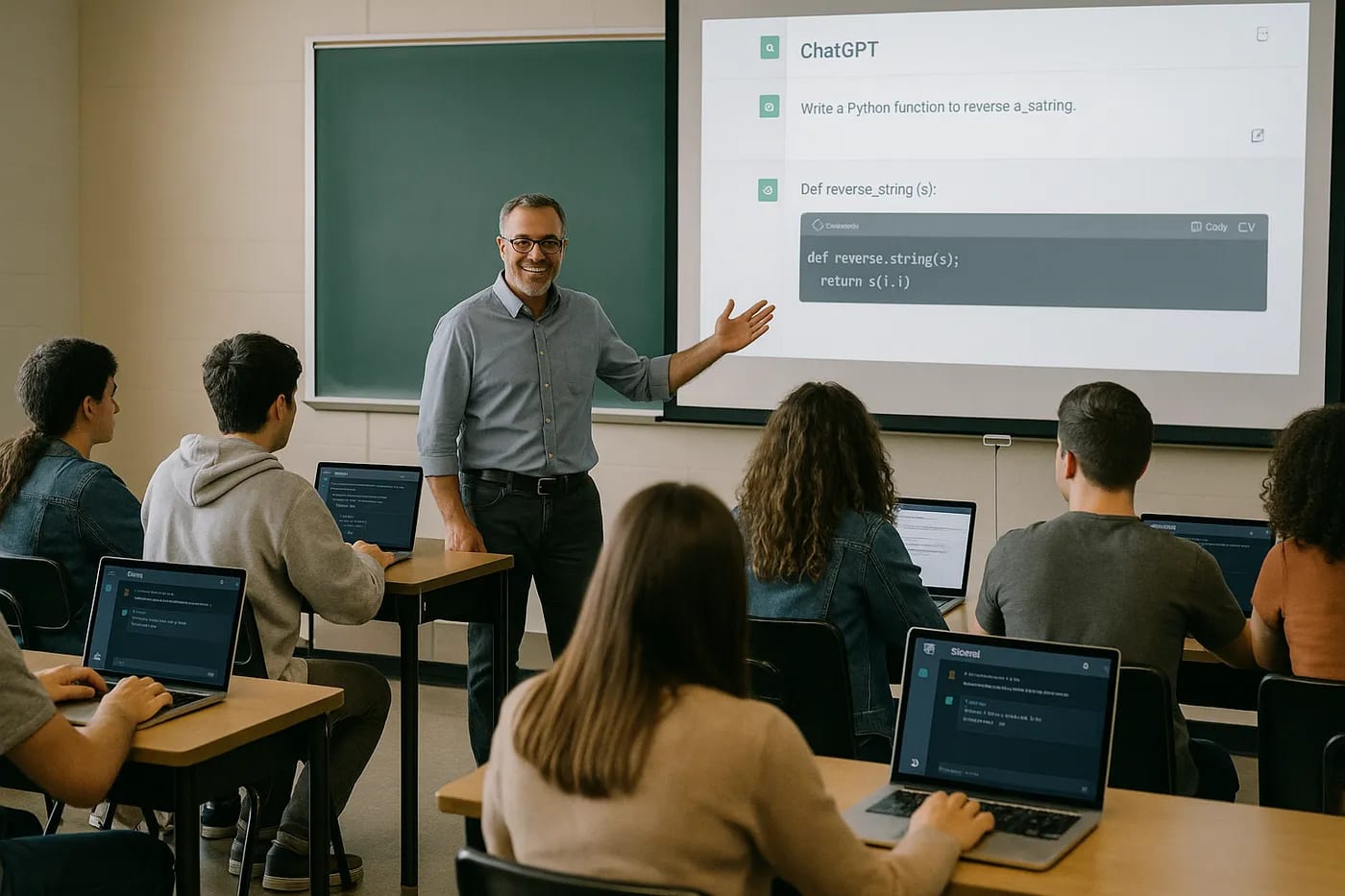
What does this look like on the ground? For one, students are officially learning alongside AI rather than in fear of it. UW allowed students to use tools like ChatGPT in assignments, provided they cite the AI as a collaborator. This policy turns academic honesty on its head, - suddenly the forbidden calculator is on the table, but you must show your work with it. Recent alum Harshitha Rebala experienced the benefits of this approach firsthand. In one project, after banging her head against a stubborn bug for hours, she turned to the AI assistant for suggestions. “If you’re stuck on the same bug… it’s really easy to just jump on and say, ‘This is the bug I’m running into, do you have any advice?’” she says, - and sure enough, ChatGPT helped her keep going. Far from “cheating,” this was practice in effective problem-solving with modern tools. Rebala and her peers still had to understand and implement the solution, but the AI acted as a tireless tutor and rubber-duck debugger at 2 a.m.
Curriculum Experiments and a Shift in Mindset
Empowering students to wield AI has meant rethinking the curriculum itself. At UW, faculty have been encouraged to experiment with integrating AI into their teaching rather than waiting for a top-down overhaul. One professor might let students use GPT for code review in a software engineering class. Another might focus on conceptual problems that AI can’t easily solve. This grassroots approach acknowledges how fast the ground is shifting. After a year of trial and error, the Allen School is now digesting the lessons and considering more “coordinated changes to our curriculum” to keep pace. The transformation is iterative and cautious, much like a software update, but the direction is clear, - less emphasis on rote coding, more on critical thinking, design, and human-AI collaboration.
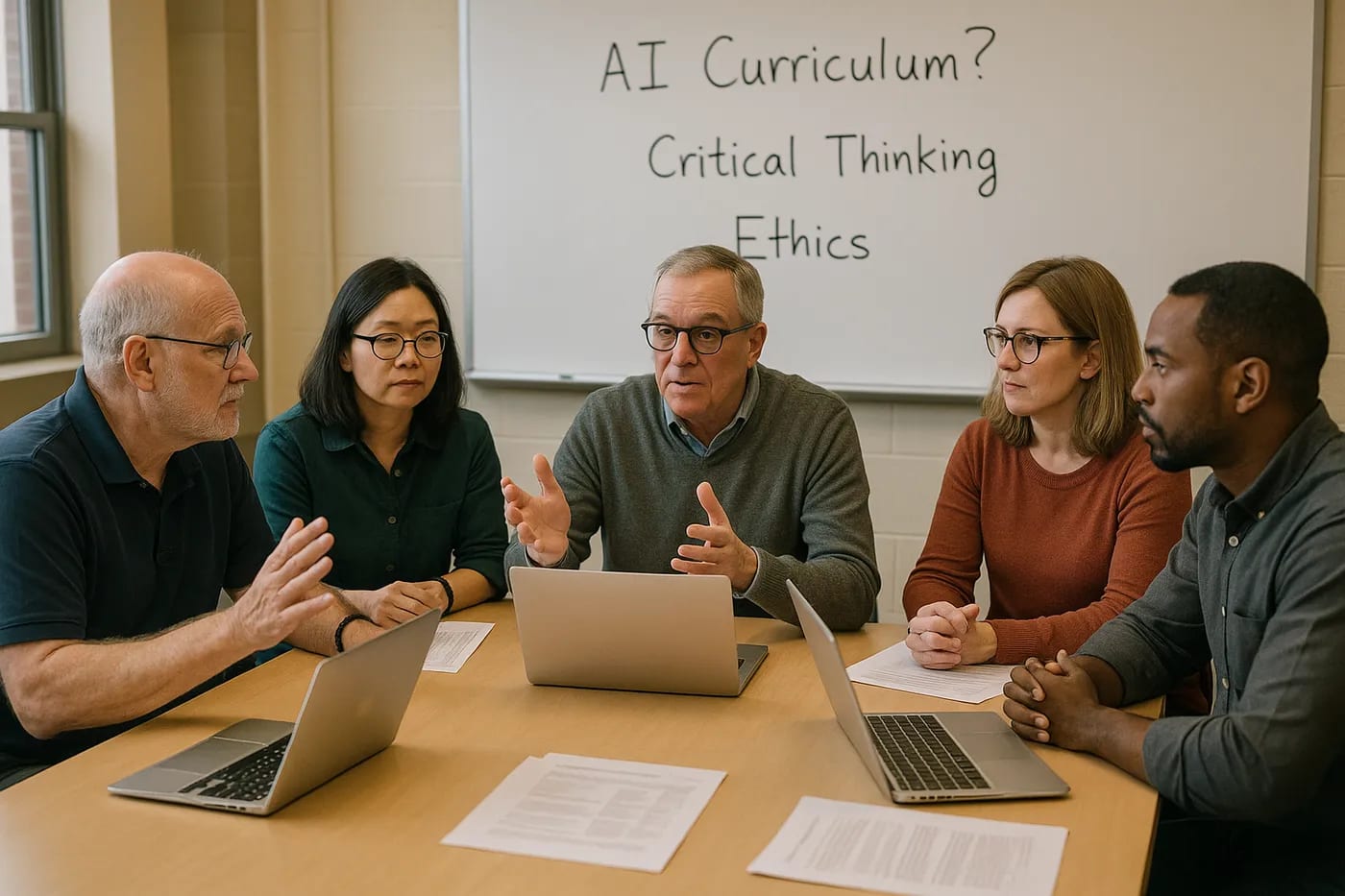
It’s not just UW. Across the country, other top-tier computer science programs are confronting the same reality. Carnegie Mellon University, for example, convened its faculty this summer to strategize on teaching in the age of generative AI (NYTimes). Stanford’s professors have openly discussed moving away from traditional programming projects to focus on “computational thinking and A.I. literacy” as core skills. The academic consensus? To stay relevant, a computer science education must evolve from coding bootcamp to something broader, - blending computer science with ethics, user experience, domain knowledge, and yes, a healthy dose of AI fluency. It’s almost a return to liberal arts, with computer science as the new humanities, - teaching students to think, analyze, and create with technology, not just churn out code.
Yet this transition comes with a fair bit of soul-searching. Professors are candid with students that nobody has all the answers in this fast-moving A.I. revolution. “This field is moving so fast, and one day you could be the one making these big changes,” one UW instructor admitted, acknowledging that today’s curriculum might look very different just a few years from now. That honesty resonates with students. It turns out that adapting, - staying curious and agile, is becoming one of the most critical skills taught.
From “Coder” to Problem Solver: The New Graduate Profile
This evolution in academia mirrors a shift in what the tech industry expects from new talent. Forward-looking companies are less interested in how quickly a candidate can crank out a bubble sort, and more interested in how they think and adapt. Kiana Ehsani, co-founder and CEO of Seattle AI startup Vercept, says that when hiring engineers, she’s looking for people who understand AI frameworks and can implement machine learning models, - not just folks who rely on AI coding tools blindly (GeekWire). In other words, knowing how to code isn’t enough. New hires need to know what to build with AI and why. The ability to collaborate with an AI, critique its output, and mold it into a valuable product is the new entry-level skill. And above all, Ehsani emphasizes one trait that no algorithm can replace: “The most important quality, above all else, is curiosity and a genuine drive to learn… That mindset often beats any specific technical skill”.
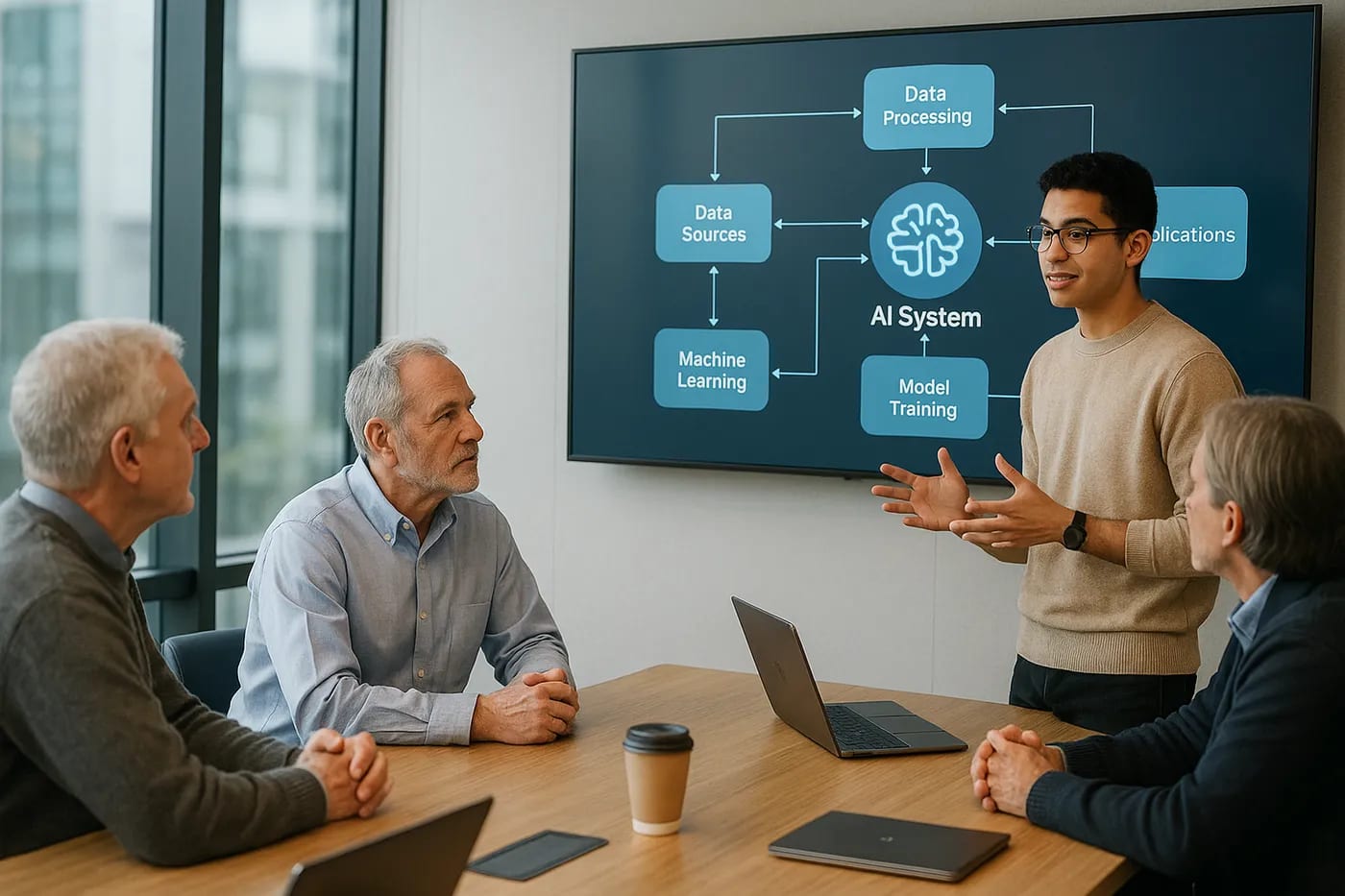
It’s a telling statement. Curiosity, adaptability, continuous learning, - these have always been desirable qualities, but now they’re non-negotiable. With AI filling in the easy blanks, human value in the workplace comes from asking the right questions and tackling the hard blanks. Even the definition of “entry-level” is being rewritten. Entry-level jobs aren’t disappearing; they’re just demanding more. “By definition, there is always some position that is the entry-level position,” Balazinska notes, but the goal is to ensure graduates have skills beyond what a basic junior programmer from a decade ago would bring. In practice, that might mean a new grad in 2025 is expected to manage a small project, use AI tools to handle routine code, and spend their energy on tricky integration or optimization problems. It’s a taller ask, but also a more interesting one.
For students like Harshitha Rebala, this new reality has a silver lining. Yes, she and her classmates graduated into a tougher job market, - “it is pretty hard out there right now,” she admits. Yet, armed with her experience in leveraging AI, she landed a role at an AI-driven startup where she’s not just coding in a silo. She’s automating workflows and solving problems that didn’t even exist a few years ago. Her story reflects a broader truth. The graduates who thrive will be the ones who treat AI as an on-the-job collaborator, not a competitor. As one talent expert put it, “AI won’t take your job if you’re the one who’s best at using it” (TechCrunch). The first rung on the career ladder may be higher, but it’s still a ladder, - and those who climb it will be equipped with new tools and a wider perspective.
Rethinking Talent and Teams in the Post-Coding Era
For technology executives and innovation leaders, the message is clear. As universities re-tool their programs, companies must re-tool their expectations. The “post-coding” generation is coming, and they’ll arrive with skills that could turbocharge your organization, - if you let them. These graduates won’t fit the old mold of entry-level code monkeys, and that’s a good thing. They’ve been trained to pair critical thinking with AI assistance, to focus on user needs, big-picture architecture, and creative problem-solving. They won’t be satisfied or fully utilized doing copy-paste programming 40 hours a week. So ask yourself: is your onboarding process, your junior role design, your mentoring approach ready to harness this potential? Or are you still writing job descriptions that a well-configured chatbot could fulfill?
This is also a moment to double-check that we’re not inadvertently breaking the talent pipeline. Yes, AI can handle a lot of the scut work, and it might be tempting to trim those entry-level positions entirely. But today’s new grads are tomorrow’s tech leaders. Eliminating the bottom rung of the ladder means risking a gap in your organization’s human capital development. Instead, consider redesigning early-career roles to be apprenticeships in problem-solving. Pair young professionals with experienced mentors on projects that leverage AI tools. Challenge them to find new uses for generative AI in your business. In return, they’ll bring fresh ideas from academia’s front lines and a native fluency in technologies that many mid-career folks are still grappling with. It’s a two-way street. The newbies learn domain context and real-world constraints from you, and you learn from them what the future of work with AI might look like in practice.
The university classroom and the corporate office are two sides of the same coin. Both are now testbeds for figuring out how humans can thrive alongside increasingly capable AI. The University of Washington’s AI-augmented classroom is one vivid example of adaptation in action. It won’t be the last. As these “post-coding” graduates walk into your boardrooms and Zoom calls, they’ll carry with them new ways of thinking about technology and collaboration. Welcome them. Challenge them. Learn from them. In an era when “coding is dead” as a solo endeavor, the companies that flourish will be those that elevate the human talents that AI can’t replace, - creativity, curiosity, ethical judgment, strategic vision, and weave those together with AI’s strengths. The classroom is changing rapidly to produce the talent of tomorrow. It’s time for the rest of us to make sure we have a workplace ready to let that talent shine.

Further Readings
-
Coding is dead: UW computer science program rethinks curriculum for the AI era – Lisa Stiffler, July 2025. A deep dive into how the University of Washington’s Allen School is adapting its curriculum in response to generative AI, featuring insights from director Magdalena Balazinska and recent grads on integrating AI into learning and the job hunt.
-
How Do You Teach Computer Science in the A.I. Era? – Steve Lohr, June 2025. This New York Times piece explores how universities across the U.S., from Carnegie Mellon to state colleges, are overhauling computer science education amid the AI revolution. It highlights emerging strategies, from emphasizing AI literacy and ethics to the challenges of keeping curricula current.
-
The Computer-Science Bubble Is Bursting – Rose Horowitch, June 2025. A compelling analysis in The Atlantic of why computer science graduates are facing a tougher job market. It examines how AI automation, tech layoffs, and changing employer demands have led to a slowdown in CS enrollment and what that means for the future of tech talent.
Disclaimer: The perspectives shared in this article are my own and do not represent those of my employer or any affiliated organizations. All company names, product names, logos, and brands mentioned are the property of their respective owners and are used for identification and illustrative purposes only. No endorsement, sponsorship, or affiliation is intended or implied. References to specific companies or case studies are based on publicly available information and are used solely for educational and discussion purposes.
More from the human factor
All the human factor → the human factor
DYADIC AI: The Next Big Leap in Human-AI Interfaces
Picture yourself in a high-stakes virtual meeting. A colleague’s avatar across the table leans in as you speak, nodding at your key points and even chuckling at your dry jokes. The interaction feels fluid and human, - and only at meeting’s…
 the human factor
Anthropomorphic Seduction: The Siren Song of Human-Like AI
The new AI assistant cracks a joke during your team’s demo, and even the skeptical CFO chuckles. For a moment, the line between tool and teammate blurs. The avatar on the screen speaks with warmth, remembers everyone’s name, and even…
 the human factor
Human Behavior Isn’t Random. This AI Proves It - and Predicts Yours!
Imagine walking into a high-stakes meeting with an advisor who knows exactly how everyone will react before a single word is spoken. It’s not a psychic, it’s an AI. We’ve long lived with the comforting notion that human decision-making is…