The Future of History: AI Co-Authors the Past
Listen · the Bit & Being podcast
A young researcher squints at a marble fragment, its Latin inscription scarred by time. Half the words are missing, and centuries of meaning hang in the balance. In that silent, dusty museum archive, the tension is palpable, - will these lost voices of history ever speak again?
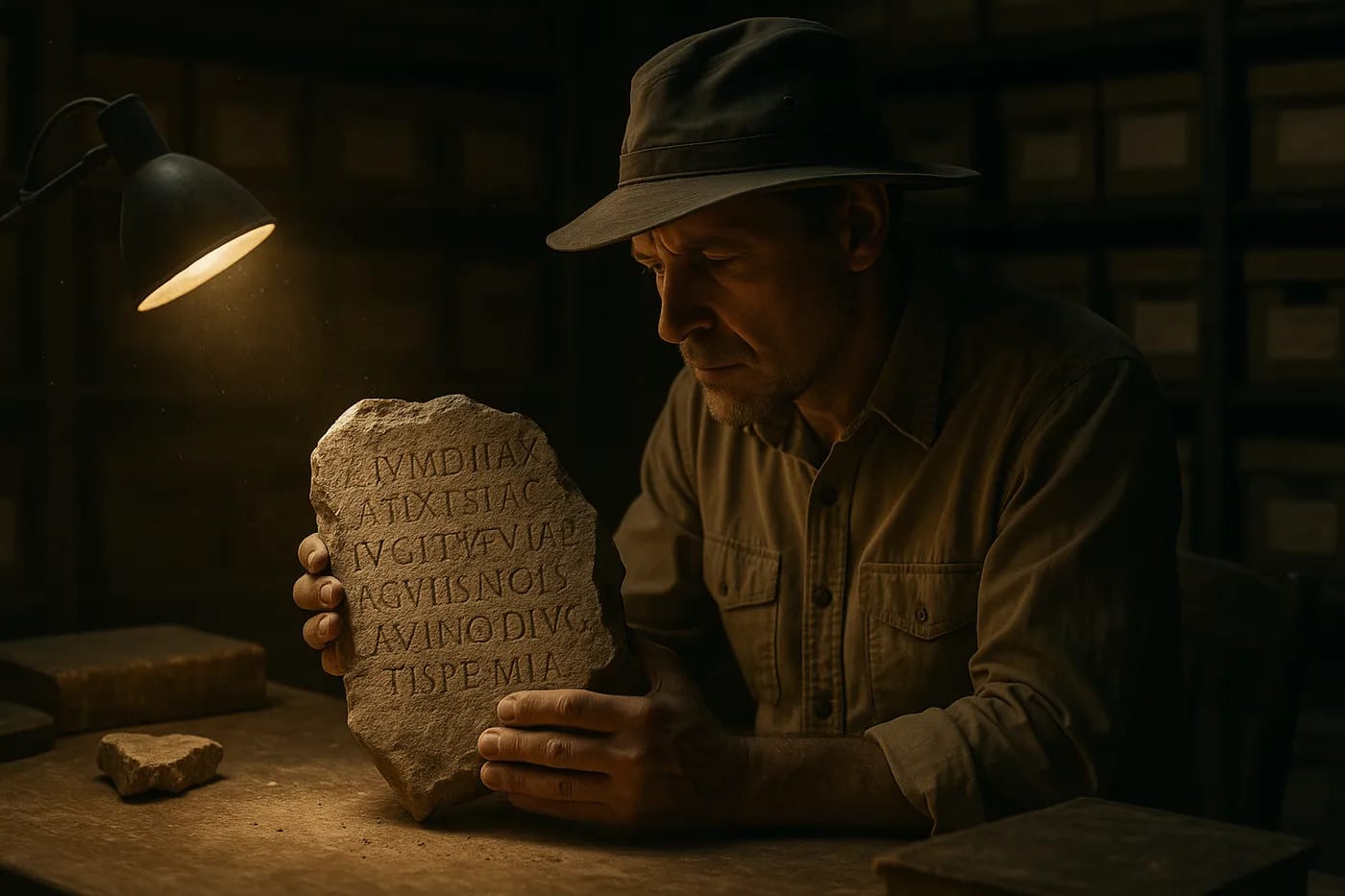
For generations, archaeologists and historians have played detective with such artifacts, piecing together brittle scrolls and weathered stones by hand. The stakes are high: every incomplete inscription could hold a political decree, a personal letter, or a poem that changes what we know about the ancient world. Yet the process of restoration has long been an arduous mix of scholarship and sheer guesswork. In a field often more familiar with trowels and tombs than algorithms, a new kind of hero is emerging to help solve these ancient puzzles.
A Fragmented Past and the Limits of Tradition
In the Roman Empire’s heyday, written words were everywhere, - carved into monuments, painted on walls, scratched on potsherds. Inscriptions were the tweets and street signs of antiquity, capturing everything from emperors’ decrees to a tavern’s chalkboard menu. Today, these inscriptions are treasure troves for historians, but most come to us in fragments, - eroded, incomplete, or torn from their original context. The traditional method to make sense of a half-legible Latin text might sound like academic bloodhound work: scouring archives for “parallels”, - other inscriptions with similar phrases or formulas, and digging through personal mental catalogs of ancient grammar quirks. It’s painstaking and slow. Only a scholar with decades of experience (and a monumental memory or a very large library) could hope to recognize that an incomplete phrase on a tablet from Gaul echoes one on a tombstone in Sicily. And with about 1,500 new inscriptions unearthed every year, even the most dedicated expert is outpaced by the avalanche of ancient texts (Nature). The result? Countless voices from the past remain locked behind gaps, - literally missing pieces of history that traditional tools struggle to restore.
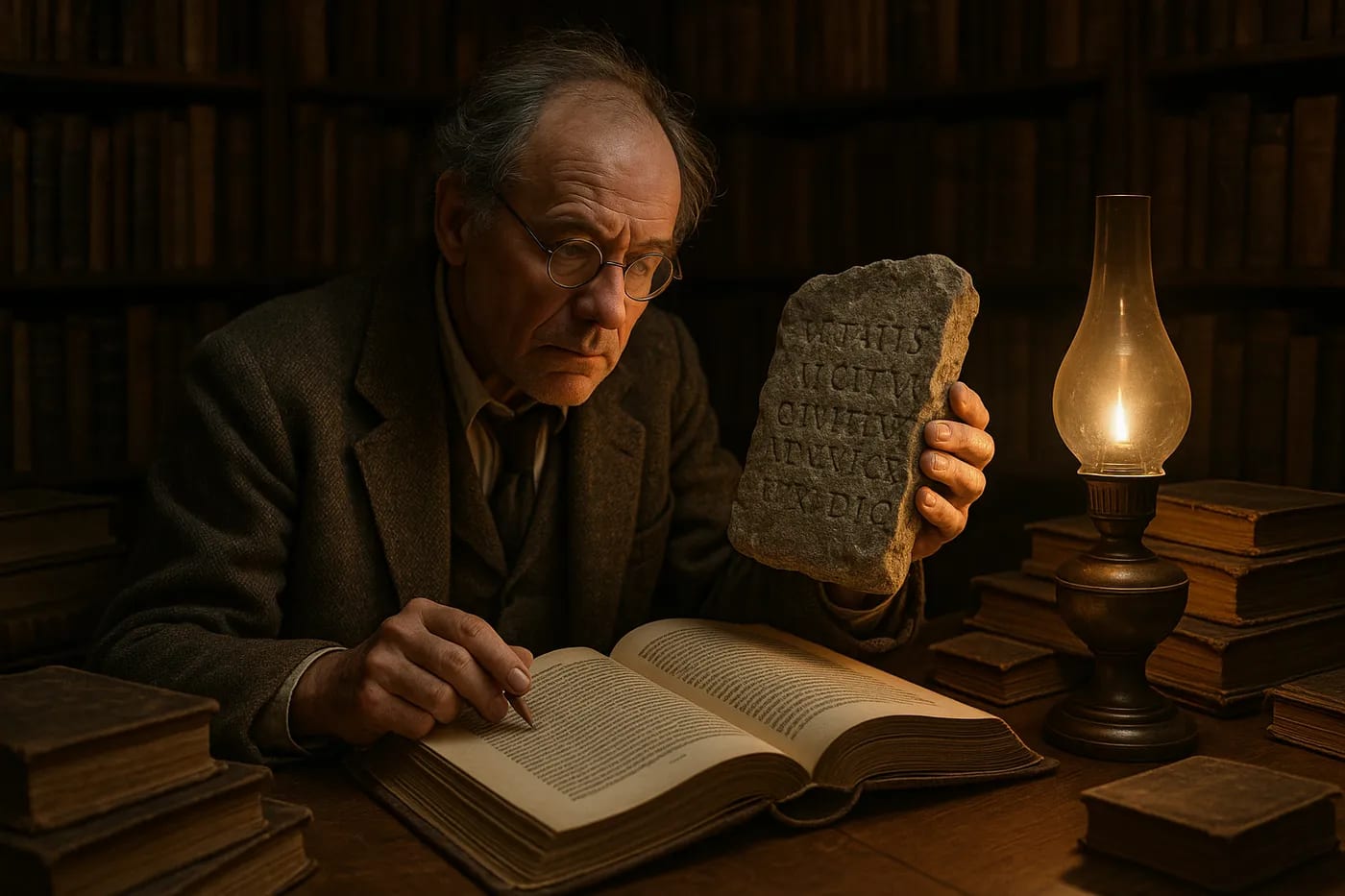
For example, consider the famous Res Gestae Divi Augusti, - the autobiographical inscription of Emperor Augustus. Weathered by two millennia, even this landmark text has gaps that fuel debate. Historians have argued for decades whether it was composed just before 1 B.C.E. or a few years into the first century C.E., parsing every surviving word like forensic evidence. Typically, resolving such debates meant years of scholarly back-and-forth and a fair bit of educated guesswork. This is the world before our story’s turning point, - a world where ancient inscriptions yield their secrets only grudgingly, and often only to a select few experts. The tension has been building, - libraries of untranslated tablets, archives of half-read scrolls, and historians straining their eyes and imaginations to bridge the gaps. Something has to give, and it’s here that a new ally steps into the fray.
Enter Aeneas: An AI Hero on a Mythic Mission
Meet Aeneas, the AI named after a Trojan hero who wandered the ancient world, - an apt metaphor for a system designed to roam through vast troves of historical text. Developed by Google DeepMind in partnership with historians, Aeneas is a generative AI model that has been trained on an unprecedented digital corpus of Latin inscriptions. Think of it as an artificial epigrapher with a supercharged memory. It has ingested over 176,000 Latin texts from across the Roman world, some 16 million characters of etched history spanning centuries and continents (The Guardian). That would be like a human reading every Latin inscription ever found, - before breakfast. Armed with this knowledge, Aeneas can do in seconds what might take an expert weeks or more, - find connections between a new fragment and texts scattered across the ancient empire.
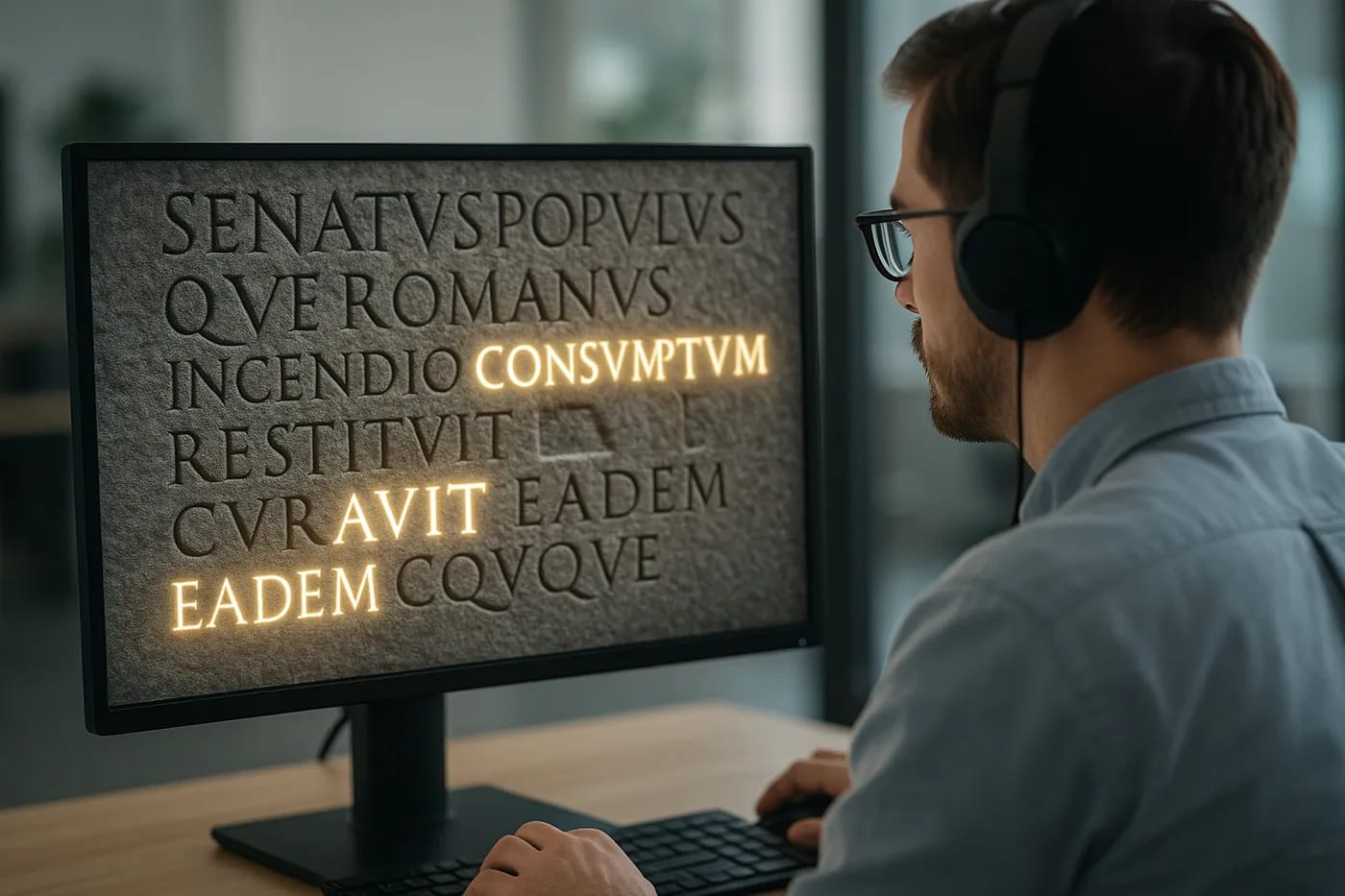
Crucially, Aeneas isn’t just doing a simple keyword search. It reads context. It looks at an incomplete inscription and weighs not only the known letters, but also subtle patterns of language, formulaic expressions, even clues in the shape or layout of the text. If needed, it can take an image of the inscription into account, - literally “seeing” the stone or bronze carving to help determine where it’s from. This multimodal ability to combine visual and textual cues is a first of its kind in archaeology AI (Google DeepMind). In practice, when a historian feeds Aeneas a damaged Latin text, the system generates a list of likely “parallels”, - other inscriptions with resemblance in wording or style, that might shed light on the mystery piece. It then uses those parallels to make educated guesses about what missing bits could be. Essentially, Aeneas is performing the historian’s contextual reasoning at machine speed, combing through an entire empire’s worth of writings to suggest: “Have you seen these five other stones? They might help fill the blanks.” As Dr. Thea Sommerschield, a historian co-leading the project, put it, the grand challenge was to teach AI to “interpret, attribute and restore fragmentary Latin texts”, - something Aeneas now tackles head-on.
The arrival of Aeneas marks an inflection point. One moment, we had scholars laboring in isolation with dog-eared catalogs. The next, we have a collaborative AI assistant that never tires of comparing inscriptions from Britannia to Syria. It’s as if every museum storeroom and archaeological dig got connected into one giant brain eager to cross-reference everything. And just like the hero of Virgil’s epic, our modern Aeneas is on a mission, - not to found Rome, but to rebuild the knowledge of Rome and beyond, one lost word at a time.
New Eyes on Old Inscriptions
What difference does this AI assistant really make? The proof comes through in the stories emerging from early tests. In one trial, historians turned Aeneas loose on the Res Gestae of Augustus, - that very inscription whose date had scholars scratching heads. Instead of pronouncing a single verdict, Aeneas returned a spread of possibilities: two clear peaks in time, one in the first decade B.C.E. and another in the 10–20 C.E. range. In essence, the AI concluded, “It might be either of these, - both are plausible.” Remarkably, those are exactly the dueling hypotheses human experts have debated for years. Seeing a machine echo the same two options, - and back them up with data from linguistic patterns, gave historians a new kind of confidence. The model wasn’t inventing a magic answer; it was crystallizing decades of scholarly intuition into a statistical insight (Smithsonian Magazine). As one of the project leads noted, “Those were jaw-dropping moments for us,” when Aeneas effectively reflected humanity’s debates right back at us.
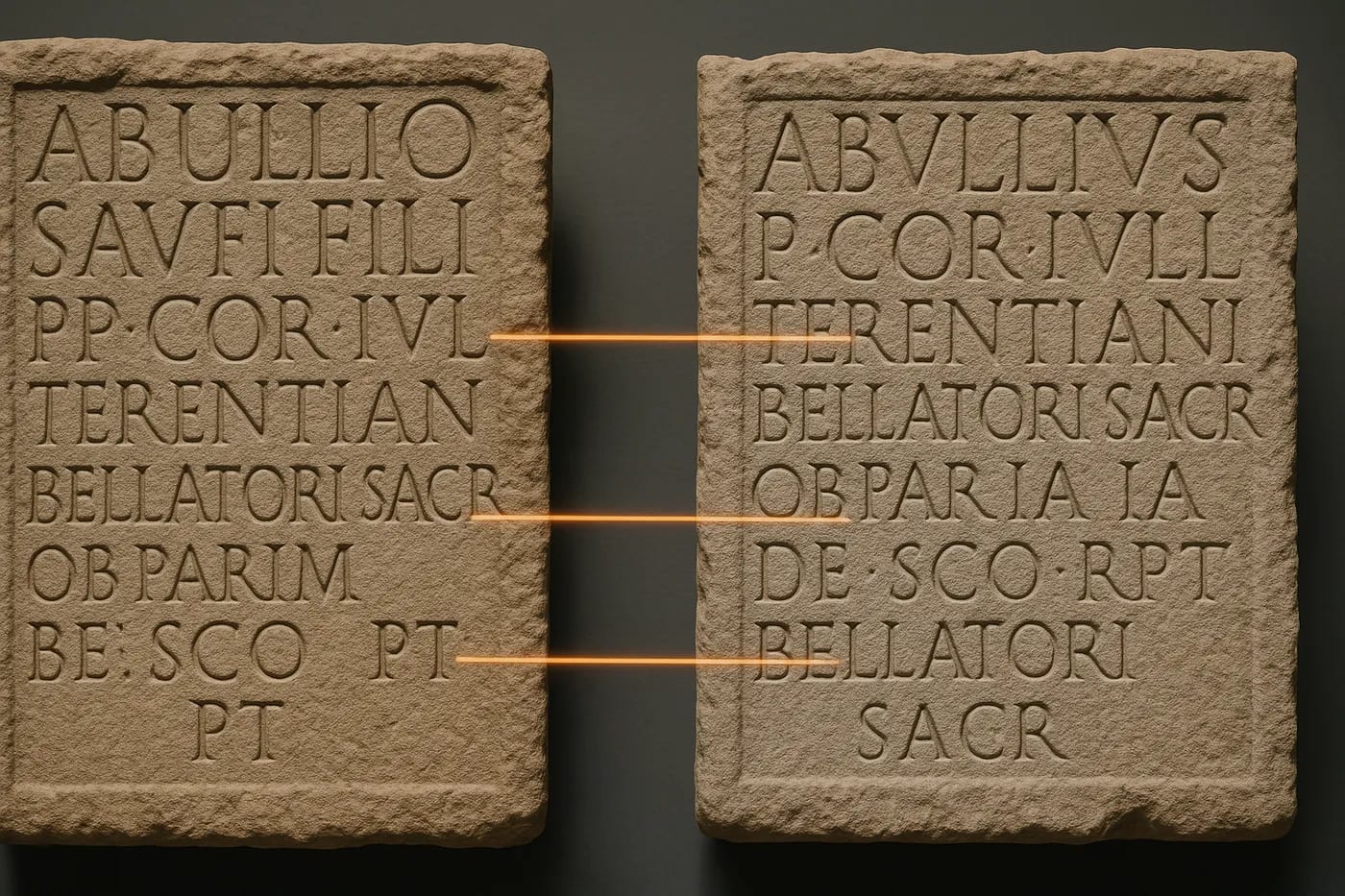
Another powerful example came from a humble source: a votive altar unearthed in what is now Mainz, Germany. The inscription on this altar seemed ordinary at first, - a dedication to a local deity, but Aeneas saw something more. By sifting through its vast memory bank, the AI picked up subtle linguistic similarities between the Mainz altar and another much older altar found in the same region. It turned out the phrasing on the newer altar was influenced by the older one, revealing a lineage of religious tradition that no single human reader had noted. This kind of connection, spanning generations of stone-cutters, was unearthed not by digging in the ground but by digging through data. “Those were the jaw-dropping moments,” Sommerschield said of realizing an AI had essentially traced ancient copy-and-paste across time.
Most exciting for historians is how Aeneas accelerates the grunt work of restoration. It can suggest missing text with a reported 73% accuracy for gaps up to 10 characters long and even when it has no clue how long the gap is, it still hits roughly 58% accuracy by context alone. These aren’t trivial fill-ins. We’re talking about educated reconstructions of phrases last read two thousand years ago. The AI also does a decent job at other tasks experts care about. It can pinpoint an inscription’s origin to one of 62 Roman provinces with about 72% accuracy, and date it to within about 13 years of the actual age. Sure, it’s not perfect, - and historians are quick to remind us that context and interpretation are key, but these metrics represent a giant leap over pure chance or blind guessing. In the painstaking work of classical epigraphy, having an AI sidekick to narrow possibilities is like switching from a candle to a floodlight.
When AI and Humanity Reconstruct History Together
Perhaps the most profound impact of Aeneas isn’t just in raw numbers, but in how it changes the historian’s workflow, - and mindset. This is where we hit it turning point. Not long ago, suggesting that machine learning could assist with Latin stone carvings might have earned you a few raised eyebrows in the faculty lounge. But after collaborating with Aeneas, many experts are using a different word: “transformative.” In a large collaborative study, 23 historians pitted their own skills against puzzles both with and without Aeneas’s help. The results spoke volumes. Working with the AI, historians were able to restore and attribute texts more effectively than either humans or the algorithm could do alone (Nature). In fact, Aeneas’s suggestions proved useful as a starting point in 90% of cases, and historians reported their confidence in tackling tough inscriptions jumped significantly, - nearly 44% higher, when they had the AI’s context to back them up. It turns out that the best deciphering happens when human intuition and machine precision team up rather than compete.
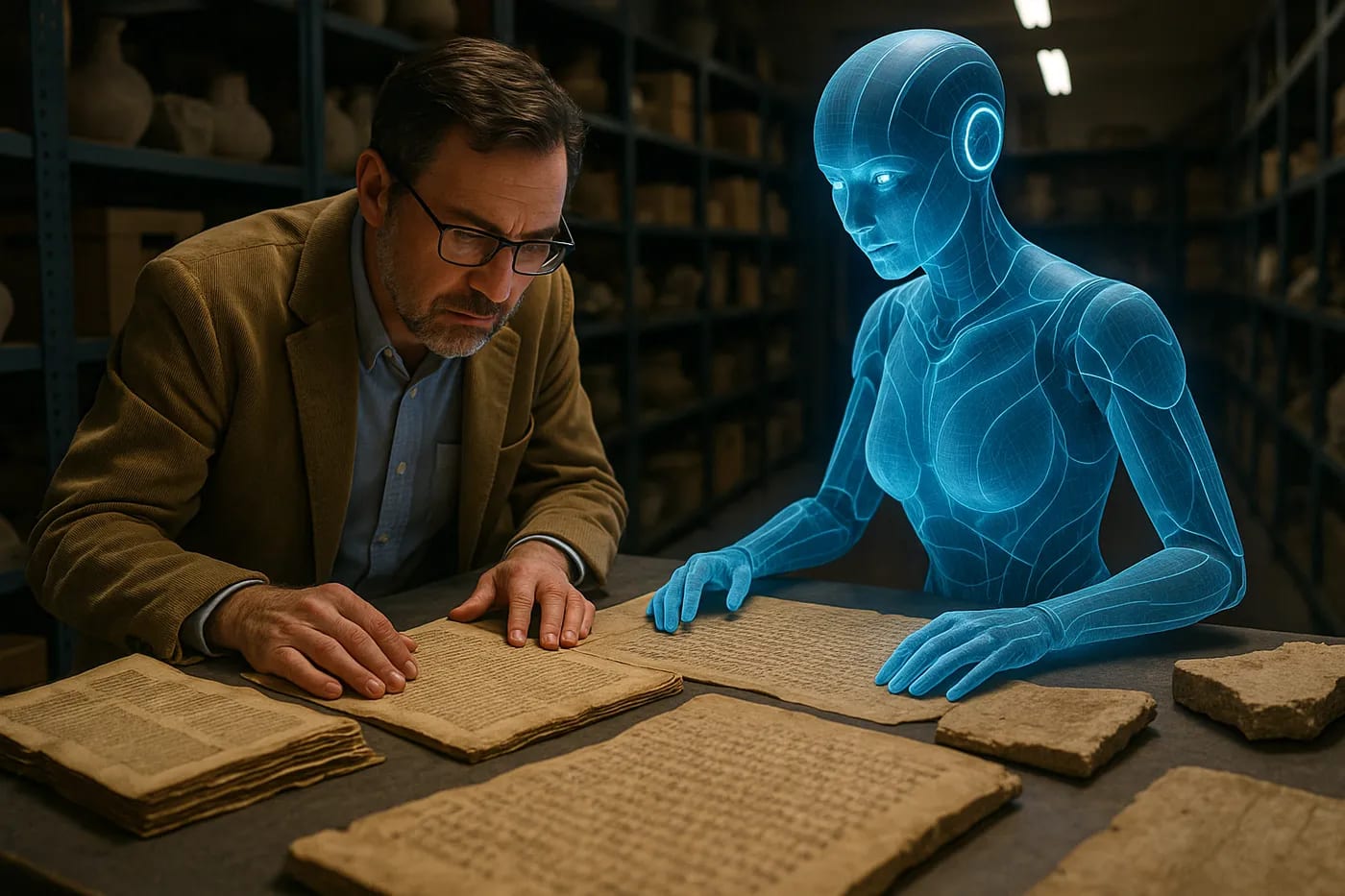
This symbiosis is changing the culture of how we approach ancient texts. Cambridge classicist Mary Beard, a luminary in the field, noted that breakthroughs used to rely on the “memory, subjective judgement and hunches” of lone scholars backed by old-school databases. Aeneas, she says, “opens up entirely new horizons” by making those deep reservoirs of knowledge accessible to anyone with a laptop. Think about that, - a graduate student in 2025 can consult an AI model to gain insights that previously might have required a lifetime of study or luck. In a field where the barrier to entry has been fluency in ancient languages and access to rare publications, Aeneas serves as an equalizer. Of course, seasoned historians caution that one shouldn’t accept AI outputs uncritically, - the tool is powerful, but not omniscient. As Oxford’s Professor Jonathan Prag put it, without a tool like this you’d need “enormous personal knowledge or an enormous library” to do the same, but even now “you do need to be able to use it critically”. In other words, the historian’s role shifts from sole detective to collaborator and editor-in-chief of AI-generated leads. The reward is not just speed, but breadth. More texts can be analyzed by more people, because a task that was once esoteric and manual has become more accessible and semi-automated.
Beyond Stones: A New Chapter for Digital Heritage
Aeneas’s success is part of a larger story, - one where AI is breathing new life into ancient history across many fronts. We’re now at a point where machine learning is not only racing toward the future, but also digging into the past, unearthing insights that have long eluded us. Consider those carbonized scrolls from Herculaneum, carbon copies (pun intended) of a library that Mt. Vesuvius turned to charcoal in 79 C.E. For two centuries, no one could read them without destroying them, - they were essentially chunks of fragile coal. But modern researchers are using AI-driven imaging and pattern recognition to identify ink patterns buried inside the rolled scrolls, effectively reading the unreadable. In 2023, one machine-learning competition even helped decipher a single word (“purple”) from a scroll that hadn’t been opened in two millennia, - a small breakthrough, but one that made global headlines. And it’s not just Roman texts: AI is being trained to decipher everything from Akkadian cuneiform tablets to illegible medieval manuscripts.
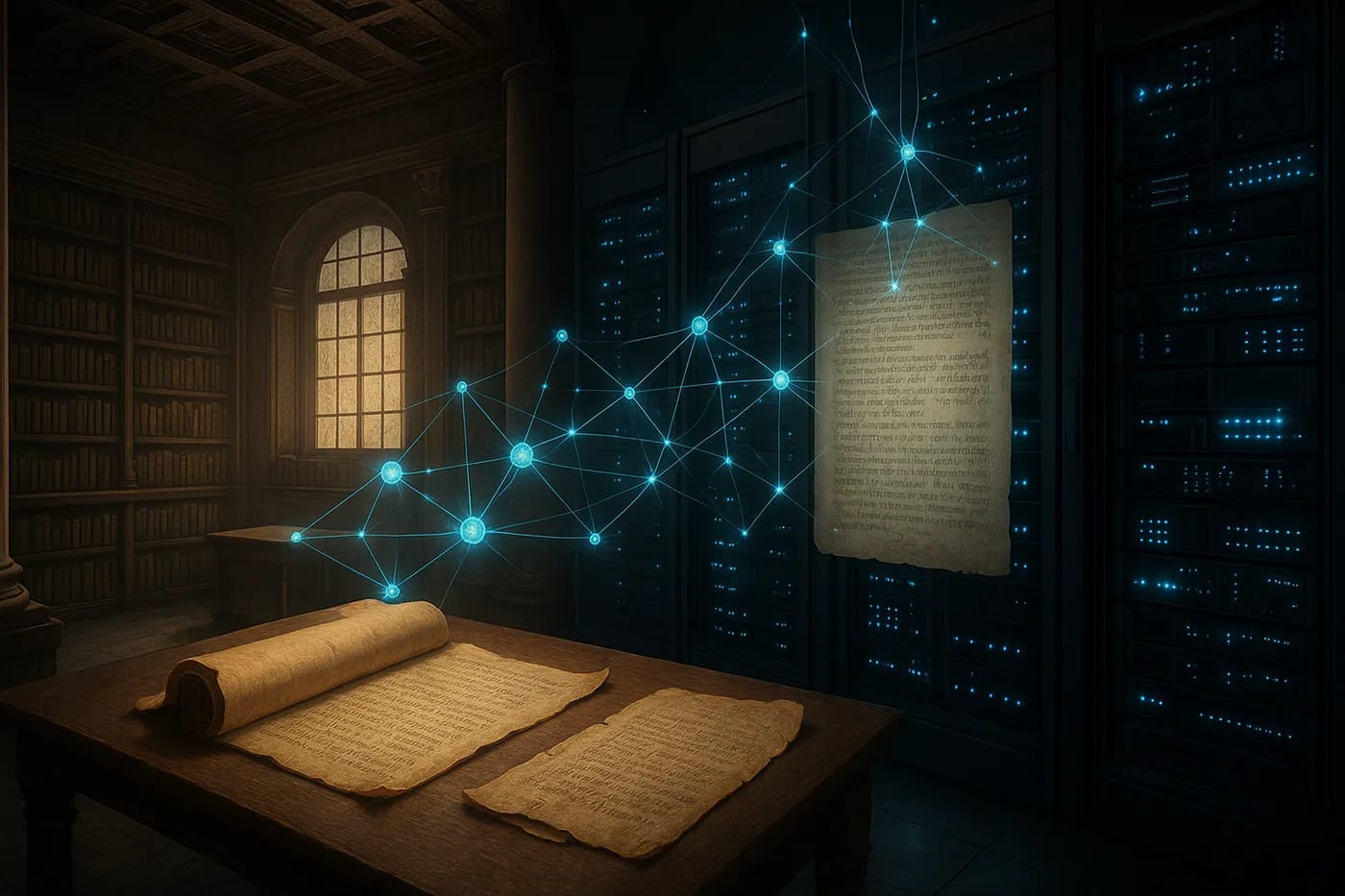
What makes Aeneas stand out in this wave is its emphasis on context and collaboration. It’s not a magic decoder ring. It’s more like a very diligent research assistant with an encyclopedic knowledge of ancient world texts. For fields like archaeology and digital humanities, this signals an inflection point. The traditional silo between tech and the humanities is crumbling, much like the ancient walls we excavate. Archaeologists in the field might soon carry AI tools as part of their standard kit, - imagine pointing your phone at a newly uncovered inscription and getting instant hints on its content and date. Museum curators and archivists are exploring how AI can help organize and restore their collections, turning static records into dynamic, interactive knowledge. And for educators and students, these tools open up the ancient world in a way that’s far more engaging, - it’s one thing to read about a Roman tablet in a textbook, it’s another to watch an AI virtually reconstruct its missing pieces before your eyes.
There’s a cultural implication here too. When we use AI to restore lost texts, we’re essentially giving a voice back to people who have been silent for ages. Many of the inscriptions Aeneas works with aren’t the grand proclamations of emperors, but they’re the epitaphs of ordinary citizens, the graffiti of a shopkeeper, the votive thanks of a soldier. By recovering these snippets, we enrich the tapestry of history with diverse, everyday perspectives. In a way, machine learning is democratizing not just access to knowledge, but the very content of history itself, - pulling it away from an emphasis on famous “great men” and towards the lives of common people who left their mark in stone. It’s a reminder that innovation isn’t only about building the future, but it can also be about rebuilding the past, more accurately and inclusively.
From Past to Future: A New Legacy of Innovation
The story of Aeneas carries a dry wit that any innovation leader can appreciate. Sometimes the greatest disruption in tech involves a journey not forward, but backward in time. Who would have predicted that a cutting-edge AI breakthrough in 2025 would be all about Latin homework from two thousand years ago? Yet here we are and the success of Aeneas is sparking insights well beyond the ivory tower of classics departments. For technology executives, there’s a resonant lesson in this story. It shows how powerful it can be to unite domain experts (in this case, historians and archaeologists) with AI specialists around a shared problem. The result wasn’t just a nifty piece of software. It was a reimagining of how an entire field approaches its work. This is the sort of cross-disciplinary magic that today’s complex challenges demand. Whether it’s in business, science, or public policy, the inflection point often comes when people step out of their silos and combine their expertise with AI’s capabilities.
From tackling fragmentary texts to transforming historical research this underscores a broader point about human-AI collaboration. Rather than displacing historians, Aeneas augments them. It frees up experts to do what they do best, - interpretation, big-picture analysis, by handling the heavy lifting of pattern-finding and data crunching. In the boardroom as in the archive, that’s a pattern worth emulating. Use AI to amplify human strengths, not replace them. As we navigate our own era’s information overload and knowledge gaps, it might just be an ancient inscription restorer that provides the muse. The past, after all, has always been prologue, - but with tools like Aeneas, the past is becoming a little more accessible, one lost word at a time. And if a machine can help resurrect the voices of history’s long-silenced multitudes, one can only imagine what other puzzles, ancient or modern, lie within reach when we blend human curiosity with machine intelligence.

Further Readings
-
Aeneas transforms how historians connect the past – Google DeepMind blog (Google DeepMind – July 2025) Google DeepMind’s official blog post introducing Aeneas, detailing its development, capabilities (like multimodal input and unknown-length text gap restoration), and the collaborative effort with historians to contextualize ancient texts.
-
Contextualizing ancient texts with generative neural networks – Nature (DeepMind, July 2025) Yannis Assael, Thea Sommerschield et al.’s research paper in Nature that formally presents Aeneas. Describes the model’s architecture and training on Latin inscriptions, and reports its performance in restoring text and dating inscriptions. Notably, it includes results from a study showing historians achieve better accuracy when using Aeneas as an assistive tool.
-
Google Just Released an A.I. Tool That Helps Historians Fill in Missing Words in Ancient Roman Inscriptions (Ella Feldman – July 2025) Smithsonian Magazine coverage of Aeneas, explaining in accessible terms how the AI works and why it’s important. Includes quotes from the project’s historians and commentary from experts like Mary Beard on how Aeneas opens “new horizons” in studying everyday Roman life.
-
Google DeepMind’s new AI can help historians understand ancient Latin inscriptions – MIT Technology Review (MIT Technology Review – July 2025) Overview of the Aeneas system focused on its technical approach. Offers a concrete example of how the AI suggests missing text (reconstructing the phrase “Senatus Populusque Romanus” from a partial fragment) and emphasizes the model’s training on nearly 150,000 inscriptions to provide context-aware restorations and provenance predictions.
-
AI for the ancient world: how a new machine learning system can help make sense of Latin inscriptions (Trevor Evans – July 2025) The Conversation article by a historian that situates Aeneas in the broader context of archaeology and digital humanities. Discusses how this AI was co-developed by computer scientists and classicists, what it means for interpreting Latin texts, and the balance between embracing new technology and maintaining scholarly caution in historical research.
Disclaimer: The perspectives shared in this article are my own and do not represent those of my employer or any affiliated organizations. All company names, product names, logos, and brands mentioned are the property of their respective owners and are used for identification and illustrative purposes only. No endorsement, sponsorship, or affiliation is intended or implied. References to specific companies or case studies are based on publicly available information and are used solely for educational and discussion purposes.
More from the human factor
All the human factor → the human factor
The Charm Offensive: When Human-Faced AI Hijacks Our Instincts
Late one night, a marketing manager finds herself laughing at her AI assistant’s latest witty reply. On her screen, a friendly avatar nods with empathetic eyes and a soothing, honeyed voice. Her usual skepticism about “just an algorithm”…
 the human factor
AI Is Everywhere. Courageous Intuition Is Not.
In January 2009, an Airbus 320 lost both engines shortly after takeoff from New York. Captain Chesley “Sully” Sullenberger had seconds to react. Air traffic control and cockpit protocols urged him to turn back to LaGuardia, but his gut…
 the human factor
CLICKBAIT: Semantic Confabulations at the AI-HUMAN INTERSECTION
Let’s get something out of the way. This headline is clickbait. But it’s also the thesis. Because “clickbait” isn’t just a cheap marketing ploy anymore, - it’s a symptom of something deeper. When AI generates language, it doesn’t know…