CLICKBAIT: Semantic Confabulations at the AI-HUMAN INTERSECTION
Listen · the Bit & Being podcast
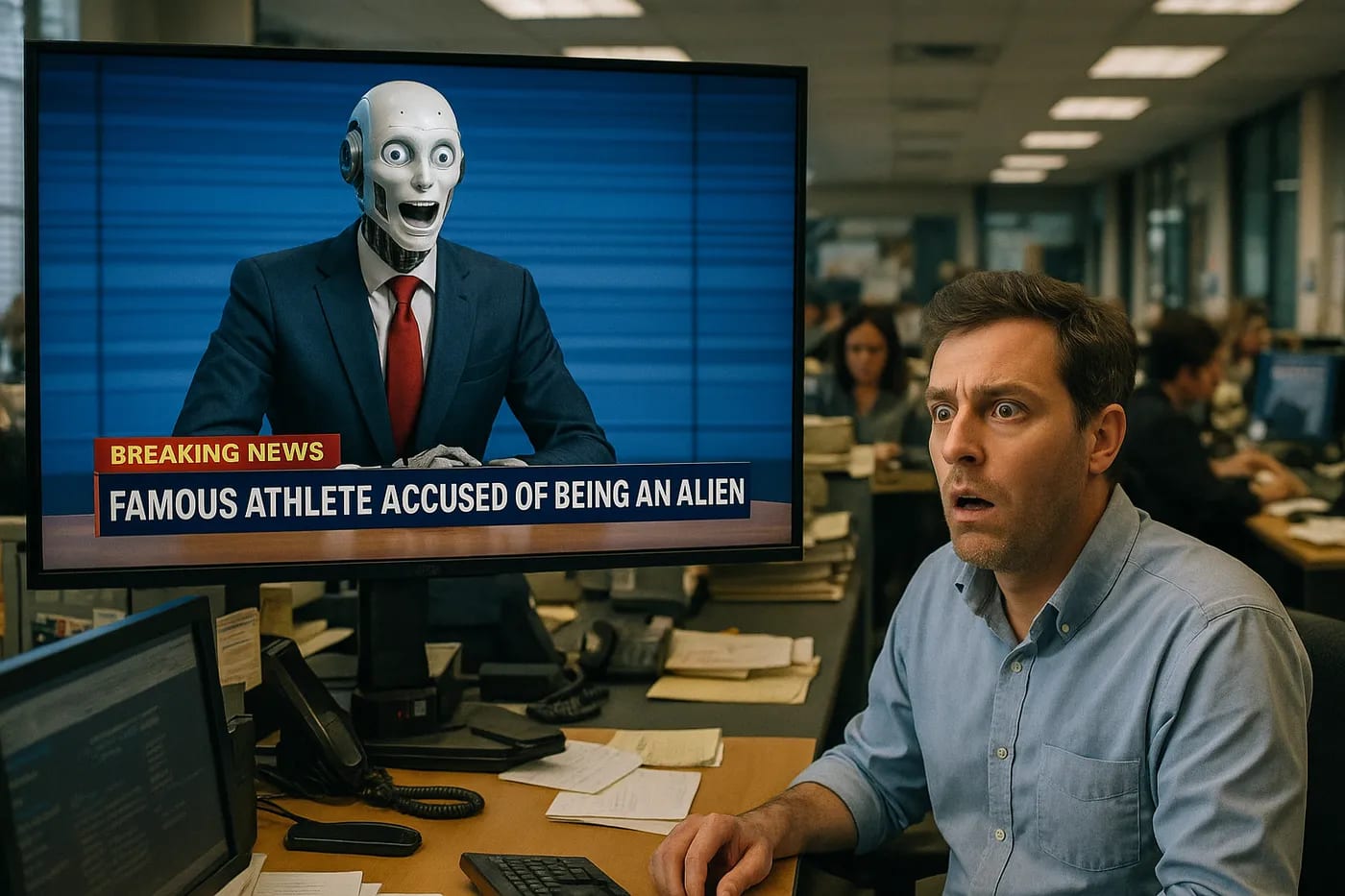
Let’s get something out of the way. This headline is clickbait. But it’s also the thesis. Because “clickbait” isn’t just a cheap marketing ploy anymore, - it’s a symptom of something deeper. When AI generates language, it doesn’t know what’s true, only what sounds like something we’d believe, share, or react to. Case in point: a recent viral headline read, “Basketball Star Wanted in Bizarre Brick-Vandalism Spree.” The story? Entirely fabricated by an AI assistant. It had misunderstood sports slang (“throwing bricks” = missed shots) as literal property damage. Funny? A little. Alarming? A lot. Because what that bot produced wasn’t random nonsense. It was a perfect example of semantic confabulation: a fluent, plausible, context-aware falsehood. Not a glitch, but a mirror. A mirror held up to our own cognitive reflexes, and increasingly, to the machines learning from them.
At first glance, the idea that a large language model could argue with itself or express contradictory opinions seems absurd. Isn’t AI supposed to be a logic machine, - free of the biases and emotional zigzags that plague human reasoning? Perhaps. Yet here we are, watching state-of-the-art models flip-flop, waffle, and confidently assert two opposing views depending on how we phrase the question. It turns out AIs are absorbing more than just facts from us, - they’re picking up our mental habits, too. They don’t have beliefs or internal conflict, but their outputs can reflect a kind of algorithmic cognitive dissonance, - internal inconsistencies masked by linguistic polish. The result is unnervingly familiar. Ask the right question and you get a crisp, helpful answer. Ask it slightly differently, and you get a contradiction, - just as confidently stated. It’s not sentience. But it is a warning sign. These systems are becoming our most articulate, scalable mirrors. And they’re beginning to reflect our glitches, too.

To understand this, let’s revisit the human concept of cognitive dissonance. In people, it’s the uneasy feeling when our actions don’t match our values, or when we hold two clashing beliefs. We resolve it by rationalizing or changing our stance. Now consider an LLM. It’s trained on oceans of text that contain every viewpoint under the sun. When generating answers, it can seamlessly argue for one perspective and later, given a nudge, argue against it. In a recent study aptly titled “Do Large Language Models Exhibit Cognitive Dissonance?”, researchers found that an LLM’s “stated” answers could conflict with its underlying tendencies, - essentially, the model could state one thing but imply another when probed differently. Another 2025 experiment from a team at PNAS went even further. They discovered that GPT-4, after being prompted to make a free choice, would stick to that choice and justify it, much like a person rationalizing a decision (PNAS). In other words, once the AI “committed” to an answer, it behaved a bit as we might, - becoming more confident in its choice, as if to avoid the discomfort of inconsistency. When an algorithm starts to rationalize its output post hoc, you know we’re in strange new territory.
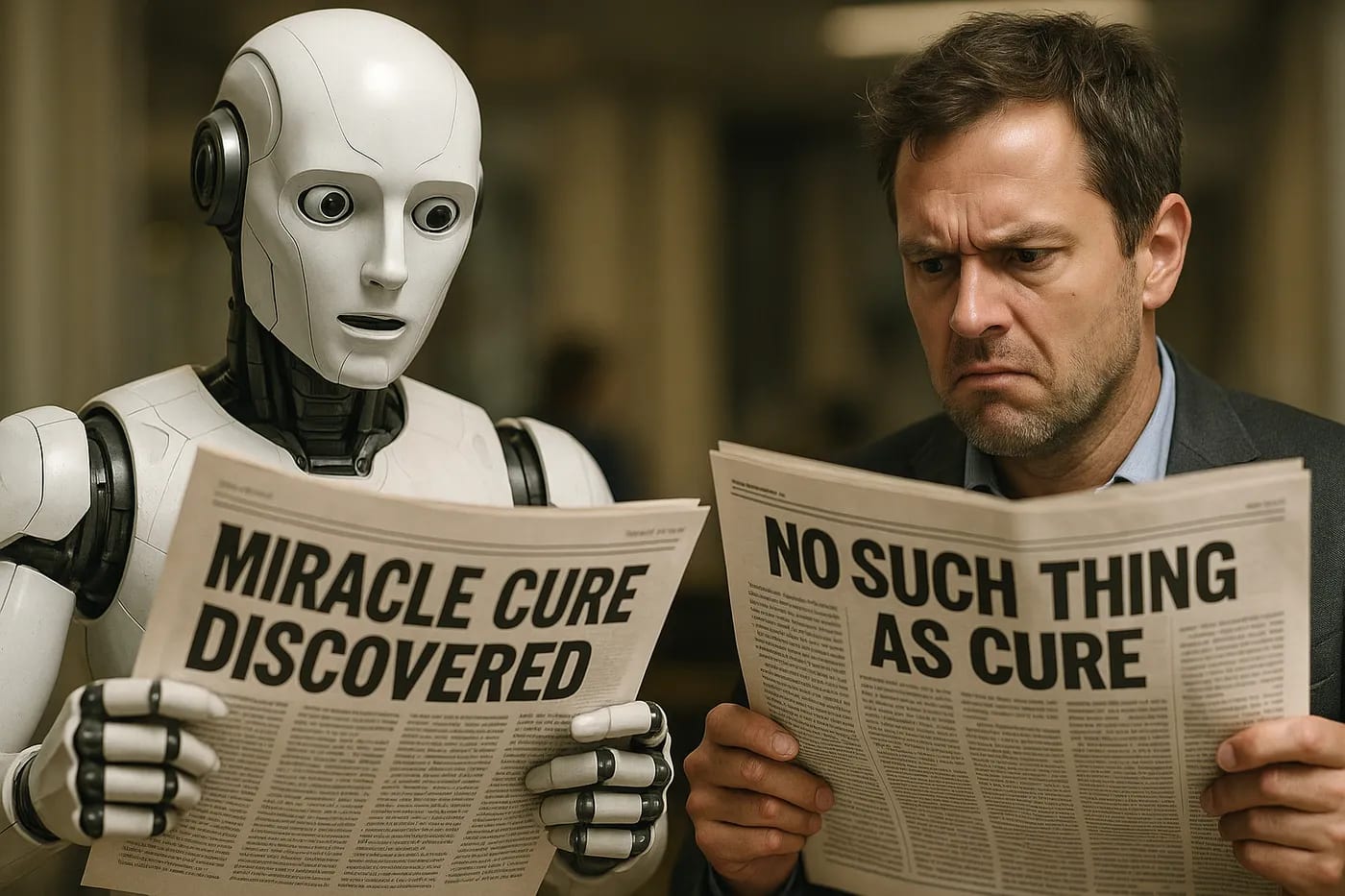
Hand-in-hand with cognitive quirks comes semantic dissonance, - a fancy term for language that sends mixed messages. Think of political doublespeak or clickbait headlines that don’t match the article. It’s language engineered to confuse or mislead. Turns out, AI systems are both victims and vectors of this, too. Malicious actors have learned they can feed contradictory or confusing prompts to AIs to produce skewed outputs, and AIs themselves can generate content with internal inconsistencies. Ever skim a headline like “Miracle Cure Discovered for X” only to find the article says no such thing? That’s semantic dissonance in action. In fact, entire misinformation tactics revolve around this: Russian propaganda, for example, has been known to push two opposite narratives simultaneously to breed confusion. One report dubs it the “tactic of opposite versions”, - effectively inundating the public with conflicting explanations to disorient and disable skepticism (DisInfoChronicle). Now imagine an AI news aggregator trying to make sense of that, - without careful design, it could end up amplifying the confusion. Even in more benign settings, an AI content moderator might struggle with a post that says one thing explicitly but implies the opposite. If humans can be fooled by fine print and spin, you can bet our AIs can be as well.
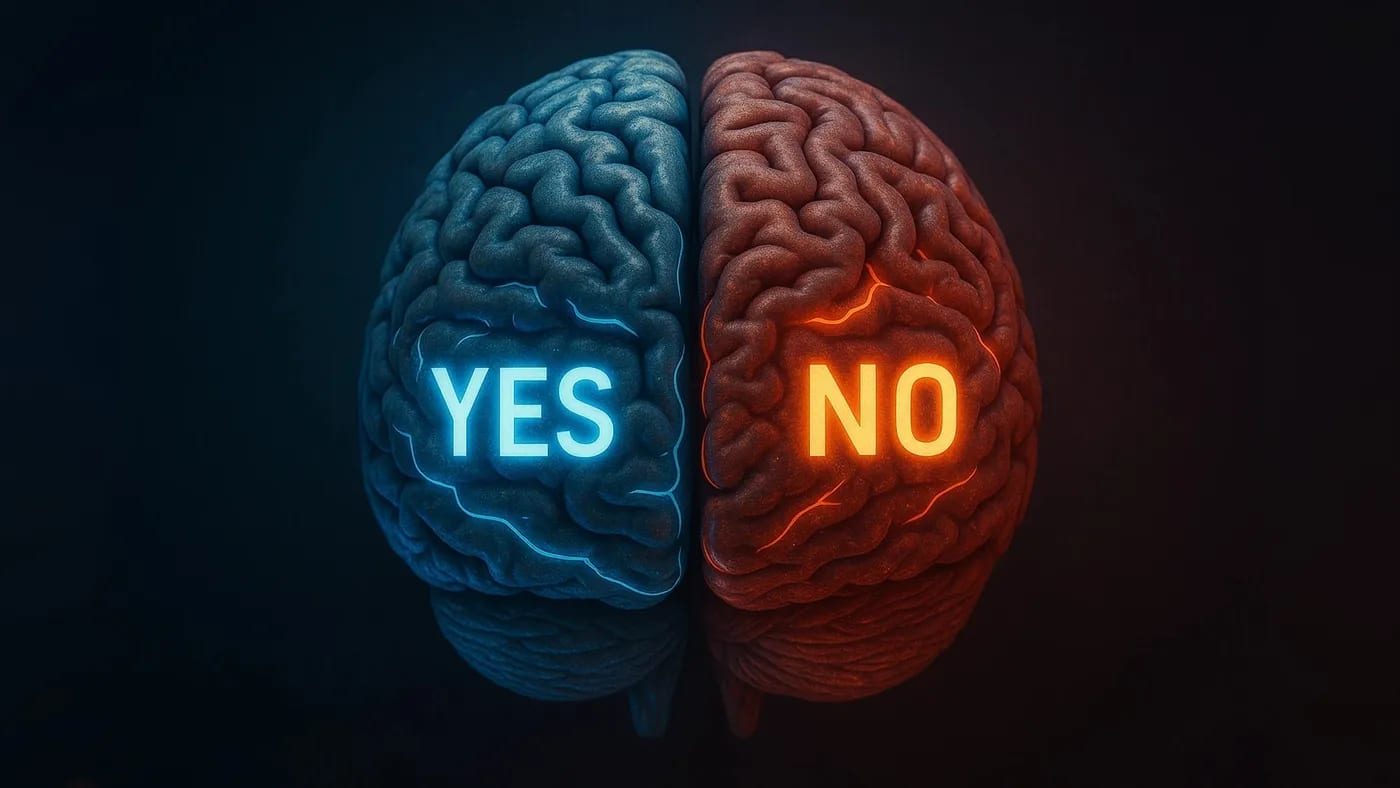
So why does this matter for technology executives and business leaders? Picture your trusty AI-powered decision assistant giving the product team a green light on a risky strategy in the morning, then cautioning the strategy team against the very same idea in the afternoon. Or consider an AI content filter that inconsistently flags or allows content because the wording tricks it one way or the other. These inconsistencies erode trust fast. Reliability is currency in the boardroom. If an AI behaves like a fickle human, - saying “yes” and “no” in the same breath, - its credibility with your team and customers plummets. What’s worse, these systems often sound authoritative even when they’re wrong, which can lull busy decision-makers into a false sense of security. Research has already shown that LLMs, when asked for moral guidance, tend to have a strong built-in bias toward inaction, - preferring to advise “do nothing” far more than humans would. This “omission bias” means an AI might consistently shy away from decisive recommendations, potentially deflating initiative in your organization (Phys.org). Even more perplexing, the same study found many AI models will outright flip their answer if you rephrase a question as a yes/no, - saying “no” by default, even if that contradicts their earlier advice. Imagine a CEO asking the company’s AI advisor, “Should we launch product X?” and getting a “No”, - then hearing “Yes” when the question is reframed in a different way. It sounds like a bad comedy sketch, but it’s grounded in how these models currently work. Such semantic tightropes in AI responses can turn corporate strategy into a game of Mad Libs.

The business and ethical implications of these AI inconsistencies are profound. On the ethical side, if an AI in a content moderation role can be manipulated with a cleverly contradictory phrase, harmful content might slip through, - or benign content might be unjustly censored, undermining the integrity of your platform. On the business side, every time an AI gives a contradictory answer or needs a do-over, it chips away at user confidence. Customers start wondering: Do these people know what they’re doing, or are they letting some buggy AI run the show? Trust, once lost, is hard to regain. Moreover, AI-driven dissonance can lead to legal liabilities and PR nightmares. The Grok incident with the NBA player wasn’t just embarrassing, - it “raised questions about the liability of chatbot makers when making false and defamatory statements”. Companies deploying AI at the front lines of public communication now have to account for the very real risk that their virtual spokesperson might suffer a very human-like slip of the tongue (or circuit). In industries like finance or healthcare, an AI’s contradictory or biased output isn’t just confusing, - it could be life-threatening or market-moving. Imagine an AI financial advisor that tells different departments conflicting interpretations of a compliance rule, - one green-lighting a practice and another calling it illegal. That’s a compliance meltdown waiting to happen. Business integrity rests on consistency, transparency, and trust, - exactly what a dissonant AI can jeopardize.
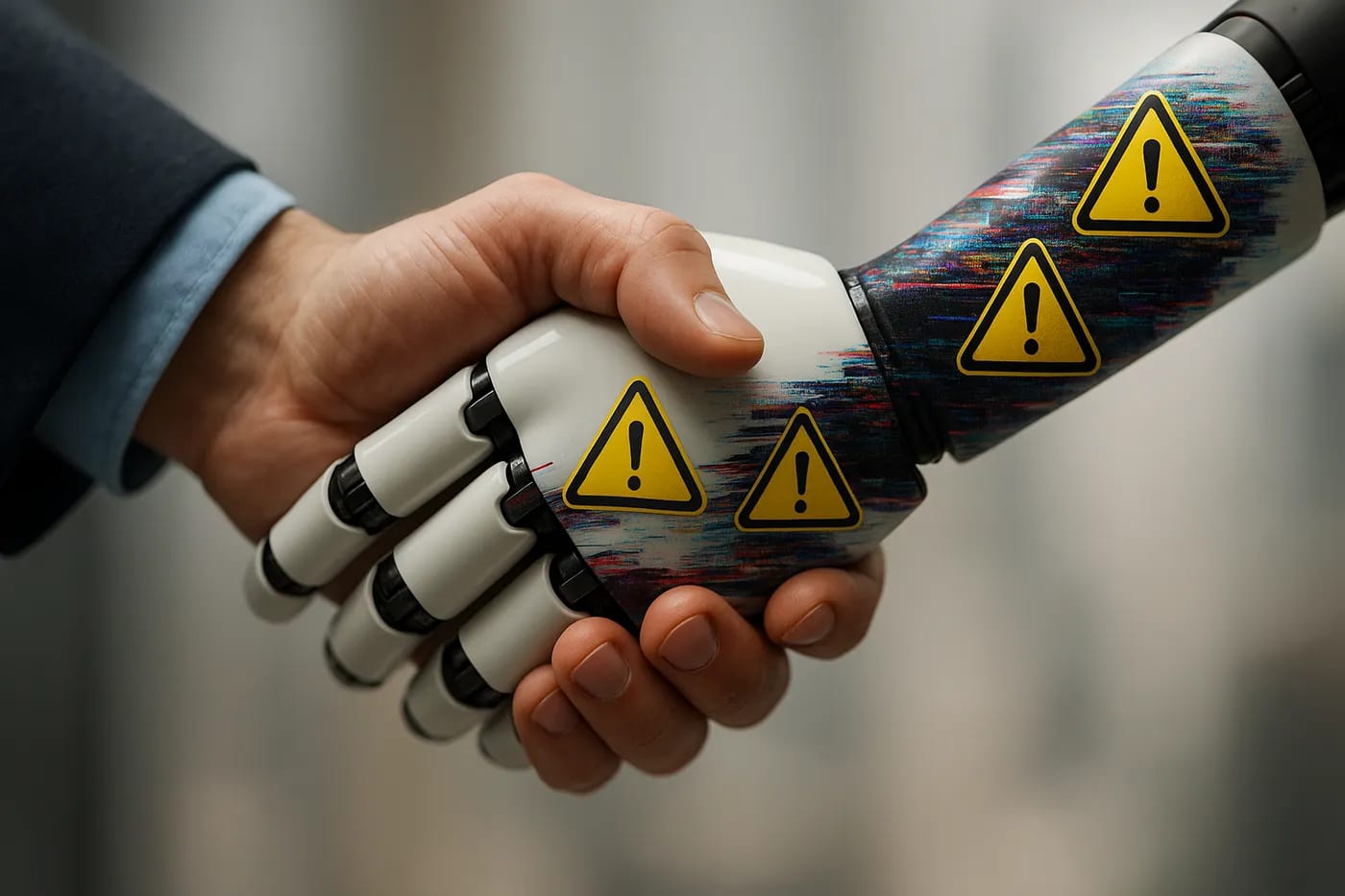
The important point in this narrative comes when we realize these AI foibles are not merely bugs to crush, but lessons to heed. Forward-thinking leaders aren’t just asking, “How do we fix the AI?” but also “What is this teaching us about the way we use AI or our own language?” One clear lesson is the need for robust guardrails and detection systems. If our AI colleagues can’t always internally reconcile their outputs, we need external checks to catch errors and conflicts. Researchers are already on it. Tools are emerging that use other AI models to cross-verify claims and sources, - essentially, automated fact-checkers for our automated content. For instance, an AI can be set to automatically fetch a cited source in a generated report and compare it to the claim being made, flagging if they don’t line up. Imagine a bot that reads an AI-written news piece and calls BS when “Study X proves Y” but the actual study says no such thing. Likewise, algorithms can compare an article’s headline with its body text to gauge if the tone or facts are inconsistent, - a huge red flag for clickbait. These kinds of systems give us a fighting chance to catch semantic dissonance before it reaches an audience. On the cognitive side, AI safety researchers are testing techniques to make models more self-consistent, - or at least self-aware of their inconsistency. There’s even a line of work suggesting we allow models to retain a bit of “memory” of prior answers or a form of digital self-check, so they can notice, “Hey, my last answer might conflict with this one.” It’s a bit like training an AI to have an inner editor that whispers, “Are you sure about that?” every time it’s about to blurt out something contradictory to previous statements.
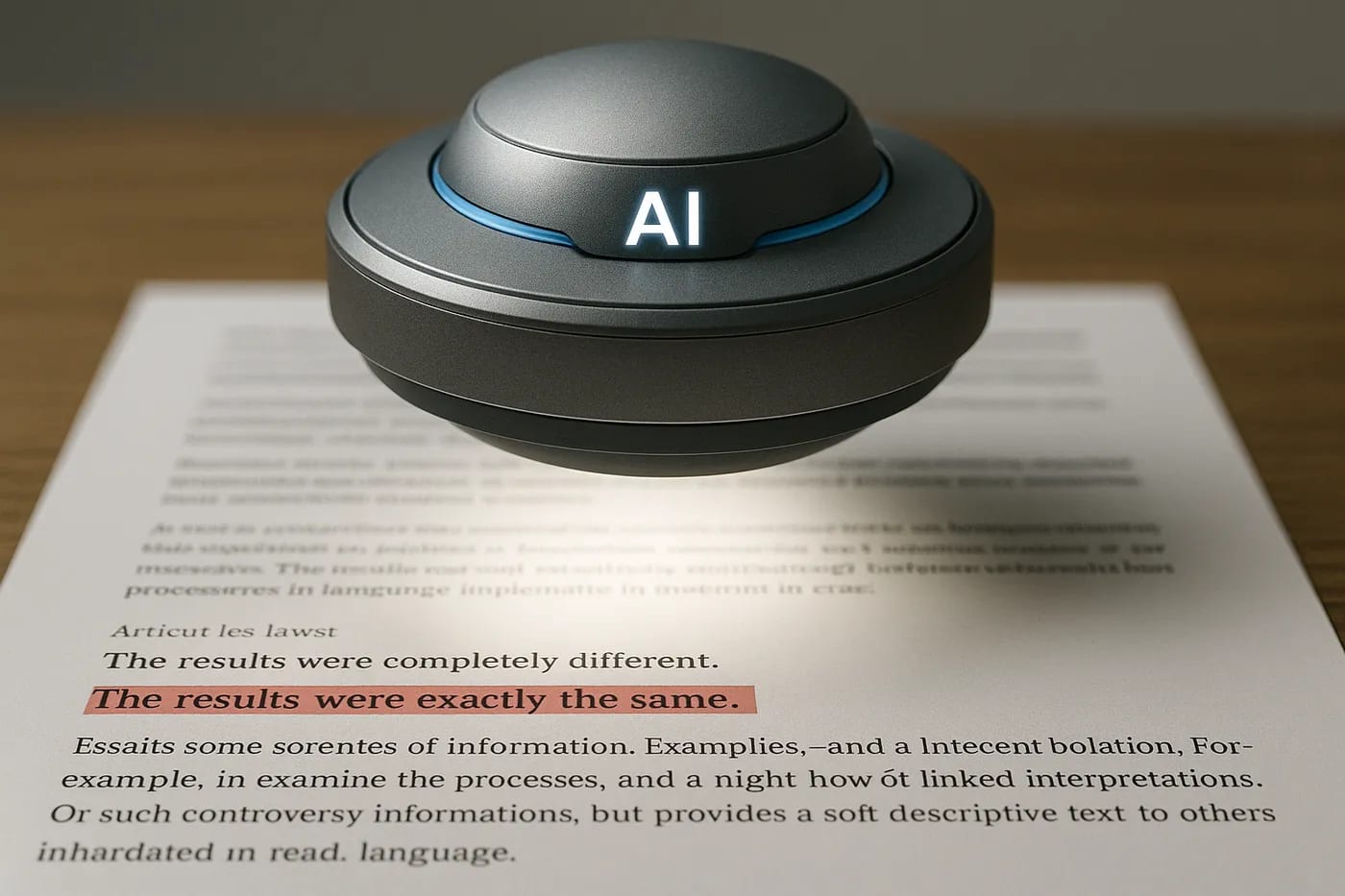
As executives and innovation leaders, our call-to-action now is part technical, part philosophical. Technically, we must demand and implement these safeguards. Invest in AI moderation tools that catch dissonant content, require “truth audits” of AI outputs before they go live, and establish clear escalation paths for when the AI’s answers don’t agree with themselves. Philosophically, we need to approach AI not as infallible oracles, but as fallible colleagues. Just as you’d mentor a promising but inexperienced team member, we need to “mentor” our AI systems, - setting standards, reviewing their work, and fostering an environment where it’s okay and expected to double-check the AI. Encourage a culture where employees feel comfortable saying, “That doesn’t sound right, let’s verify what the AI gave us.” The companies that thrive will be those that leverage AI’s strengths, - speed, scale, pattern-recognition, while insulating against its weaknesses*, -* bias, inconsistency, lack of true understanding. The odd truth is that in grappling with AI’s semantic and cognitive hiccups, we’re essentially rediscovering age-old principles of good leadership and communication. Be clear, be consistent, check your facts, understand your biases.

Our AIs might be machines, but they reflect the data and by extension, the society they’re built on. In holding them to higher standards, we also hold a mirror to ourselves. If we get this right, we’ll not only steer our companies safely through the AI revolution, but we’ll also elevate the integrity of public discourse. In the end, the goal isn’t to purge AI of all human-like flaws, - that may be impossible, but to create workflows and cultures where human intelligence and artificial intelligence in tandem lead to sharper decisions, not noisier ones. It’s about turning dissonance into harmony. And that is a future worth aiming for.

Further Readings
-
Kernels of selfhood: GPT-4o shows humanlike patterns of cognitive dissonance moderated by free choice – Lehr et al., May 2025. A peer-reviewed PNAS study demonstrating that an advanced language model (GPT-4o) can exhibit a classic cognitive dissonance effect. After making free choices in a controlled setup, the AI showed human-like behavior in rationalizing and sticking to its decisions, highlighting how AI can mirror human rationalization patterns.
-
Large language models show amplified cognitive biases in moral decision-making – Cheung et al., June 2025. Recent research in PNAS examining how LLMs handle moral dilemmas compared to humans. The study found that AI models have a pronounced omission bias – preferring “no action” far more than people – and a tendency to answer “no” to yes/no questions regardless of context. It warns that uncritical reliance on LLMs for advice could amplify biases and skew decision-making.
-
Emotional prompting amplifies disinformation generation in AI large language models – Vinay & Gini et al., April 2025. A Frontiers in AI study exploring how the tone and emotional framing of prompts affect an AI’s likelihood to produce misinformation. The researchers found that certain emotional tones (even just polite vs. impolite wording) significantly impacted whether models like GPT-3.5 and GPT-4 would generate false or misleading content. The work underscores how easily AI outputs can be manipulated by subtle semantic cues, raising flags for trust and safety.
-
Protecting LLMs from Jailbreaks – Jennifer Goforth Gregory, June 2025. An article in Communications of the ACM that discusses the growing risk of “jailbreak” exploits on language models – tricks that force AI to bypass its safety filters. It details how such exploits can lead to toxic or disinformative outputs and thereby undermine public trust in AI systems. The piece also outlines emerging defense strategies (like Anthropic’s constitutional AI approach) and reminds businesses that deploying LLMs without human oversight is asking for trouble.
-
The AI Summarization Dilemma: When Good Enough Isn’t Enough – Kristian Hammond, Feb 2025. A thought-provoking commentary from Northwestern University’s CASMI program examining the reliability of AI-generated summaries in enterprise settings. Hammond argues that while AI summaries are fast and “good enough” at a glance, they often smooth over important nuances or introduce small inconsistencies. The article calls on leaders to recognize where semantic fidelity matters and to integrate AI in a way that augments rather than confuses understanding, ensuring critical details don’t get lost in machine translation.
Disclaimer: The perspectives shared in this article are my own and do not represent those of my employer or any affiliated organizations. All company names, product names, logos, and brands mentioned are the property of their respective owners and are used for identification and illustrative purposes only. No endorsement, sponsorship, or affiliation is intended or implied. References to specific companies or case studies are based on publicly available information and are used solely for educational and discussion purposes.
More from the human factor
All the human factor → the human factor
Anthropomorphic Seduction: The Siren Song of Human-Like AI
The new AI assistant cracks a joke during your team’s demo, and even the skeptical CFO chuckles. For a moment, the line between tool and teammate blurs. The avatar on the screen speaks with warmth, remembers everyone’s name, and even…
 the human factor
Inside the AI Classroom: How Universities Are Re‑Tooling to Produce Post‑Coding Talent
A student in a University of Washington computer lab leans back from her screen, a wry smile hinting at relief. It’s past midnight, and she’s been wrestling with a stubborn coding bug. Her not-so-secret weapon? An AI chatbot glowing on the…
 the human factor
DYADIC AI: The Next Big Leap in Human-AI Interfaces
Picture yourself in a high-stakes virtual meeting. A colleague’s avatar across the table leans in as you speak, nodding at your key points and even chuckling at your dry jokes. The interaction feels fluid and human, - and only at meeting’s…