From "Mainframe Intelligence" to "Thin Client Thinking"
Listen · the Bit & Being podcast
It’s 8:00 AM and a high school teacher is staring at a stack of suspiciously flawless essays. Across town, a manager in a boardroom slyly taps on ChatGPT under the table to craft a quick strategy memo. Two very different scenes share an unmistakable undercurrent. In the age of generative AI, memorizing reams of information like a human mainframe is losing its value, while knowing how to ask the right questions, - acting more like a nimble thin client tapping into a vast network, is becoming the ultimate skill.

The Mainframe Mindset: When Knowledge Was Power
For decades, education and training operated on a “mainframe mindset.” Knowledge lived in central sources, - textbooks, professors, subject-matter experts, and learners were rewarded for being walking databases. A star employee was one who knew the most facts. A top student aced exams by recalling formulas and dates. In an era when information was scarce and hard to access, this human mainframe model made sense. But today, with AI chatbots and search engines delivering answers in seconds, that old model is starting to look like a relic of a bygone tech era. Why painstakingly load up on data internally when a query to an AI can retrieve it on demand?
Rather than panic at this shift, forward-thinking schools are rewriting the learning script. Many are embracing a flipped learning approach: letting AI handle rote lectures or practice drills as “homework,” and using precious class time for what AI can’t do. One London school even trialed a teacherless AI lab where students tackled core subjects with adaptive software, - though human teachers still swooped in for lively debates and creative projects where human insight excels (Financial Time). In place of assignments that ChatGPT can churn out in seconds, teachers now send students home to watch AI-generated lessons, reserving class hours for discussion, problem-solving, and curiosity-driven exploration. The goal is no longer to produce human sponges who absorb content, but to cultivate inquisitive thinkers who can do what machines can’t, - connect ideas and ask “Why?” and “What if?”
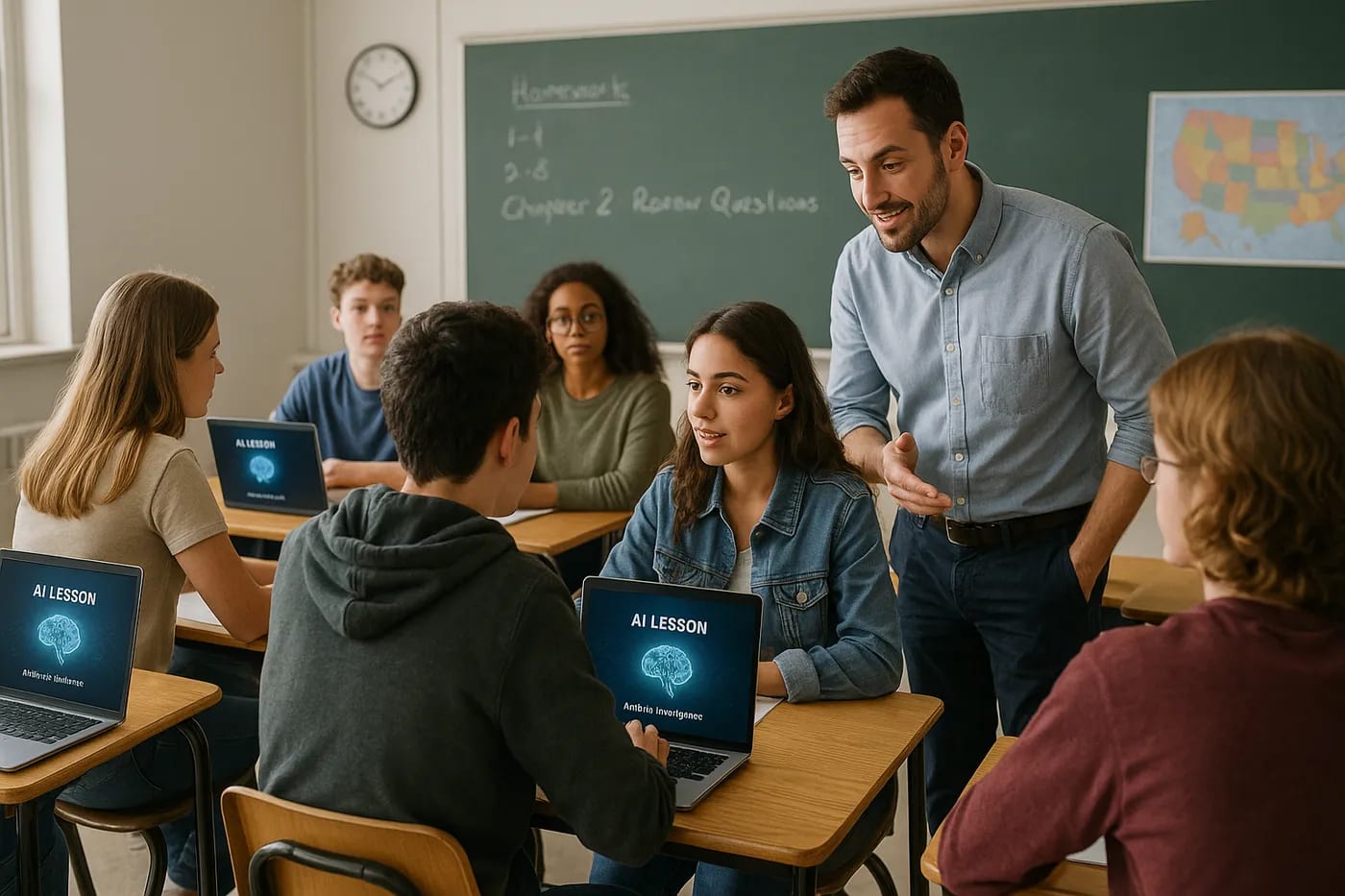
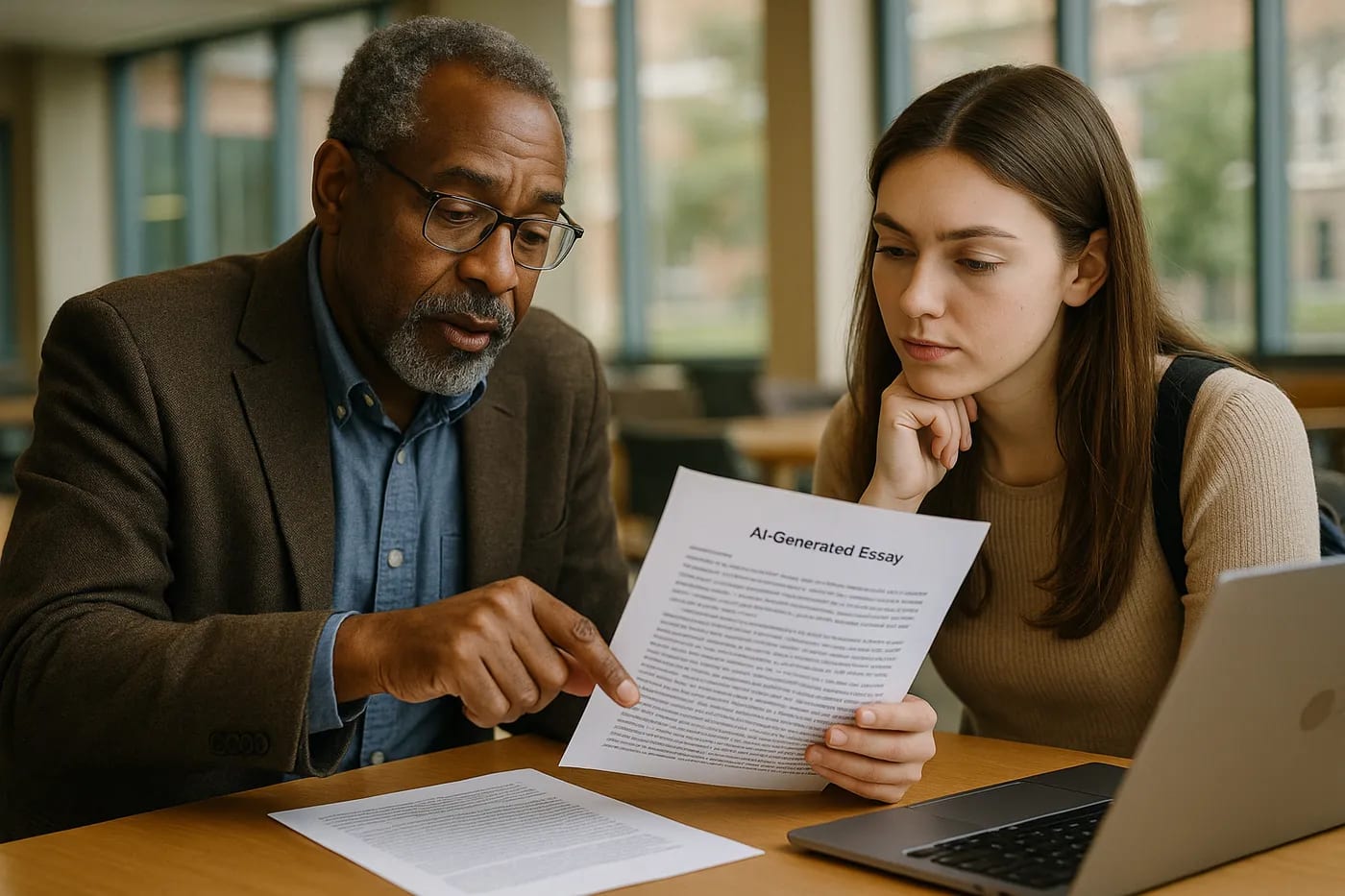
Higher education has felt the same disruption. When a Wharton professor discovered that ChatGPT could earn a “B” on his MBA exam, it sparked an existential curriculum rethink, - what are we really testing for if a chatbot can pass? (UPenn) His conclusion was telling. Instead of banning AI, design assignments that demand the one thing a chatbot can’t provide, - original human insight. In practice, that means many professors now ask students to critique AI-generated answers, formulate deeper questions, or tackle projects requiring personal perspective and ethical reasoning. In other words, they’re steering learners away from regurgitating facts and toward the kind of critical thinking no algorithm can replicate. The old measure of success, - how much you’ve stored in your head, is giving way to a new measure: how creatively and critically you can use the flood of information at your fingertips.
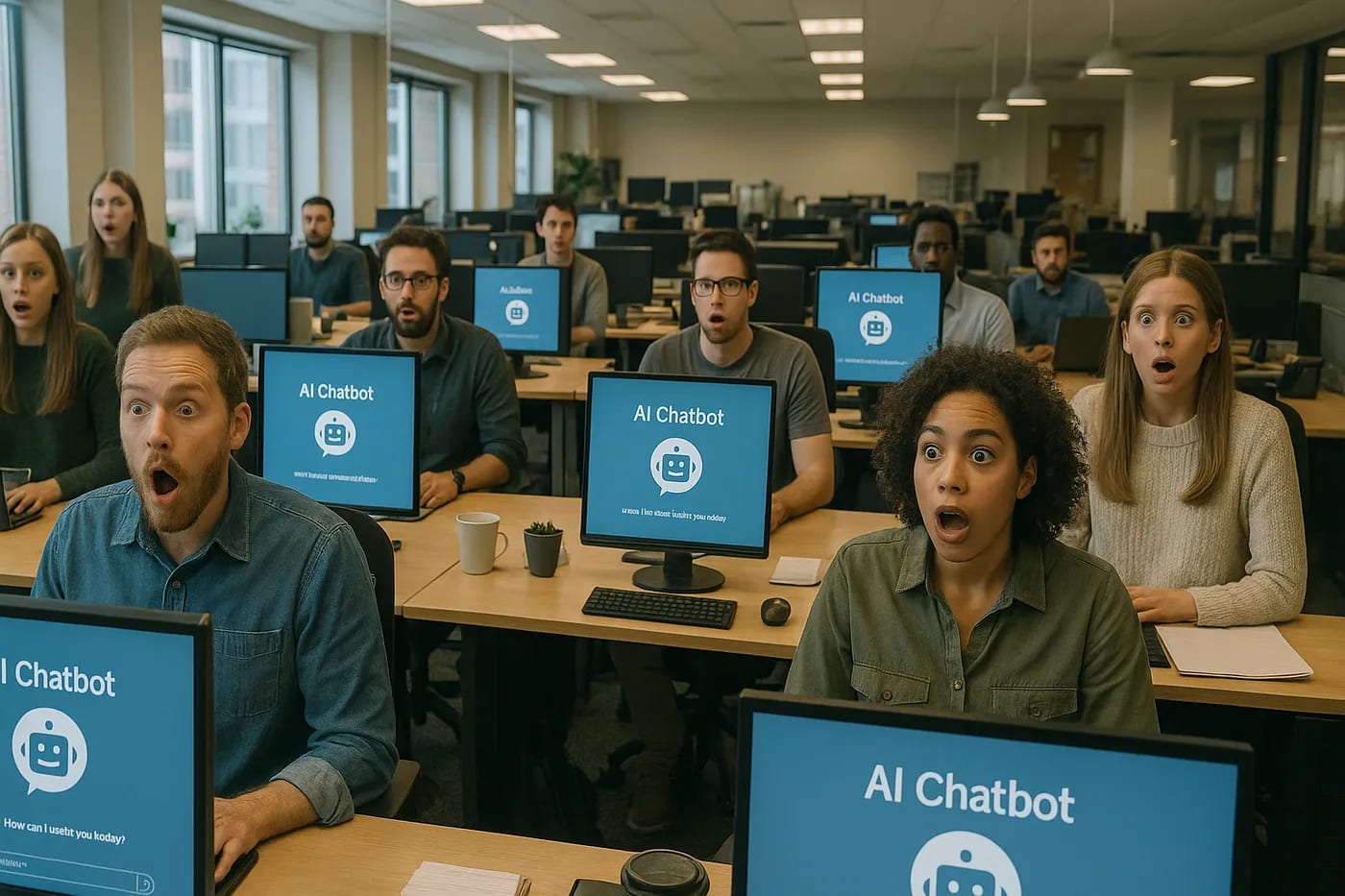
The corporate training room is evolving just as fast. Companies are rolling out adaptive learning platforms that serve up personalized lessons, with AI tutors adjusting in real time to each employee’s progress. The promise is enticing, - one industry association even touted the potential for “tailored guidance, real-time feedback, and scalable support for every learner” (ASAE). But simply handing every employee a clever chatbot and calling it training doesn’t cut it. Savvy organizations pair AI tools with human mentorship. The AI delivers on-demand answers and practice exercises, while human leaders focus on nurturing curiosity, encouraging ethical questions, and imparting the kind of big-picture, strategic thinking no algorithm can instill. In a sense, forward-looking companies are relieving their people of the “mainframe” burden of memorizing product specs or policies and instead coaching them to be agile thin clients, - skilled at seeking, synthesizing, and applying knowledge from the cloud of information when and where it’s needed.

The Thin Client Paradigm Shift
This transformation reached an inflection point in late 2022, when generative AI burst into the mainstream. In a matter of months, tools like ChatGPT went from quirky parlor tricks to ubiquitous work and study aids. Educators and executives alike found themselves both exhilarated and uneasy. If instant answers are available anytime, what exactly are we asking people to bring to the table? The answer was a paradigm shift, - from having knowledge to curating and questioning knowledge. It’s as if the collective mindset flipped from “be the mainframe” to “be the thin client.” In classrooms and boardrooms, a new mantra took hold. The most important person in the room is no longer the one who memorized the most information, but the one who can ask the most insightful question about whatever information is available. In an AI-saturated world, knowing how to probe, challenge, and make sense of information has trumped merely knowing information.
Curiosity, Synthesis, and the New Learning Playbook
As a result of this shift, the role of the educator, - and by extension, the corporate trainer or mentor, is changing from instructor to curiosity coach. Instead of simply imparting facts, effective teachers and leaders now guide learners on how to navigate endless information streams. This means training people to take “epistemic agency”, - in plain terms, ownership of their own learning process, by formulating sharp questions, seeking out reliable sources, and double-checking the answers that AI serves up. Equally important is a renewed emphasis on ethics at every step. Today’s learners must ask not just “What do I know?” but “Should I trust how I came to know it?” as they grapple with AI’s built-in biases and limitations (Open Access Government). In practice, the modern teacher or manager spends less time lecturing and more time coaching individuals on how to think critically, creatively, and conscientiously in partnership with AI. The knowledge “mainframe” hasn’t disappeared, -it’s simply moved to the cloud, and the human role is to ask the right questions of it. Teaching people how to question, how to verify, and how to contextualize information is the new heart of education and training.
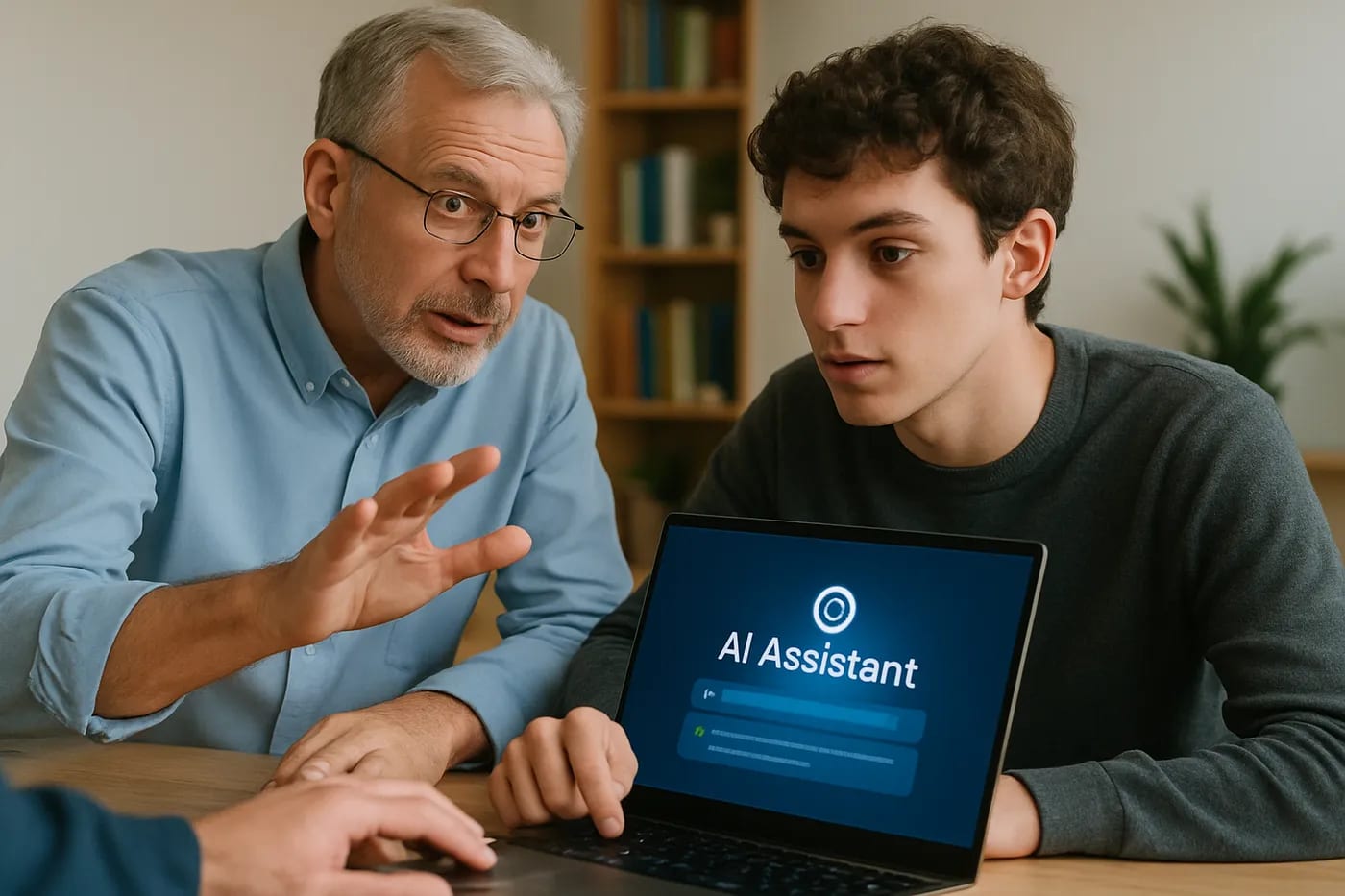
One skill in particular has risen to prominence in this new playbook: synthesis. In an age of information overload, weaving together insights from multiple sources is now more valuable than recalling any single data point. Picture a team of analysts using an AI tool to pull up market data, - the standout contributor is not the one who simply remembers last quarter’s figures, but the one who can synthesize those AI findings into a strategic recommendation that accounts for current market context, anomalies, and nuances the data alone doesn’t shout out. Likewise, a student might compare a textbook theory with a contradictory explanation from an AI and a real-world case study, then reconcile the differences into a nuanced conclusion of their own. By teaching and prioritizing synthesis, we help learners build a kind of immunity to misinformation and shallow answers. A professional trained to connect the dots, question inconsistencies, and fill knowledge gaps won’t be easily misled by a confidently wrong AI output. In essence, we’re cultivating thinkers who don’t just consume information but transform it, - much like thin clients that don’t just receive data from a server, they process and display it in context for the user’s purpose. Synthesis is the human edge that turns raw data into actionable knowledge.

The Curiosity Imperative for Leaders
Ultimately, this new paradigm reaffirms a timeless truth: curiosity is the engine of learning and innovation. The teacher once bedeviled by AI-written essays now begins class not by checking for cheating, but by asking students what new questions the AI’s answers sparked in their minds. The executive who once furtively relied on a chatbot for quick answers now openly runs team workshops on formulating better questions and interpreting AI insights with a critical eye. Across education and industry, those who thrive are the ones turning constant change into an opportunity to deepen understanding, rather than a reason to shortcut it. In a world where content is becoming as cheap and instantaneous as computing power in the cloud, the real value lies in the human drive to explore, challenge, and create. We need to build organizations of avid learners who see AI not as a crutch for avoiding thought, but as a springboard for asking bigger, bolder questions.
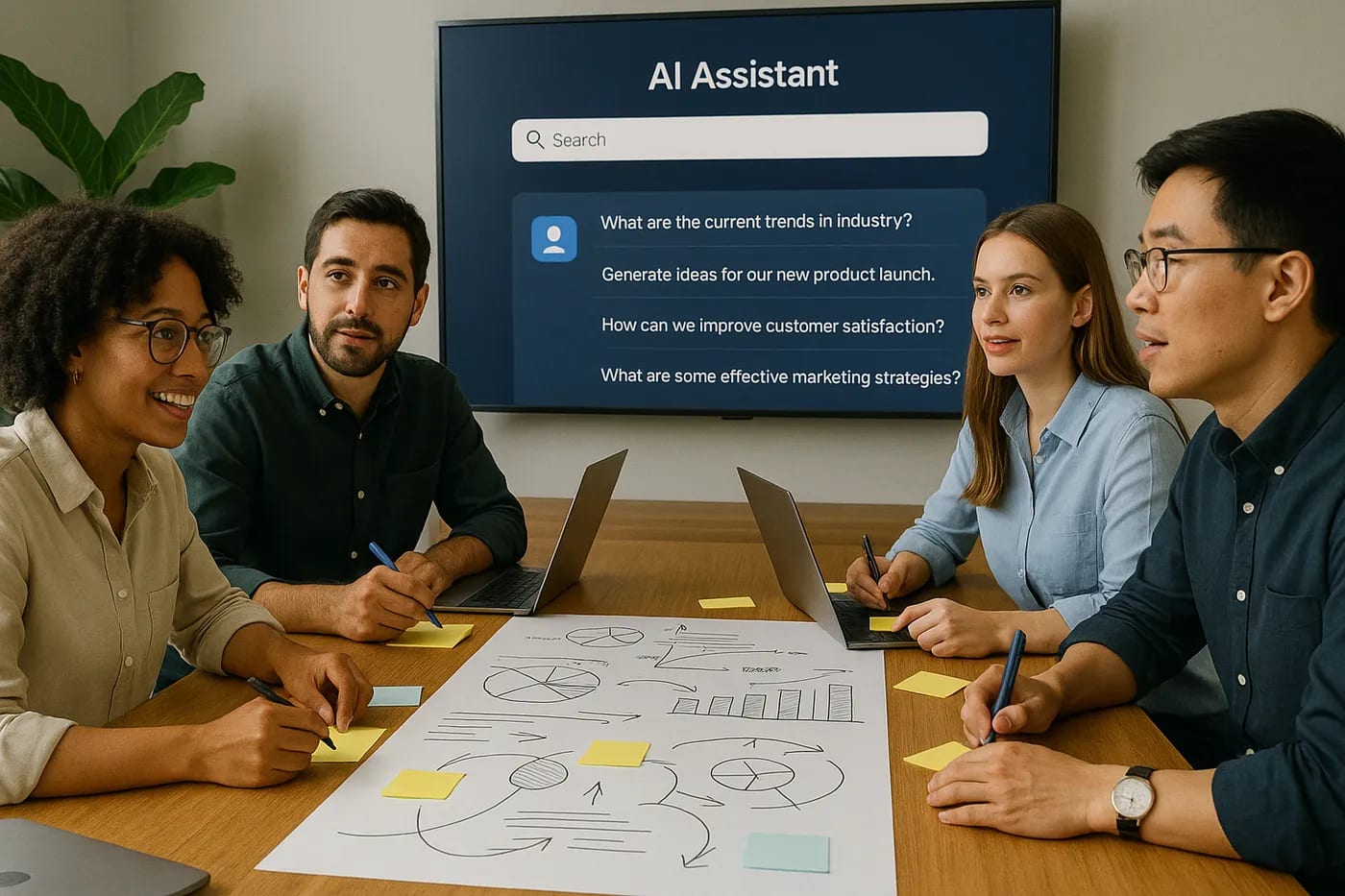
As leaders, the call to action is clear. It’s time to champion a culture where curiosity outweighs complacency. Encourage your teams to be inquisitive “thin clients” who leverage AI for information but rely on human creativity and judgment to put that information to work. Promote training programs that reward asking great questions and synthesizing insights over rote memorization. Model this behavior in leadership discussions, - swap out the old “knowledge is power” trope and reward those who aren’t afraid to say “I don’t know, but let’s find out”. The organizations that will excel in the AI era are those that treat learning as a dynamic, ongoing dialogue rather than a static download. After all, an AI can feed you information, but only a curious mind can turn it into meaningful knowledge. Let’s make sure we’re building teams full of minds like that.

Further Readings
-
Adaptive and Personalized Learning Through AI: A Realistic Assessment of Value (Sue Ebbers – June 2025) An analysis of AI-driven adaptive learning in the association world, weighing the promise of tailored, scalable training against the practical considerations of implementing these tools effectively.
-
What does it mean to “know” something in the age of AI? (Stephanie Schneider – June 2025) A thought-provoking piece examining how AI is challenging traditional definitions of knowledge and trust, and calling for new approaches to education and epistemology in an AI-driven society.
-
Beyond Tools: Generative AI as Epistemic Infrastructure in Education (Bodong Chen – April 2025) Academic research analyzing the impact of generative AI on human epistemic agency in educational settings, finding that current AI tools often prioritize efficiency over deep learning and offering recommendations to align AI use with core educational values.
-
AI and Epistemic Agency: How AI Influences Belief Revision (Mark Coeckelbergh – March 2025) A scholarly article in Social Epistemology discussing how AI systems can affect human belief formation and the importance of preserving human critical thinking and autonomy in the face of AI-provided information.
More from silicon & systems
All silicon & systems → silicon & systems
Why Generative GUIs May Be the Most Disruptive OS Shift Since Windows 95
Late at night in a corner office, a CTO sits before the gentle glow of a computer screen. The interface staring back is familiar, - rows of icons, tidy menus, the same static layout that’s greeted us for decades. It’s comforting in its…
 silicon & systems
IT SEES, IT CLICKS, IT WORKS: The Operating System Built for AI - Not You
When a digital employee shows up for work, it doesn’t need a desk or a coffee mug. In fact, it doesn’t even need sleep. Instead, it lives in the cloud, clicking through Slack messages and Salesforce forms at 3 AM while you’re asleep. This…
 silicon & systems
AI’s Hidden Bottleneck: Why Smarter Chips Could Unclog the Data Pipeline Jam
In advanced AI, we’ve built race-car fast processors only to watch them idle in a data traffic jam. Today’s AI supercomputers boast mind-bending compute speeds, yet they often find themselves waiting for information to arrive from memory…