Beware Cognitive Debt: When AI Assistance Becomes Cognitive Dependence
🔊 Listen to the Podcast version here. 🔊
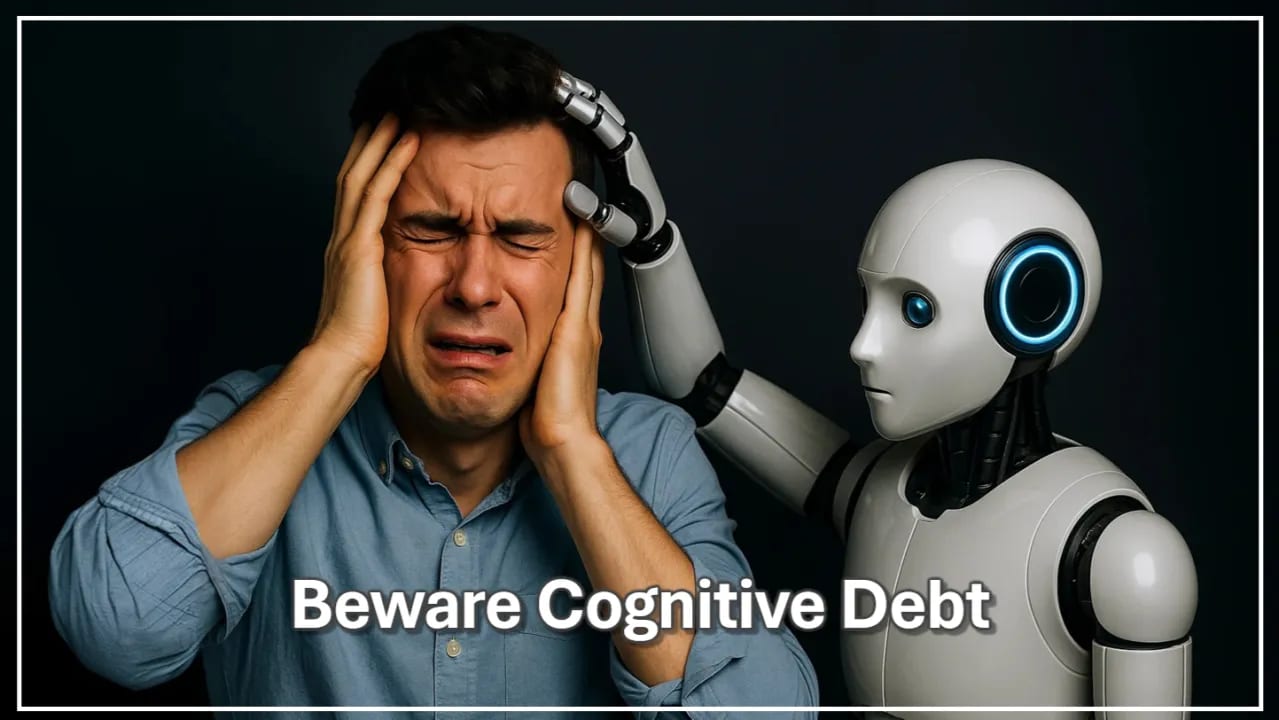
At a Monday morning strategy meeting, something strange happens. The team presents a polished plan filled with clever ideas, but when the CEO asks a probing question, the room falls silent. Each team member glances at the others, hesitant. Why? Because the proposal was largely crafted by an AI assistant the night before, and no one fully owns the details. This uneasy moment captures the essence of ‘cognitive debt’, - the hidden cost of over-relying on tools like ChatGPT. We enjoy the quick wins now, but we may owe payments later in the form of diminished memory, creativity, and accountability.

The Convenience Trap: Accumulating Cognitive Debt
Like a credit card for the mind, AI offers instant solutions with a hidden interest rate. In software development, we talk about technical debt, - quick fixes that pile up costs over time. Similarly, cognitive debt occurs when we lean on AI for mental heavy lifting and neglect to exercise our own brains. Early evidence is sounding the alarm. One study even titled “Your Brain on ChatGPT” found that participants using an LLM to help write essays had the weakest brain connectivity and mental engagement among their peers (arXiv). In plain terms, the more we outsource our thinking, the more those ‘thinking muscles’ can atrophy.
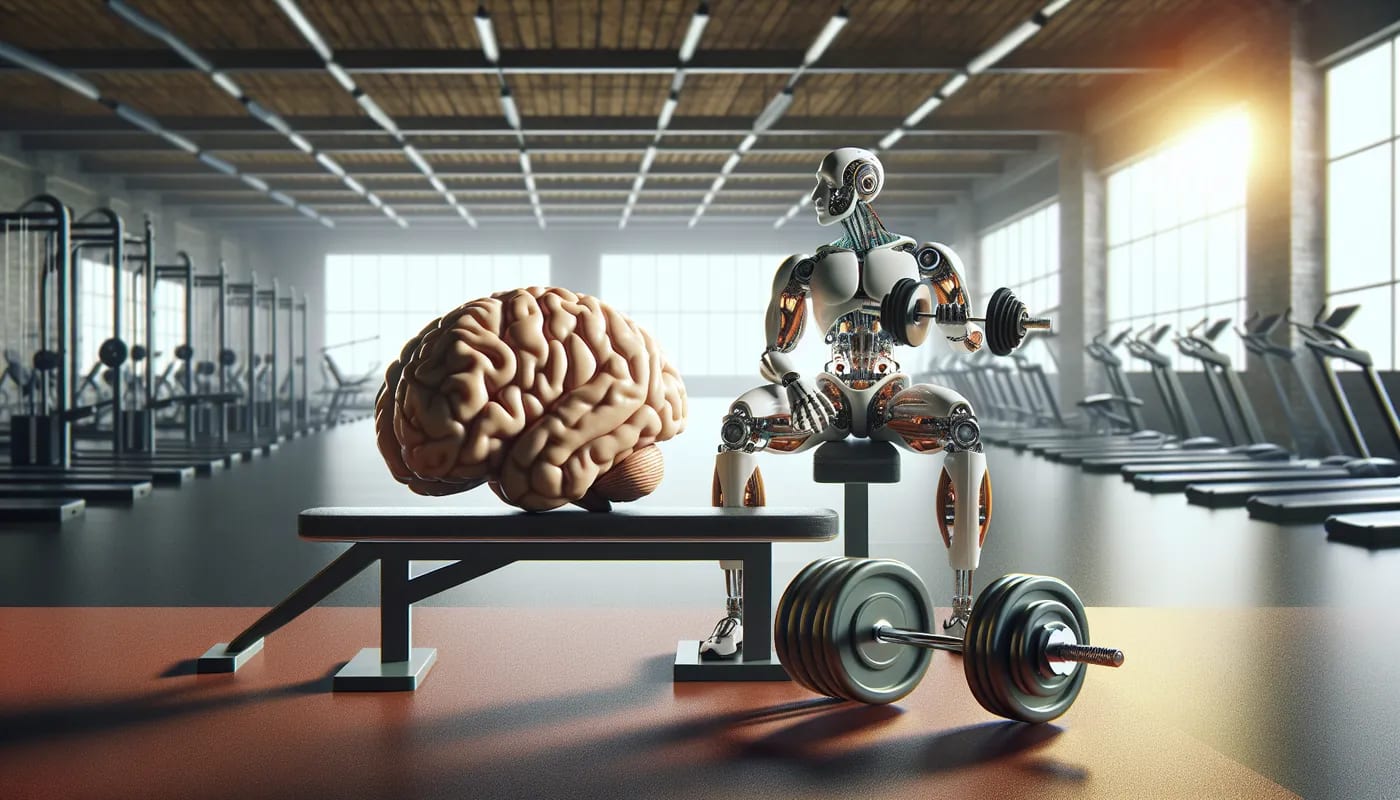
The short-term convenience of an AI assistant can mask long-term consequences. Just as a body grows weaker if you always take the elevator instead of the stairs, your brain can become complacent when an AI is always ready with an answer. Over time, that complacency is the “interest” we pay on cognitive debt, - a gradual decline in our ability to think independently and critically. Executives and innovators, who pride themselves on sharp decision-making, may find those skills quietly dulling at the edges.
Memory on Autopilot: Losing Our Recall
Remember when we used to know phone numbers by heart? Now, our phones remember for us. That outsourcing of memory might seem harmless since who really misses memorizing dozens of numbers? However, what happens when we extend that habit to critical business knowledge or personal expertise? Relying on ChatGPT to summarize reports or recall facts means we risk not encoding that information in our own brains. In the MIT study, LLM-dependent writers struggled to accurately quote or remember content they themselves had “written” with AI assistance (arXiv). They also reported the lowest sense of ownership over their work. Essentially, if you let the AI do the remembering, your own memory muscle isn’t getting the workout.

Over time, this can lead to a kind of “digital amnesia” in the workplace. Knowledge workers might produce polished work thanks to AI, yet find themselves unable to recall key details in meetings or explain the rationale behind their AI-generated decisions. Cognitive scientists note that without actively engaging with information, our ability to transfer it to long-term memory and truly understand it diminishes (MDPI). In a sense, we become spectators to our own outputs, reading the play-by-play from ChatGPT instead of internalizing the game plan.
The Creativity Trap: Homogenized Ideas
There’s a certain irony in using a creativity machine every time we need a new idea. Yes, AI can churn out suggestions in seconds, but those suggestions come from patterns in existing data. If everyone taps the same well, we all draw the same flavored water. Researchers at the University of Toronto found that participants who used an AI assistant during training produced more ideas initially, but later their independent ideas became more homogeneous and “vanilla” compared to those who had been creating on their own (Unleash). In fact, once the AI was taken away, the AI-trained group was outperformed by the non-AI group in creative tasks, - their creativity muscle had been, in a sense, over-reliant on a crutch.

Think of it like using GPS for every drive: you get there faster today, but you might not learn the route. Similarly, an AI can boost output in the moment, but over-reliance might narrow your creative horizons in the long run. The study above likened the effect to performance-enhancing drugs: a temporary boost followed by a slump and possibly a dependence. Truly groundbreaking ideas often arise from serendipity, mistakes, and deep human mulling, - experiences an AI, which draws from the average of many, doesn’t have. If your innovation team starts sounding like a remix of the internet’s greatest hits, it might be time to worry.
Innovation and Accountability on the Line
What happens to a team’s collaborative genius when everyone quietly leans on AI? In meetings, you might hear fewer original ideas and more regurgitated chat-bot phrases. Over-reliance on LLMs can create a false consensus, - if every team member’s ideas ultimately stem from the same algorithmic suggestions, diversity of thought plummets. True innovation, which thrives on contrasting viewpoints and creative friction, can suffer in an AI-everything culture. Teams might become less inclined to debate or think boldly, and more inclined to accept whatever the AI proposes as the path of least resistance.
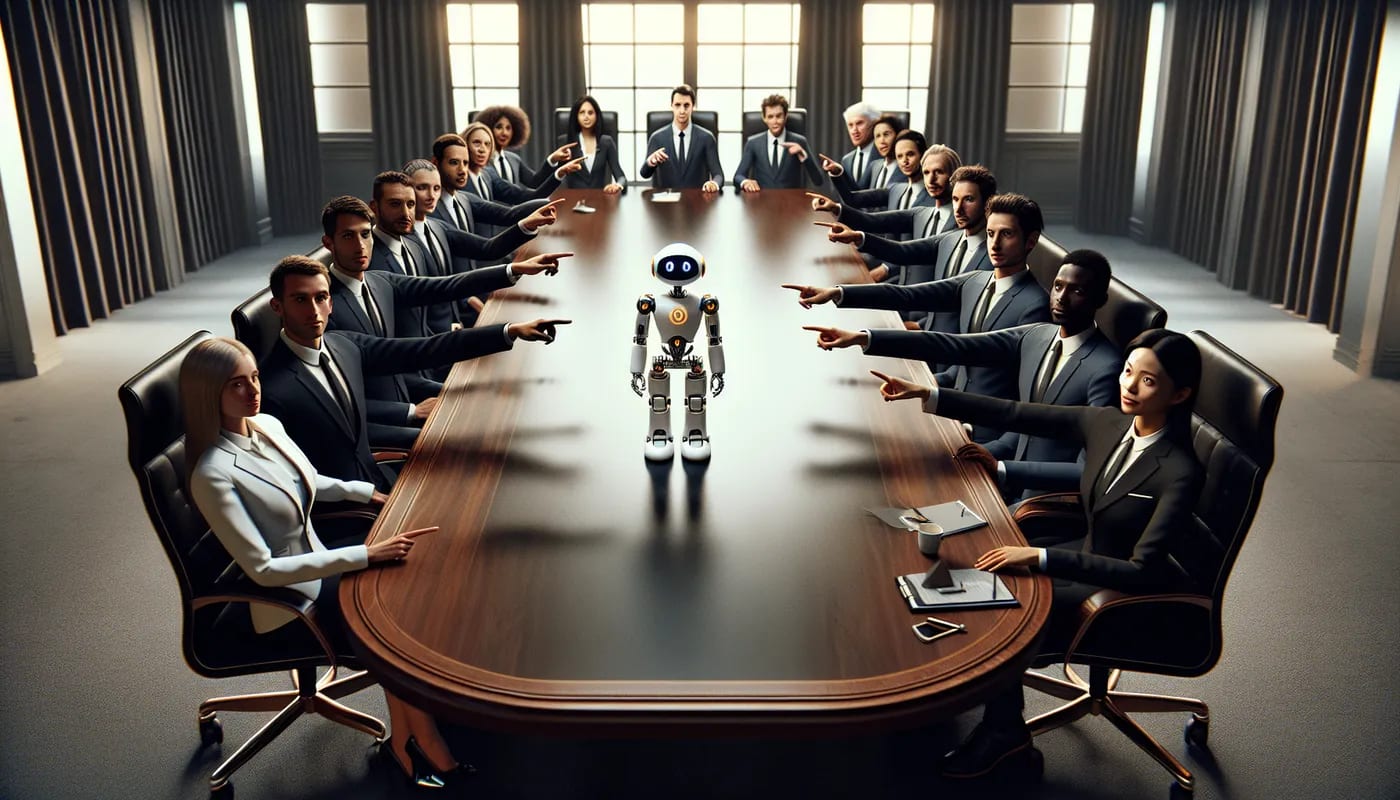
Then there’s the thorny issue of accountability. When a plan crafted by AI goes awry, who takes responsibility? It’s all too easy for team members to point at the algorithm as the culprit, - “the AI said it would work!”, instead of learning from the failure. Psychologically, blaming a non-human assistant feels convenient. After all, you can’t fire a machine for a bad idea. We’ve seen early signs of this mindset: for instance, some recruiters using highly accurate AI tools became complacent, effectively “falling asleep at the wheel” because they trusted the AI so much (Unleash). The more powerful the AI, the greater the temptation to disengage our own judgment. But when humans disengage, errors slip through and accountability slips away. No AI can carry the moral and strategic responsibility for a decision, - that burden remains with us, whether we accept it or not.
Reducing Cognitive Debt: A Human-Centered Approach
Does all this mean we should ban ChatGPT and go back to quill pens? Of course not. AI tools are here to stay, and when used wisely, they can amplify human creativity and efficiency. The key is intentional, human-centered use. Think of it like using autopilot in a plane: it’s great for cruise control, but no pilot should completely stop paying attention. We can enjoy the boost from AI without surrendering our own skills.

Here are a few strategies to harness AI while keeping your team’s cognitive edge sharp:
-
Use AI as an augment, not a replacement. Treat ChatGPT as a brainstorming partner or research assistant, but always add your own analysis and perspective. Encourage team members to question and refine AI outputs rather than copy-paste.
-
Keep humans in the loop (and in charge). Establish a rule that any AI-generated content must be reviewed and understood by a human owner. Make it clear that final decisions and responsibility rest with people, not algorithms.
-
Practice digital dieting for the brain. Just as you might schedule screen-free time, have “AI-free” days or tasks where the team solves problems old-school. Use these as mental workouts to keep cognitive skills in shape.
-
Invest in AI literacy and training. Ensure your team understands how these models work, including their limitations and biases, so they’re less likely to be seduced into overtrusting the AI. An informed user stays more cognitively engaged.
Ultimately, managing cognitive debt isn’t about resisting AI but about respecting the irreplaceable value of human cognition. By consciously integrating AI into workflows, organizations not only safeguard their intellectual agility but also unlock richer, more innovative thinking. AI should amplify your capabilities, not diminish them. The true competitive advantage isn’t merely having powerful technology, - it’s having empowered minds that leverage that technology wisely and thoughtfully without accumulating cognitive debt.

Further Readings
-
Your Brain on ChatGPT: Accumulation of Cognitive Debt when Using an AI Assistant for Essay Writing Task (Nataliya Kosmyna et al, June 2025) MIT researchers find that reliance on LLM assistance can weaken neural connectivity and reduce memory and sense of ownership in writing tasks.
-
Is AI causing a decline in cognitive and creative skills? (Ben Eubanks, February 2025) An industry analyst explores emerging evidence that overusing AI tools can erode our ability to think critically, diminish creativity, and stunt the development of deep expertise.
-
AI Tools in Society: Impacts on Cognitive Offloading and the Future of Critical Thinking (Michael Gerlich, January 2025) Academic research examining how heavy use of AI for cognitive tasks encourages “cognitive offloading” and may lead to declines in memory retention and critical thinking skills over time.
Disclaimer: The perspectives shared in this article are my own and do not represent those of my employer or any affiliated organizations. All company names, product names, logos, and brands mentioned are the property of their respective owners and are used for identification and illustrative purposes only. No endorsement, sponsorship, or affiliation is intended or implied. References to specific companies or case studies are based on publicly available information and are used solely for educational and discussion purposes.
More from the human factor
All the human factor → the human factor
Million-Dollar Manners: The Hidden Cost of Being Polite to AI
In a corner office, a CEO finishes a meeting and casually thanks their digital assistant. Not the human kind, - the AI chatbot on their screen that just crunched this quarter's sales projections. They murmur a polite 'thank you' to the…
 the human factor
Human Behavior Isn’t Random. This AI Proves It - and Predicts Yours!
Imagine walking into a high-stakes meeting with an advisor who knows exactly how everyone will react before a single word is spoken. It’s not a psychic, it’s an AI. We’ve long lived with the comforting notion that human decision-making is…
 the human factor
No One’s in Charge: AGI Is Arriving Fast and We’re Unprepared!
I found myself reading my morning news lineup with equal parts wonder and worry. We've heard of how AI has been used to draft legal briefs in minutes. And how how the Pentagon is pouring billions into AI research to keep up with China. As…