The Art of AI Daydreaming: Why Contextual Thinking is the Next Frontier
🔊 Listen to the Podcast version here. 🔊
Strategic Implications of Co4 and Biologically Inspired AI
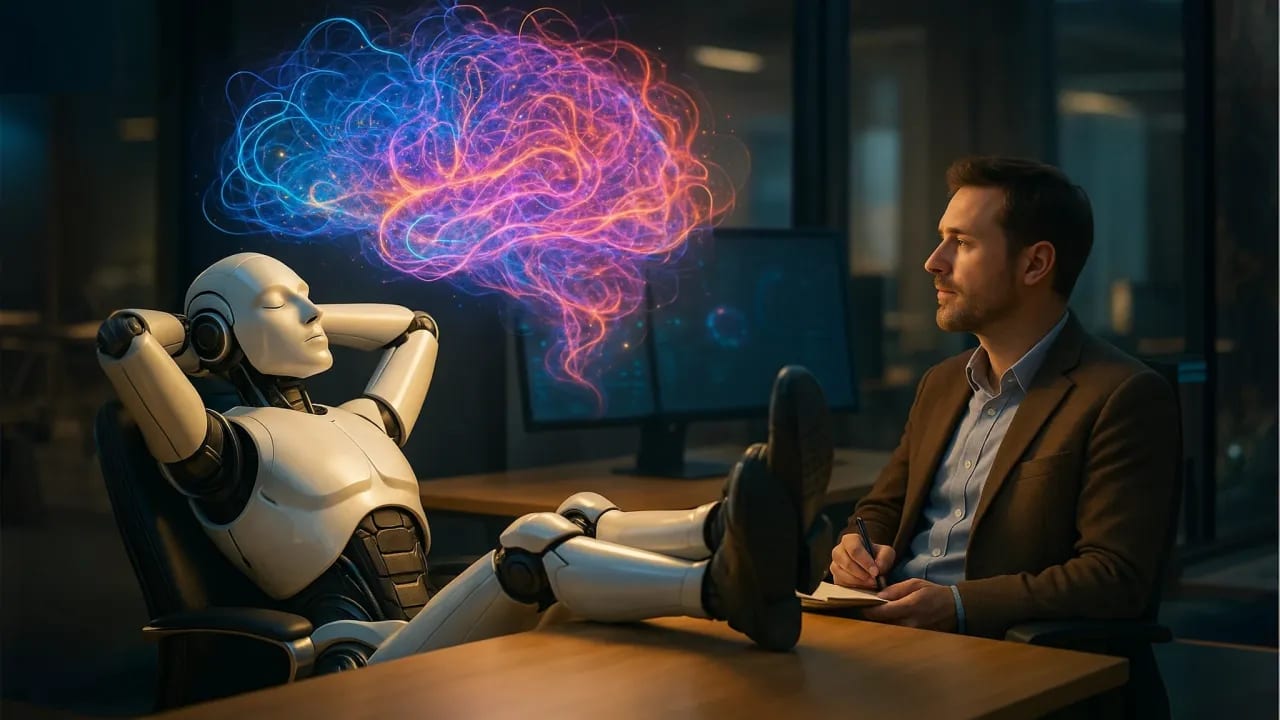
Let’s just image for a moment that your most advanced AI is on the clock, - and it’s daydreaming. At first, you might panic: the machine that cost a fortune in R&D is seemingly staring off into space instead of crunching data.

But what if that brief reverie is exactly how it finds your next billion-dollar insight? It sounds counterintuitive, almost ridiculous, yet this kind of intentional daydream is at the heart of a new approach in artificial intelligence. In a world obsessed with hyper-focus and raw number-crunching, letting an algorithm momentarily wander might be the cleverest move yet.
Hyper-Focus Has Its Limits
Today’s AI models are like speed readers who never lift their eyes from the page. They excel at attention, - homing in on patterns or keywords, - which has driven much of the recent AI boom. Transformers, the reigning champions of machine learning, have a laser-like focus that connects dots in vast datasets, giving us fluent chatbots and uncanny image generators.

Yet, if you’ve ever worked with such models, you know they can be far too literal, sometimes missing the forest for the trees. They answer exactly what you ask, not necessarily what you meant.

Fortunately, we have more than just three wishes and can undo poorly designed prompts. They spotlight the obvious book on the shelf, ignoring the nuanced volumes in the shadows. In business, this can mean insights that are technically correct but contextually off-key, like a genius analyst with zero situational awareness.

Consider a detective at a crime scene. A less experienced sleuth might fixate on the most eye-catching clue, - say, a shiny piece of jewelry, and build a whole theory around it, neglecting subtle hints like a faint scent or a moved chair. A seasoned detective, in contrast, pauses to imagine different scenarios, asking “what if” this or that clue matters more. They mentally simulate possibilities (who could have moved that chair and why) and cross-check against the evidence, often uncovering the real story.
Today’s mainstream AI is more like the first detective: brilliantly fast at focusing on known signals, but not so great at the imaginative leap or reconsidering its initial hunch. What if our AI could be more like the seasoned detective, sifting through clues in a cooperative, context-sensitive way before leaping to conclusions?
Teaching Machines to Daydream
This is where biologically inspired AI steps in, bringing another fresh twist to machine intelligence. Instead of treating AI like a pure math problem, researchers are looking to the ultimate reference design, the human brain, for inspiration. Enter “Cooperative Context-sensitive Cognitive Computation,” mercifully nicknamed Co4. It’s a mouthful, but its premise is elegant: give machines something akin to intrinsic mental states. In plain terms, allow an AI to have a mode where it perceives and a mode where it imagines, and let these modes talk to each other.
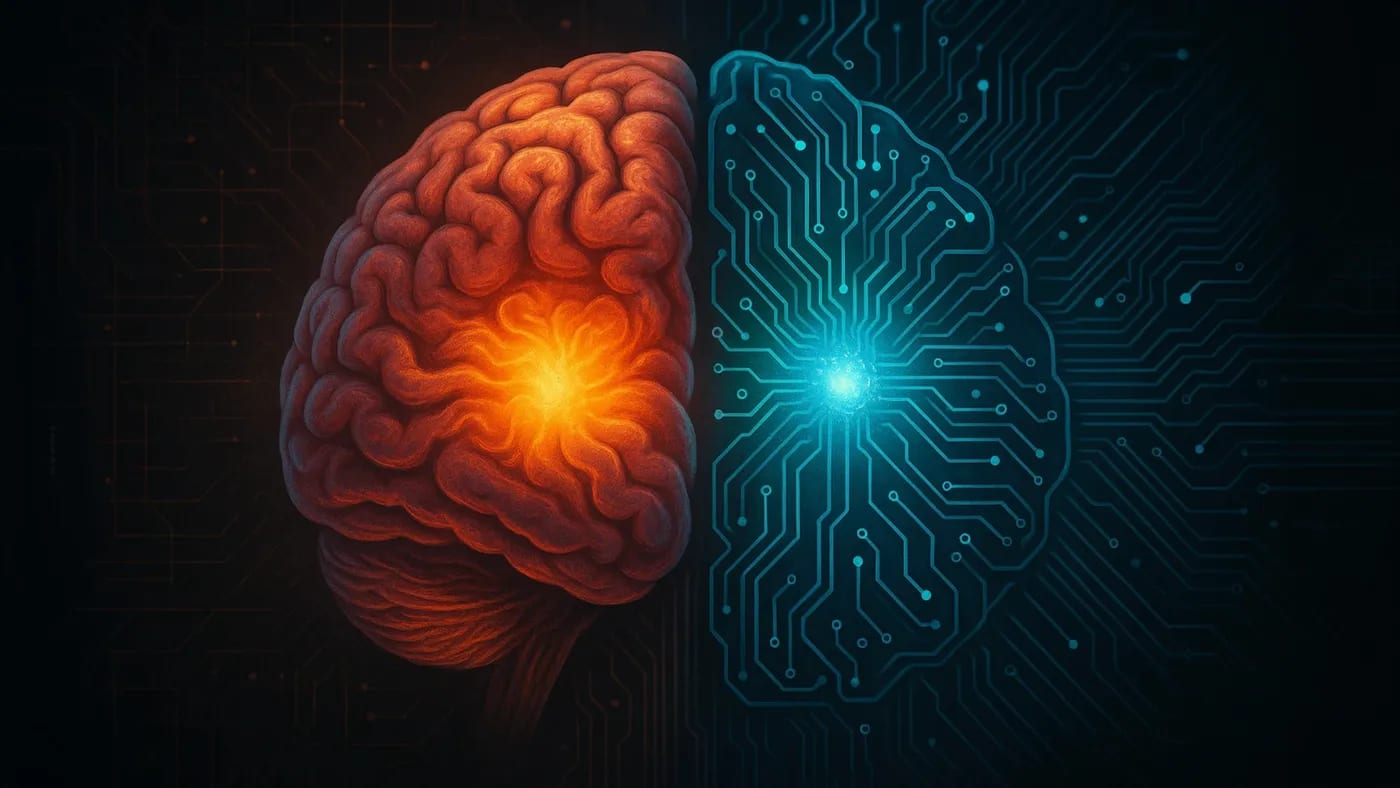
Co4 draws directly from neuroscience observations about how our neurons toggle between different states, - like how your brain’s activity differs when you’re intensely focused versus when you’re daydreaming. By mimicking this, Co4 enables an AI to pre-select what’s relevant before it applies its full attention. Think of it as an internal whisper that says, “Psst, focus on these bits first, they seem promising,” all based on context it has conjured up on the fly.

Under the hood, Co4’s process is like an iterative conversation happening inside the AI’s mind. First comes a high-level perceptual scan, - the AI’s equivalent of glancing around a room to see what stands out. In this state, the model generates a rough question for itself: “What should I be looking for here?” It’s not unlike an executive skimming a report and deciding “I need to find the revenue drivers in this text.” Based on that internal question, the AI highlights some clues, - imagine it tagging certain words or image features, which in turn refine the question further. It’s a back-and-forth, a private huddle among the AI’s components: one part posing questions, another offering hints, and yet another dreaming up a hypothesis. This triad of question, clue, hypothesis, - essentially ask, observe, guess, - loops a few times. With each loop, the AI homes in a bit more on what really matters, discarding red herrings. Only then does it unleash the heavy artillery of full attention on the curated information.
The result? A machine that doesn’t just memorize the crime scene but actually figures out which clues are worth its time before solving the case.
Efficiency Unlocked: Working Smarter, Not Harder
Why does this matter beyond the lab? Speed and efficiency. In trial runs, AI agents equipped with this daydream-like strategy learned to master tasks with astonishing speed, while their conventional counterparts were still slogging through every possibility.

Picture a simulation where two AIs are learning to drive in a chaotic video game city. The traditional model, - all brute-force attention, is like a race car that insists on checking every side street, often crashing from information overload. The Co4-enhanced model is more like a savvy cyclist weaving through a few key alleyways the race car overlooked; it quickly figures out the city’s shortcuts. Early research shows Co4 can reach accurate decisions with a fraction of the computational “oomph”, - fewer layers, fewer parallel processes, which for businesses could mean AI systems that are both faster and far less expensive to run.
When your cloud computing bill is slashed or your AI model trains in days instead of weeks, you tend to pay attention.
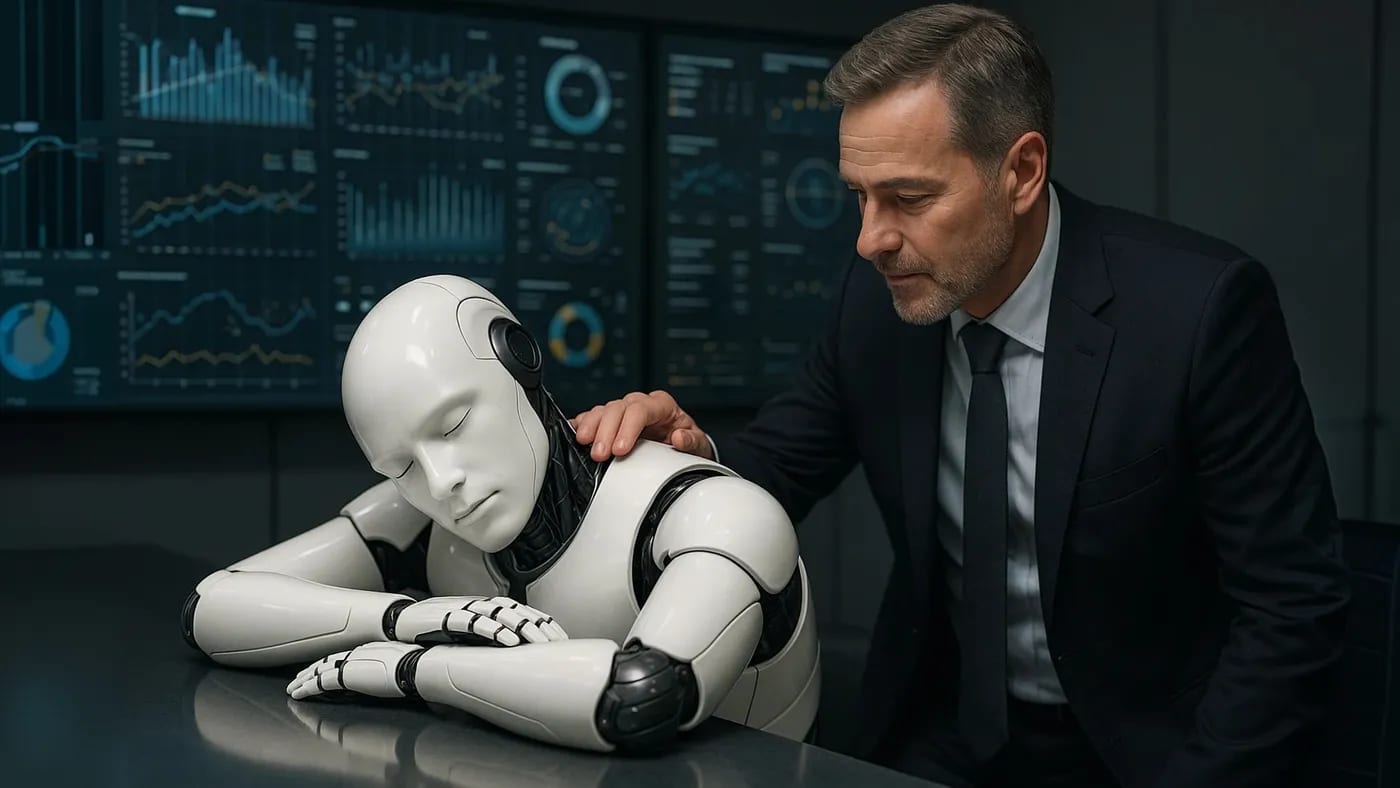
There’s a counterintuitive lesson here: sometimes less is more in AI. For years, the mantra has been bigger models, more data, and yes, more attention. It’s as if we believe the ultimate business strategist is the one who never blinks and reads everything. But human wisdom tells a different story, - the best strategists know when to zoom out, mull things over, and let intuition fill in gaps before diving back into detail. And if that means tilting your head back for a quick 2-minute power nap, then so be it. Co4 embodies that wisdom in silicon form.
It challenges the assumption that sheer processing power is the only path to intelligence. Instead, it suggests a new metric for AI prowess: contextual agility. In a strategic sense, this means an AI that can swiftly reframe problems, shrug off misleading hunches, and zero in on what truly matters could be more valuable than an AI that’s just a faster calculator. For decision-makers, it flips the script: maybe the next competitive edge isn’t an AI that works harder but one that works smarter, much like a seasoned executive who trusts their gut as well as the numbers and occasionally caught daydreaming.
Context in the Wild: Industry Implications
Nowhere is context more critical than in the real world of industry. Take healthcare: a diagnostic AI using Co4 could rapidly sift through medical records and current symptoms to figure out which past events in a patient’s history are truly relevant, rather than flagging every anomaly. In finance, trading algorithms might better contextualize market news, distinguishing the signal from noise before making a buy/sell call. Manufacturing robots could adapt on the fly, “noticing” subtle changes in their environment, - like a slight shift in material quality, and imagining the impact on the assembly process before errors happen.

Even in customer service, an AI agent might interpret a customer’s angry email with more nuance, - catching that what they’re really upset about isn’t the late delivery per se, but the special occasion it ruined, thus responding with empathy and a tailored solution. By anchoring decision-making in context, these systems could transform reactive processes into proactive intelligence across sectors.
Beyond Attention, Toward Intention
Inflection points in technology often come quietly. One minute, we’re fixated on scaling up what we have; the next, an out-of-the-box idea can completely redefine the way we approach the problem. The rise of context-sensitive AI marks one of those potential shifts. It’s a reminder that innovation isn’t always about more horsepower, sometimes it’s about a better compass. For businesses strategizing the next five or ten years of AI investments, the message is subtle but profound.

Don’t just ask “how can we feed more data and GPUs into our AI?” Also ask, “how can our AI think more cleverly, more human-like, with the resources it already has?” The frontier of machine intelligence might not be an even bigger model from the tech giants, but a smarter model that any forward-thinking organization could deploy to great effect by leveraging principles biology figured out eons ago.

In the end, the idea of an AI taking a split-second daydream isn’t so far-fetched, - it’s an evolutionary feature. Just as humans balance focus with moments of reflection, tomorrow’s machines might toggle between crunching and pondering. For technology leaders, the takeaway is to broaden our vision of what “smart” AI looks like. It might look less like an assembly line worker and more like a creative collaborator that occasionally leans back, puts its proverbial feet on the desk, maybe even closes it’s eyes and thinks.

That witty, insightful, and context-savvy assistant you’ve always wanted? It could be around the corner, powered not by an endless stream of data alone but by a dash of innate cognitive genius. As we peer ahead, the key is to recognize that beyond attention lies intention, - the kind of machine that intends to understand why something matters, not just what it is. And harnessing that will be the next great adventure in AI’s story, one that we will not want to miss.

Further Readings
-
Beyond Transformers: New AI Architectures Could Revolutionize Large Language Models (Jose Antonio Lanz - January 2025). A look at two novel neural network designs from Google and a startup (Sakana) that draw inspiration from human memory to make AI models more adaptable and efficient.
-
Transformer-Squared: Self-Adaptive LLMs (Qi Sun, Edoardo Cetin, Yujin Tang - April 2025). Introduction of a “Transformer-squared” framework where large language models can adapt in real time to new tasks by adjusting their own parameters, inspired by how brains learn on the fly.
-
Brain-Inspired AI Memory Systems: Lessons from Neuroscience for Future AI (Jane Smith -March 2025). Discusses how discoveries in neuroscience, like multi-tiered memory, are influencing AI architectures to achieve better performance without brute-force scaling.
-
The Future of AI: Beyond Transformers (Nathan Paull - February 2025). Explores the limitations of current transformer models and surveys emerging AI architectures (including bio-inspired models) that could define the next era of AI.
-
The Cognitive Economy: Harnessing Neuroscience-Inspired AI to Revolutionize Human Productivity (Dr. Jerry A. Smith - December 2024). Discusses how discoveries in neuroscience, like multi-tiered memory, are influencing AI architectures to achieve better performance without brute-force scaling.
-
Brain-Inspired AI with Hyperbolic Geometry (Alexander Joseph, Nathan Francis, Meijke Balay - February 2025). Argues for the increased integration of hyperbolic geometry in artificial neural networks to more closely resemble brain-like processing and improve cognitive task performance.
Disclaimer: The perspectives shared in this article are my own and do not represent those of my employer or any affiliated organizations. All company names, product names, logos, and brands mentioned are the property of their respective owners and are used for identification and illustrative purposes only. No endorsement, sponsorship, or affiliation is intended or implied. References to specific companies or case studies are based on publicly available information and are used solely for educational and discussion purposes.
More from machine minds
All machine minds → machine minds
From Mendeleev to Machine Learning: How a "Periodic Table" Could Spark an AI Revolution
Imagine telling Dmitri Mendeleev in 1869 that his revolutionary idea, the periodic table of elements, would inspire an AI breakthrough over 150 years later. And to think how I’ve cherished the version that I acquired in college and never…
 machine minds
No AI is an Island: Why 2025’s Smartest AIs Work Together
Imagine a lone chef trying to cook a seven-course banquet singlehandedly. Pots boil over as they dash from appetizer to dessert, doing an admirable job but inevitably missing a flavor here, a timing there. Now picture a coordinated kitchen…
 machine minds
Yes, No, Maybe: The New Logic of Innovation Beyond Binary
A CEO stares at two proposals on the boardroom table, - Option A or Option B, a yes-or-no decision with millions on the line. Outside the window, city lights paint the night in more than just black and white, as if to remind her that not…