From Mendeleev to Machine Learning: How a "Periodic Table" Could Spark an AI Revolution
🔊 Listen to the Podcast version here. 🔊
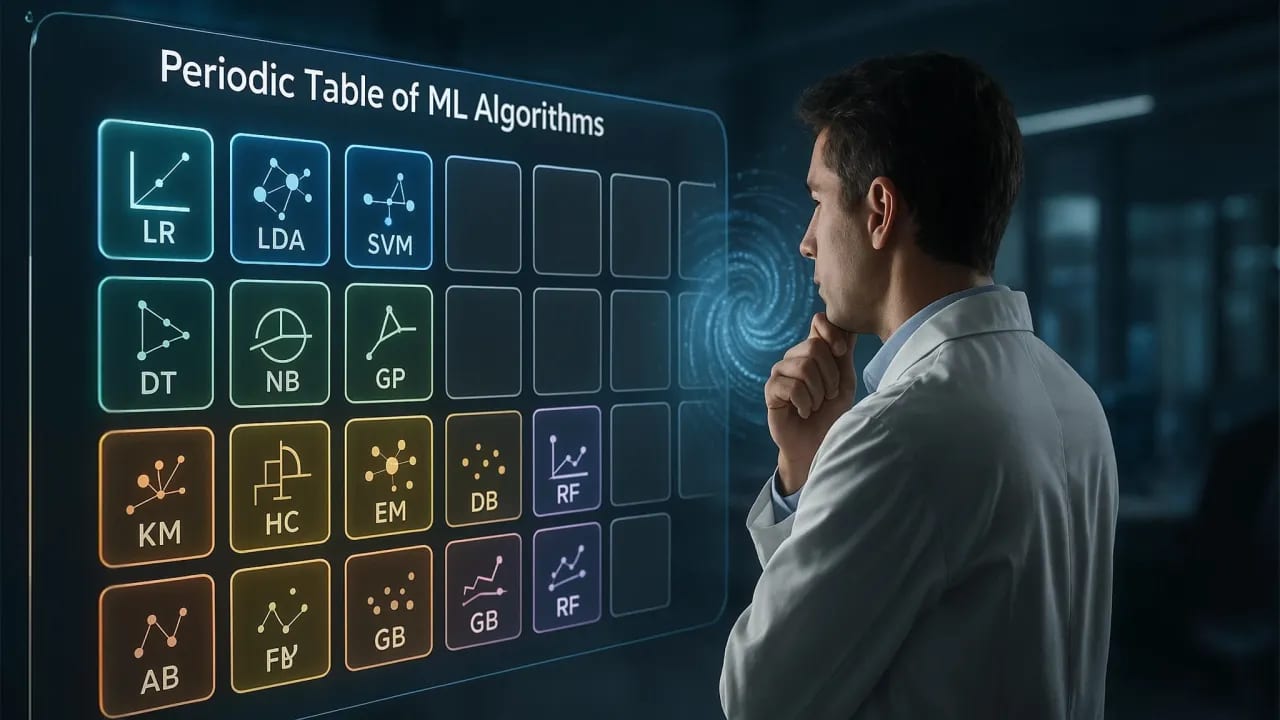
Imagine telling Dmitri Mendeleev in 1869 that his revolutionary idea, the periodic table of elements*,* would inspire an AI breakthrough over 150 years later. And to think how I’ve cherished the version that I acquired in college and never realize that the idea of the periodic table could be applied beyond just atomic structures. It sounds absurdly whimsical, like a time-traveling science fair project. Yet here we are in 2025: MIT researchers have built a “periodic table” for machine learning algorithms (news.mit.edu).

And it’s not a mere metaphor or a cute visual; it’s a unifying framework that could fuel the next wave of artificial intelligence discovery. In a field often driven by “bigger models, bigger data” hype, this development stands out for its elegant simplicity and profound implications. It turns out that a little old-school organization can spark a lot of new-school innovation, - and maybe even change how businesses strategize their AI efforts.
We’ll journey through this surprising tale of chemistry inspiring computing, let’s explore how the original periodic table brought order to chaos and how its new AI counterpart might do the same for machine learning. Along the way, we’ll see real (and hypothetical) examples of what this means in practice, - from new algorithms outperforming the state-of-the-art to big-picture shifts in how business leaders might approach AI innovation.
Order from Chaos: A Chemistry Lesson for AI Innovators
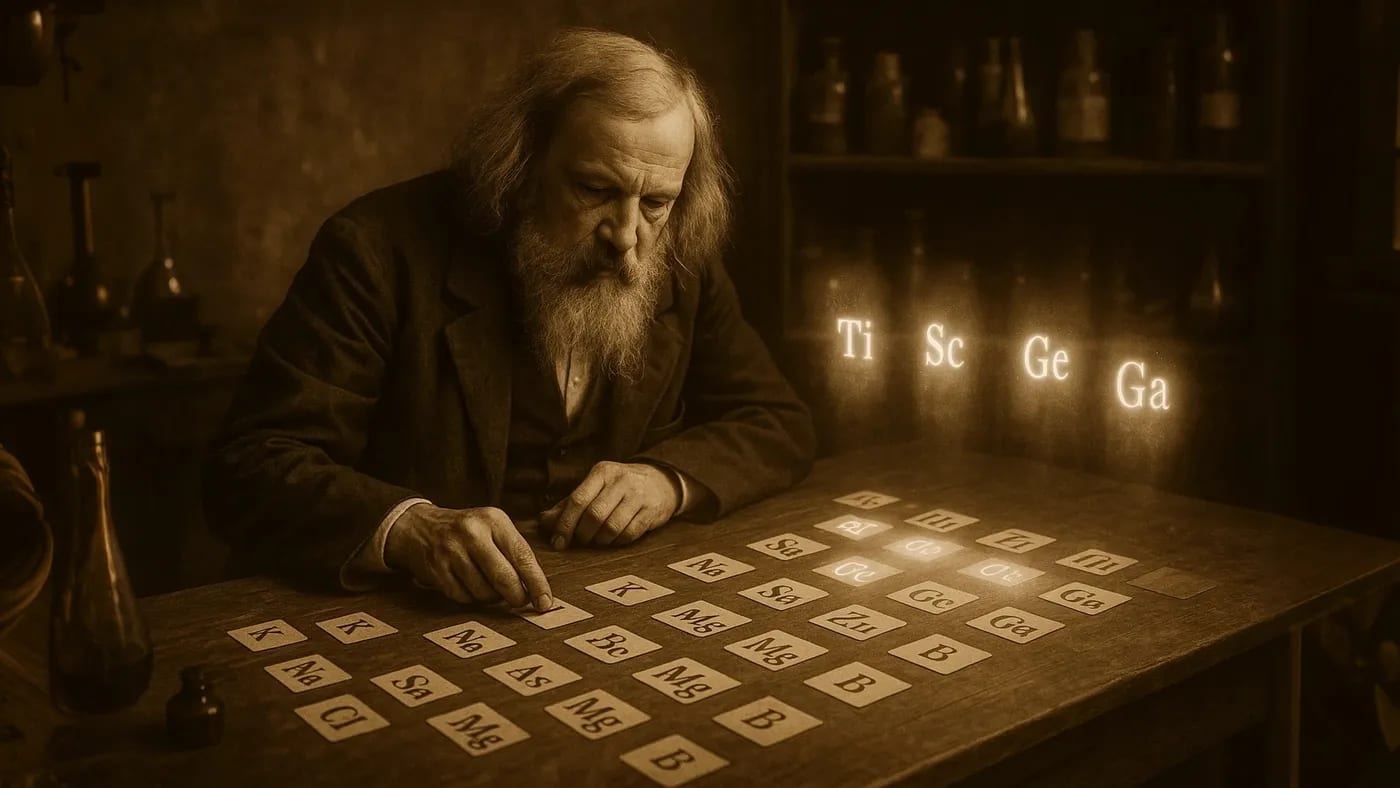
Let’s rewind to the 19th century. The world of chemistry was, to put it mildly, a hot mess. Dozens of elements had been discovered, each with its own quirky properties, and scientists struggled to find any rhyme or reason in the elemental zoo. Enter Dmitri Mendeleev, a Russian chemist with a penchant for card games and bold ideas. In 1869, Mendeleev did something radical: he wrote down the known elements on cards (yes, like a Victorian-era flashcard game) and arranged them by atomic weight and chemical behavior (history.aip.org). He saw a pattern – a periodic one. Elements lined up into columns sharing similar properties, but only if he left gaps for elements not yet discovered. Rather than dismiss those gaps as “holes” in his theory, Mendeleev predicted new elements would be found to fill them. Bold move, right? Skeptics laughed, but within years gallium (1875), scandium (1879), and germanium (1886) were discovered, fitting snugly into Mendeleev’s blank spaces. His periodic table had triumphed, bringing order from chaos and giving chemistry a powerful roadmap for future discoveries.
Fast forward to today’s machine learning research, and you’ll find a similar chaos begging for order. The AI/ML field has exploded with algorithms and models, - supervised, unsupervised, reinforcement learning, deep learning, you name it. New techniques pop up weekly (or so it seems), each with its own devotees and fancy jargon. For practitioners and researchers, it’s like being a chemist in 1868: lots of “elements” (algorithms), but no unified view of how they all relate. Sure, we categorize algorithms broadly (decision trees vs. neural networks, clustering vs. classification), but these categories are often taught as completely separate beasts. Could there be an underlying structure connecting, say, a clustering algorithm from 1970 and a deep neural network from 2020? The creators of the ML periodic table thought so, and as we’ll see, they were on to something big.
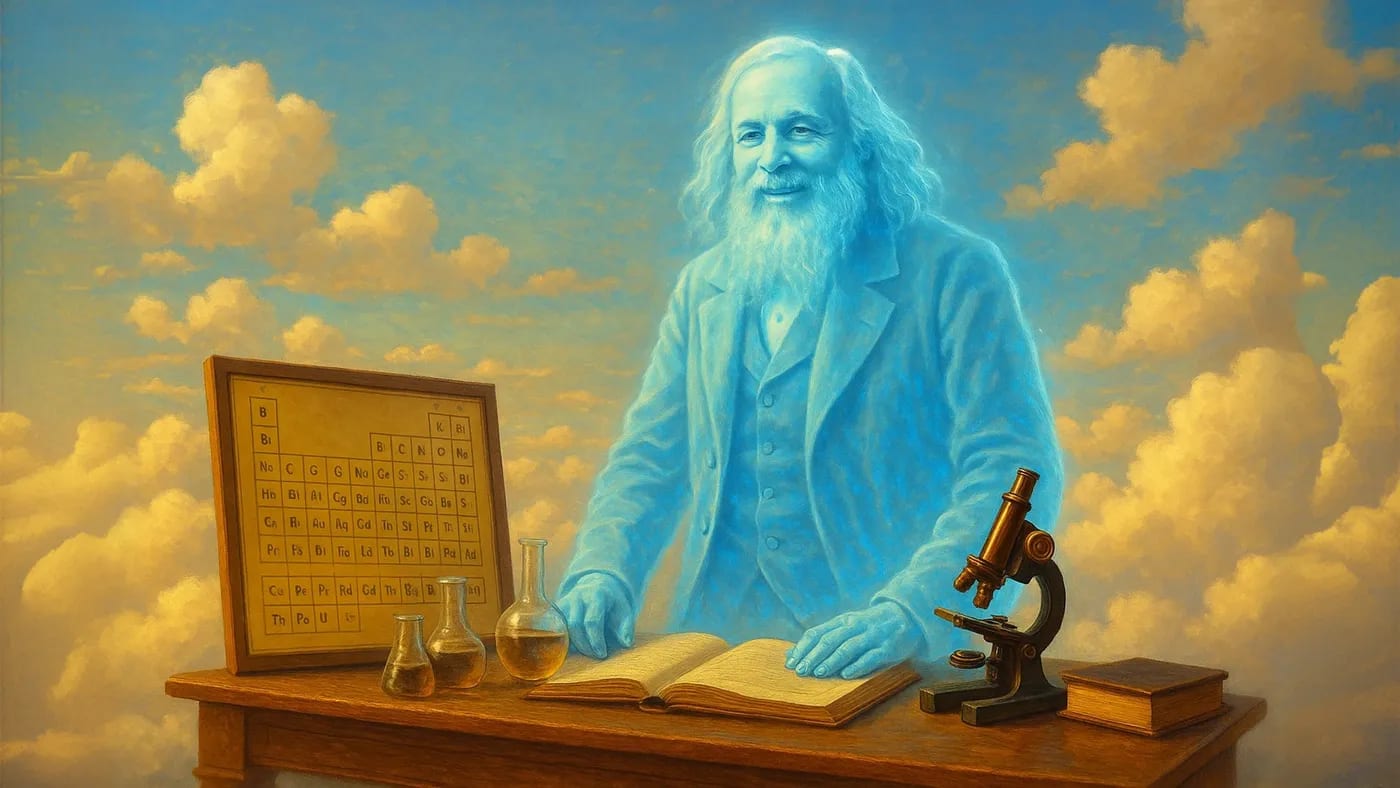
Before we jump into the details of the machine learning periodic table, it’s worth savoring the historical irony: a conceptual tool devised in the age of gaslight and telegrams is guiding cutting-edge AI in the era of quantum computing and GPT-5. It’s a beautiful reminder that innovation often means synthesizing old ideas in new ways. As one might reluctantly observe, sometimes the next big thing in AI isn’t a bigger model, – it’s a smarter way to organize what we already have. The ghost of Mendeleev is surely smiling in his laboratory in the sky, - possibly rearranging machine learning algorithms on index cards as we speak.
Inventing a Periodic Table… for Machine Learning
The story of how MIT’s team created a periodic table of machine learning is pretty unexpected. The researchers, a collaboration between MIT, Google, and Microsoft, didn’t initially set out to make a periodic table of anything (news.mit.edu). It began with graduate student Shaden Alshammari tinkering away on a specific problem: clustering algorithms, - those methods that group similar data points, like sorting images into clusters of cats, dogs, etc. without labels.
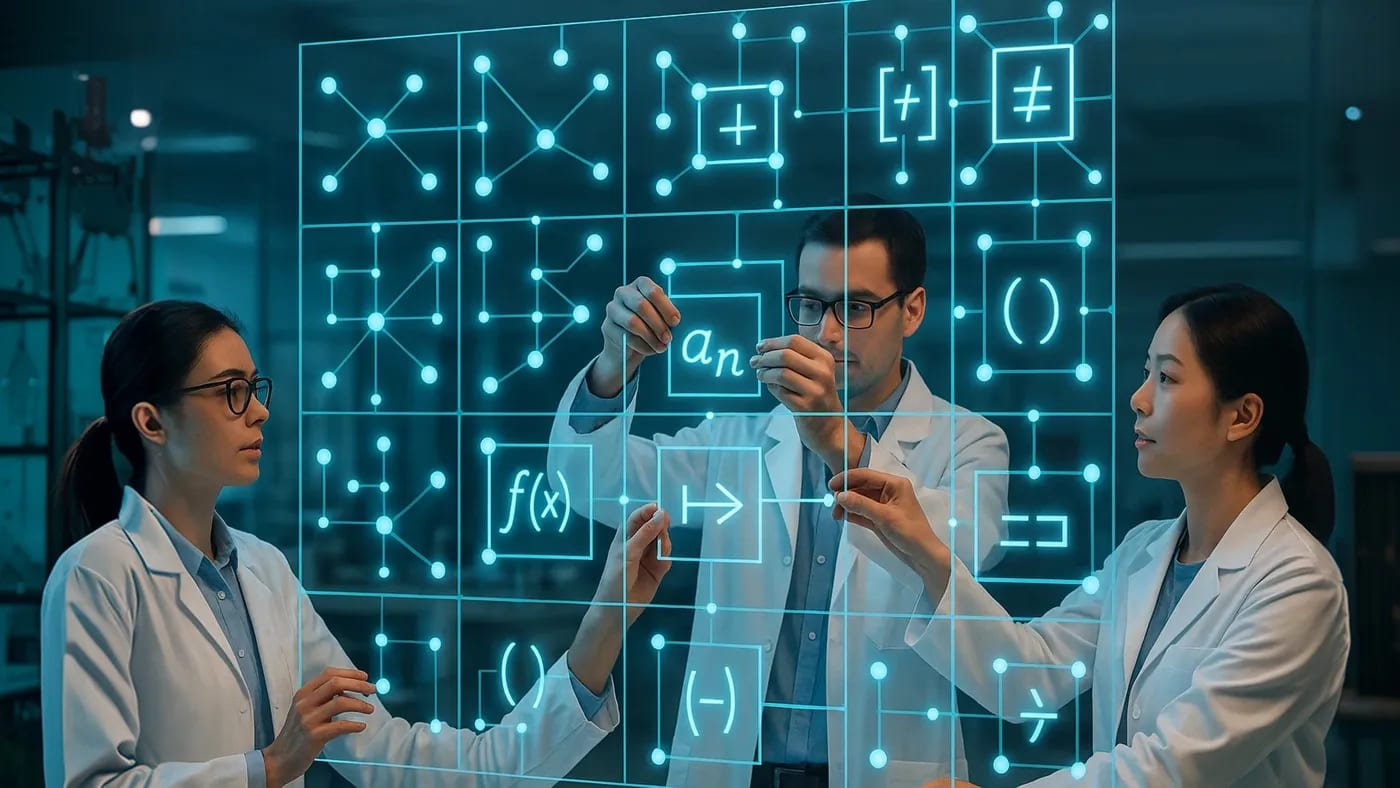
As Alshammari dug into the math, she got a sense of déjà vu. The equations behind clustering looked oddly familiar… reminiscent of something she’d seen in an entirely different context. It reminded her of a contrastive learning algorithm, a technique inspired by how our brain’s visual cortex learns by comparing differences (popularmechanics.com). Contrastive learning is used in self-supervised learning (for example, teaching AI to recognize images by learning what makes two images alike or different). At first glance, clustering and contrastive learning appear unrelated, - one assigns images to groups, while the other learns representations by comparing samples, but at their core, they share strikingly similar mathematical foundations.
This “Wait a minute… haven’t I seen you before?” moment led Alshammari and her colleagues to a eureka equation. They discovered that many classical machine learning algorithms, - from clustering and dimensionality reduction to classification and even aspects of deep learning, - could be described by the same underlying equation. In other words, these algorithms were like different songs played on the same musical instrument. The team named this unifying framework I-Con, short for Information Contrastive Learning (neuron.expert). (No relation to icon, though the name is fitting, - it’s iconoclastic, breaking down the silos between algorithms.)
What is I-Con? At heart, it’s a bit of math, - specifically a loss function (think of it as a measure of error), - that captures how an algorithm learns relationships between data points.
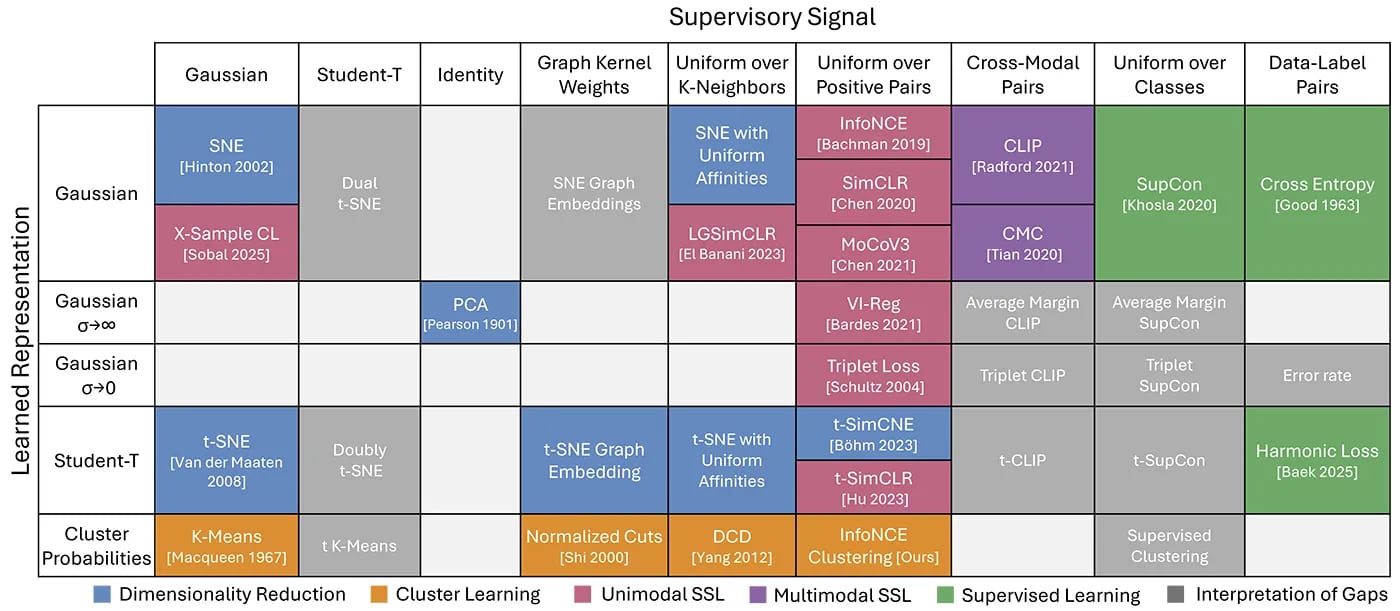
If that sounds abstract, consider a down-to-earth analogy: a party with many guests. Each algorithm is like a different way of seating those guests at tables:
-
In a clustering algorithm, guests sit with others who are physically nearby – like sorting data points into clusters based on proximity, - who’s nearest whom. (microsoft.com).
-
In classification (supervised learning), guests sit with their assigned club or team – in other words, data points group by a shared label (all the “bananas” at one table, all the “apples” at another).
-
In dimensionality reduction (think PCA or t-SNE), guests start in a high-dimensional dance floor and we try to seat them in a low-dimensional way while preserving who was close to whom in the original space.
-
In a graph algorithm (like spectral clustering), guests are connected by literal strings or handshakes (edges in a network) and form tables accordingly.
-
Even a large language model’s prediction (like GPT guessing the next word) can be seen as seating words that likely follow each other – effectively grouping tokens by the “neighborhood” defined by grammar and context.
Despite these different seating arrangements, all these algorithms share a common goal: make the seating (the model’s internal representation) reflect the true friendships or relationships in the data as closely as possible. In more technical terms, each method “aims to minimize how much their approximate connections deviate from the real data’s connections”. The I-Con equation formalizes this idea using an information-theoretic metric (the team used Kullback–Leibler divergence, a way to measure difference between two distributions).
This sounds complex, but it’s beautifully general. Change the definition of “connection” or “neighbor” in the equation, and you toggle between algorithms. Turn one dial and k-means clustering pops out; turn another and you get logistic regression or an SVM classifier; another tweak yields t-SNE (a popular visualization tool). It’s like a one-size-fits-many formula for machine learning.
Seeing all these algorithms through the same lens was step one. Step two was the masterstroke: organize them into a “periodic table.” The researchers drew a grid much like Mendeleev’s, but instead of chemical properties, the axes represented key properties of the algorithms. One axis described the type of connection in the real data (Are data points “friends” because they’re nearby in space? Because they share a label? Because one transitions to the other in a sequence? Etc.). The other axis captured the approximation technique the algorithm uses (Does it assume things are Gaussian? Does it sample random neighbors? Does it treat relationships as binary or continuous? etc.). Each known algorithm they analyzed fit neatly into a unique slot defined by a particular combination of connection type and approximation method. It’s as if each algorithm were an element with its own “atomic number” in this conceptual table.
And just like Mendeleev’s table, when they filled in what they knew, they found holes, - blank spots in the grid with no known algorithm occupying them. Instead of saying “oh well, nothing goes here,” the team realized these gaps were opportunities. Each empty square wasn’t a flaw in the framework; it was a prediction. A hint that “hey, an algorithm should exist at this intersection, so why not invent it?”. In essence, the table started suggesting new algorithms the way the chemical periodic table once suggested new elements.
The gravity of this development is hard to overstate for the AI community. It’s as if a chaotic library of math tools suddenly got a Dewey Decimal system.
“We’ve shown that just one very elegant equation, rooted in the science of information, gives you rich algorithms spanning 100 years of research in machine learning. This opens up many new avenues for discovery,” says MIT researcher Mark Hamilton.
The normally understated tone of academia borders on giddy in such remarks – and for good reason. Unifying theories in any field are rare and precious; they don’t come by often (just ask the physicists chasing a Grand Unified Theory for decades). Here, in machine learning, a domain often criticized for ad-hoc results and “alchemy,” we suddenly have something systematic.
To borrow a dry quip: Machine learning has grown up so fast, it finally decided to clean its room and organize its toys. The result is not just tidiness for its own sake, but a clarity that could accelerate innovation. Before we explore those innovations, let’s look at an example of how filling one of those “missing algorithm” gaps actually led to a real breakthrough.
Filling the Gaps: New Algorithms from Unlikely Combos

Creating a periodic table is cool; using it to discover something new is cooler. The MIT team didn’t have to wait long. They eyed one of the empty spots on their ML table and wondered what algorithm might live there. The particular gap in question suggested a hybrid of sorts: something that combined contrastive learning (a technique often used to learn representations without labels) with clustering (grouping data points, typically also without labels). If those sound abstract, think of it this way: contrastive learning is great at learning rich features from data by comparing pairs, while clustering is great at grouping data globally. Why not marry the two? Using I-Con as a guide, they did exactly that! They took a recent innovation in contrastive learning debiasing and applied it to a clustering method.
The outcome was a brand-new algorithm for image classification that doesn’t require a single human-provided label. It was tested on the notoriously challenging ImageNet dataset (the “gym” where vision algorithms bulk up). The result? This new concoction classified images 8% more accurately than the previous state-of-the-art algorithm in that category. An 8% jump in performance, in AI terms, is like breaking a track record, - it turned heads. And remember, this wasn’t achieved by throwing more data or compute at the problem, but by combining ideas from two corners of the algorithmic universe that hadn’t been combined before.
The periodic table pointed the way to an “algorithmic alloy” stronger than its component metals, if you will.
Another “gap-filling” experiment showed that a trick developed to debias contrastive learning models (basically, a way to reduce certain biases in how algorithms pick their friends) could be plugged into clustering algorithms to make them more accurate. Imagine that, - a tweak invented to help, say, a self-driving car’s perception system could directly improve a data-mining tool used for customer segmentation, all because at a fundamental level they share the same math under I-Con. This is cross-pollination in action.
These are early examples, but they are case studies in the power of synthesis. They validate what Alshammari and team hoped: “the results in this work represent just a fraction of the methods that are potentially unify-able with I-Con,” she notes, “and we hope the community can use this viewpoint to improve collaboration and analysis across algorithms and machine learning disciplines.”. In plainer terms: Y’all, we just opened a portal, - come in and start mixing stuff!
From a narrative perspective, this moment is an inflection point. It’s when the story shifts from “we organized the past” to “we’re inventing the future.” The framework is not a museum exhibit of algorithms; it’s a workbench. And here’s a twist: by making machine learning more systematic, the field might actually become more creative. Sounds paradoxical, but consider how having the periodic table empowered chemists. A chemist in 1870 could look at Mendeleev’s table and think, “Hmm, if element X reacts with Y in this column, an undiscovered element below X might do the same, producing a new compound.”
Similarly, an AI researcher in 2025 might look at the ML table and think, “If algorithm A and B are adjacent here, maybe an algorithm that blends their properties (sitting in the gap between them) will achieve something unprecedented.”
In both cases, a structured framework amplifies imagination by highlighting what’s not there… yet.
The excitement isn’t limited to academia. Forward-thinking tech companies are paying attention. Why? Because the next breakthrough algorithm might not come from a lone genius yelling “Eureka!” – it might come from systematically exploring the “algorithmic space” that I-Con lays out.
In the land of machine learning, X no longer marks the spot… a blank square on the periodic table does.
Cross-Pollination and the Power of Synthesis
And here’s an insight for the ages: when you create a map, you not only guide explorers – you also inspire them to explore. There’s now a generation of PhD students who can literally pick a blank spot on the ML periodic table as their thesis topic: “I’m going to attempt an algorithm that fits here, between these two.” How neat is that? It brings a bit of scientific method back to a discipline that sometimes felt like an arts-and-crafts competition of who can glue pieces together better.
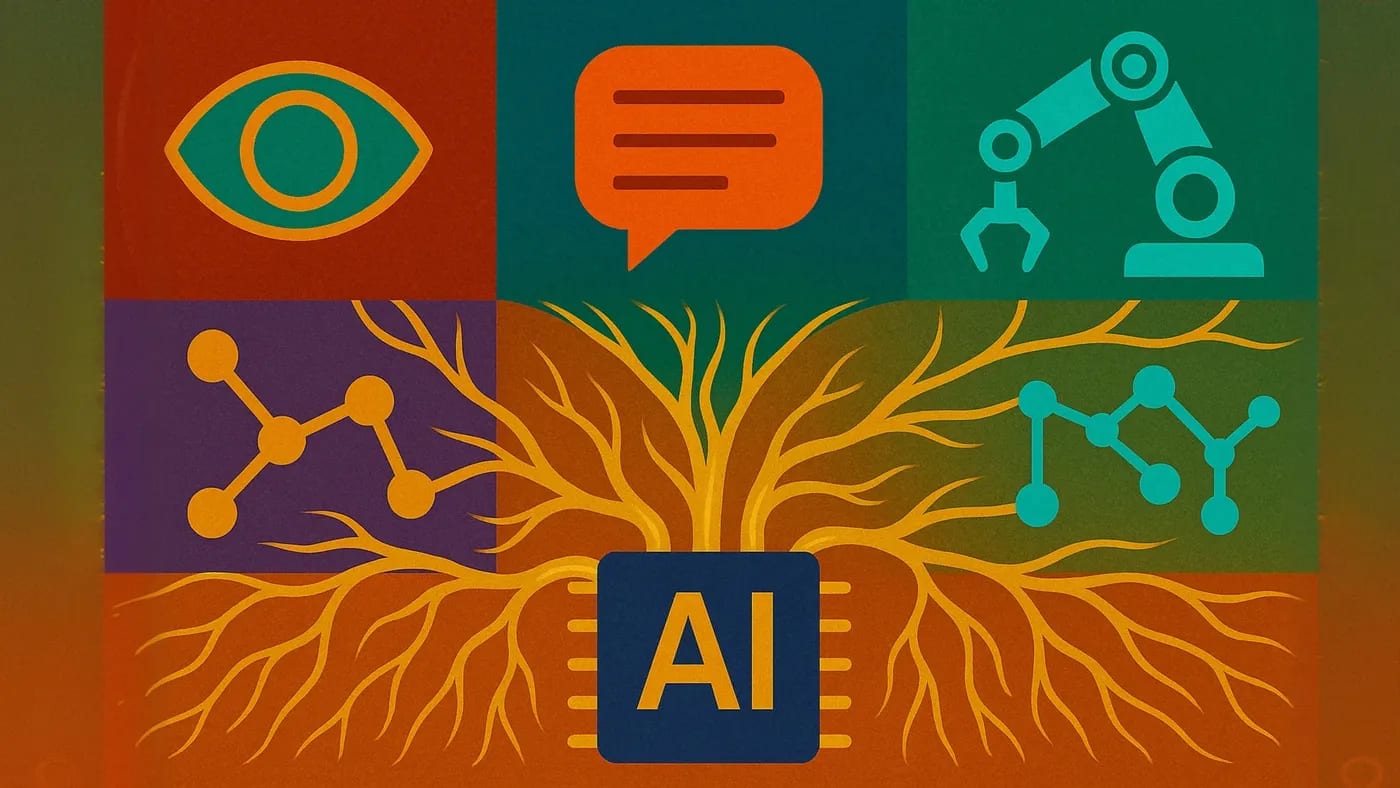
Machine learning researchers, rejoice – you may finally have an excuse to hang a periodic table on your wall like your chemistry geek friends, and it actually means something.
Why Business Leaders Should Care About This
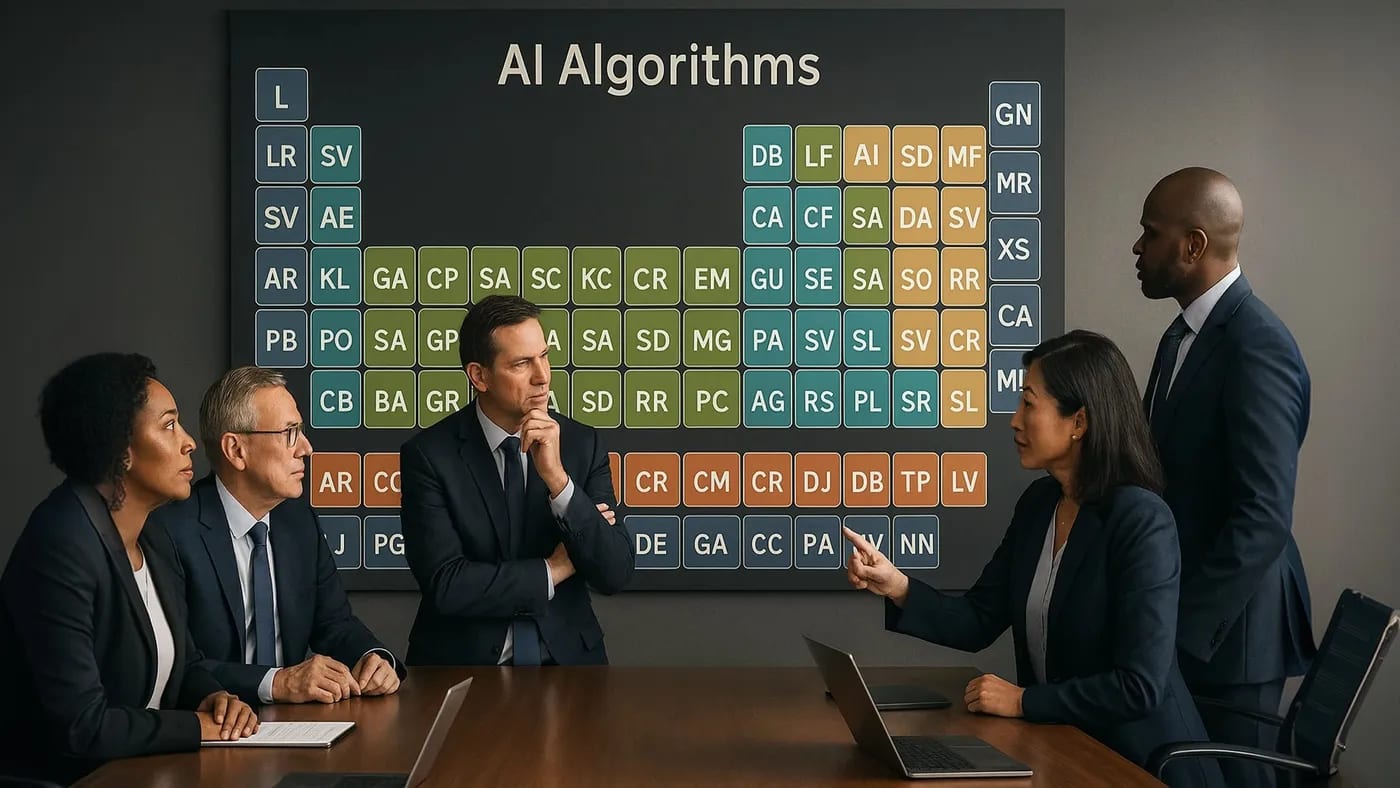
At this point you might be thinking: “Alright, so academics have a new shiny framework. Cool story, but I run a business / lead a product team. What does this do for me besides being a neat analogy to drop in a meeting?” Fair question. The answer lies in the strategic implications of a more unified and systematic approach to AI. Business leaders have often felt like they’re at the mercy of rapid AI advances, chasing one fad after another. First it was “We need a big data strategy,” then “We need deep learning,” then “We need explainable AI,” then “We need generative AI.” It’s like trying to catch confetti in a storm , – the moment you grab one piece, a dozen more swirl around. A periodic table of machine learning offers something deeply appealing amid this chaos: clarity and foresight.
Here are a few ways this shift toward unified frameworks could impact business strategy and AI deployment:
A Map for Innovation
Think of the periodic table of ML as a map of the AI capability space*.* If you’re a CTO planning your next product feature that relies on machine learning, this map can help identify what combination of techniques might work best, or whether a missing algorithm could be the key. Rather than blindly throwing a neural network at a problem because it’s trendy, you could pinpoint, for example, that your problem is essentially about grouping customer behaviors (a clustering-type connection) and predicting outcomes (a classification connection). The table might show a gap or a promising cross-over method to tackle exactly that mix. In other words, it guides R&D decisions with a more systematic outlook, potentially saving time and R&D budget by highlighting paths likely to succeed and pitfalls to avoid.
-
Efficiency and Reusability: Businesses often suffer from “reinventing the wheel” in AI. One team builds a model for X, another team builds a model for Y, and they use totally different algorithms without realizing they share core principles. With a unified framework, cross-team collaboration becomes easier. A fintech company’s fraud detection algorithm might learn from a bioinformatics team’s pattern recognition approach once they see on the table that both are variants of, say, contrastive learning. Reusing components or techniques means faster deployment and less duplication. It encourages the development of modular AI components that can be plugged into multiple systems, much like how standardized parts revolutionized manufacturing.
-
Strategic Talent Development: If the field moves toward thinking in frameworks like I-Con, the kind of expertise you want in-house might shift. Instead of siloed specialists who only know one library or one class of algorithms, you’d value “AI architects” who grok the unified theory and can creatively combine techniques. These are the people who don’t just chase the latest Kaggle-winning model, but understand why it wins and how to transplant that success elsewhere. Companies could start training their data scientists in this framework, - essentially giving them the periodic table as part of their mental toolkit. The benefit? Your team is better at adapting to new research, because they can see how that new flashy algorithm on ArXiv fits into the grand scheme or doesn’t.
-
Innovation Pipeline Insurance: In sectors like pharmaceuticals, having a platform approach (like a consistent way to discover drugs) is more valuable long-term than one-off discoveries. The periodic table of ML hints at a more “platformized” approach to AI innovation. Businesses could establish internal research programs specifically aimed at exploring gaps in the algorithmic table that align with their domain needs. For instance, a logistics company might notice that none of the existing algorithms quite fit their need for real-time route optimization with uncertainty. Using I-Con, they identify a gap and invest in creating a new algorithm, - which becomes a proprietary advantage. It’s like discovering a new element and owning its applications!
-
Demystifying AI for Stakeholders: Let’s not underestimate the communication value. AI has often been a black box, not just technically but organizationally, - hard for non-tech execs to grasp why a certain approach is chosen. A periodic table visualization can be a powerful communication tool. Imagine explaining to your board, “Here’s where our current capabilities lie on this map of AI. These areas are crowded (commoditized solutions available), but here are a couple of white spaces, - that’s where we aim to develop something novel.” It frames strategy in a way that’s easier to digest than jargon-laden technical briefs.
Business leaders who get this will navigate the AI landscape with more confidence. Instead of being sold a black box solution by a vendor, they can ask, “So, which cell of the ML periodic table does this fall into? Is it a new element or just a remix of something known”? Imagine the look on a consultant’s face if you ask that. Savvy vendors might even start marketing in these terms: “Our solution fills a known gap in the algorithmic periodic table, - we combine X and Y in a way no one has before.” That at least sounds more concrete than “our AI is revolutionary trust us.”
This shift toward unified frameworks in AI is about moving from alchemy to engineering.
And every business leader prefers reliable engineering to mystical alchemy when betting their company’s future on it. The periodic table of machine learning is a sign that the field is maturing, getting more disciplined. Those companies that internalize this mindset will likely be better prepared for the next wave of AI advancements, whatever they may be.
Charting the Future: Embrace the Framework, Empower the Innovation

It’s not every day that we witness the birth of a new framework that can reshape an entire field. The periodic table of machine learning might seem like a niche academic concept at first glance, but as we’ve explored, its ripples extend far beyond the lab. This narrative has taken us from Mendeleev’s drafty chemistry lab to modern AI research centers, from the thrill of discovery to the practicalities of boardroom strategy. The common thread is the power of synthesis and structure. By recognizing the underlying unity among diverse algorithms, we open doors to innovation that were previously invisible in plain sight.
In a sense, the AI community has been given a gift: a map of what we’ve accomplished and a hint of where to go next.
“We’re starting to see machine learning as a system with structure that is a space we can explore, rather than just guess our way through,” Alshammari said.

For those of us cheering from the sidelines or analyzing how to leverage these developments, it’s a call to action: encourage the breaking of silos, invest in understanding fundamentals, and look for connections others miss.
The periodic table of machine learning is a reminder that innovation is often about connecting the dots, not just drawing new ones. It challenges the notion that we must constantly invent from scratch. Sometimes, we just need to see what was already there from a new angle.
As we look to the future, one can’t help but feel a cautious optimism. Frameworks like this bring a bit of order to the wild frontier of AI. They won’t solve every problem, - and we shouldn’t expect a Grand Unified Theory of Everything AI overnight, but they push the field a step closer to maturity. They also remind us that progress in AI (and any field) is not only about speed, but about wisdom. In a world racing ahead, taking a moment to map out where we stand might just give us the insight needed to leap forward more effectively.
“In the end, everything is connected – the trick is to understand how.”
The periodic table of machine learning is one new trick to do exactly that. And whether you’re coding the next model, managing an AI team, or just pondering the societal impact of smarter machines, understanding those connections is key to navigating the road ahead. So here’s to a future where AI discoveries are fueled not just by big data or big compute, but by big understanding.
Now, go forth and multiply (your algorithms, that is), - the map is waiting!

Further Readings
For those eager to dive deeper into this topic or explore related developments in 2025, here are some recent publications and articles that shed more light:
-
Periodic table of machine learning could fuel AI discovery. (Adam Zewe - April 23, 2025). MIT’s official news release about the I-Con framework, detailing how the research came about and its significance. It highlights the periodic table analogy and includes expert commentary on unifying AI methods.
-
A Periodic Table for Machine Learning. (Microsoft Research Blog - April 23, 2025). An explanatory article (updated April 28, 2025) from Microsoft Research that uses accessible analogies (like party guests forming clusters) to describe I-Con. It emphasizes how changing “neighborhood” definitions can recreate different algorithms and discusses the discovery of gaps and new methods in the table.
-
Scientists Have Created a Periodic Table for AI. (Elizabeth Rayne - April 28, 2025). A popular science take on the story, connecting it to the high school chemistry periodic table lesson. Rayne’s piece explains I-Con in lay terms, notes its accidental discovery, and how algorithms are grouped like families of elements on the table.
-
Machine Learning Gets a Periodic Table: MIT’s Revolutionary I-Con Framework. (Rahul Dogra (April 25, 2025). A newsletter article that provides an enthusiastic overview of I-Con. It includes quotes from the researchers, underscores the cross-pollination aspect, and discusses why this unifying framework can lead to more robust and unbiased models.
-
A periodic table of machine learning. (Pranjal Malewar - April 23, 2025). A brief news article summarizing the MIT research. It highlights the creation of a single unifying equation and the “periodic table” connecting 20+ algorithms, noting that the framework shows how these methods refine data representations to match informational structure.
Disclaimer: The views expressed in this article are based on the author’s interpretation of the referenced research and news. This article is for informational and thought-leadership purposes only, and does not constitute an endorsement of any specific technology or strategy. Readers are encouraged to consult original sources and professionals when making strategic AI decisions. The author’s opinions are personal and do not represent any affiliated institutions.
More from machine minds
All machine minds → machine minds
The Art of AI Daydreaming: Why Contextual Thinking is the Next Frontier
Let’s just image for a moment that your most advanced AI is on the clock, - and it’s daydreaming. At first, you might panic: the machine that cost a fortune in R&D is seemingly staring off into space instead of crunching data.
 machine minds
No AI is an Island: Why 2025’s Smartest AIs Work Together
Imagine a lone chef trying to cook a seven-course banquet singlehandedly. Pots boil over as they dash from appetizer to dessert, doing an admirable job but inevitably missing a flavor here, a timing there. Now picture a coordinated kitchen…
 machine minds
Yes, No, Maybe: The New Logic of Innovation Beyond Binary
A CEO stares at two proposals on the boardroom table, - Option A or Option B, a yes-or-no decision with millions on the line. Outside the window, city lights paint the night in more than just black and white, as if to remind her that not…