The AI That Grew a Brain: Neuromorphic Computing Comes of Age
🔊 Listen to the Podcast version here. 🔊
In a cozy rural clinic, a doctor calmly assists a patient whose hand shows the early signs of an impending seizure. Although the nearest specialist and hospital are hours away, help is already here, - in the form of a small, innovative device discreetly fitted onto the patient’s glasses. This clever gadget listens carefully to the subtle electrical signals from the patient’s brain, promptly detecting the signs of trouble ahead.

Suddenly, a reassuring alert pops up on a nearby smartphone, notifying the doctor well in advance: seizure approaching. With plenty of time to respond, the doctor administers the right medication calmly and confidently. Crisis averted!
Thanks to this tiny yet powerful piece of neuromorphic silicon, the patient receives timely, precise care without having to leave the comfort of their local community. A brighter future is already here, powered by technology that works seamlessly alongside dedicated healthcare professionals.
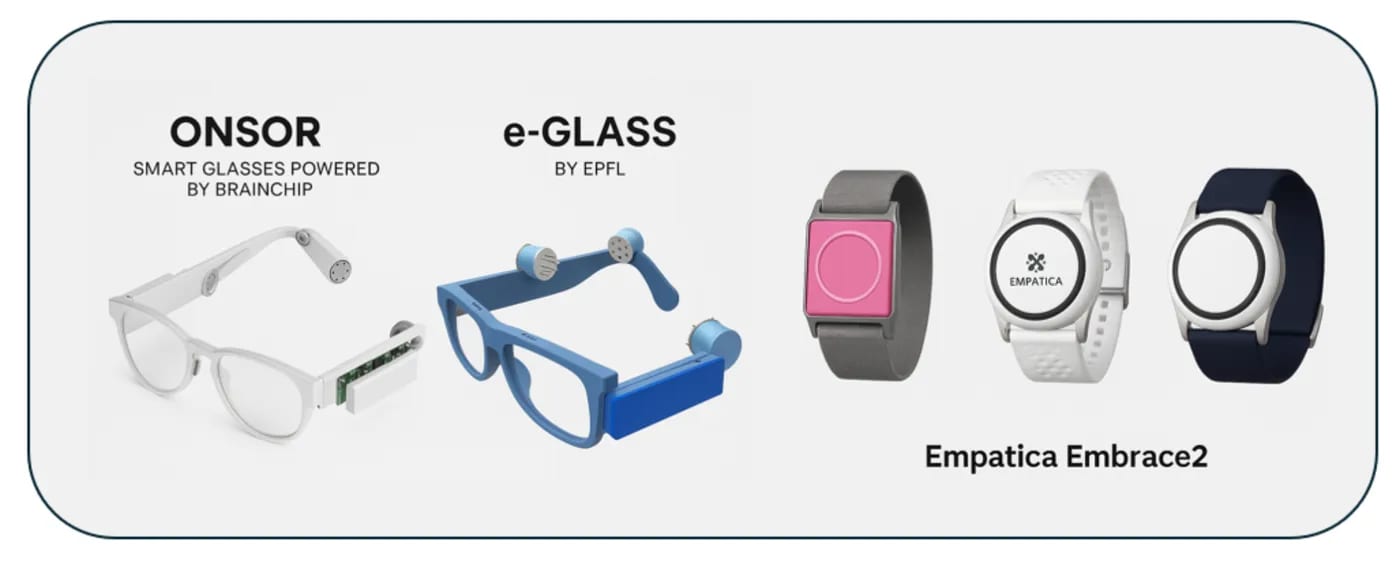
The scene above isn’t science fiction or a dramatic Netflix trailer. It’s happening now. The smartglasses in question run on a neuromorphic AI chip, - a processor designed to think more like a brain than a traditional computer (eenewseurope). Neuromorphic computing may sound like jargon, but it simply means brain-inspired computing. Instead of crunching numbers like a power-hungry calculator, these chips function through networks of artificial “neurons” and “synapses” that fire in patterns, much like the neurons in your own head. The goal? Achieve intelligence with vastly less power and more contextual adaptability than today’s mainstream AI hardware.
When Silicon Grows Synapses
To appreciate the neuromorphic approach, consider the brute-force strategy we currently use in AI. In a data center somewhere, rows of graphics processing units (GPUs) roar with fans, burning through electricity as if it were free and infinite. Those GPUs are the workhorses behind everything from sales forecasts to speech recognition.

They’re astonishingly powerful, - and astonishingly thirsty. A top-tier GPU can devour 400 watts or more just to answer your customer support chat, gulping power like an Olympic swimmer at the finish line. Meanwhile, the human brain, - arguably the most sophisticated “computer” known, sips a mere 20 watts (about the power of a dim lightbulb) to run all of a person’s mental faculties. It makes you wonder: who designed our current AI engines, Doctor Frankenstein or Mother Nature?

Neuromorphic chips aim to close this absurd efficiency gap. How? By taking a cue from biology. In your brain, neurons don’t all fire at once at a fixed frequency; they spike only when something worth noting happens. Similarly, neuromorphic processors use spiking neural networks (SNNs), - they send bursts of signals only when needed, instead of churning through every calculation relentlessly.
This event-driven model means if there’s no input or change, the chip stays mostly quiet and ultra-low-power. For IT organizations drowning in cloud bills, imagine an AI that runs on a trickle of energy, awakening only to deliver insight, then falling back to an efficient idle. Neuromorphic designs have already demonstrated 100-1000x improvements in energy efficiency for certain tasks compared to conventional processors (Medium).
This isn’t just about doing the same old tasks more efficiently, - it’s enabling AI to go places it literally couldn’t go before. Picture a wildlife conservation drone scanning for rare animals in a rainforest: it can’t lug a supercomputer or rely on cloud connectivity out in the bush. But a neuromorphic vision sensor could recognize species from the air using a few milliwatts, processing the imagery on-board in real time. Or take a field sensor in a remote oil rig, where internet is spotty and maintenance is infrequent. A tiny neuromorphic chip can monitor vibration patterns and learn from them over time, adapting to distinguish normal tremors from an impending drill failure. All of this on a battery that lasts not hours, but months or years.
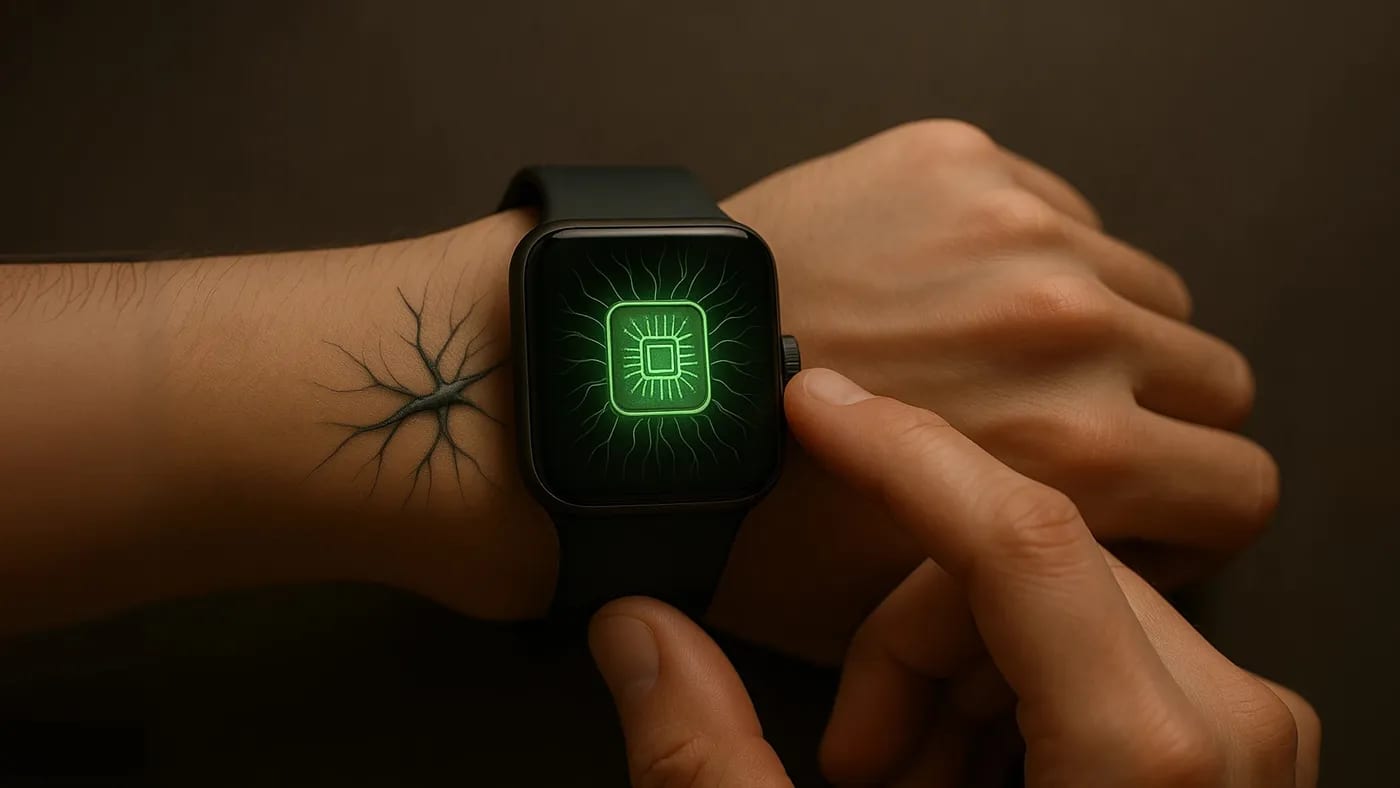
These examples underscore a development unfolding in our industry: AI is escaping the glass-and-steel cages of big data centers and finding its way into the wild. And it’s doing so by effectively growing “silicon synapses”, - redesigning our chips at a fundamental level so they behave more like brains. We see neuromorphic chips popping up in wearables that guard against medical emergencies, in smart cameras that react to events instantly, and in autonomous machines that need to make split-second decisions without a supercomputer strapped on. It’s a story of redistributing intelligence – from the center to the edge.
The 2025 Inflection Point – Why Neuromorphic Matters Now
For years, neuromorphic computing has lurked in the shadows, - a fascinating project in university labs and R&D divisions, occasionally surfacing in a press release with brainy promises. So why should technology leaders care now? Because 2025 is shaping up to be neuromorphic’s very own inflection point. Think of it as the “iPhone moment” or the “AlexNet moment,” when a once-nascent idea hits critical mass in feasibility and necessity.

The necessity side is glaring. AI’s energy appetite is becoming unsustainable, and that’s not hyperbole. One government lab estimated that if we keep scaling up today’s AI models, the cost of powering the world’s large language models could exceed the GDP of the United States by 2027 (Los Alamos Daily Post). Even if that projection is tongue-in-cheek, the point lands: we can’t keep throwing more kilowatts at our AI problems and expect a happy ending, - not for our budgets and not for the planet. Neuromorphic tech offers a way out of that spiral, by boosting efficiency by orders of magnitude. In an era where ESG concerns and cloud cost overruns both keep execs up at night, a brain-inspired solution is timely relief.

On the feasibility side, 2025 is the year the training wheels come off. After years of prototypes, we’re seeing tangible progress and scaling. Intel’s latest neuromorphic system, codenamed Hala Point, packs about 1.2 billion artificial neurons, - roughly equivalent to the brain of an owl, on a platform deployed at a national lab (Intel Newsroom). This is a tenfold leap over prior generations, and it’s not just a science project: it’s demonstrating that brain-inspired hardware can tackle mainstream AI tasks with record-breaking energy efficiency.
Meanwhile, startups and collaborators are bringing neuromorphic chips into real products, - from medical devices to satellite image analyzers. Even industry giants like Intel, IBM, and Qualcomm are in on the game, - they’ve quietly invested heavily in brain-inspired architectures (Medium). The ecosystem is maturing, - software frameworks for spiking neural networks are improving, and a new generation of engineers is fluent in both deep learning and neuroscience. In short, the question has shifted from “will neuromorphic computing ever work?” to “when and where will it outperform our current approach?”
Every tech leader knows that the biggest industry shifts often brew quietly before exploding. Neuromorphic computing has been quietly brewing for over a decade, and multiple signals, - technical, economic, environmental, suggest it’s about to boil over.
Challenging Assumptions, Seeing the Bigger Picture
Let’s step back and challenge a few assumptions. First, the dogma that more brute force is always better in AI. For the last few years, the dominant narrative has been: bigger models, more data, bigger data centers. Scale, scale, scale. That mindset has yielded impressive results, - no one’s denying the transformer models their glory, but it has also left us with diminishing returns and ballooning costs.

Neuromorphic computing posits that perhaps we’ve been chasing the wrong kind of scale. Instead of scaling up indefinitely, – stacking more servers and silicon, why not scale out by distributing intelligence in clever ways? Ten million tiny brains might accomplish what one giant brain cannot, at least not at an acceptable cost.
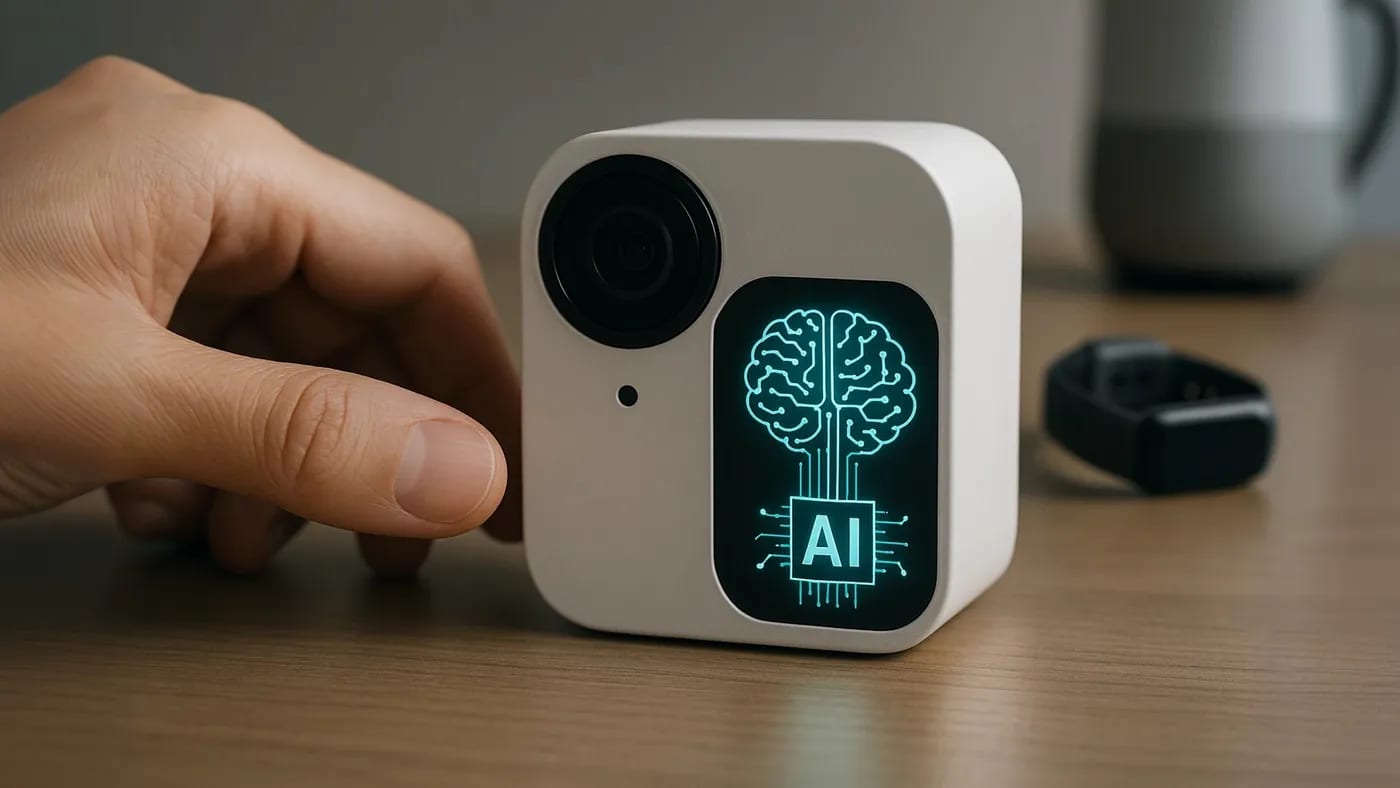
Secondly, consider our assumption that AI has to remain centralized to be smart. This assumption has been crumbling at the edges with the rise of edge AI devices, but neuromorphic technology blows it open. If your security cameras, appliances, vehicles, and wearables all gain brain-like chips that learn and adapt locally, you are effectively pushing cognition to the edges of your network. That changes the strategic calculus. It reduces dependency on connectivity, - a boon for resilience and security. It can protect privacy by processing sensitive data on-device. It also opens up new user experiences, - devices that personalize themselves in real-time, tools that continue to improve after shipping, services that don’t break when the cloud is down. We’re looking at a paradigm shift where learning happens everywhere, not just in big-data vaults.
Finally, there’s the assumption about difficulty and risk: “Sure, this neuromorphic stuff sounds great, but isn’t it experimental? Should we really bet on it?” It’s true that neuromorphic computing is a departure from the tried-and-true. But so was cloud computing once; so were GPUs for general computing tasks, for that matter. Dismissing brain-inspired tech today is like dismissing parallel computing in the 1980s or the internet in the 1990s, - in hindsight, a shortsighted call. The better question to ask is: where can we start benefiting from it sooner rather than later, and what assumptions about our AI strategy does it upend?
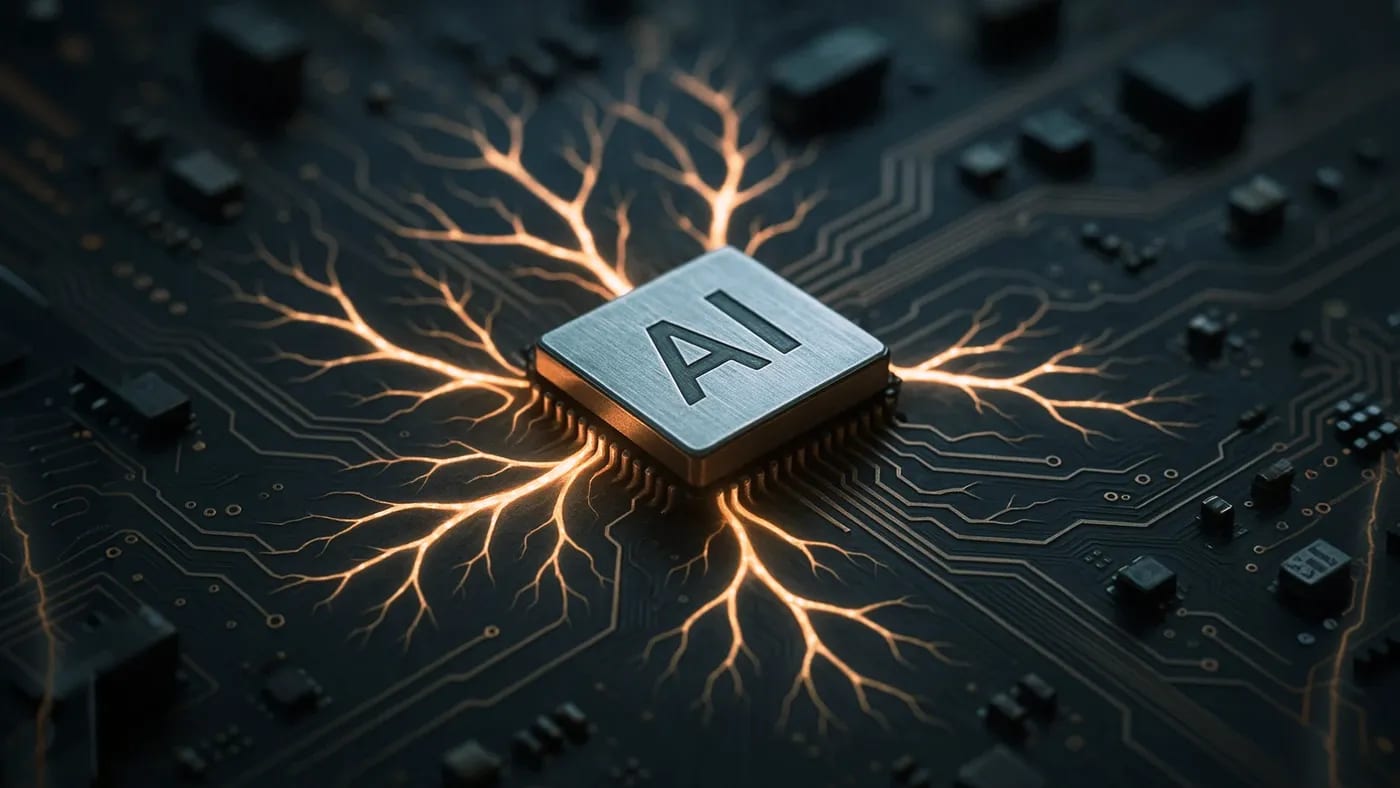
When we zoom out, the picture that emerges isn’t one where neuromorphic chips replace all our systems overnight. Rather, they will complement and enhance the AI landscape. They’ll handle tasks that are inefficient on traditional digital pipelines, much as GPUs accelerated graphics, - and then machine learning, or how FPGAs handle certain specialized workloads. By challenging our current assumptions, - that only monster servers can do serious AI, that learning must happen in a centralized brain, that more transistors are the only path to improvement, - we prepare our organizations to leverage what’s coming. And what’s coming is a more distributed, efficient, and dare I say elegant approach to intelligent machines.
The Strategic Takeaway
The bottom line for executives and innovation leaders: pay attention to neuromorphic computing. Not because it’s the buzzword of the week (it’s not, at least not yet), but because it represents a shift that could re-draw competitive lines in the coming decade. In an age when everyone has access to cloud AI and big data, doing more with less can be a true differentiator.

Neuromorphic AI is about doing a lot with a little, - delivering new capabilities under severe power or latency constraints, personalizing on the fly, and operating at scales, - both nano and macro, that were previously impractical.
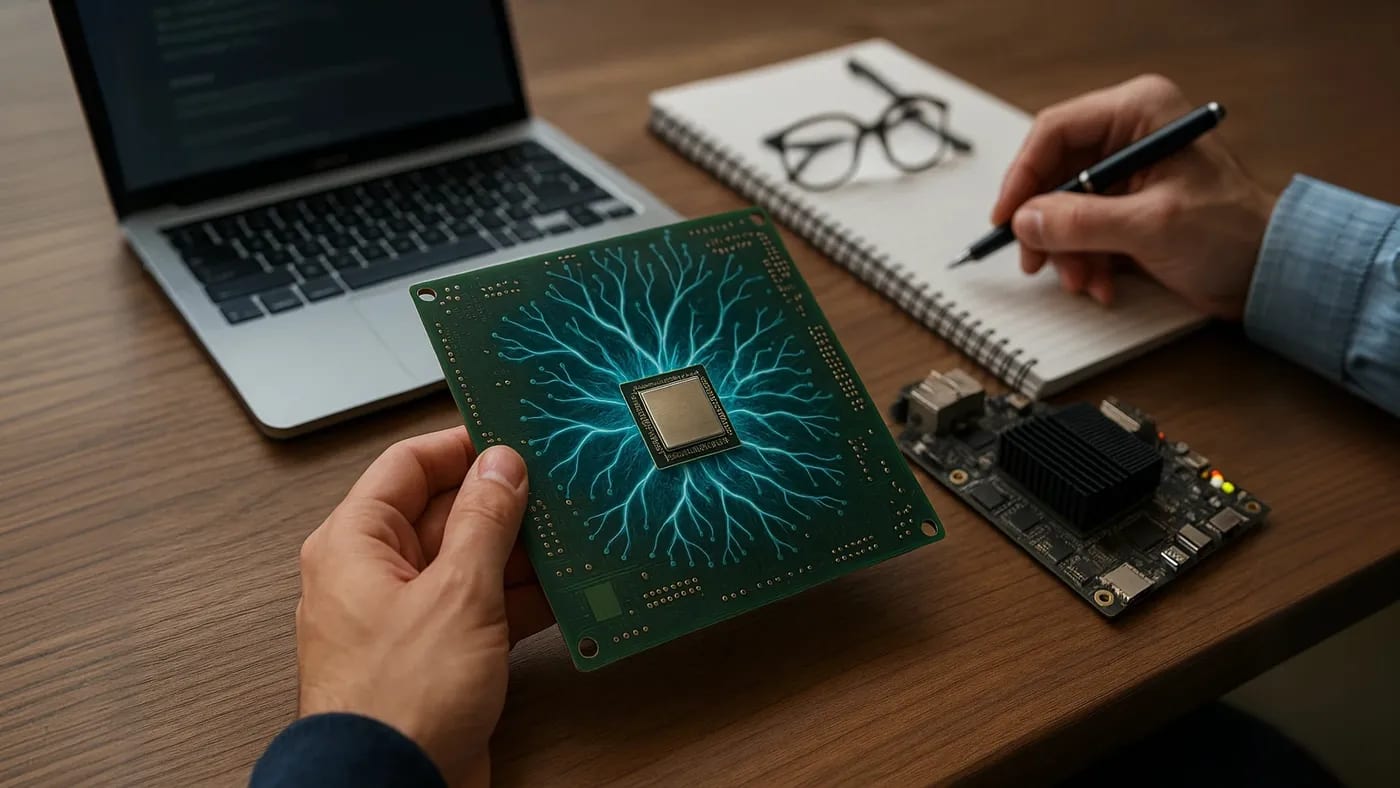
What can we do? At the very least, keep an eye on this space. The history of technology has taught us that paradigm shifts often start slowly and then happen all at once. Today’s quirky neuromorphic prototype could be tomorrow’s industry standard for edge intelligence. The companies that understand its implications early will ride the wave instead of being washed away.
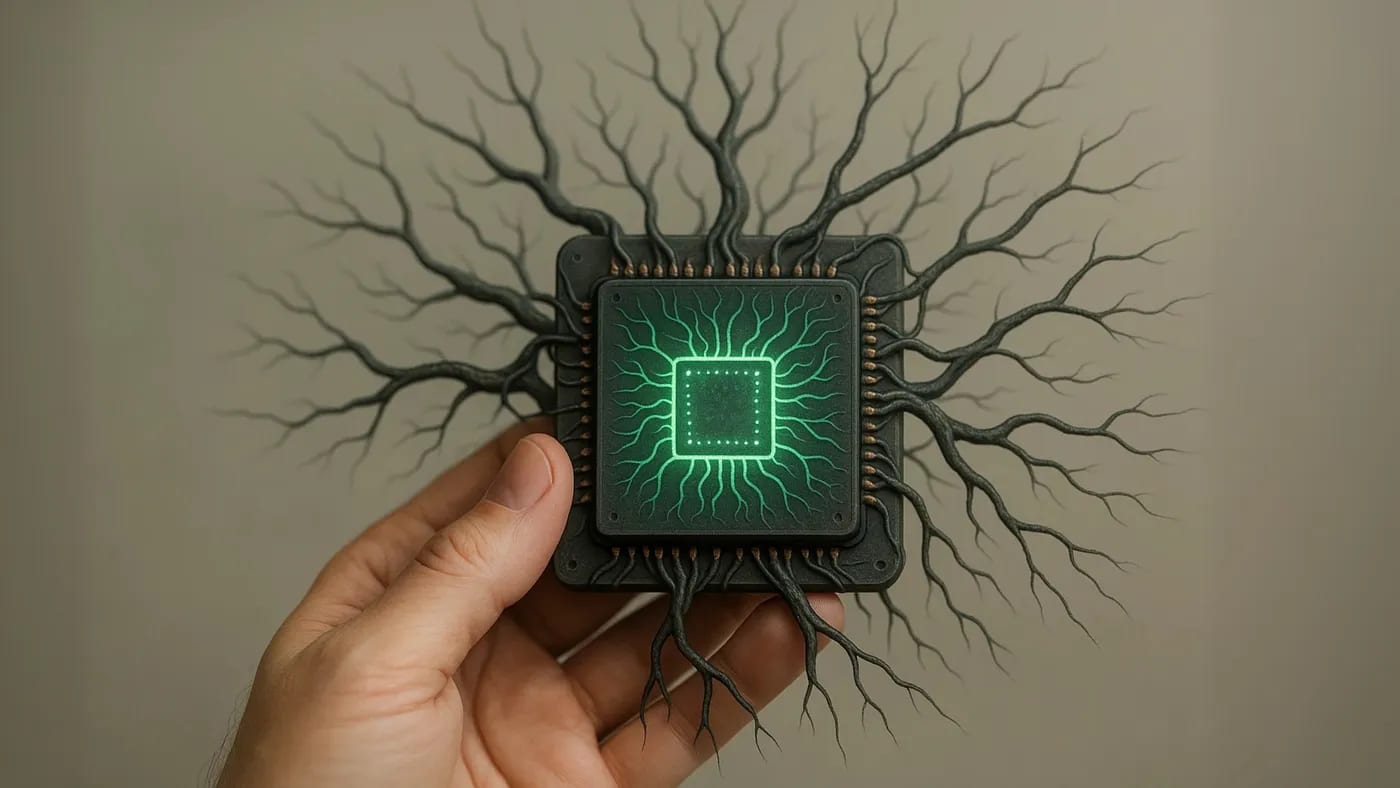
And so, neuromorphic AI isn’t about throwing out everything that’s working. It’s about expanding the toolkit for what comes next. By infusing our silicon with a bit of nature’s genius, we might just unlock innovations that make our businesses smarter, our services more adaptive, and our world a little closer to the vision we all share: intelligent and sustainable.

Further Readings (2025):
-
Akida Neuromorphic AI Chip for Epileptic Smartglasses (Nick Flaherty - Feb 2025) Describes a wearable seizure-prediction device using a low-power neuromorphic chip in smartglasses.
-
Trends in Neuromorphic Computing CIOs Should Know (John Edwards - Apr 2025) Outlines the rapidly advancing neuromorphic tech landscape and what it means for CIOs, including emerging applications and players.
-
Why Intel, IBM, and Qualcomm Are Quietly Building AI That Thinks Like You in 2025 (Ashish Sharda - May 2025) A brief, witty piece highlighting neuromorphic computing as a “green, brainy” future for AI and why this year is pivotal.
-
Scaling up Neuromorphic Computing for Efficient AI Everywhere (Ioana Patringenaru - Jan 2025) News on a Nature paper that charts a path to human-brain-scale neuromorphic systems, calling 2025 a critical moment and stressing industry-academia collaboration.
-
The road to commercial success for neuromorphic technologies (Nature.com - Apr 2025) Explores how brain-inspired chips can deliver huge computing power with tiny energy budgets, and why that matters for the future of artificial intelligence.
Disclaimer: The perspectives shared in this article are my own and do not represent those of my employer or any affiliated organizations. All company names, product names, logos, and brands mentioned are the property of their respective owners and are used for identification and illustrative purposes only. No endorsement, sponsorship, or affiliation is intended or implied. References to specific companies or case studies are based on publicly available information and are used solely for educational and discussion purposes.
More from silicon & systems
All silicon & systems → silicon & systems
Silicon Gold Rush: Inside the Global AI Chip Evolution (2023–2025)
Picture a modern gold rush, but instead of panning rivers for gold, tech companies in 2023 were scouring the globe for graphics cards. In boardrooms and data centers alike, the conversation turned to GPUs, - those workhorse chips once…
 silicon & systems
How Google Solved the Impossible: Making Smart Search Actually Fast
Picture this: It's 2024, and somewhere in the gleaming halls of Google Research, a team of engineers just casually solved one of computing's most stubborn problems, - making multi-vector search as fast as single-vector search. They called…
 silicon & systems
Everyone’s Watching Quantum. No One’s Watching MVL!
Quantum computing is often touted as the next technological leap, - the rocket ship that will blast us into a new era of computing. Not quite. Although, we’ve all heard the breathless headlines: unbreakable encryption cracked in seconds,…