The Prime Number Strategy: Lessons from Cicadas for Modern Leaders

Listen · the Bit & Being podcast
On a humid spring night, the quiet woods erupt with life. The ground cracks open as countless red-eyed insects crawl out in unison, blanketing branches and fence posts. It’s not a horror movie. It’s a rare natural spectacle, - billions of periodical cicadas rising after years underground. The last time this brood saw daylight, flip phones were still in use and a different U.S. president sat in the White House. Now, after 17 years of silent preparation, they emerge together in a synchronized frenzy. It’s a strategy so precise and eccentric that it reads like something out of a playbook, - one written in the language of prime numbers and patience.
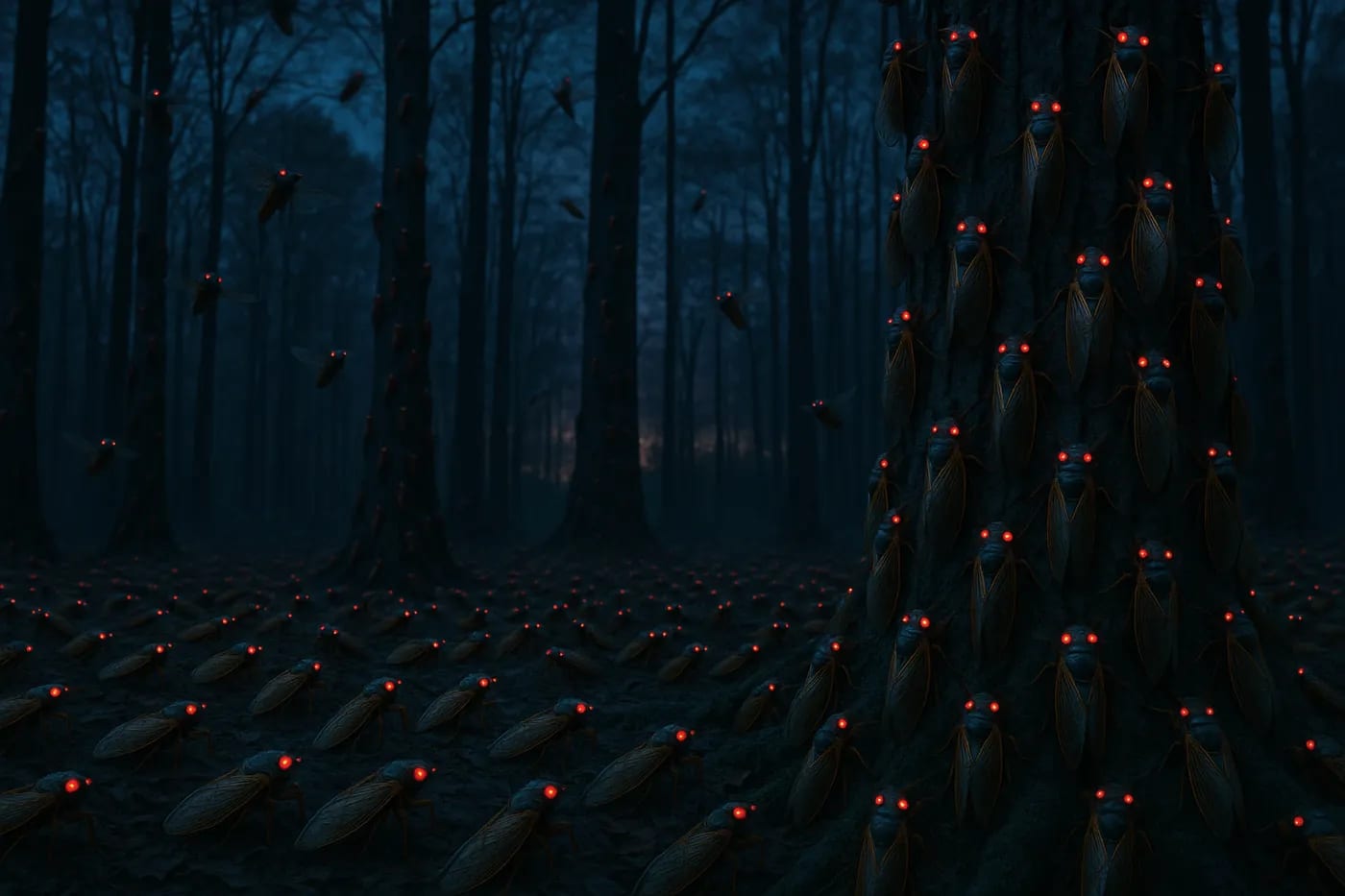
Why all at once? It turns out there is strength in numbers, - literally. By appearing simultaneously in droves, each cicada brood creates a wildlife all-you-can-eat buffet so massive that no predator can make a dent. Birds, raccoons, foxes, even house pets gorge on cicadas, yet plenty survive. This survival tactic even has a scientific name: predator satiation (Live Science). Individually, cicadas are defenseless snacks with wings. Collectively, they’re an unstoppable, crunchy tide. Picture a potluck dinner where ten people bring enough food for a hundred, - the guests (predators) fill up long before the dishes are empty. By swarming the ecosystem with their vast numbers, cicadas ensure that enough of them will evade being eaten and live on to sing, mate, and start the cycle anew. It’s a brilliantly clumsy yet brilliant strategy, - quality of defense by overwhelming quantity.

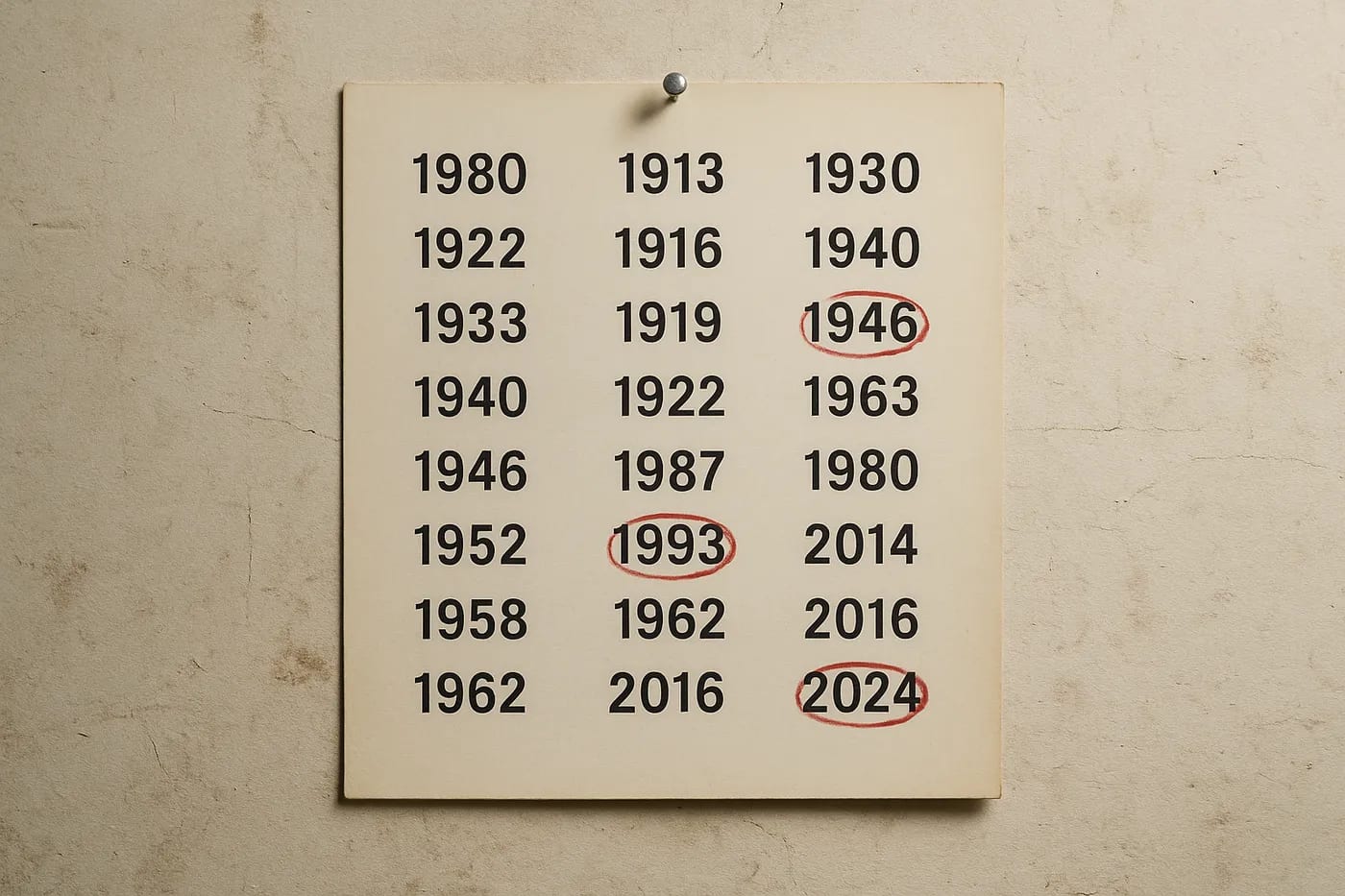
The cicadas’ game gets even more interesting when you look at when they emerge. These insects operate on “prime time”, - literally. Most periodical cicadas wait 13 or 17 years between showings, both prime numbers. This means different broods (each a gigantic generation of cicadas) are rarely on stage at the same time. A 13-year cycle and a 17-year cycle only intersect every 221 years, so each brood effectively has its own era. The evolutionary payoff? Avoiding competition and confusion. If every cicada group popped up in the same year, they’d compete with each other for food and space and thoroughly freak out half the country in the process. Instead, by sticking to prime-numbered intervals, they minimize overlap with both predators’ schedules and other cicada broods. In simple terms, prime cycles make it mathematically unlikely for a cicada’s enemies , - or its noisy cousins from another region, to sync up against it. It’s as if each brood reserved its own timeslot in nature’s calendar, ensuring a solo performance free from unexpected rivals or hungry audiences lying in wait.
So what does this bizarre insect strategy have to do with us in our air-conditioned offices and digital domains? Quite a lot, it turns out. Nature’s playbook is full of clever moves that can inspire human systems, and the cicadas’ dual-level strategy is one of those head-turning examples. At its core, the cicada plan is about when to act together and when to stand apart. Sometimes success means moving in lockstep with your peers to create an impact so large that any opponent or obstacle is overwhelmed. Other times it means staggering your moves so you don’t collide with the competition (or your own allies).

This idea resonates well beyond entomology. From cybersecurity to political campaigns, from corporate change initiatives to school reform, getting the timing right, - knowing when to synchronize and when to desynchronize, can be a game-changer. Let’s explore a few arenas where a little cicada wisdom might just give us a strategic edge.
Prime Lessons for Modern Systems
Cybersecurity Swarms
In cybersecurity, unpredictability can be a superpower. Many companies schedule software patches or security updates on predictable routines, - say, the first Tuesday of every month. Hackers (the “predators” in this scenario) love predictability. It lets them time their attacks or exploit known gaps. Now imagine a swarm strategy where dozens of organizations coordinate a massive security update all at once, on an irregular schedule.

A whole industry sector might decide that next Wednesday, at 3:17 PM, everyone deploys critical patches instantly. It would be like a cicada emergence in cyberspace, - threat actors would be overwhelmed by the sudden, widespread immunity boost. At the same time, each company could also stagger smaller updates on its own prime-number interval (one might use a 13-day cycle, another a 17-day cycle, you get the picture) to avoid creating a pattern adversaries can anticipate. The result? Within each organization, everyone moves together decisively (synchrony for strength), while across the landscape, defenders are dancing to different beats (desynchrony for stealth). The bad guys end up as confused as a fox at a cicada orgy, unable to zero in on a single weak target before it vanishes or changes again.
Political Timing
Politics is all about timing and momentum. A savvy movement might take a page from the cicada handbook in two ways. First, within-group synchronization: unify your efforts to make a splash so big it can’t be ignored. Imagine an advocacy group orchestrating rallies in every major city on the same day, flooding the media channels at once. The public hears one loud, harmonized message, and opponents struggle to respond to the sheer volume of it. It’s predator satiation, campaign-style. The critics and fact-checkers simply can’t be everywhere at once. Now add between-group desynchronization: not every cause or sub-group should peak at the same time. If environmental activists, healthcare reformers, and education advocates all try to grab headlines simultaneously, they drown each other out (and exhaust the pool of supporters and donors). Instead, each picks its own “prime year”, “prime month”, or moment to push its agenda, while the others lay low or build quietly underground.

One year climate policy takes center stage. The next year is all about healthcare, - each gets its spotlight without colliding. By staggering their big pushes, movements avoid cannibalizing attention or resources. In election strategy, similarly, a party might focus on one flagship issue now and save a second big initiative for a non-election year when the opponent isn’t gearing up. The cicada lesson for political strategists: sometimes you shout in unison for maximum volume, and sometimes you stagger your shouts so the echo lasts longer.
Organizational Change and Innovation
Within companies, we see similar dynamics. Big changes often fail when attempted in isolation , - one department trying to transform while others carry on as usual can get picked off by “predators” like inertia, skepticism, or misalignment. Smart leaders know when to rally the whole organization to move together. Launching a major change initiative is a bit like a brood emerging. If everyone implements the new strategy in sync, the resistance (internal confusion, naysayers, old habits) is quickly swamped by the new way of doing things. There’s no easy target for pushback because the change is everywhere at once. On the other hand, companies also learn not to launch too many big initiatives at the same time.

If you have five product lines or five major projects, unleashing all of them in one go means they’ll compete with each other for budget, customer attention, and support, - much like overlapping cicada broods would compete for survival. Staggering big product releases or transformations, - giving each its own “season”, ensures each gets the necessary resources and a clear field. One division’s big innovation might roll out this quarter, while another division holds fire until next year, avoiding an internal traffic jam. Thus, within each team you get a unified, concentrated push, and between teams you get a staggered roadmap that keeps efforts from undermining one another. The result is a portfolio of initiatives that each has a chance to shine, much as each cicada brood owns its moment in time. It’s strategy by prime numbers. Execute change in powerful waves, and space those waves out wisely.
Prime-Scheduled Training & Compute
Compute scarcity and energy peaks make AI ops feel like rush hour every hour. Borrow the cicada play. Run within-family synchronized training bursts (all model variants in a family retrain together) to maximize pipeline reuse, cache locality, and evaluation coverage. Then desynchronize between families on prime-offset cycles, - say, 11-hour and 13-hour windows, or 13-day and 17-day cadences, so big jobs don’t collide for GPUs, power, or staff attention. This results in fewer queue pileups, flatter power demand, less correlated failure risk, and clearer attribution when something breaks. Like broods with their own seasons, each model family gets a dedicated “emergence” without elbowing others off the cluster.

In the cacophony of summer insects, there’s a whisper of wisdom for those of us contemplating the leadership of human organizations. Nature often solves problems with elegant, unexpected simplicity. The periodical cicadas survived for eons by mastering timing, -a mix of loud unity and long pauses, and in doing so, they’ve essentially written a two-part memo to the rest of us. Part one: Band together when it counts*; there’s power in a well-timed mass action.* Part two: Give each effort its own space*; don’t always run with the pack.* In a world that often urges us to “move fast and break things,” the cicadas offer a counterpoint. Sometimes moving slow (very slow) and then all at once is the key.

As technology leaders, policymakers, or innovators, we can smile at the dry humor of it, - tiny red-eyed bugs outsmarting bigger creatures, and also take it as inspiration. What might change in our cybersecurity posture, our corporate campaigns, or our social initiatives if we applied a prime-number mindset? The next breakthrough strategy might not come from a management consultant’s PowerPoint, but from the treetops on a summer evening. After all, when the cicadas sing, they’re not just looking for mates, they’re quietly teaching a masterclass in timing and teamwork. Are we listening?

Further Readings
-
Seventeen-Year Cicada Brood XIV Emerges Across the Eastern U.S. – National Geographic, Jason Bittel, April 7, 2025. This article covers the once-in-a-generation appearance of Brood XIV cicadas across the eastern United States. It explores their 17-year underground development, the ecological impacts of their synchronized emergence, and why prime-number timing is such an evolutionary advantage. The piece also includes insights from scientists studying how these insects reshape ecosystems during their brief but explosive time above ground.
-
What Cicadas Can Teach Us About Marketing – Hudson Fusion, March 10, 2025. This blog draws parallels between cicadas’ survival tactics and smart marketing practices. It emphasizes patience, timing, and the power of making a massive coordinated impact rather than smaller, scattered efforts. The piece cleverly shows how businesses can adopt “prime-number thinking” to create memorable campaigns and avoid being drowned out by competitors.
-
The 2025 Periodical Cicada Emergence | University of Connecticut – UConn Cicada Research, 2025. This resource provides a deep dive into the biology and mapping of Brood XIV, including fascinating details about “straggler” cicadas and potential hybridization events. It explains how researchers track these emergences across states and why the insects’ timing remains one of nature’s most elegant puzzles. For readers who want both science and data, it’s a comprehensive overview from one of the leading cicada research groups.
Disclaimer: The perspectives shared in this article are my own and do not represent those of my employer or any affiliated organizations. All company names, product names, logos, and brands mentioned are the property of their respective owners and are used for identification and illustrative purposes only. No endorsement, sponsorship, or affiliation is intended or implied. References to specific companies or case studies are based on publicly available information and are used solely for educational and discussion purposes.
More from enterprise ai
All enterprise ai → enterprise ai
Managers Are the Bottleneck—and the Breakthrough—of the AI Workquake
At first glance, everything seems calm. Unemployment is low and employment across advanced economies hit record highs in early 2025, - a glassy surface suggesting smooth sailing (OECD). Yet beneath that placid outlook, powerful currents…
 enterprise ai
The Two-Move Checkmate: Inside OpenAI’s Playbook
Picture a midnight boardroom huddle in Silicon Valley. On the screen flashes news that OpenAI has just pulled a double surprise, - unveiling GPT‑5, its most advanced AI model yet, and simultaneously open-sourcing powerful new models. The…
 enterprise ai
Cross-Agent Learning: A Playbook for Enterprise AI Wisdom
Monday morning at Acme Corp, the new marketing AI proudly presents a campaign strategy, - only for everyone to realize it's repeating a mistake the sales department’s AI made last month. By Tuesday, the finance team’s chatbot is struggling…