Managers Are the Bottleneck—and the Breakthrough—of the AI Workquake
Listen · the Bit & Being podcast
At first glance, everything seems calm. Unemployment is low and employment across advanced economies hit record highs in early 2025, - a glassy surface suggesting smooth sailing (OECD). Yet beneath that placid outlook, powerful currents are reshaping work. An overwhelming 86% of employers expect AI and digital tech to transform their business in the near future, and the potential productivity gains are staggering – up to $4.4 trillion annually by some estimates (World Economic Forum, McKinsey. In other words, a “workquake” is underway just below the surface, and it’s tugging hard at even the steadiest organizations.

Executives are feeling both the pull and the undertow. On one hand, nearly half of tech leaders say AI is now fully integrated into their core strategy, and virtually all companies plan to increase AI investments over the next few years (PwC). On the other hand, many of these same leaders have been doubling down on old-school management tactics, - mandating more days in the office, tracking performance with ever-tighter metrics, all in the name of “getting serious” about results (BusinessInsider). The intent is to regain control and clarity, but enforced return-to-office (RTO) edicts and blunt productivity KPIs can backfire if they ignore how modern work actually gets done. It’s a bit like gripping the wheel harder in a storm, - instinctive, but not always the smartest move.

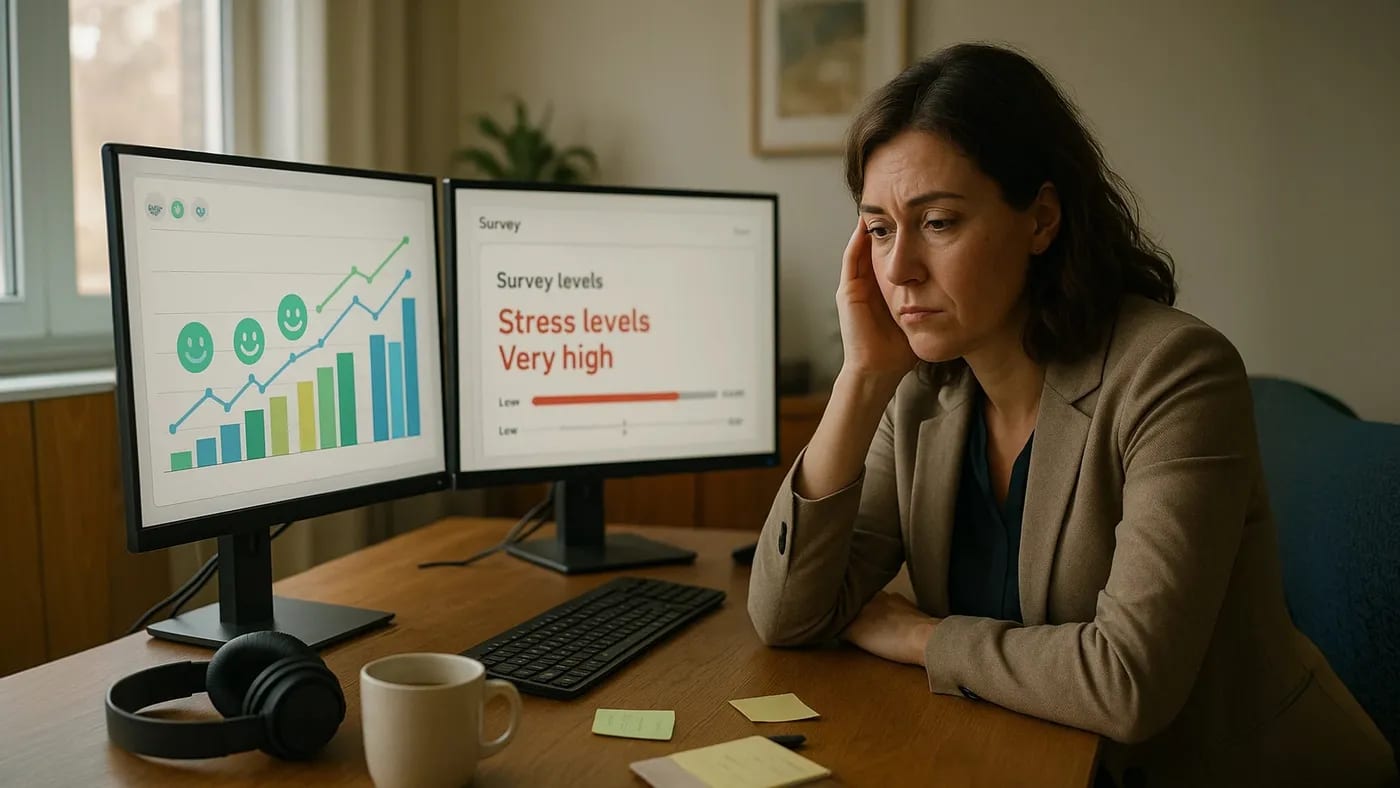
The human signals are flashing caution. Global employee engagement has slumped to just 21%, and among managers, - those key players who translate strategy into action, engagement is an even bleaker 27% (Gallup). Fully remote workers present a paradox that leadership can’t afford to ignore: they report higher engagement and higher stress at the same time. This means people are working hard and enthusiastically from home, but they’re also burning out and feeling isolated. Forcing everyone back into cubicles unilaterally won’t solve that paradox. In fact, it may drive talent away. Nearly half of U.S. workers say they’d likely quit if their employer took away remote work flexibility (Pew Research). It’s no wonder some cynics call heavy-handed RTO mandates a form of “stealth layoff,” as people quietly head for the exits rather than sacrifice hard-won flexibility. The bottom line: a rigid one-size-fits-all push back to the office risks brittle morale and a slow bleed of your best people.
So what’s the way forward? It turns out that the companies navigating these cross-currents best are striking a new social contract with their workforce. First, they treat AI as a power-assist, not an autopilot, - think of AI as augmenting human talent rather than substituting for it. Second, they approach hybrid work as a designed system, not a perk or a vibe that emerges on its own. Surveys show six in ten employees in remote-capable jobs prefer a hybrid arrangement, but most also crave structure and clarity within that flexibility. In practice, this means leadership explicitly defines which work truly requires in-person collaboration and which work is better done solo and remotely. Imagine a team playbook that says: brainstorms, client kick-offs, and complex problem-solving equals in-office “together time,” whereas code sprints, analysis, and writing tasks equals remote “focus time.” Making these expectations crystal clear, and co-authoring them with your teams, turns hybrid from a source of tension into a source of strength.

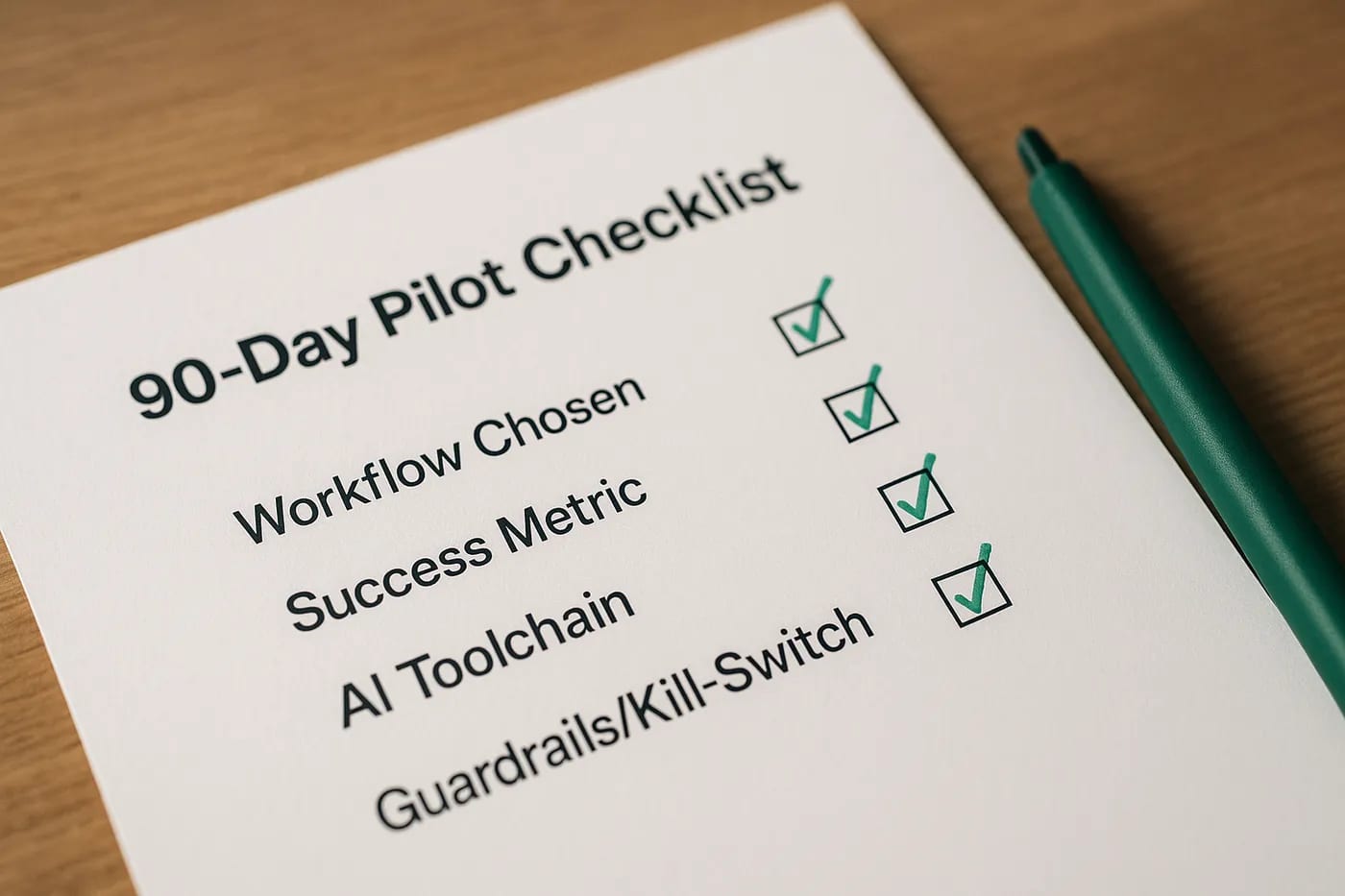
With a new mindset in place, pragmatism becomes your friend. Rather than grandiose moonshots, start with a few boringly valuable improvements. Identify three unsexy but important workflows in your org. For example, Level 1 customer support triage, month-end financial close prep, or CRM data hygiene. For each, define one clear metric of success (resolution time, hours saved, error rate, etc.). Then pilot a narrow AI solution in that workflow, and give it a “kill switch”, - explicit criteria where a human steps in or the project is aborted if quality dips below an acceptable threshold. Keep these pilots small and focused; you’re not aiming to make headlines, you’re aiming to make measurable progress. In 90 days, you should know if an AI-driven approach can cut that support ticket backlog by 30%, or shave a day off financial reporting, or eliminate tedious data entry for your sales team. If it works, great, -expand it. If not, you’ve lost little time and can course-correct. This methodical approach turns the hype of AI into tangible, low-risk wins that build momentum (and credibility) for bigger moves.
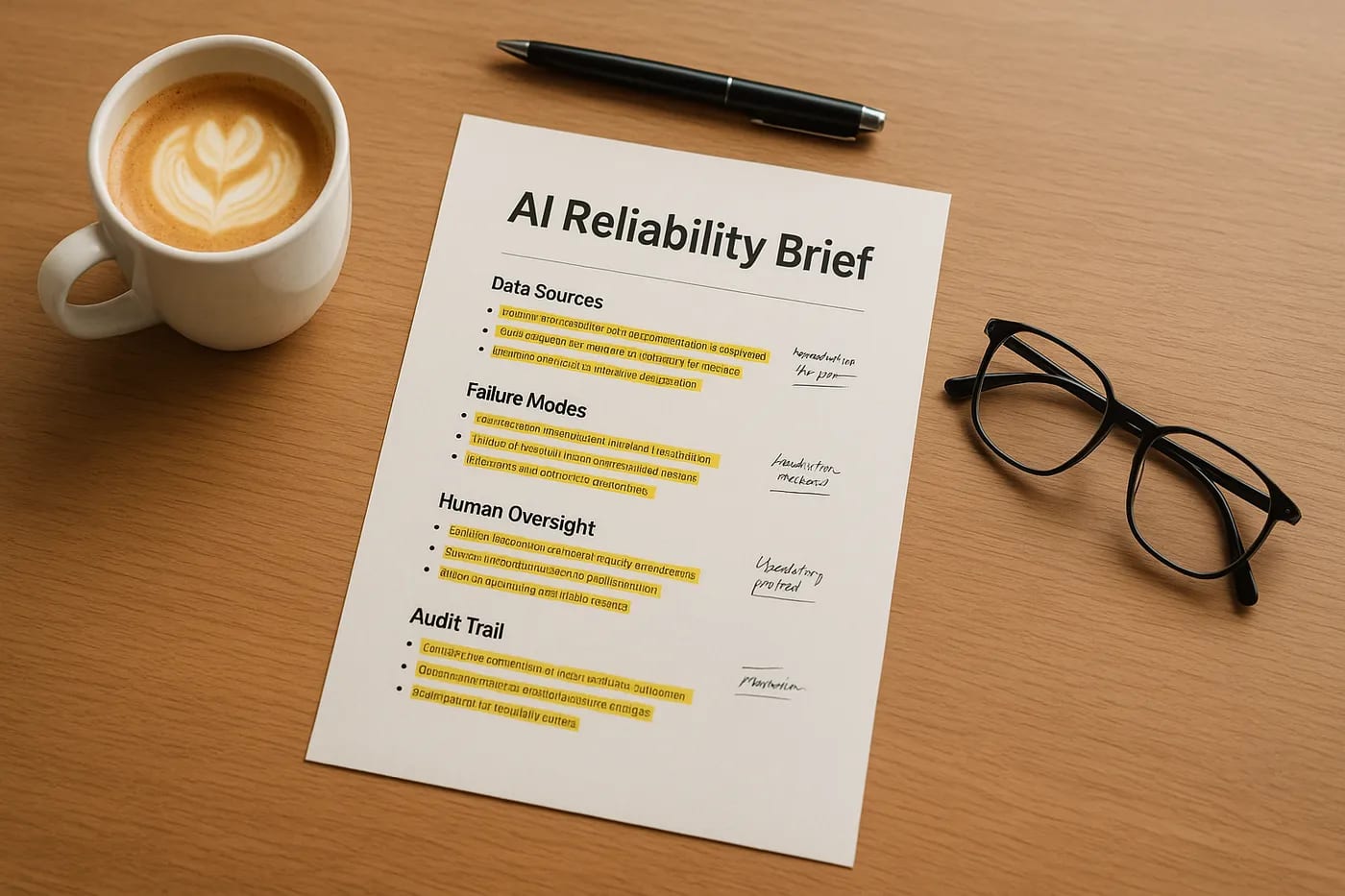
For each pilot, take one extra step that many skip: write a one-page “AI Reliability Brief.” This is essentially a constitution for your pilot. In plain language, document the data sources it relies on, the known failure modes or things that could go wrong, the points in the process where a human must review or approve outputs, and the audit trail for decisions. Define up front what “good” looks like (e.g. 95% accuracy and no regulatory flags), and what you’ll do if reality falls short. This brief becomes a simple contract between your operations, security, and product teams, - making sure everyone is on the same page about how the AI will work and how you’ll manage the risks. It also has a wonderful side effect. It forces vendors to focus on delivering outcomes, not just flashy demos. When a salesperson knows you’re measuring error rates and have a kill switch, the conversation changes from “Here’s what the tool could do” to “Here’s what we’ll guarantee it does.” Over time, as you run more projects, these one-pagers form a living playbook for your AI program, - a no-nonsense portfolio of what you’ve tried, how it performed, and what guardrails kept it on track.
Crucially, even as automation picks up steam, invest in the human edge, - the skills and roles that AI can’t easily replicate. The World Economic Forum’s latest analysis shows rising demand for uniquely human strengths: analytical thinking, leadership, resilience, creativity, and social influence are all climbing the priority list for employers. In plain terms, as algorithms handle more rote tasks, your people will be called on to do what machines cannot. Great organizations are already rethinking talent development accordingly. Instead of the old career ladder, - where everyone specialized narrowly and climbed vertically, it’s about building a “skill lattice.” Encourage cross-functional stints, where your data analysts sit with marketing for a quarter, or your project managers rotate through an AI ethics task force. Pair up tech-savvy staff with those who have deep customer insight so they learn from each other. When an employee shows initiative in learning a new tool or embracing a new role, reward it. This lattice approach yields people who are technically literate and organizationally fluent, - exactly the kind of team you need to translate AI potential into real business innovation. Plus, it sends a clear message that in an automated future, people, - with all their adaptability and creativity, are still your most important asset.

All these initiatives thrive only in the right governance environment. Interestingly, AI adoption is often outpacing the guardrails in many organizations. A recent study found that about half of U.S. workers are already using generative AI tools on the job , - often without formal approval or guidance, and shockingly, 46% admit to uploading sensitive company data into public AI platforms (KPMG). People will route around roadblocks if leaders don’t act, so it’s better to channel that energy safely than to pretend it’s not happening. Governance here shouldn’t mean a 50-page policy nobody reads; it should be quiet and firm. Establish three simple rails for every AI-powered workflow: transparency (log the prompts, data versions, and decisions so you can trace outputs later), risk gating (automate the low-risk stuff freely, but require human review for medium-risk tasks and escalate high-risk calls to a higher authority), and accountability (assign a named human owner for each AI initiative who is responsible for its outcomes). These practices don’t strangle innovation, - they direct it. They also make it easier to measure and repeat success. In fact, leaders in 2025 have shifted from a “just try it” mindset to a “prove it” mindset, tying AI budgets to clear ROI and business value. By logging what your AI is doing and keeping it within well-defined boundaries, you gain the visibility to demonstrate ROI with confidence. When the board asks “How do we know this fancy AI project is working?”, you’ll have the dashboards and audit trails to answer.
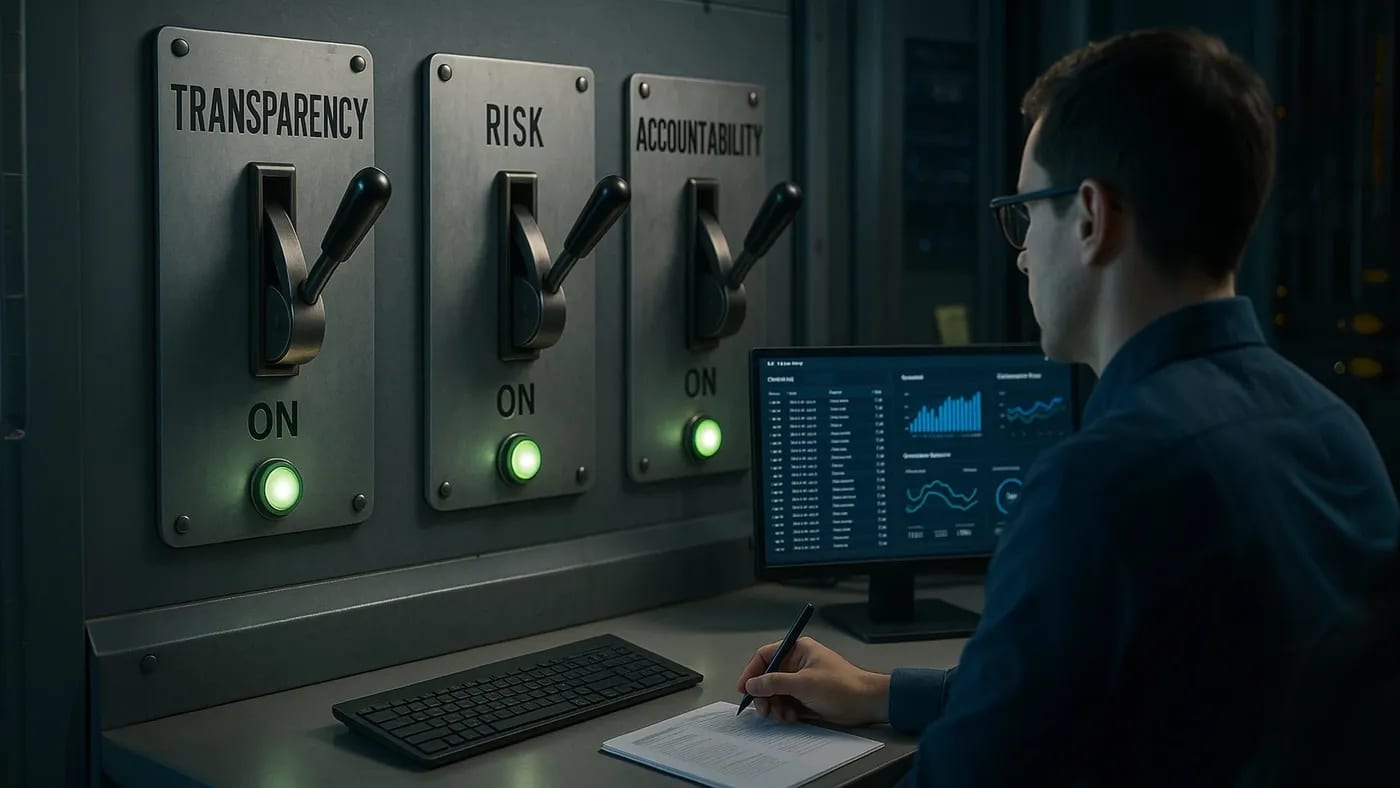
The calm surface of the business world can fool even seasoned leaders, - it’s easy to think everything is fine when the quarterly numbers look good. But as this workquake accelerates, momentum should not be mistaken for mastery. Yes, AI is enabling incredible leaps (it could eventually influence nearly 40% of jobs in some way, by some estimates) and yes, we’ve proven we can be productive from bedrooms and kitchen tables. But every leap brings second-order effects. Automation can introduce new biases or errors that tarnish customer trust. Remote work can erode team culture or employee well-being if left unchecked. The wise leader treats these as navigational challenges, not reasons to drop anchor. Set up a small ethics and impact council, - maybe just a few respected employees from diverse roles, to meet monthly and review how your tech and policy changes are affecting real people. If something’s off, don’t double down out of pride or inertia, - adjust course. Dial the AI back and add a human checker, tweak the hybrid schedule, invest in a mental health day, communicate more. Leadership in the age of AI isn’t about achieving a static state of perfection. It’s about constant steering.

In the end, those who lead with both boldness and balance will ride the currents faster than those who cling to the past. The companies that pair disciplined AI experiments with thoughtful hybrid-work design, that coach their managers to use data and empathy, and that double down on uniquely human judgment where it matters most, - these are the organizations that won’t just survive the workquake, they’ll thrive in its flow.

The 2025 Workquake isn’t a destructive rupture waiting to crack your foundation. It’s more like a river gaining speed and carving a new course. With the right preparation, that river can carry you farther, faster. So get yourself a good map, hand out paddles to your team, and be prepared to navigate the rapids together. The water is rising, - but with everyone on board, that can be a very good thing.

Further Readings
-
OECD Employment Outlook 2025 (OECD — July 2025) – A concise overview of global labor market conditions, noting record-high participation and employment alongside recent signs of cooling. Useful for calibrating your talent and hiring strategy against macro-economic and demographic trends in the workforce.
-
The Future of Jobs Report 2025 (World Economic Forum — January 2025) – WEF’s flagship report surveying 1,000+ employers about technology adoption, job outlook, and skill needs through 2030. It highlights which jobs are emerging or declining and which skills (like analytical thinking, resilience, and AI fluency) are surging in importance, helping you benchmark your organization’s future-readiness.
-
Superagency in the Workplace: Empowering People to Unlock AI’s Full Potential (McKinsey — January 2025) – A 47-page research report examining the state of AI in the workplace. It finds that while almost all companies are investing in AI, only 1% consider themselves fully AI-mature. The report diagnoses leadership and organizational barriers (not employee resistance) as the biggest hurdles to scaling AI, and recommends how to “steer faster” to capture AI’s promised productivity gains.
-
Global Engagement Falls for the Second Time Since 2009 (Gallup — May 2025) – Gallup’s analysis of worldwide employee engagement trends, showing a dip in engagement levels and an even sharper drop among managers. Provides insight into why workers are feeling disconnected (e.g. burnout, unclear expectations) and offers talking points for addressing culture, well-being, and managerial support in your organization.
-
AI Use at Work Has Nearly Doubled in Two Years (Gallup — June 2025) – A report on Gallup’s latest workforce survey, revealing that the share of employees regularly using AI on the job jumped from 21% to 40% in just two years. It also uncovers a critical gap: while 44% of employees say their companies have begun integrating AI, only 22% see a clear AI strategy or policy. This piece underscores the importance of providing guidance and training as AI adoption accelerates, to ensure productivity gains don’t come at the expense of security or trust.
Disclaimer: The perspectives shared in this article are my own and do not represent those of my employer or any affiliated organizations. All company names, product names, logos, and brands mentioned are the property of their respective owners and are used for identification and illustrative purposes only. No endorsement, sponsorship, or affiliation is intended or implied. References to specific companies or case studies are based on publicly available information and are used solely for educational and discussion purposes.
More from enterprise ai
All enterprise ai → enterprise ai
The Two-Move Checkmate: Inside OpenAI’s Playbook
Picture a midnight boardroom huddle in Silicon Valley. On the screen flashes news that OpenAI has just pulled a double surprise, - unveiling GPT‑5, its most advanced AI model yet, and simultaneously open-sourcing powerful new models. The…
 enterprise ai
The Prime Number Strategy: Lessons from Cicadas for Modern Leaders
On a humid spring night, the quiet woods erupt with life. The ground cracks open as countless red-eyed insects crawl out in unison, blanketing branches and fence posts. It’s not a horror movie. It’s a rare natural spectacle, - billions of…
 enterprise ai
Cross-Agent Learning: A Playbook for Enterprise AI Wisdom
Monday morning at Acme Corp, the new marketing AI proudly presents a campaign strategy, - only for everyone to realize it's repeating a mistake the sales department’s AI made last month. By Tuesday, the finance team’s chatbot is struggling…