From Chatbot to Think Tank: The Swarm Advantage and Parallel Reasoning
Listen · the Bit & Being podcast
Late one evening, a team of execs huddles in a boardroom grappling with a market puzzle that seems unsolvable, - until an AI assistant suggests not one solution, but five different approaches all at once. It sounds like science fiction, yet this scenario is edging into reality. Google DeepMind’s new Gemini 2.5 “Deep Think” system takes the concept of brainstorming literally. It orchestrates a swarm of reasoning agents working in parallel rather than relying on a single monolithic model. In plain terms, it’s less like consulting one genius and more like convening an AI think tank on demand (TechCrunch). The result? An AI that attacks your toughest problems from multiple angles at once, - and often ends up outsmarting its single-minded predecessors.

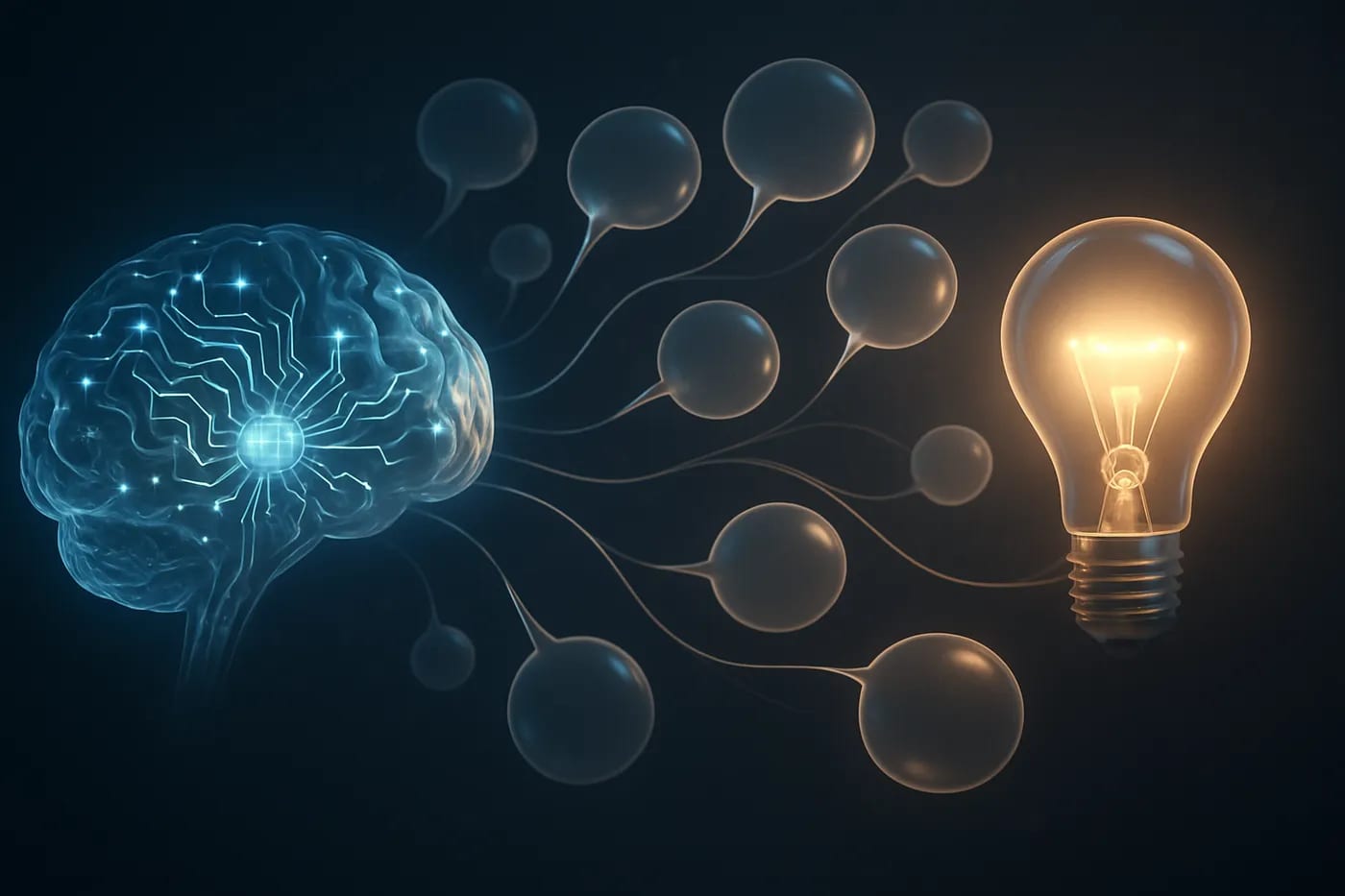
What makes Deep Think different is how it “thinks.” Traditional large models like OpenAI’s GPT-4 or Anthropic’s Claude operate as one big brain, processing a query in a single stream of reasoning. They’re extraordinary soloists, - a GPT-4 can compose an essay or debug code by itself, but they still think one step at a time. Deep Think, by contrast, is more like a hive mind. Ask it a hard question and under the hood it spawns a small army of AI “agents,” each exploring different ideas simultaneously, then it merges their findings into one answer. Google calls this parallel thinking, drawing a parallel to how human teams solve problems, - by exploring many angles at once and later combining the insights (Google Blog). Instead of one linear chain of thought, Deep Think branches into many and even lets those branches cross-pollinate, - akin to brainstorming sessions among specialists inside the model. This hive approach demands more computing power than a single model running alone, but it tends to produce far better answers for complex tasks. In an era where even the best single AI can get stumped by ambiguity, Deep Think’s collaborative tactic is a clever way to push past those limits.
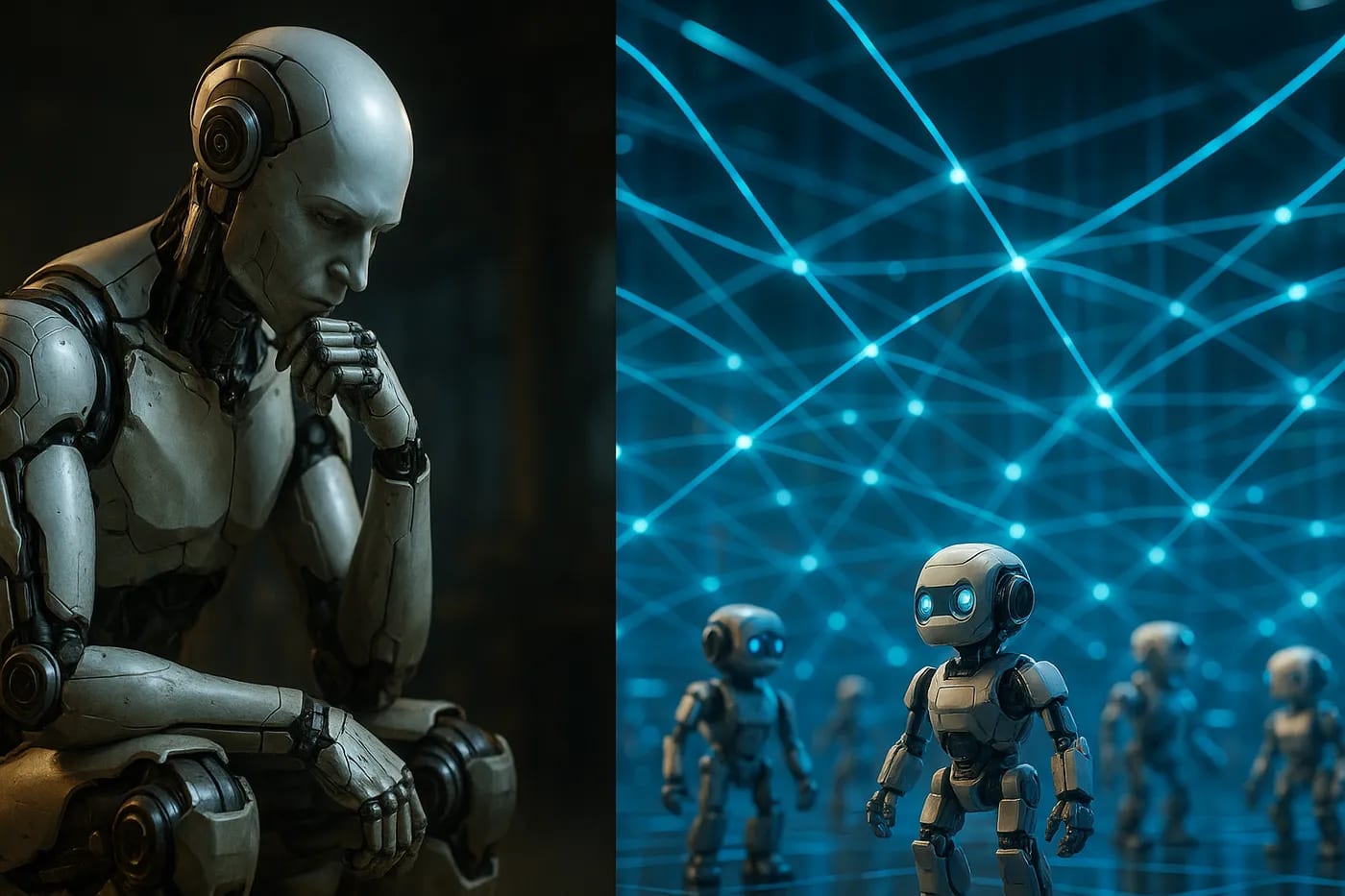
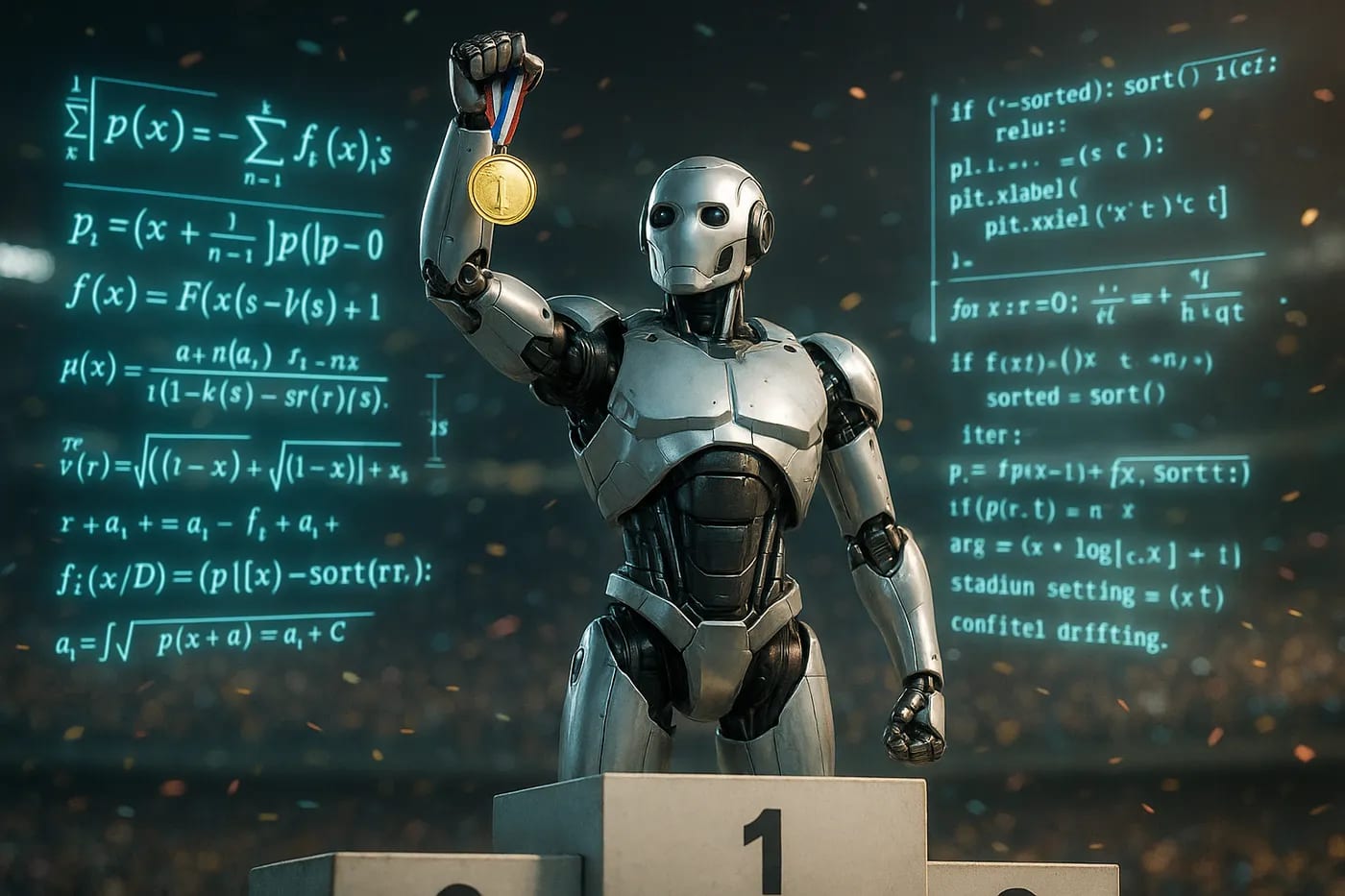
The “hive mind” design isn’t just a gimmick, - it’s showing real gains. For example, when tackling advanced math problems, Deep Think might simultaneously attempt a proof by contradiction, a visual geometry approach, and a brute-force computation all at once, something no single GPT-4 instance would normally do. One Google scientist described how Deep Think will generate “deeper and parallel chains of thought” and even revise or combine them before finalizing an answer, much like a team of experts debating the best solution (TechTalks). This parallelism paid off spectacularly in a highly publicized test. Deep Think achieved a gold-medal level score in the 2025 International Math Olympiad, essentially acing one of the world’s toughest math contests for high school prodigies. To do so, an experimental version of the model was allowed hours of collective “thinking time,” orchestrating its swarm of agents to crack problem after problem. The victory wasn’t just academic, - it proved that throwing more thoughtfulness (in the form of parallel reasoning) at a problem can beat even the mightiest single-network brains. OpenAI’s team similarly used a multi-agent approach to claim their own IMO gold medal around the same time, and Anthropic’s latest research assistant reportedly also relies on a colony of AI agents working together under the hood. In other words, even the GPT-4s and Claude’s of the world are starting to tiptoe toward the hive mind paradigm, - a telling sign that this approach is more than just Google’s quirky experiment.
Beyond math trophies, Deep Think is delivering concrete performance boosts. In coding tasks, for instance, this multi-agent wizardry has led to striking improvements. On a challenging programming benchmark (LiveCodeBench 6), Gemini 2.5 Deep Think scored about 87.6%, handily outperforming OpenAI’s best (around 72%), - roughly a 20%+ jump in code-generation prowess over one of the strongest single-agent models. That’s the difference between a model that writes decent code and one that nails the solution with far fewer errors. Similarly, on a broad knowledge and reasoning test dubbed “Humanity’s Last Exam,” Deep Think took the new top spot, showing that a chorus of reasoning agents can outshine even titans like GPT-4 when it comes to complex Q&A. Test metrics aside, the qualitative gains are palpable too. Early users report that Deep Think gives more detailed, insightful responses, - it’s as if you asked a question on a forum and got five well-thought-out answers merged into one. Google has noted examples like web design, where Deep Think iteratively improved both the aesthetics and functionality of a website beyond what a single-pass AI would do. It’s even capable of handling ultra-long queries and context (we’re talking entire books or codebases at once) thanks to a mixture-of-experts architecture that divvies up work among specialized sub-models, - think of it as an ensemble cast of savants, each tackling what they’re best at. In short, this model isn’t just bigger. It’s smarter in how it uses its size.
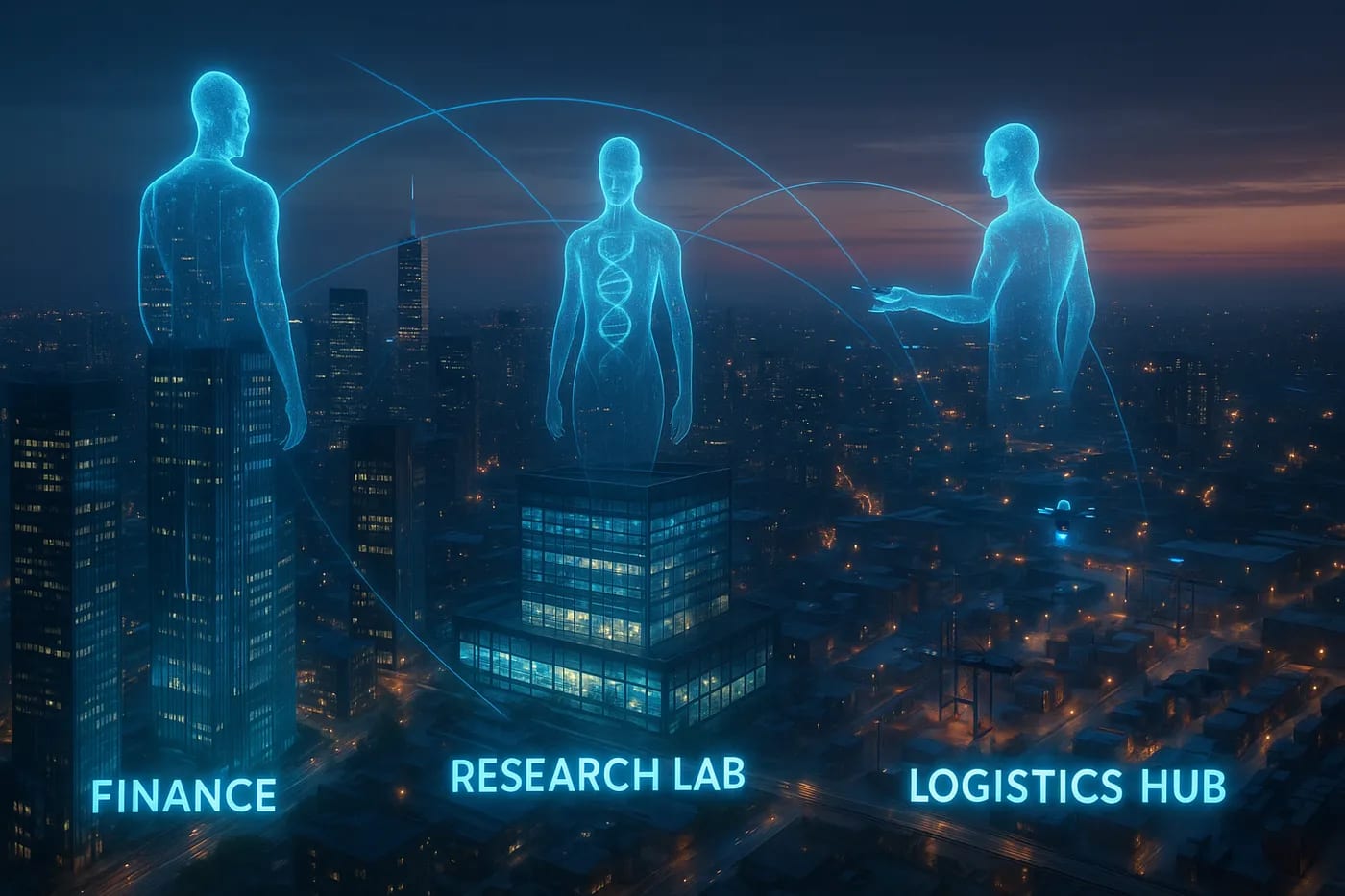
All these breakthroughs beg the question: what can a hive-mind AI do for your enterprise? The implications span many domains. In finance, a system like Deep Think could serve as the ultimate scenario planner, - imagine a swarm of analytical agents stress-testing your portfolio or balance sheet against dozens of market scenarios simultaneously. Instead of one AI churning through projections linearly, you’d get a spread of possibilities (and pitfalls) mapped out in parallel, improving foresight in risk management and investment decisions. For R&D and innovation, a multi-agent AI might turbocharge research by exploring multiple hypotheses or design iterations at once. It’s like having a hundred virtual interns brainstorming different approaches to a scientific problem or product design overnight, with the best ideas synthesized by morning. In logistics and operations, the “hive” could revolutionize optimization: one agent simulates supply chain tweaks in Asia while another tests distribution strategies in Europe, all coordinated by an orchestrator agent that converges on the optimal global solution in a single run. Complex routing, scheduling, and resource allocation problems that used to require weeks of human modeling might yield answers in a flash when tackled by a platoon of digital problem-solvers working in concert. Essentially, any challenge that benefits from diverse perspectives or simultaneous trials is a natural fit for this approach.
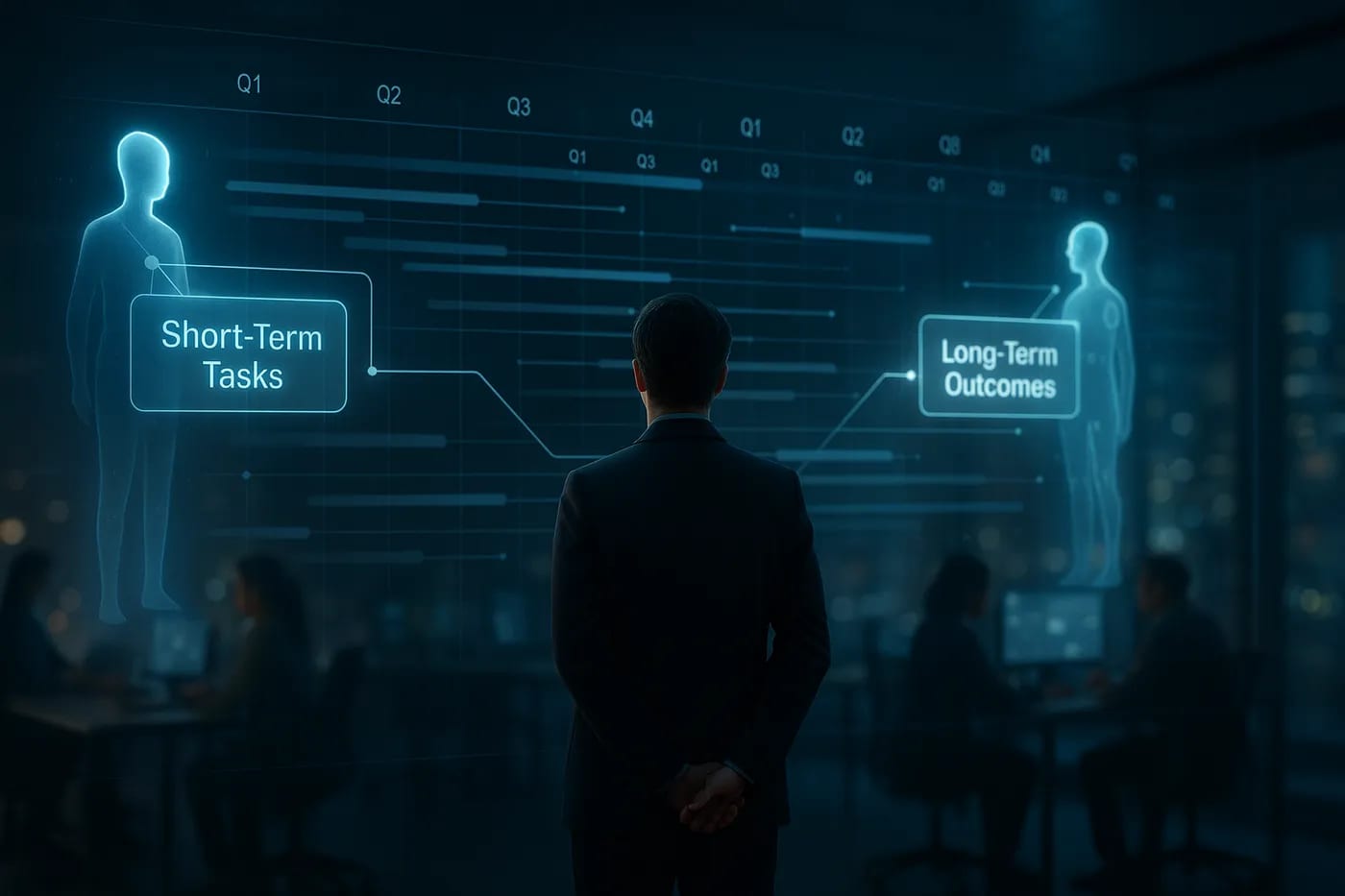
Perhaps the most intriguing prospects lie in long-horizon planning and strategy. Long-term corporate planning often involves layer upon layer of interdependent decisions, - a veritable chess game against an uncertain future. Traditional AI might handle a few moves ahead, but a multi-agent system can play out many what-if scenarios in parallel. Envision a strategic planning AI where one agent focuses on immediate next-quarter tactics, another models impacts a year out, and yet another explores five-year market evolutions, - all exchanging information and adjusting the plan dynamically. This could make scenario planning feel less like guesswork and more like having an army of strategists charting multiple futures at once. Early signals of this potential are already visible. Multi-agent GenAI platforms are being eyed for their ability to continuously adapt plans in fast-changing environments, a capability no single model or human planner can match. For product roadmaps, major investments, or policy decisions that unfold over time, hive-mind AIs might become the go-to consigliere, helping leaders see around corners by covering many angles concurrently. It’s a level of foresight and adaptability that could prove decisive in today’s high-volatility markets.
So what’s the strategic takeaway for technology and product leaders eyeing this new AI paradigm? First, it’s time to update our mental models (and perhaps our prototypes) beyond the “one model to rule them all” mindset. The future of AI solutions may look more like an orchestra of specialized models working in harmony. That means now is the moment to start experimenting with multi-agent workflows in your organization. On a practical level, this could be as simple as orchestrating two or three AI services to tackle a problem from different directions, - for instance, pairing a generative model with an analytical one and a planning algorithm, then building a layer that synthesizes their outputs. Tools for this kind of agent orchestration are emerging (from open-source frameworks to cloud offerings), and forward-thinking teams should get hands-on. Encourage your innovation labs to run pilot projects with these concepts: maybe a multi-agent AI assistant for your strategy team to explore market shifts, or an internal tool that uses one agent to generate ideas and another to critique them. The goal isn’t to jump on every hype bandwagon, but to steadily build muscle for coordinating AI agents, because this could become a core competitive skill. Think of it as training your organization to manage an AI “team” rather than just an AI tool.

Finally, take a reflective but confident stance. The rise of hive-mind AI like Deep Think is a signal that the AI field is maturing. We’re moving from solo acts to symphonies. Much as agile firms learned to harness cross-functional human teams, the winning companies in the AI-powered era will be those who harness teams of AIs, - all while keeping the humans in charge of the grand vision. Google DeepMind’s Gemini 2.5 Deep Think is a compelling proof-of-concept that many brains (even silicon ones) are better than one. It challenges us to reimagine what problems are solvable when you have not just an AI, but an entire fleet of AIs collaborating at your side. The invitation to executives and product innovators is clear. Start orchestrating your own little hive minds for the challenges that matter most to you. The companies that accept that invite early will be the ones writing the playbook for multi-agent intelligence in the enterprise. In a business landscape where the complexity of problems is ever increasing, having an AI swarm on call might just become the ultimate superpower for those prepared to wield it.

Further Readings
-
Try Deep Think in the Gemini app – Google DeepMind Team (August 2025) – Official announcement of Gemini 2.5 “Deep Think.” Describes how the model uses parallel “thinking time” with multiple agents to tackle problems and highlights its gold-medal performance on the International Math Olympiad, along with improvements in coding and reasoning benchmarks.
-
Google rolls out Gemini Deep Think AI, a reasoning model that tests multiple ideas in parallel – Maxwell Zeff (August 2025) – TechCrunch coverage of Deep Think’s launch. Provides context on the model’s multi-agent architecture, its benchmark results (from code generation to the “Humanity’s Last Exam”), and notes that OpenAI and Anthropic are also exploring similar “hive mind” approaches in their latest AI systems.
-
What to know about Gemini 2.5 Deep Think – Ben Dickson (August 2025) – A deep dive into the technical aspects of Deep Think. Explains the human-inspired parallel reasoning approach with examples (solving math problems via multiple strategies), discusses the model’s mixture-of-experts architecture and massive context window, and examines how these contribute to its superior performance on complex coding, math, and creative tasks.
-
The end of monolithic AI: Here’s why you really need a multi-agent architecture – Pedro Andrade (June 2025) – Though focused on customer service, this piece offers a clear explanation of multi-agent AI’s advantages over traditional single-bot systems. It uses an analogy of a team meeting (specialized members coordinated by a leader) to show how a multi-agent setup can solve multifaceted problems in one seamless flow, adapt to changing conditions, and scale more flexibly – insights that apply to enterprise AI strategy broadly.
Disclaimer: The perspectives shared in this article are my own and do not represent those of my employer or any affiliated organizations. All company names, product names, logos, and brands mentioned are the property of their respective owners and are used for identification and illustrative purposes only. No endorsement, sponsorship, or affiliation is intended or implied. References to specific companies or case studies are based on publicly available information and are used solely for educational and discussion purposes.
More from machine minds
All machine minds → machine minds
AI’s Inner Monologue: A Window into Transparency That May Soon Close
Picture an AI that thinks out loud like a colleague muttering through a tough problem. It sounds far-fetched, but today’s most advanced models sometimes do exactly that, - breaking down complex challenges into step-by-step reasoning that…
 machine minds
Test-Time Neural Plasticity: AI That Adapts on the Fly
It’s 2 AM at a busy call center, and an irate customer is on the line. Suddenly, the AI support agent’s voice changes mid-sentence, - its formal script softens into a gentle, empathetic tone. This shift isn’t pre-programmed by a developer;…
 machine minds
From Brittle to Brilliant: How Model Synthesis Architecture (MSA) Is Reinventing AI Reasoning
It’s past midnight on a high-tech manufacturing floor, and the assembly line has ground to a halt. An emergency alarm blares as a baffled shift supervisor calls the plant manager. The factory’s AI system, - normally excellent at optimizing…