BlackBoxToBlueprint: Software Archaeology Meets AI
🔊 Listen to the Podcast version here. 🔊
In a sleek, climate-controlled data center lined with racks of modern servers, it’s easy to assume everything is cutting-edge. But looks can be deceiving. Beneath the polished exterior, some of the world’s most critical business logic still runs on systems built decades ago, - relics of the past wrapped in the shell of today. As a solution architect who’s spent the last 15 years crafting blueprints for modernization projects across the globe, I’ve learned to spot these digital fossils hiding in plain sight. And honestly, I’ve often felt less like an engineer and more like an archaeologist, - carefully excavating layers of code, brushing aside the dust of obsolete languages and undocumented logic, hoping not to “trigger a collapse”, - think Indiana Jones. These systems are rarely understood, seldom documented, and often feared. They’re the black boxes of enterprise IT: you feed in inputs, get outputs, and pray the magic holds. For leaders overseeing these systems, this isn’t just a technical nuisance, - it’s a profound risk. The people who built them are retiring or worse still, you have had to outsource their support. The documentation is gone. And yet, these ancient cores still beat at the heart of modern business. Critical systems built in the ’80s and ’90s continue to soldier on as their stewards retire and their documentation fades into oblivion.

Modernizing a legacy system often feels like assembling a puzzle without the picture on the puzzle box, - the pieces are all there, but the logic is tangled, undocumented, and obscured by decades of patchwork updates. And while you’re not likely to break something with a single change, - thanks to robust testing, the real risk lies in wasting time, missing critical logic, or rebuilding functionality that no longer serves the business. There has to be a smarter way to make sense of these black boxes before rebuilding them, right? That’s exactly where a new wave of AI-powered modernization platforms comes in. Strategic partners like GAPvelocity AI blend traditional code analysis with behavioral exploration to reveal a clear, navigable blueprint of the system’s logic. So how do you modernize a mission-critical system you barely understand?
Software Archaeology: Digging for Logic in the Dark
Maintaining old software can really feel like archaeology. Intrepid engineers sift through stratified layers of code, hoping to unearth meaning (business logic) buried in relic programming languages and cryptic comments, - if any were left behind. They patch and pray. Meticulously brushing away bits of technical dust, they attempt to discover why a piece of code exists in the first place. It’s painstaking, slow work, - a high-stakes treasure hunt with the business on the line.
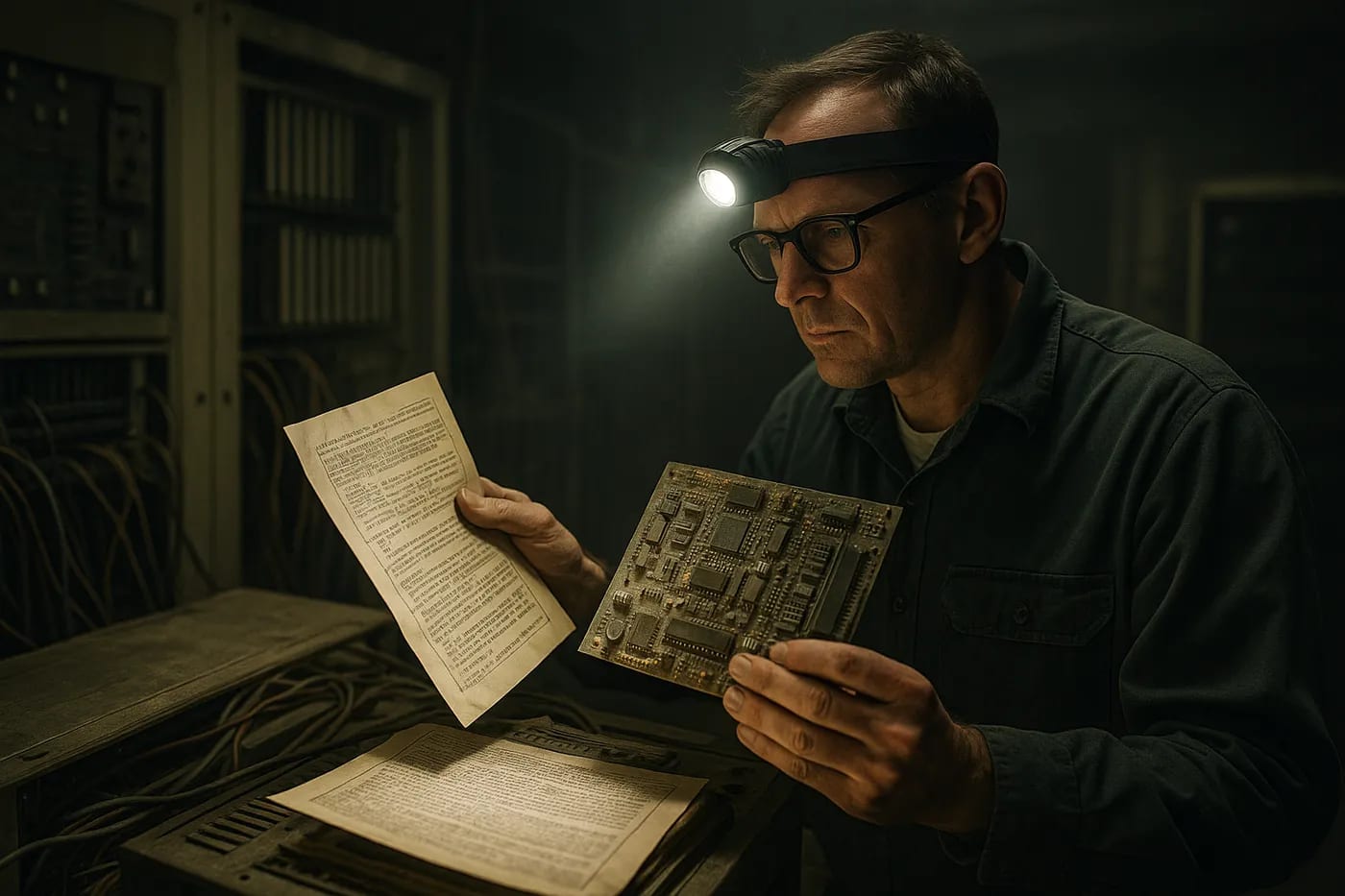
Without a map to the maze, organizations resort to desperate measures. Some freeze the code entirely, terrified to touch it. Others try “behavioral cloning”, - treating the system like a mysterious black box and simply copying its input-output behavior onto a new platform without truly understanding it. That’s like trying to recreate a secret family recipe by taste alone: you might replicate the dish, but you’ll also replicate any bad ingredients or hidden (mistakesarxiv.org). Meanwhile, costs spiral upward. By some estimates, companies spend up to 80% of IT budgets just keeping these ancient systems (runningstride.build). Even U.S. government agencies have tallied over $90 billion per year spent on legacy system (upkeepzestminds.com). The risk of doing nothing grows by the day, yet diving in blind is its own recipe for disaster.
It’s no surprise, then, that modern problem-solvers are looking for a better way. AI-driven modernization platforms are changing the equation, using automation, intelligent code analysis, and generative AI to map, refactor, and rebuild legacy systems faster, safer, and more cost (effectivelystride.build). For example, GAPvelocity AI approaches software archaeology with a deterministic AI engine that precisely analyzes and traces legacy code. Instead of spending months digging through Informix or Clarion source code manually, teams can get a high-level map of a system’s logic in days. This kind of platform effectively gives you the “map to the maze” that was missing, allowing engineers to see the system’s structure and decision points without endless guesswork. In short, AI is taking on the brunt of the archaeological dig, - and doing it in a fraction of the time, so humans can focus on understanding and acting on the findings.

The consequences of leaving legacy code in the dark are very real. For instance, a government benefits system recently miscalculated payments due to a tiny logic flaw hiding in 40-year-old COBOL code. It took a swarm of consultants on a weeks-long bug hunt to pinpoint and patch the issue. The fiasco cost millions and eroded public trust, all because the system’s logic was essentially a riddle wrapped in spaghetti code. Clearly, we need better tools to shine light into these black boxes.
BlackBoxToBlueprint: Hunting for Logic with AI
Enter the AI agent, armed with curiosity and a reward function. Think of it as a digital explorer dropped into our legacy system’s world, poking and prodding to see what makes the black box tick. Researchers have aptly nicknamed this approach “BlackBoxToBlueprint.” Instead of painstakingly reading code, the AI treats the legacy program like a mysterious game. Every time it finds an input that causes the system’s output to change significantly, it’s like striking gold, - the agent gets a reward. Through reinforcement learning (the same kind of AI mojo behind robots learning to walk and algorithms mastering video games), the agent learns to home in on these critical decision points.

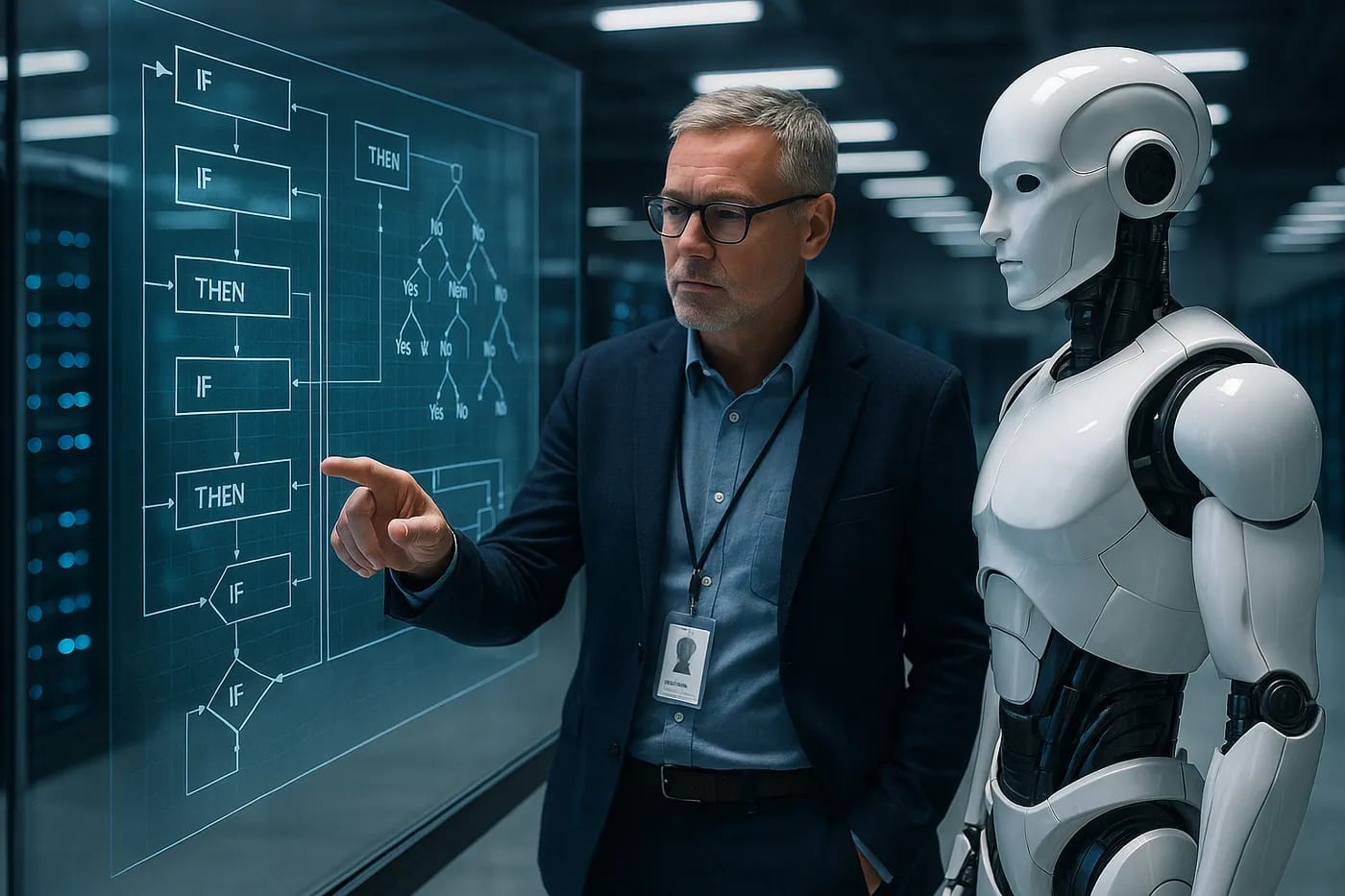
Over time, this AI explorer maps out the system’s secret pathways from the outside in. Each “rewarding” discovery marks a decision boundary, - perhaps the exact point a fee jumps from 1% to 2%, or where an order status flips from “pending” to “confirmed.” For example, the agent might reveal that any order of 100 or more units triggers a special bulk-order processing flag, - a rule you’d see plainly in the extracted decision tree. Once enough of these points are found, they can be clustered and translated into a human-readable form. In plain English, the AI can hand you a decision tree (a flowchart of rules) that approximates what the legacy code does. It’s as if the AI drew a blueprint of a maze by running through its corridors and noting every twist and trapdoor. One recent study showed an RL agent doing exactly this, then using the extracted rules to accurately mirror a legacy system’s behavior.
Notably, this technique works even when you can’t (or prefer not to) read the original source code at all. The AI learns purely from the system’s behavior, which means you can apply it to a running application directly. It’s a perfect complement to traditional code analysis because it provides an outside-in perspective on the system. And while the extracted rules may not capture every last edge case, they zero in on the logic that truly defines the system’s behavior. In practice, a tool using this approach could quickly highlight, say, the 5% of conditions that account for 95% of decisions in the program, - the critical paths every maintainer or modernizer needs to know.

This is where a hybrid strategy shines. For example, while a reinforcement learning agent discovers what the system does by observing outputs, a deterministic AI engine (like the ones at the core of GAPvelocity AI) can simultaneously parse why the code does it by analyzing the source. The RL agent might identify that “orders ≥ 100 units trigger Mode X,” and the deterministic analysis can confirm exactly where in the code that rule lives and how it’s implemented. By combining forces, you get a more complete blueprint: the outside-in exploration finds the functional behaviors, and the inside-out analysis provides details with full traceability back to the code. In fact, industry practitioners are embracing this two-pronged approach. In 2024, we saw the advent of “tool-calling” methods that let AI agents combine the predictive reasoning of LLMs with the precision of deterministic tools (devops.com). It’s the same philosophy behind GAPvelocity AI’s hybrid AI platform, which unites an explainable rules-based engine with generative AI helpers. The deterministic side guarantees consistency and control, while the generative side assists with making sense of it all, - like suggesting tests, creating documentation, and even helping with some application fine-tuning. The result is a practical blueprint of the legacy system, from both macro and micro views, that teams can actually use.
Blueprints in Hand: Rebuilding with Confidence
Armed with an AI-generated blueprint of your legacy system’s logic, you suddenly have options.

The previously opaque program becomes a trove of insights, and that changes the game for modernization. Here are six ways this newfound clarity pays off:
1. Legacy Modernization with Less Guesswork
Knowing the exact rules and decision points means you can rewrite or re-architect the system with far less guesswork. The AI-extracted blueprint becomes a spec sheet for developers, - essentially a map to rebuild the functionality on modern platforms, minus decades of cruft. Teams can implement a new system confident that it preserves all the critical business logic of the old one. No more “I hope this new module does what the old COBOL one did.” Now you know what the old one did.

2. Software Archaeology, Supercharged
Instead of spending months or years digging through code manually, your team gets a high-level view of the system’s logic in days. This accelerates understanding of what each module does and why. Hidden business rules that would have been missed by manual code reading jump right out of the decision diagrams. Modernization experts at GAPvelocity AI see this regularly, - when their deterministic AI engine produces a flowchart of a legacy app, it often surfaces odd conditional branches that prompt business users to say, “Wait, we still do that?!” Finding those surprises early means fewer nasty shocks during migration.

3. Test Generation on Autopilot
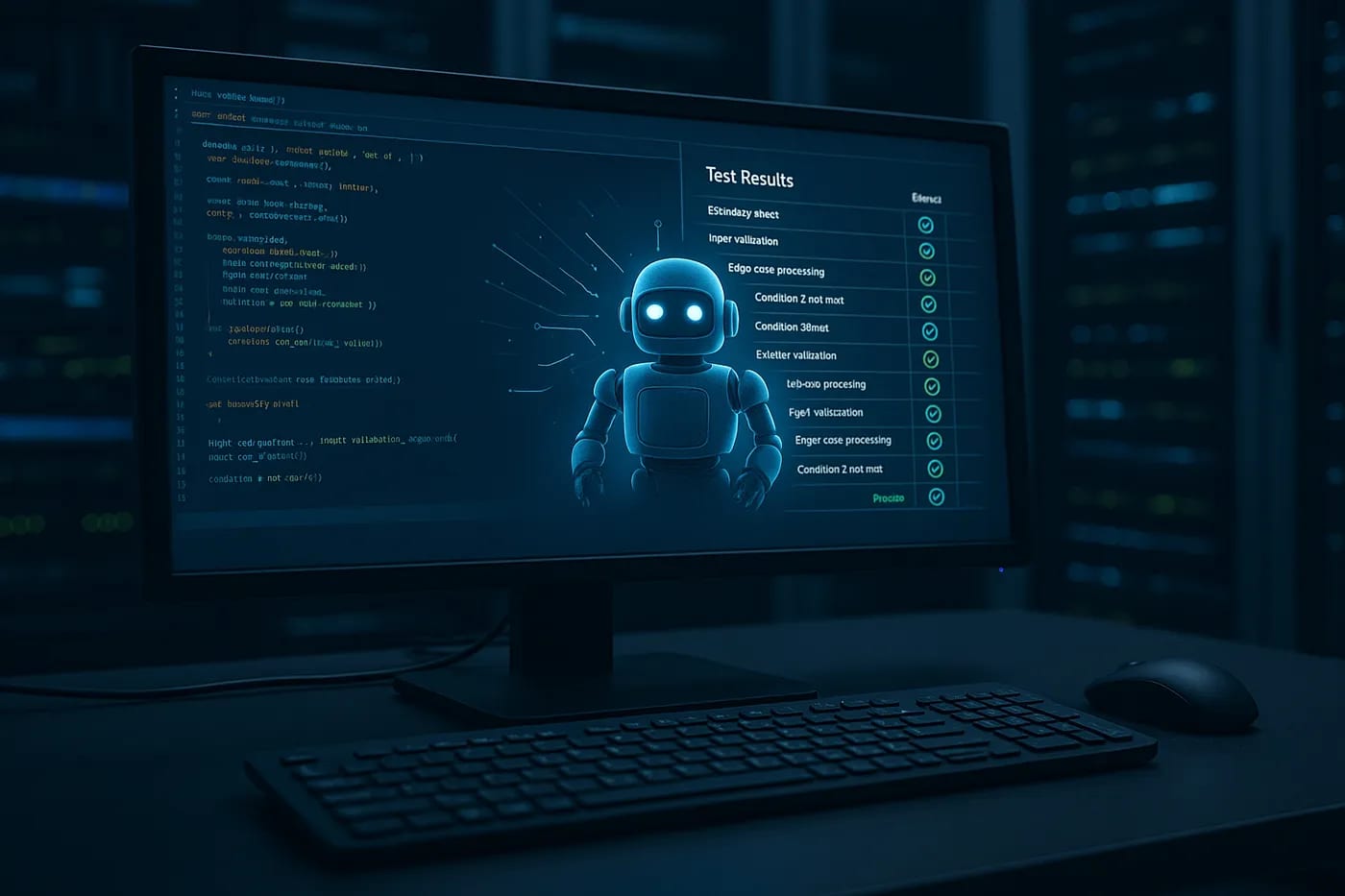
Each decision boundary the agent finds is a perfect candidate for a test case. If the blueprint says an input of X yields output Y (unless condition Z is true), you can generate targeted tests to ensure any new implementation behaves the same as the legacy system for all those critical edge conditions. In fact, specialized AI tools can even churn out thousands of unit tests automatically for legacy code that never had them (zestminds.com). For example, GAPvelocity AI’s platform leverages generative AI to help produce exhaustive regression test suites and even documentation. This means when you rebuild or refactor the system, you have a safety net of tests to catch any deviations in behavior, - a huge boost to confidence and quality.
4. Risk Mitigation
With an interpretable, traceable model of your old system, you’re far less likely to be blindsided by it. No more unknown-unknowns lurking in the code. If a certain obscure input combination triggers a business rule (say, a regulatory compliance condition), you’ll see it in the decision tree and can account for it during modernization. Every code change in the new system can be validated against the blueprint of the old, dramatically reducing risk. Moreover, because deterministic AI extraction provides an audit trail for each rule, you can verify the new implementation covers the same cases. GAPvelocity AI’s approach, for instance, preserves full traceability of each transformed code element to its source. When you let AI create a map of the logic, you eliminate much of the variability and guesswork that make purely manual or purely generative approaches risky, - every change becomes predictable and consistent (devops.com). In short, modernizations stops being shots in the dark.

5. Long-Term Operational Efficiency
Once legacy logic is extracted and ported to a cleaner, modern system, maintenance costs plummet. Teams can onboard new developers far more easily using the decision-tree documentation as a teaching tool. Freed from babysitting ancient code, IT talent can focus on innovation instead of mind-numbing bug hunts in 40-year-old modules. The scary “ghost in the machine” becomes a well-documented, well-understood piece of your tech portfolio. For example, organizations that have modernized with GAPvelocity AI’s help often report that what used to be a week-long debugging ordeal in the old system becomes a 10-minute fix in the new one, thanks to clear documentation and robust tests. Operationally, you’re no longer in constant fire-fighting mode. You can proactively improve and extend your systems.

6. New Insights & Optimization
By exposing the system’s decision logic, you might uncover business rules that are outdated, redundant, or ripe for improvement. In translating old logic to new, you have a chance to question long-held assumptions (“Why do we deny a loan when score is 600 but approve at 601?”) and refine them. Modernization thus becomes not just a technical upgrade, but an opportunity to streamline processes and optimize outcomes. The blueprint gives both IT and business stakeholders a clear view of how things actually work, enabling data-driven decisions about which rules to carry forward, which to tweak, and which to retire. In many cases, the exercise of reviewing a GAPvelocity AI-generated model of the legacy system leads to simplifications in the new design, e.g. merging two similar rules, eliminating a never-used feature, or automating a manual check, - all of which can yield efficiency gains going forward.

Charting a New Path Forward
The emergence of techniques like BlackBoxToBlueprint signals that we don’t have to remain prisoners of our legacy systems’ mysteries. What once required months or years of painstaking code reading can now, at least in part, be accelerated with smart automation and AI-driven insight. It’s a shift in mindset as much as technology: from fearing the black box to eagerly exploring it, armed with better tools.
Looking ahead, we might even combine these AI superpowers in creative ways. Picture a tandem of agents: one (the RL explorer) maps out what the system does, while another (perhaps a clever code-reading generative model) interprets why it does it. This hybrid approach could not only translate legacy behavior into rules, but also suggest better ways to implement or streamline that logic in a modern codebase. In fact, this isn’t just a futuristic vision – platforms like GAPvelocity AI are already heading down this path, fusing deterministic predictability with generative adaptability in their tooling. Modernization no longer needs to be a shot in the dark; it becomes a guided modernization journey, with AI shining light on both the “what” and the “why” of your legacy software.

For technology leaders responsible for aging portfolios, the message is clear. You can wait for that next outage or compliance scare to force your hand, or you can take a proactive stance. Start by identifying a candidate system and let an AI agent (or two) take it for a spin. And yes, all of it should be done in a manner consistent with your AI governance policies. Even if you begin with a small pilot project, you’ll gain valuable insight with relatively low effort. The cost of inaction is only rising, but now the odds are finally in your favor. Those dusty, inscrutable programs hiding in the basement? They just might have a second life when guided by an AI cartographer. With a blueprint in hand, the hard-earned logic of decades isn’t lost to time, - it becomes an asset you can carry into the future. After all, even the gnarliest legacy code can be tamed when you have its blueprint in hand.
As a solution architect at GAPvelocity AI, I’ve seen firsthand how these approaches can revive “untouchable” legacy systems. If you’re ready to illuminate a black box in your organization, feel free to reach out to me or our team. We’re happy to discuss how hybrid AI could help turn your black box into a blueprint for innovation.

Further Readings
-
BlackBoxToBlueprint: Extracting Interpretable Logic from Legacy Systems – Vidhi Rathore et al., July 2025. Research paper proposing an RL-based pipeline to extract human-readable rules from legacy software by probing its decision boundaries.
-
Building Your AI Future: How GAP Tackles Your Most Critical Software, Data Engineering, and Staffing Challenges to Actually Make AI Work (Growth Acceleration Partners, July 2025). Explores practical strategies for integrating AI within complex legacy software environments. Highlights best practices for overcoming common engineering, data, and staffing hurdles to unlock the true potential of AI-driven modernization.
-
Legacy IT Modernization with AI – Nitin Naik, Ph.D., June 2025. Insight into U.S. federal agencies leveraging large language models to accelerate legacy system updates, highlighting AI’s promise to speed modernization and the need for human oversight on mission-critical systems.
-
Data, Determinism, and AI in Mass-Scale Code Modernization – Olga Kundzich & Patricia Johnson, April 2025. Explores how combining deterministic code analysis (e.g. OpenRewrite recipes) with agentic AI yields scalable, traceable legacy refactoring. Discusses the importance of rich code data (LSTs) and tool-based AI for reliable large-scale code transformations.
More from builder's bench
All builder's bench → builder's bench
Rapid Code, Rapid Decay: How AI Tools May Repeat 90s RAD Mistakes
Picture this... It's 1995 and an ambitious accountant just built a mission-critical application using Microsoft Access. It works like a charm, - until it doesn't. Fast forward to 2025 and instead of rogue office workers building shaky…
 builder's bench
12 AI IDEs, 5 Policy Tests, 1 Guide for CTOs
Picture a stressed CTO in a late-night code review, a virtual genie perched on her shoulder offering brilliant fixes and a joke or two. Tempting, right? But like any good genie, an AI coding assistant can grant wishes with a catch. The…
 builder's bench
PDL is to Prompts as Git was to Code
Imagine running your company by whispering instructions into a black box, then crossing your fingers. That’s essentially how many teams handle AI today, - blind prompt guesses and hope for the best. One day a prompt produces gold. The…