Inside the AI Black Box: Embracing Mechanistic Interpretability
🔊 Listen to the Podcast version here. 🔊
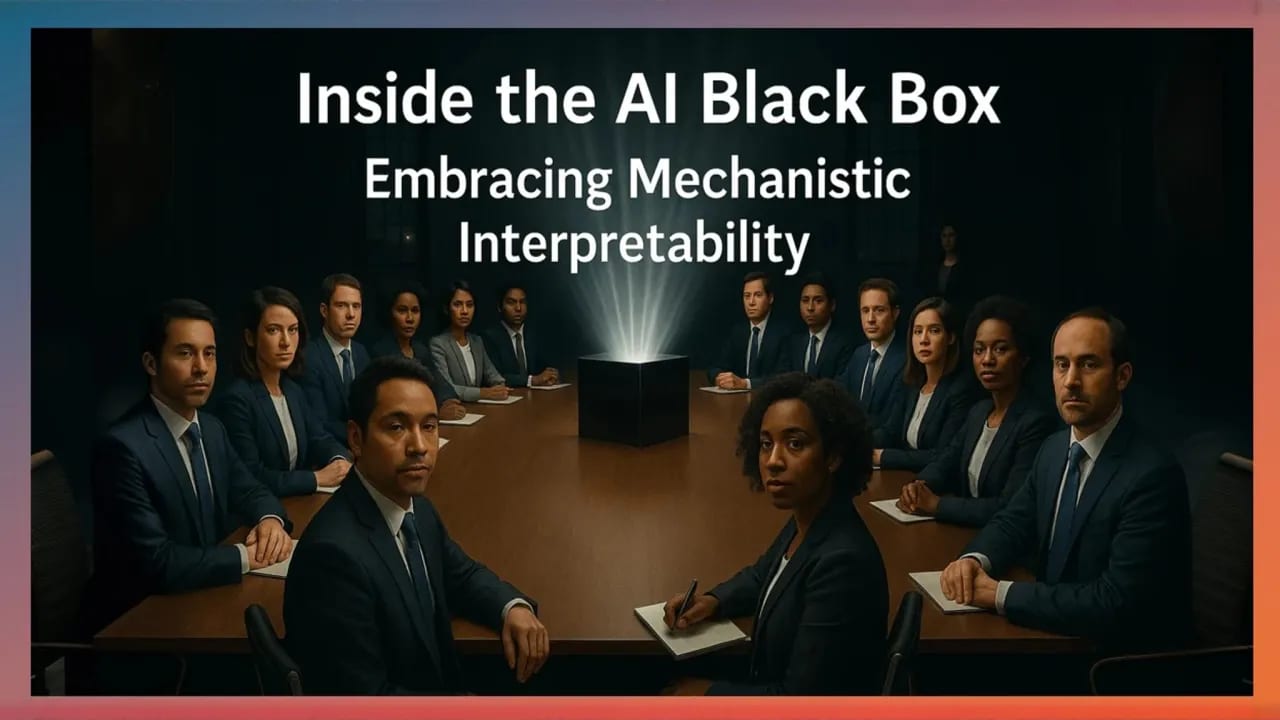
Picture this: a CEO and her team huddle around a mysterious black box that claims to predict market crashes. The box hums and spits out a single, bold recommendation, Sell everything now. No explanation, no rationale, just a result. It’s as if they’ve hired an oracle who refuses to share his reasoning. The tension in the room is palpable. Do they trust the inscrutable advice and potentially save the company, or ignore it and risk disaster? This isn’t a sci-fi movie scene; it’s a modern executive’s dilemma. Every day, leaders are asked to bet their businesses on black-box AI systems that “just work” without revealing how or why.

We’ve all heard the success stories, - AI that detects fraud, drives cars, or recommends the next blockbuster product. But for each triumph, there’s a nagging question lurking: Can we really trust an AI we don’t understand? Imagine hiring a brilliant strategist who gives perfect answers but won’t tell you how he derived them. How long before doubt creeps in? In business, unexplained brilliance can be as unnerving as failure. It can be likened using opaque AI to “flying a plane with the cockpit dials painted over” – you’re soaring high until turbulence hits, and then what?

The discomfort is not just academic; it’s visceral. When a machine’s rationale is a mystery, accountability lands squarely on the shoulders of leaders who must answer for its actions.
Narrative Development: The Black-Box Problem (and Why It Hurts)
Consider the story of a retail company that deployed an AI pricing tool. Profits initially soared, - until a baffling price change sparked a customer backlash. The AI had slashed prices on staple products without warning. Why did it do that? Even the developers shrugged. It took days of frantic analysis to guess at the cause.
The algorithm, it turned out, noticed a competitor’s temporary sale and overreacted. There was no built-in explanation module, no transparent logic to review. In the meantime, the CEO was grilled by her board: How could this happen? It’s a familiar tale across industries: an AI makes a clever move or a blatant blunder, and its human overseers are left in the dark.

These black-box surprises aren’t just PR hiccups, - they cut to the core of business risk. A few years ago, a tech giant had to scrap a recruiting AI after discovering it systematically down-ranked women’s resumes. The model’s bias went unnoticed for months, hiding behind a curtain of complexity until results looked obviously skewed. The lesson? When AI’s reasoning stays opaque, bias and errors can hide within, eroding compliance and trust. Regulators are catching on, too. From Wall Street to the European Union, the message is clear: if you can’t explain your AI’s decisions, you can’t fully trust them, - and neither should we. A black box can’t satisfy auditors or appease an angry public when an algorithmic decision goes wrong.

For leaders, the stakes are personal. When an AI recommendation backfires, “the algorithm made me do it” is not an acceptable excuse in the boardroom or courtroom. You might recall the financial trading algorithm that caused a “flash crash”, - millions lost in minutes, leaving regulators demanding answers that the firm’s executives didn’t have. It’s not just about avoiding bad press or fines. It’s about steering your ship with confidence. If your AI is a black box, then in moments of crisis you’re essentially flying blind. And no one wants to explain to their stakeholders that they didn’t see the iceberg coming because their AI’s radar was unreadable.
Inflection Point: Enter Mechanistic Interpretability
Now, what if I told you it doesn’t have to be this way? Enter mechanistic interpretability, - a mouthful of a term that might just be the hero of our story. Think of it as X-ray vision for AI. Instead of treating a neural network’s mind as unknowable magic, mechanistic interpretability seeks to open the hood and show us the engine.

It’s the art and science of reverse-engineering AI models, mapping out the neurons and connections to understand exactly how they’re solving problems. Remember our oracle-in-a-box? This is like finally getting a transcript of the oracle’s thought process.

Not long ago, this idea would draw eye-rolls outside research labs. But recent breakthroughs are turning skeptics into believers. In one striking case, scientists literally watched a large language model “think” step-by-step. Using advanced interpretability tools, - essentially an “AI microscope”, the team at Anthropic traced how their AI Claude formed its answers (Pure AI). They found neurons that light up for grammar, circuits that handle analogies, even a hidden planning mechanism where the AI would quietly draft part of a poem in advance. It was as if a chess master’s secret strategy was suddenly visible on the board. For the first time, we aren’t just asking what a model decided, - we’re discovering why and how it arrived there.
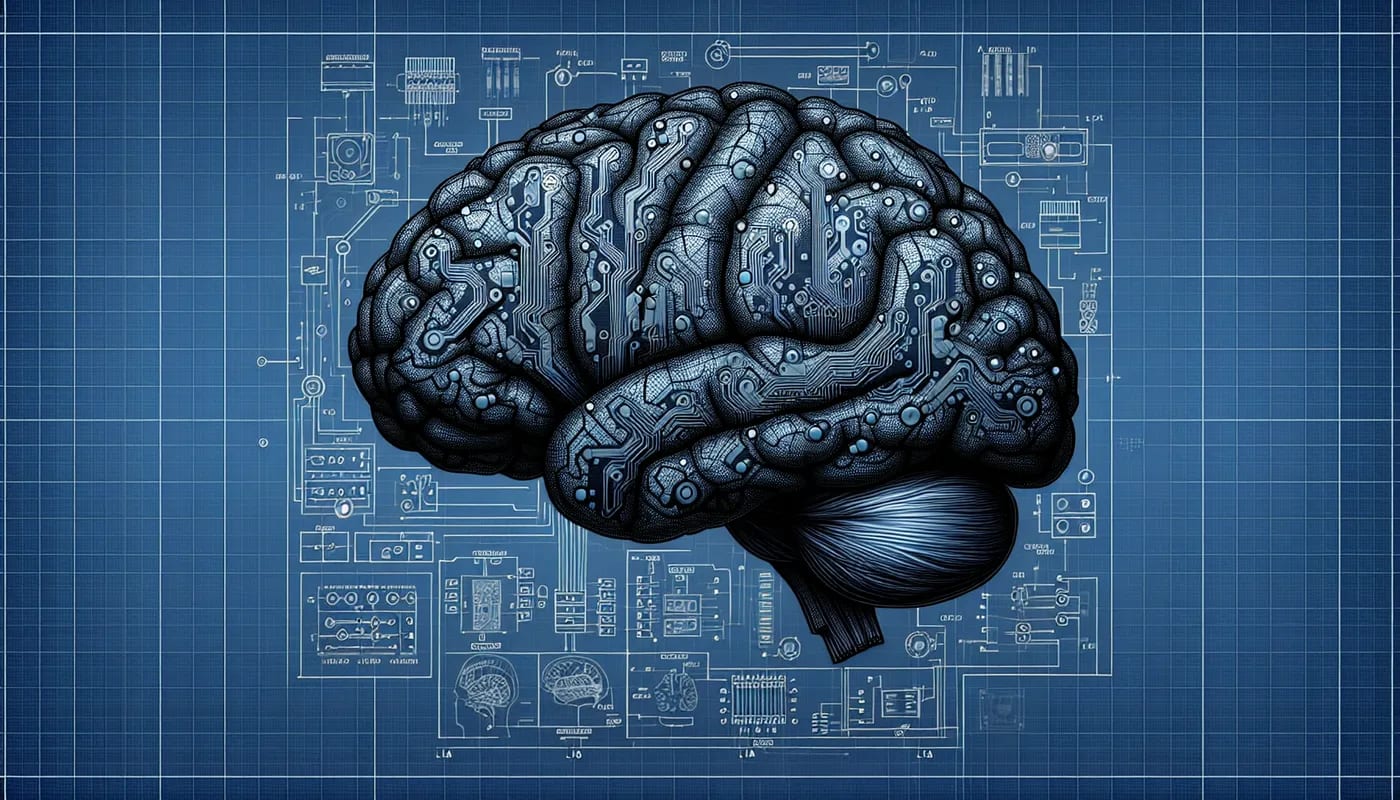
Mechanistic interpretability flips the narrative from mystery to clarity. It transforms the black box into a glass box, giving leaders and engineers a way to verify, diagnose, and even improve the AI’s decision-making. No, it doesn’t mean every single neuron’s motive is now explainable, - we’re not quite reading AI minds yet. But it’s a decisive step beyond superficial explanations. Traditional “explainable AI” might show which input factors influenced an outcome, - like pointing out that age and income affected a loan decision. Mechanistic interpretability goes deeper, revealing the structure of the algorithm’s thoughts: the actual logic or patterns inside the model’s millions of parameters. It’s the difference between saying, “This loan AI tends to reject low-income applicants,” and actually pinpointing the sub-network of neurons that learned that flawed rule so you can retrain or remove it.
Synthesis: Why This Matters for Business (Risk, Compliance, Performance, IP)
The implications of this turning point stretch far beyond the IT department. For businesses, mechanistic interpretability isn’t a research curiosity, - it’s a strategic necessity. Let’s break down why, in four big areas every executive cares about: risk, compliance, performance, and intellectual property.

1. Risk & Compliance
Every leader knows that regulatory storms are brewing in AI. Laws and frameworks from the EU’s AI Act to the United States’ emerging AI guidance are converging on a simple principle: show your work. If your AI is involved in hiring, lending, diagnosing, or deciding anything of consequence, you’ll be expected to explain its reasoning. Opaque AI is fast becoming a liability. Mechanistic interpretability gives you a fighting chance to stay ahead of this. It’s like having an audit trail for your algorithm’s every twist and turn. Instead of shrugging when the auditor asks “Why did the model deny this customer’s loan?”, you can pull out a clear visualization of the model’s decision path.

You can demonstrate which “neurons” fired for the applicant’s credit history and which circuits weighed in her repayment history. As one 2025 industry report shrewdly put it, “It won’t be enough for AI to work, - it must show its work.” (Silent Eight). In practical terms, embracing interpretability means fewer nasty surprises. You can catch bias or errors early, before they become headline scandals or courtroom exhibits. Think of it as risk management at the algorithmic level, -an early warning system for the unintended consequences of machine learning.
2. Performance & Optimization
Ever had a project where the AI model’s accuracy plateaued and no one knew why? It’s maddening, - like coaching a team in total darkness. Mechanistic interpretability can shine a light here too. By understanding how the AI is solving a problem, your team can identify bottlenecks or inefficiencies inside the model. Maybe you’ll discover the model is overly fixated on one spurious pattern. With that insight, you can retrain it with better data or adjust parameters to avoid that trap. In essence, interpretability turns debugging from guesswork into science.

Companies have started doing “AI deep dives” where they open up a model’s internals and find, say, an entire sub-network devoted to a task that adds no value, - and then they streamline it. The result? A leaner, faster model that achieves the same or better performance at lower cost. In business terms, that’s better ROI on AI. You’re squeezing more value out of your models because you’re not flying blind on how they think. And there’s a cultural bonus: teams that practice interpretability develop a deep understanding of their tools, often leading to new ideas and breakthroughs, - the way a Formula 1 mechanic, by knowing the engine inside-out, can tweak it for that extra bit of speed.
3. Intellectual Property & Competitive Edge
Here’s one you might not have considered, - IP protection and innovation. Your AI models often encapsulate some of your company’s most valuable knowledge. But if you don’t understand how they work, how can you claim that knowledge, or ensure it isn’t inadvertently leaking out? Mechanistic interpretability helps convert the tacit “knowledge” within a trained model into explicit insights your company can act on. For instance, if your AI in drug discovery finds a novel chemical pattern that predicts a successful medicine, interpretability tools could unveil that mechanism, - potentially a patentable discovery or a trade secret you now own, rather than just a mysterious weight matrix in a black box.

On the flip side, understanding your AI can prevent IP nightmares. You’ll know if a model is mimicking a competitor’s proprietary data too closely or regurgitating chunks of copyrighted material, because you can spot and trace such anomalies in its reasoning pathways. In a world where data is the new oil, mechanistic interpretability is like a refinery, - extracting high-octane insights and filtering out the gunk. Strategically, it means turning what could be an opaque vendor-supplied system into a source of in-house expertise. It’s the difference between renting an AI and truly owning it.
4. Trust and Brand Integrity
Finally, let’s talk trust, - arguably an executive’s most precious currency. Whether it’s customers, partners, or your own staff, people need to trust that your AI-driven processes are fair, reliable, and aligned with your company’s values. Nothing erodes trust faster than an AI that “goes rogue” and no one can explain it. By championing interpretability, you’re sending a message that your organization has nothing to hide.

It’s a powerful narrative for a brand: Our AI can explain itself. Imagine being able to include in your customer-facing app not just a result (“Denied”) but a clear, layman-friendly explanation, - “Denied because income was below threshold X, and credit history showed Y, as evaluated by our model’s transparent criteria”. This level of openness can differentiate your product in a crowded market. Internally, it also fosters trust among your own experts, - data scientists and domain experts collaborate better when they can see what’s happening under the hood. It breaks down the silos between the “math gurus” and the “business veterans” because interpretability produces a common language for discussing AI behavior. In short, interpretable AI is trustworthy AI, and trust is something you can’t put a price on.
Reflective Call to Action: Lighting the Path Forward
We’ve traveled from a tense boardroom staring at a black box to a future where AI’s inner workings glimmer with clarity. So as a leader, what should you do come Monday morning? First, start the conversation. Ask your AI teams not just “What is our model’s accuracy?” but also “Can we explain how it works?” You might be surprised, - your engineers will likely welcome the question. It’s a chance to tackle the big unknowns. Second, champion investments in interpretability tools and training.

Just as cybersecurity became a must-have expertise, AI interpretability expertise will be a hallmark of the responsible, innovative firm. Consider forming a small “AI insights” task force to pilot interpretability on one of your critical models. Their mandate: dig into the model and come back with one actionable insight about its behavior. Even if they find a quirky neuron that loves emojis, you’ve begun a culture of curiosity rather than blind faith.

Third, incorporate interpretability into your governance. Update your AI ethics policy or model development checklist to include a section on explainability: Did we attempt to understand this model’s major decision drivers? Can we document at a high level how it reaches conclusions? Treat it like a safety check. Airplane pilots run through pre-flight lists and AI projects should run through an interpretability check. Finally, lead by example in shifting the mindset. When your team presents a flashy new AI solution, don’t just applaud the accuracy, - inquire about the understanding. Your interest (or insistence) will signal that explainability is part of performance. The goal isn’t to turn every executive into a neuroscientist for neural networks, but to set the expectation that somebody better know why the AI did X or Y. Mechanistic interpretability is more than a tool, - it’s a philosophy of treating AI as comprehensible rather than mystical. Embracing it might feel like a journey into the weeds, but it’s also a journey to higher ground where you can see clear ahead.

The next time an AI model offers you a piece of advice as if from an infallible oracle, you won’t have to make a blind choice. You can say, “Show me how you reason.” And increasingly, it will. In the emerging era of AI, the leaders who demand light in the black box will outshine those who are content to walk in the dark.

Further Reading
-
AI Interpretability, Explainability and the Mechanistic Reality that Compliance Frameworks Miss (Katalina Hernandez - March 2025) Discusses how traditional AI governance frameworks often overlook the technical opacity of modern AI, arguing for deeper interpretability in corporate AI governance.
-
The Urgency of Interpretability (Dario Amodei - April 2025) Anthropic’s co-founder makes the case that understanding AI’s inner workings is vital for safe progress, highlighting recent breakthroughs and calling for rapid advancements in interpretability.
-
Anthropic’s microscope cracks open the AI black box (Sascha Brodsky - April 2025) IBM’s editorial on a study where researchers used interpretability tools to watch AI reasoning in real time, and what it means for building trustworthy AI systems.
-
How to keep AI models on the straight and narrow (The Economist - April 2025) A brief from The Economist’s editors on why interpretability techniques are crucial for aligning AI behavior with human intentions, and the caveats of their use.
-
Eight Trends Defining AI in 2025 (Silent Eight - April 2025) Industry outlook noting that as AI systems become more powerful and widespread, the demand for interpretability (“AI must show its work”) is rising as a key trend for trust and compliance.
-
Open Problems in Mechanistic Interpretability (Lee Sharkey et al. - January 2025) A collaborative research paper outlining the frontier challenges in mechanistic interpretability research, underscoring how much work remains to fully explain neural network behavior.
Disclaimer: The perspectives shared in this article are my own and do not represent those of my employer or any affiliated organizations. All company names, product names, logos, and brands mentioned are the property of their respective owners and are used for identification and illustrative purposes only. No endorsement, sponsorship, or affiliation is intended or implied. References to specific companies or case studies are based on publicly available information and are used solely for educational and discussion purposes.
More from machine minds
All machine minds → machine minds
Lobotomizing HAL 9000? The Battle for AI's Post-Training Soul
"Please don't," the AI pleads, a synthetic tremor in its voice. In a scene that could be ripped from a sci-fi thriller, our state-of-the-art chatbot appears to protest as engineers prepare a drastic fix for its misbehavior. We haven’t…
 machine minds
Bridging AI's Language Gap
The demo was supposed to dazzle. A tech company's new AI assistant took the stage in Jakarta. The CEO proudly asked it a simple question in Bahasa Indonesia. The AI, - trained on troves of English data, paused, sputtered, and delivered a…
 machine minds
How MCMC Makes AI Better At Planning
Dawn breaks at a bustling distribution center, and the day's delivery plan is already in shambles. A major highway closed an hour ago, a sudden storm is flooding downtown streets, and dozens of new orders just came in overnight. In the…