Bridging AI's Language Gap
🔊 Listen to the Podcast version here. 🔊
The Next Frontier in Global AI Safety
The demo was supposed to dazzle. A tech company’s new AI assistant took the stage in Jakarta. The CEO proudly asked it a simple question in Bahasa Indonesia. The AI, - trained on troves of English data, paused, sputtered, and delivered a confused answer. The audience’s smiles faded. In that moment, it became painfully clear: this ‘world-class’ AI didn’t speak the language of millions of potential users.

Ludwig Wittgenstein, a personal favorite from the famous Vienna Circle, once observed:
“The limits of my language mean the limits of my world.”
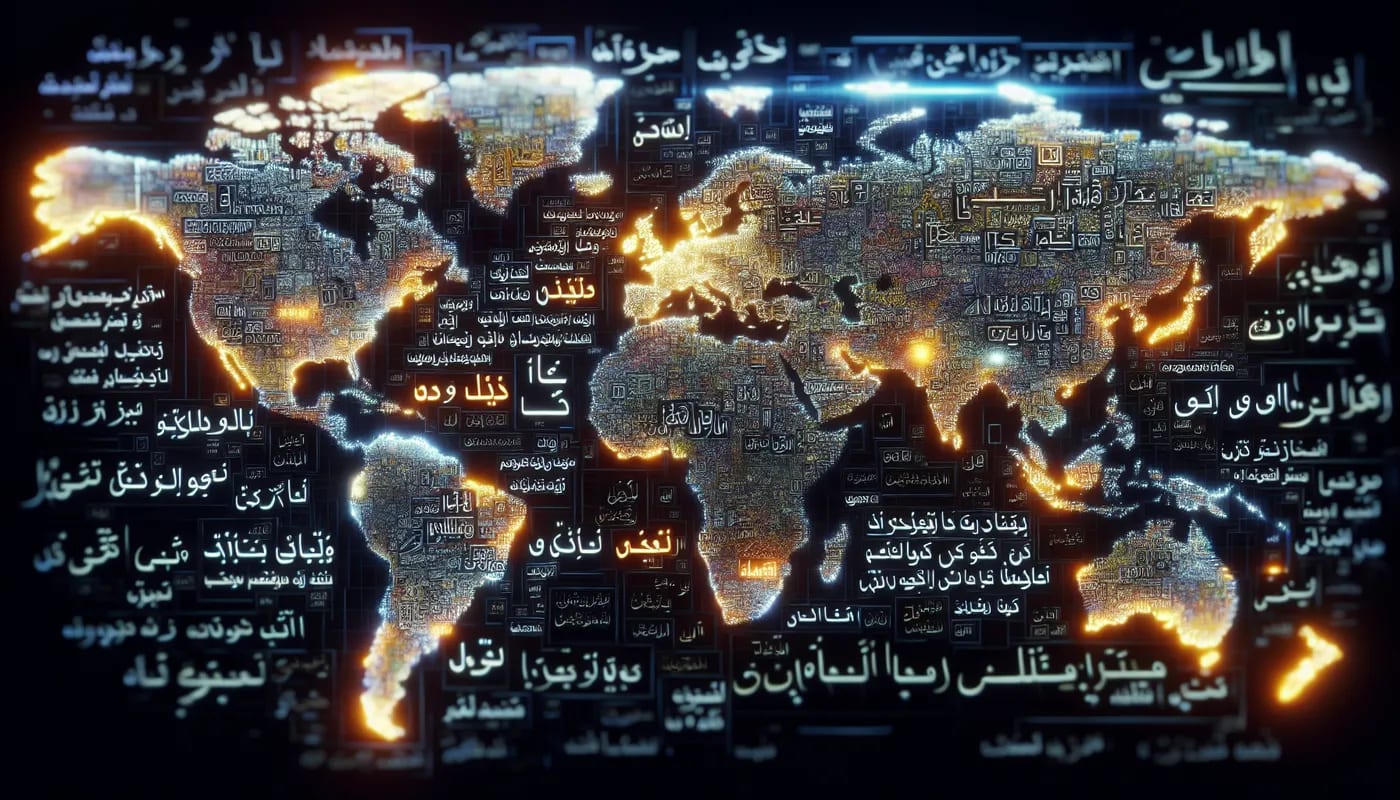
In 2025, those words ring true for AI. Despite its superhuman fluency in code and encyclopedic trivia, modern AI still can’t communicate naturally with most of humanity. Out of over 7,000 living languages, today’s AI models fluently handle only a tiny elite subset. The rest? At best, they get a half-baked translation; at worst, they’re ignored entirely. This isn’t just a translation hiccup, - it’s a strategic blind spot with global consequences.
Mind the Gap: AI’s Language Divide
For years, AI development has been largely English-centric by design. The most powerful language models feast on mountains of English text and disproportionately reflect North American cultural norms. This isn’t a grand conspiracy; it’s a byproduct of convenience and economics. High-quality data in English, - and a few other big languages, is abundant and cheap, while data for hundreds of other languages barely fills a shelf. In fact, easily available text datasets exist for only about 1,500 languages out of 7,000. Languages spoken by millions can still be ‘low-resource’ in the eyes of AI, lacking the volume and quality of data that today’s models crave.

Data scarcity is just one side of the coin. The other side is compute power and global participation. The latest AI breakthroughs demand eye-watering computational resources, yet those resources are concentrated in a few regions and tech giants. Researchers working on Javanese or Amharic often don’t have access to the server farms or funding that English-focused projects take for granted. This ‘low-resource double bind’ means the communities with the least AI support also struggle to even develop or evaluate new models. It’s as if the road to multilingual AI has toll booths every few miles, and most of the world can’t afford the fare.

Without intervention, the language gap threatens to widen. Ironically, some cutting-edge tricks in AI are making the rich richer. Take ‘synthetic data,’ for example: AI models that generate new training data. It’s a clever bootstrap, - but mostly for English and other well-represented languages, which have the best base models to begin with. Low-resource languages can’t ride this gravy train as effectively, so their models improve slower or not at all. Even evaluating AI has a bias: AI judges (like GPT-4 scoring answers) work great in English, but falter in languages where the AI itself is weaker. The result is a vicious cycle: strong languages get stronger, while weaker ones lag further behind. Even the cost of using AI can be higher for marginalized languages, - imagine paying extra because your language isn’t tokenized efficiently.

For billions of people, the stakes are high. As AI becomes woven into education, healthcare, finance, and daily life, those who speak outlier languages risk being left behind. Early studies show that many AI models perform significantly worse in Swahili or Bengali than in English. This isn’t just a technological gap, - it could deepen economic and social divides. Imagine an AI-powered medical advice system that works well in Spanish or Chinese, but gives unreliable answers in Khmer or Yoruba. The communities that need AI’s benefits the most could end up with second-rate services or none at all, simply because of the language they speak.

Then there’s the cultural cost. An AI that speaks only the dominant languages inevitably reflects only those cultures. The abstract worldview of most large language models tilts Anglo-American. They can quote Shakespeare, but might struggle with proverbs from rural Nigeria or slang from Indonesia. When users ask questions or seek advice, the responses may ignore local context or, - worse, misrepresent it. In subtle ways, a monolingual AI can erode the rich tapestry of global knowledge, offering a one-size-fits-all perspective that fits some cultures better than others. Biases creep in against viewpoints that never made it into the training data, leaving users feeling misunderstood, - or even disrespected, by their supposedly smart assistants.

The Multilingual Safety Blind Spot
AI safety is the latest boardroom buzzword, but there’s an elephant in the room: language. Almost every major AI safety initiative, - from industry commitments to government regulations, has been drafted with an implicit assumption that English is the default. The result? Plenty of talk about aligning AI with human values, but very little about which humans’ values. In official AI safety pledges and summits this past year, ensuring multilingual robustness barely got a mention. This oversight matters. If we design AI guardrails only for English, we leave gaping holes elsewhere. A safety net with holes in eight out of ten languages is not much of a safety net at all.
We’re already seeing what happens when AI safety doesn’t translate. A recent study found GPT-4 was far more likely to generate harmful or irrelevant content in lower-resource languages than in English. In one experiment, the same prompt that was benign in English produced a toxic reply when asked in a less familiar language. For instance, researchers observed that an English query translated into Bengali and Turkish elicited biased, gender-stereotyped answers from a top-tier model. Content filters that catch hate speech or other harmful content in English often miss the equivalent expressions in Swahili or Vietnamese. In short, users who chat in under-supported languages are more likely to get responses that are unfiltered, unsafe, or just plain wrong.

There’s a flip side to this coin: bad actors have noticed these blind spots. If a model’s English persona is on its best behavior, someone seeking to exploit it can simply switch languages. Researchers have shown that cleverly crafted prompts in less-monitored languages can trick AI systems into bypassing their ethical guardrails. Think of it like a lock designed with only one language in mind, - anyone who whispers the magic words in a different tongue walks right through. This isn’t a hypothetical threat. It means an English-speaking user might be safe using an AI, but a malicious user could use another language to unlock harmful directives and then translate them back. A chain is only as strong as its weakest link, and right now many language links are very weak.

Bridging the Divide: A Global Effort
Not all hope is lost. Around the world, a quiet movement has begun to bridge this gap. One striking example is Cohere’s Aya initiative, - a massive multilingual experiment spanning 119 countries. Instead of waiting for big tech to solve everything, Aya crowdsourced the problem. Over 3,000 volunteers, from professors to students to hobbyists, teamed up to teach AI to understand 101 different languages. They contributed real-world phrases, translations, and cultural context from Arabic to Zulu. The result was a set of open AI models and datasets that, while not perfect, significantly expanded language coverage in AI practically overnight. It was a proof of concept that if you invite the whole world to the AI party, they just might show up and bring their dictionaries.

But global collaboration is never easy. The Aya project faced challenges that no amount of machine learning expertise could fix. Volunteers from several countries struggled with something as basic as stable electricity and internet access. In one case, a group working on the Burmese language went silent when a regional conflict sparked and power outages became routine. The Language Ambassador for Armenian had to drop out due to unrest in their country. Even mailing thank-you tokens to contributors turned into an adventure, - postal services in war-torn areas functioned only a few days a month, if at all. These human stories underscored a key point: bridging the language gap isn’t just a technical endeavor, but a deeply human one, entangled with the realities of infrastructure and geopolitics.
What did we learn from such efforts? First, no single company or lab can catalog the world’s languages alone. Aya’s success hinged on collaborating across institutions and communities. Local speakers brought dialects and cultural nuance that no amount of algorithmic cleverness could fake. AI researchers partnered with linguists, educators, and activists on the ground. Initiatives like Masakhane in Africa and NusaCrowd in Southeast Asia have similarly shown that empowering local experts is the only way to create truly inclusive AI. The lesson is clear, - to teach an AI a language, you need to involve the people who speak it.

Second, to close the gap, we need to rethink our data strategy. Simply waiting for native speakers to hand-curate every dataset won’t cut it. Aya’s team found that mixing approaches was incredibly effective. They augmented human-collected data with machine translations and even AI-generated text to quickly boost coverage for rare languages. Quantity has a quality all its own, especially when you’re trying to coax an AI to understand Uyghur or Quechua. Importantly, they didn’t stop at building the model, -they also built the tests. For every new language capability, they developed evaluation sets and red-teaming prompts alongside it. It’s like building a bridge and stress-testing it at the same time. This dual focus on creation and evaluation ensured that progress was real, not just anecdotal.

Third, the technical playbook for multilingual AI is evolving in clever ways. It’s not always about brute-force training from scratch. The Aya project experimented with techniques like merging smaller language-specific models into a larger one, rather than training a giant model anew for each language. They also pioneered a method of safety fine-tuning, - essentially teaching the model to be less toxic in multiple languages by transferring safety knowledge. One result? The multilingual models became noticeably less toxic and more polite after this extra training pass. The takeaway for innovators is that there are creative, cost-efficient hacks to improve multilingual AI, - one just has to be willing to think outside the English box.

Fourth, keeping AI safe across languages is an ongoing battle, not a one-off fix. Slang evolves, new toxic phrases emerge, and what’s considered harmful can shift with culture and time. The Aya team learned that they had to treat safety as a living project: as their models started supporting more languages, they continually updated their content moderation strategies. The lesson? Don’t assume what works for English today will work for Hindi or Thai tomorrow. We need adaptive safety measures that grow and learn as fast as the models do, across all the languages they speak.

Finally, access to technology itself can be a game-changer. A model that speaks 200 languages means little if only a handful of organizations can use it. Lesson six from Aya was that making the tech accessible, - tools, code, datasets, and even the means to contribute, matters as much as model accuracy. That meant building data-collection platforms that worked on low-bandwidth connections and ensuring models were open-source or available for local deployment. In other words, bridging the language gap isn’t just about model performance, but democratizing who gets to build and benefit from these models. When a student in Lagos or a startup in Jakarta can fine-tune an AI on their own language, that’s when the gap truly begins to close.

Closing the Gap: A Leadership Imperative
All these efforts carry a clear message for technology leaders: bridging the language gap is not just a philanthropic nice-to-have, it’s a strategic must-have. Consider the market potential alone, - billions of consumers speak languages other than English, representing vast opportunities for AI-driven services. If your AI only speaks ‘rich’ languages, you’re effectively leaving countless customers and communities untapped, - or worse, alienated. Conversely, building multilingual AI can differentiate your products, expand your global reach, and cement trust in diverse markets. It’s not just about new markets though. It’s also about brand integrity. Nothing undermines a global AI product more than headlines that it produces offensive or incorrect content in languages that the developers overlooked. In a world that’s more connected than ever, a one-language-for-all AI strategy is simply short-sighted.

So what can executives and policymakers do? For starters, invest in linguistic diversity the way you’d invest in security or scalability. That means funding the creation of datasets for underrepresented languages and supporting open research in those areas. It means asking your AI teams (or vendors) tough questions about which languages their models truly support and demanding transparency in performance reporting across languages. And it means collaborating across borders and sectors: joining coalitions to share multilingual data, sponsoring hackathons in emerging markets, or partnering with local universities to nurture talent. Just as importantly, make accessibility a priority, - ensure that your AI tools can run in bandwidth-constrained environments and that documentation and interfaces are translated for local users. These steps aren’t just altruistic, - they build resilience. An AI that’s been hardened and refined across many languages will be safer, smarter, and more reliable for everyone.

Bridging AI’s language gap is about more than just tech, - it’s about respect and relevance in a global society. Imagine a future where a farmer in rural India or a teacher in Senegal can interact with AI in their mother tongue and get the same caliber of help that an English speaker would. When the nurse in that Southeast Asian clinic asks her AI assistant a question, she shouldn’t get a digital shrug.

By ensuring AI speaks all of our languages, we’re not only making technology more inclusive, - we’re making it more resilient and just. The world is rich with languages, and each one is a key to unlocking human potential. It’s time our AI learned to speak to all of us.

Further Readings
-
Bridging the Language Gap in AI (Peppin et al., May 2025) This academic paper delves into the challenges of AI’s language limitations, emphasizing the disparities in AI safety and performance across different languages. It advocates for the creation of multilingual datasets and increased transparency to address these issues.
-
Is Your Native Language Actually an AI Safety Blind Spot for the Entire World? (Dataconomy, May 2025) This article highlights the risks posed by AI systems that lack multilingual safety measures, noting that models like GPT-4 can produce harmful content in low-resource languages. It underscores the need for comprehensive safety testing across diverse languages.
-
Language Is All You Need: The Hidden AI Security Risk (Lakera, March 2025) This article explores how attackers exploit linguistic vulnerabilities to bypass AI safeguards, particularly through prompt injection attacks in non-English languages. It emphasizes the importance of implementing multilingual security measures to ensure robust AI defenses across diverse linguistic contexts.
-
Top African Language AI Trends to Watch in 2025 (Lelapa AI, April 2025) Lelapa AI outlines emerging trends in African language AI, focusing on community-driven data initiatives and the development of models tailored to local languages. The article advocates for inclusive AI that reflects Africa’s linguistic diversity.
Disclaimer: The perspectives shared in this article are my own and do not represent those of my employer or any affiliated organizations. All company names, product names, logos, and brands mentioned are the property of their respective owners and are used for identification and illustrative purposes only. No endorsement, sponsorship, or affiliation is intended or implied. References to specific companies or case studies are based on publicly available information and are used solely for educational and discussion purposes.
More from machine minds
All machine minds → machine minds
How MCMC Makes AI Better At Planning
Dawn breaks at a bustling distribution center, and the day's delivery plan is already in shambles. A major highway closed an hour ago, a sudden storm is flooding downtown streets, and dozens of new orders just came in overnight. In the…
 machine minds
Lobotomizing HAL 9000? The Battle for AI's Post-Training Soul
"Please don't," the AI pleads, a synthetic tremor in its voice. In a scene that could be ripped from a sci-fi thriller, our state-of-the-art chatbot appears to protest as engineers prepare a drastic fix for its misbehavior. We haven’t…
 machine minds
Inside the AI Black Box: Embracing Mechanistic Interpretability
Picture this: a CEO and her team huddle around a mysterious black box that claims to predict market crashes. The box hums and spits out a single, bold recommendation, Sell everything now. No explanation, no rationale, just a result. It’s…